Tag Archive for: conta dei carboidrati

Autumn in Parma means Porcini because the local town of Borgotaro has its Fungo Porcino PGI, protected by a Consortium. What recipes with Porcini mushrooms can we prepare? Certainly this delicious Omelette with Porcini and Provolone cheese.

Porcini mushrooms from Borgotaro are not cultivated, but they grow wildly and the hunting season goes from late spring to late autumn. Porcini are rounded and plump, they feature a typical mushroom smell and aromatic flavour. Depending on the type, their caps can range in colour from brown to red or from cream-white to chestnut or blackish brown.

From a nutritional point of view, it is important to remember that mushrooms should be eaten with moderation because, even if edible, they are always slightly toxic, yet they are very rich in micronutrients and low in calories. So, try this super fast omelette that will make you fall in love with it!

If you like omelettes, try my Rolled omelette.

Omelette with Porcini and Provolone cheese

2g carbohydrates per 100g

frittata-ai-porcini-e-provolone

Ingredients for 4 servings

  • 8 eggs
  • 400g peeled tomatoes
  • 300g mild or sharp Provolone cheese
  • 300g Porcini mushrooms
  • 2 sprigs of parsley
  • 4 twigs of basil
  • 1 clove of garlic
  • extra virgin olive oil
  • salt and pepper

**Ingredients specific for celiacs

*Ingredients whose labels must read “gluten-free” (or, in Italy, present on  Prontuario AIC)

Preparation

  1. Clean the mushrooms and slice them, sauté them in a large non-stick frying pan with a dribble of oil and the clove of garlic for 5-6 minutes. Adjust salt and pepper, then dust with chopped parsley and remove the garlic.
  2. Chop the onion thinly and put it in another frying pan with a dribble of oil, then add the peeled tomatoes in pieces and cook for 15-20 minutes adjusting salt.
  3. Beat 2 eggs in a bowl, add a pinch of salt and pepper, slightly oil a non-stick pan of 18cm diameter and pour the beaten eggs in it. Cook the omelette on one side only over medium heat.
  4. Spread on the surface ¼ of the warm Porcini and ¼ of the thinly sliced Provolone cheese, then fold the omelette and put it in the frying pan with the peeled tomatoes.
  5. Repeat the operation with the other 3 omelettes. Put a lid on the frying pan containing all the omelettes and heat them up to melt the cheese. Serve.
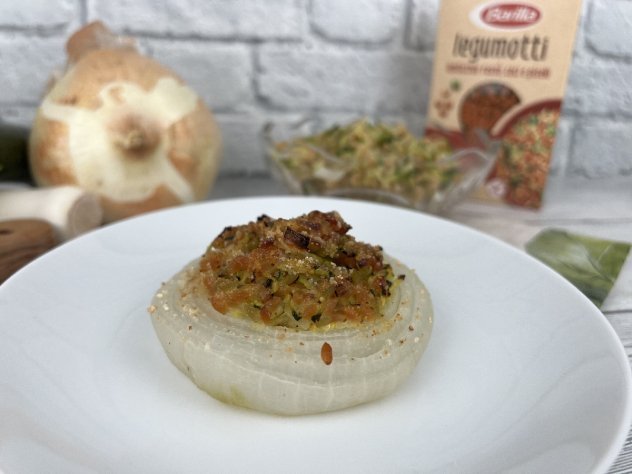
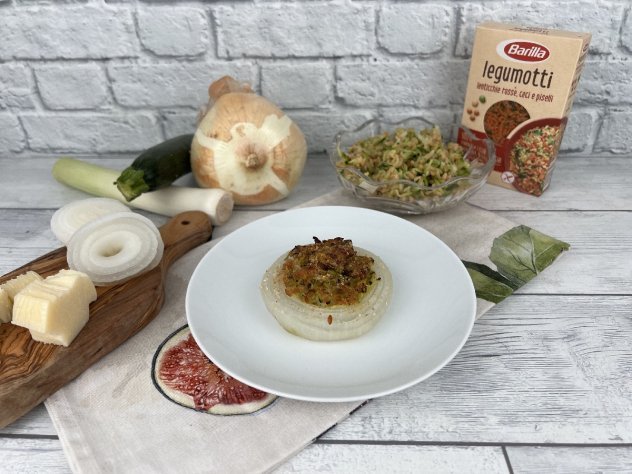
 

September is one of the months in which the Giarratane onions, the sweet, extra-large Sicilian onions that are perfect for stuffing and preparing in a thousand ways, are harvested: try these Giarratane onions stuffed with Legumotti.

The Giarratana onion is an onion grown in the area of the municipality of Giarratana in the south-east of Sicily. Its size is variable and a single bulb can weigh up to 3 kg. Its main characteristic is sweetness, which makes this onion particularly popular and part of the traditional Italian produce (P.A.T.) list created by the Ministry of Agriculture and Forestry.

Precisely because of its sweetness, this onion is also often eaten raw, but it is excellent with all types of cooking: boiled, grilled and baked au gratin.

Stuffed with my beloved Legumotti topped with lots of vegetables and a touch of melting cheese, it is a perfect main course for people affected by diabetes and coeliac disease for both lunch and dinner.

If you like Legumotti, try them in the Legumotti salad with caramelised Tropea onion.

Giarratane onions stuffed with Legumotti

carbohydrates 13.13g per 100g

cipolle-giarratane-ai-legumotti

Ingredients for 4 servings

  • 4 Giarratane onions of about 350g each
  • 180g courgettes
  • 150g leek
  • 120g Barilla Legumotti*
  • 50g sharp Provolone cheese
  • breadcrumbs*
  • extra virgin olive oil
  • oregano
  • salt and pepper

**Ingredients specific for celiacs

*Ingredients whose labels must read “gluten free” (or, in Italy, present on  Prontuario AIC)

Preparation

  1. Peel and trim the Giarratane onions then cut them in half horizontally.
  2. Put a pan of water on the heat, when it comes to the boil throw in the Giarratane onions cut in half and boil them for 5 minutes. Drain them with a skimmer and lay them on a cutting board to dry.
  3. Chop the leek very finely and sweat it in a non-stick pan with a little oil. Add grated sharp Provolone cheese and stir to melt.
  4. Use, if you like, the water used to blanch the onions to cook the Legumotti for 9 minutes, then drain and throw them into the non-stick pan with the vegetables; stir and season with salt and pepper.
  5. Remove some internal layers of the onions to form a hollow for the filling; use the inside of the onions for any other preparation (sauces, onion stuffing, caramelised onions, etc.).
  6. Stuff the emptied onions with the Legumotti, sprinkle with breadcrumbs and a drizzle of oil and put in a convection oven preheated to 200°C for 15 minutes to gratin.
  7. Serve the stuffed onions warm.

cipolle-giarratane-ai-legumotti

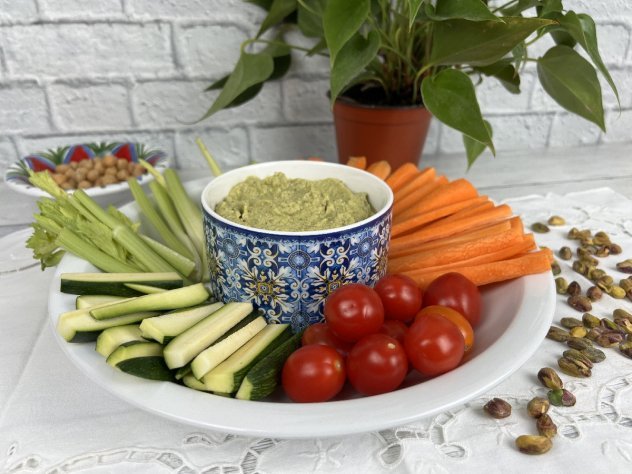
For the month of August, I thought of a salad ideal for sharing with friends: Pinzimonio with pistachio and courgette hummus.

Once you have prepared this delicious hummus, you can use it not only to accompany many seasonal vegetables, but also to top bruschettas or season a pasta dish: a recipe with a thousand possibilities!

Pinzimonio can be used throughout a meal, i.e. it can be an appetiser, a main course or a side dish, it all depends on your appetite and the other courses you have planned for the meal.

You could serve Pinzimonio with Meat mini-pizzas.

pinzimonio-hummus-di-ceci-e-zucchine

Pinzimonio with pistachio and courgette hummus

 5.7g carbohydrates per 100g hummus

Ingredients for 6-8 servings

  • vegetables to taste (courgettes, carrots, celery, cherry tomatoes, etc.)
  • 200g courgettes
  • 150g cooked chickpeas
  • 40g pistachio nuts
  • lemon juice
  • extra virgin olive oil
  • water
  • salt and pepper

**Ingredients specific for celiacs

*Ingredients whose labels must read “gluten-free” (or, in Italy, present on  Prontuario AIC)

Preparation

  1. Place courgettes, chickpeas, pistachios and lemon juice in a blender and start blending. While continuing to blend, gradually add water and oil to obtain a creamy texture, then season with salt and pepper.
  2. Cut the vegetables into sticks, while leaving the cherry tomatoes whole and arrange everything in a serving dish with the hummus in a bowl in the centre or put the hummus in small single-serving bowls for each of the diners.

pinzimonio-hummus-di-ceci-e-zucchine

Version with gluten of Pinzimonio with pistachio and courgette hummus

The recipe contains only naturally gluten-free ingredients.

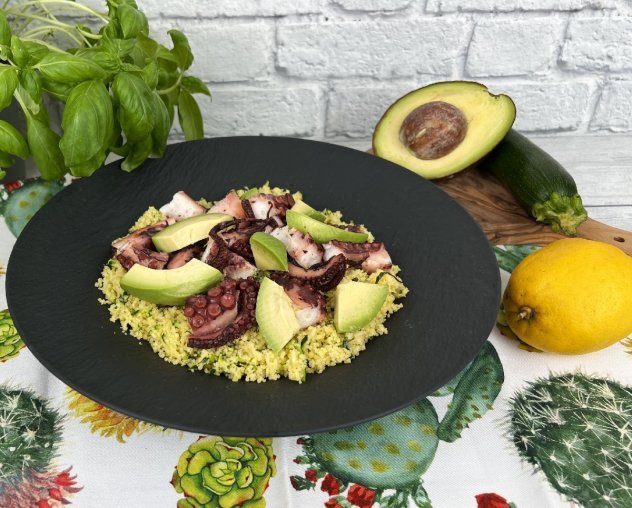
Couscous combined with fish is a great classic, try it in this fresh version for summer: Couscous with octopus and avocado.

You can also indulge in the choice of the type of gluten-free couscous, the Bia company offers a wide range: maize and rice, chickpeas, peas, chickpeas and red lentils, buckwheat are all available options, although with this seasoning I would avoid buckwheat whose characteristic taste would risk covering that of fish.

Couscous combined with fish and vegetables, besides being a source of good fats such as avocado, makes this recipe a perfect one-course meal for lunch or dinner.

If you like couscous in summer, try also Couscous with prawn and courgette curry.

cous-cous-con-polpo-e-avocado

La ricetta del Couscous with octopus and avocado

15.3g carbohydrates per 100g

Ingredients for 4 servings

  • 1kg approx. octopus
  • 200g BIO Corn and rice couscous**
  • 200g courgettes
  • 100g avocado
  • 1 onion
  • 1 carrot
  • 1 celery stalk
  • 1 clove of garlic
  • lemon peel
  • extra virgin olive oil
  • mint
  • parsley
  • salt
  • pepper

**Ingredients specific for celiacs

*Ingredients whose labels must read “gluten-free” (or, in Italy, present on  Prontuario AIC)

Preparation

  1. Cook the octopus in a large saucepan with onion, carrot, celery and garlic, putting a few centimetres of water on the bottom and covering with a lid. Cook over low heat for about 45 minutes.
  2. Prepare the couscous according to the instructions on the packet, i.e. by soaking it with an equal amount of hot water.
  3. Julienne cut the courgettes and sauté them for a few minutes in a non-stick pan with a little oil. Season with salt and pepper.
  4. Separate the couscous well with a fork and season it by adding the courgettes, chopped mint and parsley, grated lemon zest, salt and pepper and a drizzle of extra virgin olive oil.
  5. Assemble the plates by placing the couscous on the bottom and the chopped octopus and avocado on top. Complete to taste with another drizzle of extra virgin olive oil and, if necessary, salt and pepper.

cous-cous-con-polpo-e-avocado

Version with gluten of Couscous with octopus and avocado

Replace the Corn and rice couscous with wheat couscous, while all other ingredients are naturally gluten-free.

Beat the heat with these July salads that will feature some of the most beloved seasonal ingredients, peaches and tomatoes.

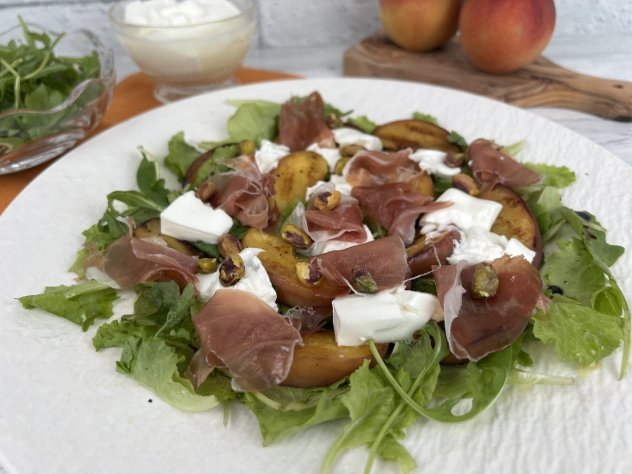
Furthermore, back from my holidays in Sardinia, I wanted to use a Slow Food Presidium that I had never tried before: the cheese called Frue or Casu axedu, meaning “sour cheese” in Sardinian dialect, made with sheep’s or goat’s milk leaving the curd in the whey. The resulting cheese is a product that is a combination of yogurt and cheese, it is without rind, soft and sour. It is sold in small cubes or larger pieces always covered with whey.

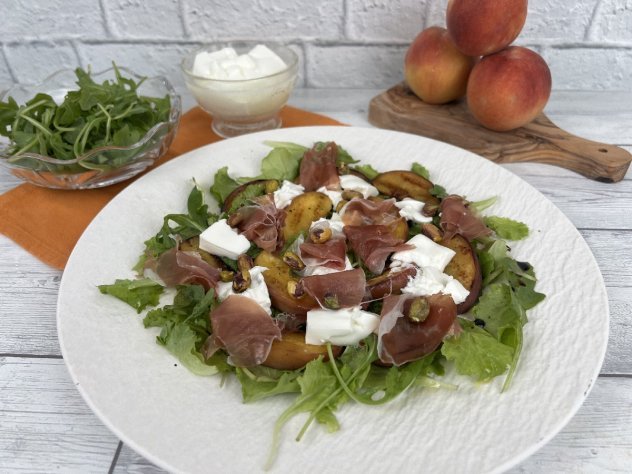
Because of its sour taste, Frue may be too strong for many people, so I decided to combine it with sweet grilled peaches and a savoury Prosciutto di Parma matured for 24 months: simply delicious!

The second salad is a fun way of eating lentils also in summer making them fresh and colourful with cherry tomatoes, and the aroma of garden rocket and basil.

In addition to these July salads, for other fresh and easy-to-make ideas, have a loot at my June salads.

Salad of grilled peaches and Prosciutto

carbohydrates 6g for the whole serving

insalata-di-pesche-grigliate-e-prosciutto

Ingredients for 1 serving

  • 100g peaches with peel on
  • 80g Frue sour cheese or Mozzarella cherries
  • 40g Prosciutto di Parma (2 slices)
  • a handful of baby lettuce
  • a handful of garden rocket
  • 15g shelled pistachio nuts
  • spray extravirgin olive oil Fratelli Mantova
  • Balsamic vinegar of Modena
  • salt and pepper

Preparation

  1. Cut the peaches into thin segments and grill them without adding any grease or dressings.
  2. Form a layer of baby lettuce and garden rocket on the serving dish, then arrange the grilled peaches on top; dress with a pinch of salt, freshly ground pepper, a spray of extravirgin olive oil and a dribble of Balsamic vinegar.
  3. Complete with pieces of sour cheese or Mozzarella cherries, the slices of Prosciutto torn into smaller pieces and the pistachio nuts.

insalata-di-pesche-grigliate-e-prosciutto

Salad of lentils and sautéed cherry tomatoes

carbohydrates 37.41g for the whole serving

insalata-di-lenticchie-e-pomodori-arrostiti

Ingredients for 1 serving

  • 180g cherry tomatoes of various colours
  • 150g boiled lentils (about 50g dry lentils)
  • 70g Mozzarella cheese
  • garden rocket
  • basil
  • oregano
  • extravirgin olive oil
  • salt and pepper

Preparation

  1. Boil the lentils in water with carrot, celery, onion and garlic; drain and allow to cool down.
  2. Pour a dribble of extravirgin olive oil in a non-stick pan and sautéed the cherry tomatoes cut in half, intially with the cut side downwards. Adjust flavour with salt, pepper and oregano and cook for a couple of minutes.
  3. Dress the lentils with the sautéed tomatoes, adjust flavour with olive oil, salt and pepper if necessary, then finish with pieces of Mozzarella, strips of garden rocket and some basil leaves.

insalata-di-lenticchie-e-pomodori-arrostiti

Pasta salads are one of the most popular dishes in summer and every year I like inventing new ones to make a tasty and balanced dish suitable for all occasions.

The protagonists are the Strozzapreti Zero+, organic pasta made with 100% red lentil flour and eggs from free-range hens by the Spinosi pasta factory, a pasta designed to reduce the glycemic index of Italy’s most popular dish while providing a high protein and fibre intake: discover the entire range of gluten-free egg pasta with legume flours to have fun in the kitchen.

This pasta salad proposal is meant to take us tastefully to Greece, using the same ingredients we find in traditional Greek salads, but combined in a slightly different way.

Thanks to the presence of egg in Strozzapreti, the pasta salad has a perfect texture even when cold, which is very unusual in the world of gluten-free pasta, especially with a legume base, so you can enjoy an exquisitely fresh dish that is both healthy and balanced.

If you are looking for more pasta salad ideas, try my Coronation Pasta Salad.

Greek-style Strozzapreti pasta

10.8 g carbohydrates per 100g

Ingredients for 4 servings

  • 250g Strozzapreti Zero+ with red lentil flour*
  • 200g fat free Greek yoghurt
  • 200g cherry tomatoes
  • 100g Greek pitted black olives*
  • 100g Greek feta cheese
  • 70g pickled cucumbers*
  • extra virgin olive oil
  • mint
  • salt and pepper

Preparation

  1. Boil Strozzapreti in lightly salted boiling water for 7 minutes. Drain them, mix them with a drizzle of extra virgin olive oil and leave them to cool.
  2. Cut the cherry tomatoes into 4 wedges and add them to the Strozzapreti together with the black olives, then crumble the feta cheese and mix well.
  3. Prepare a sauce mixing Greek yoghurt with finely chopped pickled cucumbers, season with salt and pepper and pour it over the cold pasta. Complete by adding a few mint leaves and serve.

strozzapreti-alla-greca

If you’re looking for an alternative to pizza, which always challenges us with blood sugar and gluten-free, these Meat mini-pizzas can be super tasty and fun: try them!

In the recipe you will find the ingredients to prepare a tasty and succulent base starting with beef, which I asked my trusted butcher to grind from a lean cut, as my children like. Indeed, remember that it is important to see which meat is used for the mince because if you buy it ready-made at the supermarket, it usually contains a very high percentage of fat.

For the topping, you can decide to use your favourite ingredients, without having to follow my instructions: it will be a lot of fun!

So tonight mini-pizzas ready in just over 30 minutes! For alternative pizzas, see also this Potato pizza with olives.

pizzette-di-carne

Meat mini-pizzas

carbohydrates per 100g negliglible 

Ingredients for 5 mini-pizzas

  • 550g lean minced meat
  • 40g tomato sauce
  • 8g honey
  • 5g salt

Ingredients for the topping

  • tomato sauce
  • mozzarella
  • artichokes in oil or sautéed in a pan
  • sautéed mushrooms
  • sun-dried tomatoes*
  • olives
  • oregano
  • extra virgin olive oil
  • salt

Preparation

  1. In a bowl, season the minced meat with the tomato sauce, honey and salt. Mix well and leave to rest for about 30 minutes.
  2. Then, take an 8-9cm diameter pastry cutter and form discs of meat by pressing it down well with the back of a spoon. Place the meat discs on a hot grill and cook them on both sides without cooking them through (I cooked them 3-4 minutes per side). Move away from the heat.
  3. Meanwhile, season the tomato sauce with oregano, oil and salt.
  4. Place the grilled meat on a baking tray covered with parchment paper and top it like a pizza: tomato sauce, a few slices of mozzarella, artichokes, mushrooms, chopped sun-dried tomatoes and olives.
  5. Bake the mini-pizzas under the grill preheated to 220°C for about 4 minutes or anyway until the mozzarella has melted. Serve them hot.

pizzette-di-carne

Version with gluten of Meat mini-pizzas

The recipe contains only naturally gluten-free ingredients, so no adaptation is necessary for its version with gluten.

What does our lunch box contain today? When Gaia lifts the lid of the container, there are always new ideas waiting for her for lunches away from home, and today’s Legumotti with vegetable ragout and Jerusalem artichokes will be a surprise in terms of taste and energy.

Legumotti will provide you with carbohydrates and plant proteins that will help  you keep your blood sugar under control thanks to the fibre present in the many vegetables on the plate. What about Jerusalem artichoke? Do you know this exotically named ingredient?

Jerusalem artichoke is the root of a plant that is very common throughout Italy, so vital that it is considered almost a weed, growing in wet environments, preferably along watercourses. The root can be eaten either raw or cooked, just like in our lunch box, so you can enjoy its artichoke-like flavour when cooked and its pleasant crunchiness when eaten raw.

It is very suitable for people with diabetes as it has a low carbohydrate content and a high percentage of fibre, in addition to its high digestibility which makes it suitable for everyone. So what are you waiting for to try the recipe?

Follow me not to run short of ideas for out-of-home meals! And if you are looking for a lunch with a lower amount of carbs, try my Roastbeef with aubergine cream.

Legumotti with vegetable ragout and Jerusalem artichokes

42.26g carbohydrates for the whole lunch box

Ingredients for 1 lunch box

  • 280g Jerusalem artichokes
  • 80g carrot
  • 50g leek
  • 40g celery
  • 70g Barilla Legumotti*
  • 30g Parmigiano Reggiano 36 months
  • 20g shelled walnuts
  • 1 tbsp of lemon juice
  • extra virgin olive oil
  • salt and pepper

**Ingredients specific for celiacs

*Ingredients whose labels must read “gluten-free” (or, in Italy, present on  Prontuario AIC)

Preparation

  1. Chop the leek and sweat it in a non-stick pan with a little oil; dice the carrot, celery and some Jerusalem artichokes and add them to the pan with leek, then cook all the vegetables. Season with salt and pepper.
  2. Cook Legumotti in lightly salted boiling water, removing with a skimmer the foam that forms on the surface during cooking. Drain Legumotti and mix them with the vegetable ragout, seasoning with a little oil, salt and pepper.
  3. Preparate l’insalata di topinambur. Slice the Jerusalem artichokes with a mandoline or a well-sharpened knife; add Parmigiano Reggiano cheese cut into slivers, then season with lemon, extra virgin olive oil, salt and pepper, then top with walnuts.
  4. Fill the lunch box by placing Legumotti in one of the containers and the Jerusalem artichoke and Parmigiano Reggiano salad in another container. Close everything and take the lunch box with you!

legumotti con rafù di verdure e topinambur

Version with gluten of Legumotti with vegetable ragout and Jerusalem artichokes

The recipe does not need any adaptations for the version with gluten.

Do you know how the recipe for gluten-free Carnival Fried Tortelli came about? By pure chance, while experimenting with doughs for the Cicerchiata cooked live with the Rieti and Viterbo Chamber of Commerce! Among various combinations of flour, egg and sugar, having obtained a beautiful smooth and firm dough, I thought I would try making Tortelli with plum jam.

The result? Delicious fried Carnival Tortelli! And it’s a good thing I had written down all the weights of the ingredients, otherwise I would have missed out on the doses for an ideal dough for a traditional recipe that has always been prepared in my family (usually in a version with gluten) for Mardi Gras.

Here are other recipes you can prepare for Carnival: Cicerchiata, Fried cream e Krapfen with jam.

Gluten-free Carnival Fried Tortelli

54g carbohydrates per 100g

Ingredients for 10 Tortelli

  • 150g plum jam*, very firm
  • 100g gluten-free flour mix for bread, brand BiAglut**
  • 100g gluten-free bread flour, brand Mix B Schär**
  • 2 eggs
  • 20-30g milk (add it gradually)
  • 25g sugar
  • 15g butter
  • lemon rind
  • sunflower seed oil for deep frying

Preparation

  1. Pour the eggs into a bowl, beat them with a fork together with the sugar, add the soft butter and lemon zest. Gradually incorporate the flour, stirring with a fork until the mixture is firm enough to knead with your hands. Add enough milk to obtain a firm mixture, then transfer to a cutting board and knead with your hands until you obtain a smooth, homogeneous and non-sticky dough.
  2. Cover it with cling film and let it rest for 15 minutes.
  3. Roll out the dough to a thickness of about 5mm, place a teaspoon of very firm plum jam on top of the pastry, cover with another layer and cut out the Tortelli with the mould provided. Continue until everything is used up.
  4. Heat the seed oil to a temperature of 170-180°C and deep-fry a few Tortelli at a time, using a skimmer to flip them so that they brown evenly. Drain them well on paper towels.

tortelli-dolci-di-carnevale

Version with gluten of Carnival Fried Tortelli

Replace the BiAglut and Schär flours with equal amounts of 00 wheat flour and adjust the amount of milk added.

This idea for gluten-free carnival sweets came to me from my friends at the Rieti and Viterbo Chamber of Commerce, who, keeping alive an initiative conceived during the Covid-19 pandemic, organised FB lives from theOsteria Le Tre Porte in Rieti to publicise the products of the area by sending to bloggers and journalists throughout Italy the ingredients to prepare various dishes including Cicerchiata.

When I received the information about the recipes we would prepare together, I had not imagined that Cicerchiata would be a dessert. Instead, in the province of Rieti, it is the traditional Carnival dessert inspired by Campania’s ‘Struffoli‘. The traditional form is that of a garland, which is obtained by pouring the sweets into a doughnut mould, while I’m proposing a mini-serving version so as not to be tempted to eat too much of it.

Given the fundamental role of honey in this recipe, it seems that the spread of Cicerchiata is linked to the development of bee-keeping in this area of Italy, while the name is presumed to derive from the legume grass peas of which the sweet balls of dough reproduce the shape and colour, so Cicerchiata would be a nice ‘stack of grass peas’.

Like many Carnival sweets, Circerchiata symbolises regeneration through its circular shape, the frying that turns a cold dough into a delicacy, and the vitality of honey and colourful decorations.

A tip for those of us who have to be careful with both fried food and simple sugars? Form very small balls, just like dried chickpeas, and reduce the amount of honey to the minimum necessary to hold the precious compositions together.

Here are a few more ideas for Carnival: Krapfen with jam e Fried cream.

cicerchiata

Cicerchiata

60g carbohydrates per 100g without candied fruit and coloured sprinkles

Ingredients

  • 160g flour mix for bread, brand BiAglut**
  • 2 eggs + 15g egg white
  • 100g honey
  • 40g brown rice flour*
  • 25g sugar
  • 20g butter
  • lemon rind
  • slivered almonds*
  • candied fruit*
  • coloured sprinkles*

**Ingredients specific for celiacs

*Ingredients whose labels must read “gluten-free” (or, in Italy, present on  Prontuario AIC)

Preparation

  1. Pour the eggs into a bowl, beat them with a fork together with the sugar, add the soft butter and lemon zest. Gradually incorporate the flour, stirring with a fork until the mixture is firm enough to knead with your hands. Transfer everything onto the work surface and continue kneading with your hands until you obtain a smooth and homogeneous dough, similar to fresh pasta.
  2. Divide the dough into small portions, form them into sticks of dough having a diameter of about 8mm as for making Gnocchi, then cut them into chunks no more than 8mm-1cm long. Round the pieces of dough with your fingers to form small balls.
  3. Heat the seed oil to a temperature of 170-180°C and deep fry a few balls at a time. When they are golden brown, drain them well and let them cool on kitchen paper.
  4. Meanwhile, pour the honey into a large pan and heat it gently for a few minutes. When it has browned slightly, turn off the heat and add the fried balls, stirring to coat them evenly. Finally, add the almonds and sprinkles, taking care to keep some aside for decoration. Mix again, pour the mixture into the desired moulds, garnish with the almonds and sprinkles kept aside and serve.

Cicerchiata

Version with gluten of Cicerchiata

Replace BiAglut flour and rice flour with 250g wheat flour 00 and add 30g sugar instead of 25g.