Tag Archive for: ricette senza glutine

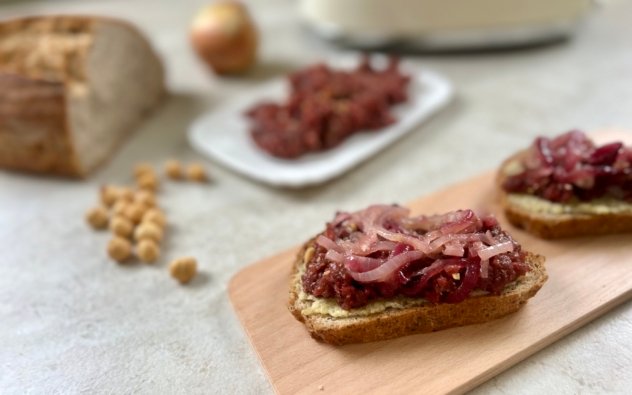
Some recipes are born almost by chance. From a slice of toasted bread, an ingredient waiting to be used, or a flavour combination that sparks curiosity. And very often, these are the creations that end up winning everyone over, just like my Bruschetta with beef tartare, hazelnuts and caramelised onion.

It is with this spirit that my new series, Not Your Usual Bruschetta, begins—a collection of creative and delicious ideas that transform a simple slice of bread into something truly memorable. Easy to prepare, perfect for summer, and ideal for anyone who loves experimenting in the kitchen without making life complicated.

The first star of the series is a bruschetta with bold yet perfectly balanced flavours: beef tartare with crunchy hazelnuts, caramelised Tropea onions, and artichoke pâté. A combination of textures and aromas that makes every bite both surprising and deeply satisfying, whatever the occasion.

Because, after all, this is not your usual bruschetta.

ilaria-bertinelli-bruschetta-con-tartare-di-manzo

Bruschetta with beef tartare, hazelnuts and caramelised onion

39g carbohydrates for 1 bruschetta

Ingredients for 2 bruschettas

  • 2 slices of bread** (50 g each)
  • 150 g Tropea onions
  • 120 g beef tartare
  • 30 g artichoke pâté*
  • 30 g hazelnuts
  • 10 g brown sugar
  • apple cider vinegar
  • extra virgin olive oil
  • salt and pepper

**Ingredients specific for celiacs

*Ingredients whose labels must read “gluten-free” (or, in Italy, present on  Prontuario AIC)

Method

  1. Finely chop the hazelnuts and mix them into the beef tartare. Season with salt, pepper, and extra virgin olive oil, then leave to marinate while you prepare the onions.
  2. Thinly slice the Tropea onions and cook them gently in a non-stick frying pan with a drizzle of extra virgin olive oil and a pinch of salt. Once softened, add the brown sugar and a splash of apple cider vinegar, allowing the vinegar to evaporate completely.
  3. Toast the bread slices until golden and crisp. Spread a layer of artichoke pâté over each slice, top with the hazelnut beef tartare, and finish with the caramelised onions.

Nutrition Note

Beef tartare provides high-quality protein and important minerals such as iron and zinc. Hazelnuts contribute mostly unsaturated fats, vitamin E, and a pleasant crunch, while artichokes are naturally rich in fibre and plant compounds such as cynarin. The caramelised Tropea onions add sweetness and depth of flavour, creating a bruschetta that is both satisfying and well balanced.

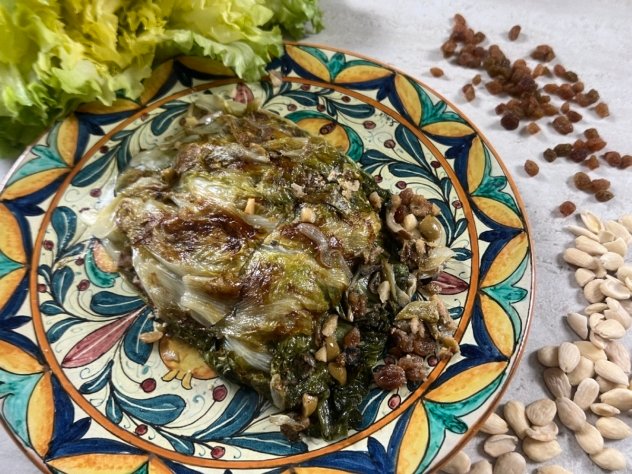
Pan-fried Stuffed Chicory is a clear example of how a simple ingredient can be turned into a truly satisfying dish with very little effort. Chicory, often treated as a side vegetable, becomes the star here: with the right handling and just a few well-chosen ingredients, it turns into something full of flavour and substance.

The secret lies entirely in the filling. Anchovies and capers, together with olives and the gentle sweetness of raisins, create a very interesting balance of saltiness, depth and freshness. These are ingredients that also tell the story of the relationship between nature and human intervention: both anchovies and capers develop their distinctive character through preservation processes such as salting, which enhances their flavour and complexity.

From a nutritional point of view, anchovies provide high-quality protein and are a good source of Omega-3 fatty acids, which support cardiovascular health and have anti-inflammatory properties. Capers — typically used in small quantities — add aromatic compounds and a good level of antioxidants. Together, they give the dish plenty of flavour without the need for much else.

The result is a naturally gluten-free recipe (when using gluten-free breadcrumbs), complete and well balanced, also ideal for preparing in advance and enjoying warm or at room temperature. Another simple way to bring more vegetables to the table without compromising on taste.

ilaria-bertinelli-scarola-imbottita-in-padella

Pan-fried Stuffed Chicory

11.4g carbohydrates per 100g

Ingredients

  • 1 head of chicory
  • 125 g pitted black and green olives*
  • 35 g peeled almonds
  • 35 g desalinated capers
  • 30 g breadcrumbs**
  • 25 g raisins
  • 5 anchovy fillets
  • 1 clove of garlic
  • parsley
  • extra virgin olive oil
  • salt and pepper

**Ingredients specific for celiacs

*Ingredients whose labels must read “gluten-free” (or, in Italy, present on  Prontuario AIC)

 Preparation

  1. Wash the chicory thoroughly and trim off the tough base of the stem.
  2. Roughly chop the almonds, a handful of parsley, the olives, capers and anchovy fillets.
  3. Gently open the leaves and stuff with the chopped mixture, adding raisins and breadcrumbs between the layers. Tie the chicory with kitchen string to hold it together.
  4. Heat a drizzle of olive oil in a deep frying pan and brown the garlic. Add the stuffed chicory and brown over a high heat for about 10 minutes. Cover with a lid and continue cooking gently for around 30 minutes.
  5. Serve warm or cold, with its cooking juices, a sprinkle of parsley and freshly ground black pepper.

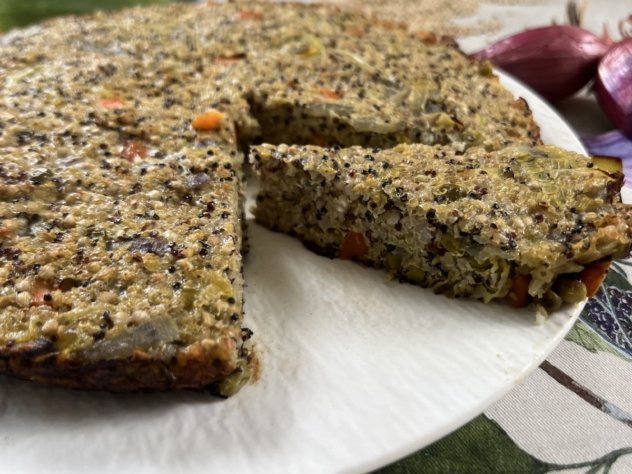
Vegetable quinoa and buckwheat bake is one of those recipes that truly simplifies everyday cooking: everything is prepared in a single pan, first on the hob and then finished in the oven, with no unnecessary steps and no extra washing up. A small detail that makes a big difference, especially when time is limited but you still want a complete meal.

In this bake, the key ingredients are quinoa and buckwheat, two naturally gluten-free pseudocereals with very interesting nutritional properties.

Quinoa, originally from the Andean region and cultivated for thousands of years by pre-Columbian populations, was already considered a staple food by the Incas, who referred to it as the “mother grain”.

Even today, it is widely appreciated and often considered a superfood for several reasons: 1) it contains all essential amino acids, which is quite rare in plant-based foods; 2) it provides a good amount of fibre; 3) it has a moderate glycaemic index; 4) it is rich in minerals such as magnesium, iron and potassium; 5) it contains antioxidant compounds.

Buckwheat, despite its name, is not a cereal but a plant belonging to a different botanical family. It is also naturally gluten-free, with a good fibre content and an interesting supply of minerals such as magnesium and iron.

When used in a preparation like this bake — together with eggs and vegetables — they help create a complete, satisfying dish that is also easy to manage from a glycaemic perspective.

A practical, versatile recipe, suitable for everyday cooking, designed to optimise time and steps without compromising on ingredient quality.

ilaria-bertinelli-tortino-di-quinoa-e-grano-saraceno

Vegetable quinoa and buckwheat bake

16g carbohydrates per 100g

Ingredients

  • 300 g red onions
  • 150 g carrots
  • 100 g quinoa*
  • 100 g buckwheat*
  • 100 g cherry tomatoes
  • 100 g peas
  • 80 g leek
  • 40 g milk
  • 3 eggs
  • Extra virgin olive oil
  • Oregano
  • Salt and pepper
  • Cream cheese, to serve

**Ingredients specific for celiacs

*Ingredients whose labels must read “gluten-free” (or, in Italy, present on  Prontuario AIC)

Preparation

  1. Cook the quinoa and buckwheat separately in lightly salted water for about 20 minutes. Cover and leave to cool slightly.
  2. Meanwhile, heat a drizzle of extra virgin olive oil in a non-stick pan that is also ovenproof. Add the sliced leek, onions, diced carrots and peas. Season with a pinch of salt, add a few tablespoons of water and cook for 5 minutes.
  3. Add the halved cherry tomatoes and cook for a further 3 minutes. Season with pepper and a pinch of oregano.
  4. In a bowl, beat the eggs with the milk. Add the cooked quinoa and buckwheat, mix well, adjust seasoning with salt and pepper, then pour the mixture into the pan with the vegetables.
  5. Cook over a low heat for 5 minutes while preheating the oven to 180°C. Transfer the pan to the oven and bake for 15 minutes.
  6. Serve warm, either on its own or with fresh, creamy cheese.

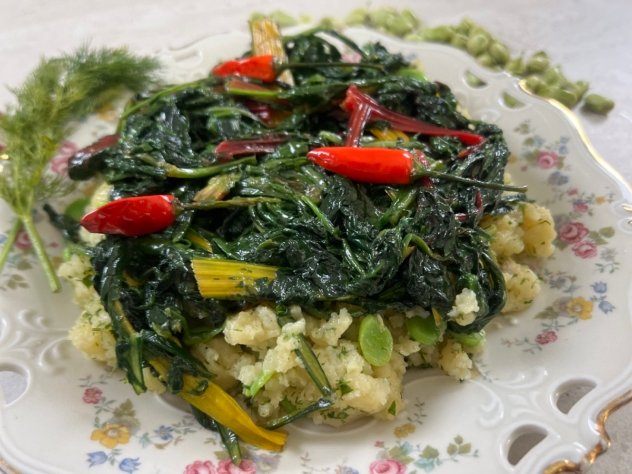
Mashed potatoes and broad beans with sautéed greens is a simple, seasonal and nutritionally balanced dish — perfect for getting even the most sceptical family members to enjoy their vegetables!

Potatoes are always a crowd-pleaser and, in this recipe, they give the mash a naturally soft and creamy texture. Fresh broad beans add flavour along with an interesting plant-based protein component. The sautéed greens, with their slightly bitter note, balance the dish and make it more appealing to the palate.

From a nutritional perspective, broad beans are often overlooked, yet they are well worth including more regularly in your diet. They provide fibre and plant-based protein, both of which contribute to satiety and help slow down the absorption of carbohydrates in the meal. They are also a good source of folate and contain minerals such as iron and magnesium.

Compared to other legumes, fresh broad beans have a lower carbohydrate content and, when used in a dish like this — which also includes fibre and healthy fats from extra virgin olive oil — they help keep the overall glycaemic impact of the meal more balanced.

A naturally gluten-free recipe, ideal for those looking for simple, balanced dishes that fit easily into everyday cooking. And if you’re in the mood for salads, here’s what to look for in May: hearty, fortified salads.

ilaria-bertinelli-macco-di-patate-e-fave

Mashed potatoes and broad beans with sautéed greens

13.2g carbohydrates per 100g

Ingredients

  • 500 g potatoes
  • 250 g mixed greens (chard, chicory, baby spinach)
  • 60 g fresh broad beans, shelled
  • Wild fennel
  • Fresh chilli
  • Parsley
  • Garlic
  • Extra virgin olive oil
  • Salt and pepper

 Preparation

  1. Blanch the broad beans in salted water for a few minutes, then remove their outer skins.
  2. Boil the whole potatoes with their skins on. Once cooked, peel and mash them with a fork.
  3. Add the broad beans to the mashed potatoes along with 30 g of extra virgin olive oil, a pinch of salt, freshly ground pepper and finely chopped wild fennel.
  4. Blanch the greens in lightly salted boiling water, then drain and transfer them to cold water.
  5. Heat a pan with a drizzle of extra virgin olive oil, one garlic clove and some fresh chilli. Add the blanched greens and sauté to flavour.
  6. To serve, spread the potato and broad bean mash on a serving dish, top with the sautéed greens and finish with chopped parsley, freshly ground pepper and a drizzle of extra virgin olive oil.

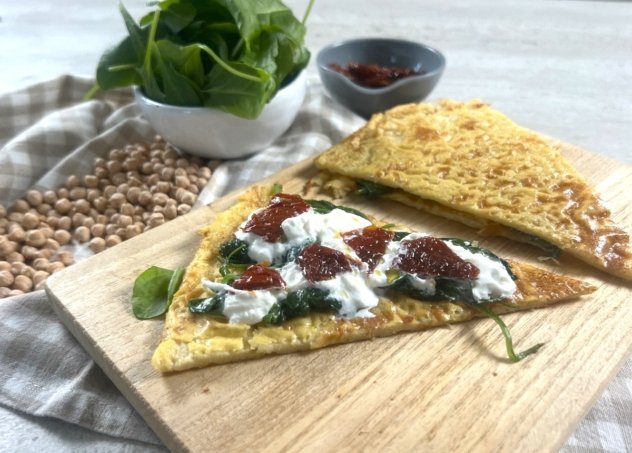
Chickpea Farinata is one of those dishes that perfectly shows how simplicity can become smart cooking. Made with just a few ingredients, naturally gluten-free and budget-friendly, it features chickpea flour as the star of the recipe. As a legume, chickpeas are particularly valuable for blood sugar control and satiety, thanks to their content of fiber and plant-based proteins.

In this version, we turn it into an extra-indulgent dish by topping it with baby spinach, stracciatella cheese, and sun-dried tomatoes. That said, Chickpea Farinata remains extremely versatile: it can also be enjoyed plain, as an alternative to bread, to accompany meals in a simple and mindful way. An essential preparation, with no complicated doughs, that brings a great traditional classic to the table in a healthy, inclusive, and satisfying way.

ilaria-bertinelli-farinata-farcita

Delicious Chickpea Farinata

15.8g carbohydrates per 100g Farinata without topping

Ingredients for one 32cm baking tray

  • 375g water
  • 100g chickpea flour*
  • 1 tablespoon extra virgin olive oil
  • salt

Ingredients for topping 

  • baby spinach
  • stracciatella cheese
  • sundried tomatoes in oil*
  • extra virgin olive oil
  • salt

**Ingredients specific for celiacs

*Ingredients whose labels must read “gluten-free” (or, in Italy, present on  Prontuario AIC)

 Preparation

  1. Whisk the chickpea flour with the water, one tablespoon of olive oil, and a pinch of salt, mixing well to prevent lumps. Let the batter rest for at least 4 hours, ideally overnight.
  2. Sauté the baby spinach in a non-stick pan with a drizzle of olive oil and a pinch of salt, then set aside.
  3. Using a sheet of kitchen paper or a brush, oil an aluminum baking tray of the appropriate size to achieve your desired thickness. I love a very thin chickpea flatbread, so I chose a 32 cm (12.5-inch) diameter tray.
  4. Bake in a preheated fan-assisted oven at 250°C (480°F) until golden and crispy.
  5. Cut the flatbread while still hot and top as desired with the sautéed spinach, a teaspoon of stracciatella, and a few pieces of sun-dried tomatoes.

Tour of Italy in 20 ricette

Gluten-free Seupa alla Valpellinentza

With this first interview and recipe, my Tour of Italy in 20 Recipes officially begins—a project that, over the coming months, will take me on a journey across Italy from north to south, one region at a time, collecting stories, memories, and comfort dishes from people who, after being diagnosed with celiac disease, were forced—at least for a while—to give up flavors deeply connected to their personal history.

The first stop could only be Valle d’Aosta, a land of hearty, mountain-inspired, convivial cuisine. Guiding me on this opening stage were Michela and Mirella, who shared with me their Seupa alla Valpellinentza, a soup that is emblematic of the region—rich, deeply flavorful, and full of memories.

One of the key ingredients of this traditional recipe is rustic bread, a central element that is often difficult to replicate in a gluten-free version that truly lives up to the original. To honor the spirit of the dish, I chose to use my own recipe for Crunchy Wholemeal Gluten-Free Bread, which proved to be perfect in terms of structure, flavour, and its ability to absorb liquids, giving this soup an irresistible texture and depth of taste.

The result is a gluten-free Seupa alla Valpellinentza that preserves the soul of the traditional recipe and finally makes it possible to rediscover this great classic of Valdostan cuisine in a safe, gluten-free version.

This is just the beginning of the journey!
The next stop will be Piedmont: a new region, a new story, and a new recipe to bring back to the table in a gluten-free version.

Stay tuned to find out which recipe will be next.

ilaria-bertinelli-seupa-alla-valpellinentza

Gluten-free Seupa alla Valpellinentza

9g carbohydrates per 100g

Ingredients

**Ingredients specific for celiacs

*Ingredients whose labels must read “gluten-free” (or, in Italy, present on  Prontuario AIC)

Preparation


  1. Clean the Savoy cabbage and cut it into strips about 1 cm wide. Boil it in the meat broth until tender, then drain it, keeping both the cabbage and the broth aside.
  2. Cut the Fontina cheese into slices or chunks, removing the rind.
  3. Lightly grease a baking dish with olive oil and arrange a first layer of bread. Top with pieces of Fontina and the cooked cabbage, then add a ladle of broth before starting the next layer. I made two layers of bread.
  4. Finish with a final layer of bread topped with cabbage, Fontina, melted butter, and a light dusting of cinnamon. Add two or three generous ladles of broth, allowing the bread to absorb the liquid.
  5. Bake in a fan-assisted oven preheated to 180°C (356°F) for about 20 minutes. Once ready, let the soup rest in the switched-off oven for about 10 minutes before serving.


From north to south, Italy is waiting to be rediscovered… dish by dish, story by story. It is in this spirit that my project, Tour of Italy in 20 Recipes, was born. Starting in January 2026 and continuing over the next twenty months, I will take you on a culinary journey to explore regional Italian gastronomic traditions, reimagined in a gluten-free version, with careful attention to carbohydrate sharing and the most inclusive cooking possible.

ilaria-bertinelli-giro-d-italia-in-20-ricette

Tour of Italy in 20 recipes: a monthly appointment with regional gluten-free cuisine

This is not just about recipes. Every month, I will have the pleasure of meeting virtually with friends from all over Italy through video calls, where they will share their favourite recipe: the dish they missed the most after being diagnosed with celiac disease, the flavours that evoke memories of family, celebrations, and special moments.

My role will be to turn these stories into reality: I will recreate each dish gluten-free, preserving its flavours, textures, and soul, without compromise. Each recipe will also include carbohydrate information per 100g, helping those with diabetes calculate their insulin dose for the meal.

But this project is also a rediscovery of traditional Italian cuisine. From the rustic breads of the mountains in Valle d’Aosta, to Piedmontese stuffed pastas, to the sweets of the South, each stop will be an opportunity to explore the territory, the people, and their stories, bringing to the table dishes that convey identity, culture, and affection.

The Tour of Italy in 20 Recipes is not just a culinary journey: it is a journey through memories, emotions, and sharing, designed to make you feel part of every region, every story, and every dish.

Don’t miss a single stop! Every month, a new story, a new dish, a new piece of Italy to rediscover… and to enjoy in a gluten-free version.

After a refreshing swim in the pool or sea, there’s nothing better than a fresh and nourishing dish to restore your energy without feeling heavy. This Quinoa Salad with Watermelon, Feta, and Mint is exactly what you need.

Light yet complete, quinoa provides complex carbohydrates while feta offers a good protein boost. Watermelon and cucumber ensure hydration and freshness, while mint adds an aromatic touch that makes this recipe irresistible even on the hottest days.

Prepare it in advance and take it with you to the beach, the pool, or enjoy it at home after your workout. It’s a healthy, practical, and colourful one-dish meal that will make you feel like you’re on holiday with the very first bite. And if you want to know what’s best to do after swimming for optimal recovery, check out the tips from Bianca Balzarini.

Looking for more summer ideas? Try our Couscous with Octopus and Avocado.

ilaria-bertinelli-insalata-di-quinoa-e-anguria

Quinoa Salad with Watermelon, Feta, and Mint

9.8g carbohydrates per 100g

Ingredients for 4 servings

  • 300g watermelon (net weight, without rind and seeds)
  • 100g quinoa (white or mixed)
  • 160g cucumber
  • 150g feta cheese
  • 1 bunch fresh mint
  • ½ lemon
  • 3 tablespoons extra virgin olive oil
  • salt and pepper
  • pumpkin seeds

Preparation

  1. Rinse the quinoa thoroughly under running water to remove any saponins, then cook it with triple its weight in lightly salted water for about 12-15 minutes with the lid on, until it has absorbed all the water. Turn off the heat and let it cool slightly.
  2. Peel and coarsely grate the cucumber, sprinkle with salt, place in a colander, and let it rest to release its water.
  3. Cut the watermelon into small cubes, removing all seeds.
  4. Crumble the feta cheese with your hands.
  5. Mix the cooled quinoa with the watermelon, well-drained cucumber, crumbled feta, and finely chopped mint.
  6. Dress with lemon juice mixed with olive oil, salt, and pepper.
  7. Garnish with pumpkin seeds for a crunchy touch and a few mint leaves.

If you love focaccia with bold flavours, the Ligurian gluten-free Sardenaira will win you over at the very first bite. It’s a true explosion of taste: a soft dough topped with tomato sauce, enriched with anchovies, capers, and Taggiasca olives, for a result that carries all the scent of the sea and the essence of tradition.

I first discovered this dish in Sanremo, during a trip with my family: I still remember how much we wanted to try it all together, even though at the time there was no gluten-free version available. Today, with great satisfaction, I’ve recreated the Sardenaira without gluten—faithful to its authentic flavour but suitable for everyone, with that perfect balance between the savoury topping and the sweetness of the tomato.

A tip: don’t overdo it with salt, since the toppings are already naturally very flavourful. Try it, and I’m sure it will become one of your favourite focaccias!

If you prefer more delicate flavors, you might also enjoy my Buckwheat and Corn Focaccia.

ilaria-bertinelli-sardenaira-senza-glutine

Gluten-free Sardenaira

34g carbohydrates per 100g

Ingredients for a baking tray

  • 200g Mix B Schär flour**
  • 200g Nutrifree Pane flour**
  • 100g Fibrepan Farmo flour**
  • 250g water
  • 250g milk
  • 20g extra virgin olive oil
  • 12g brewer’s yeast
  • salt

For the topping 

  • 400 g tomato purée or peeled tomatoes
  • 100 g pitted Taggiasca olives*
  • 10 anchovy fillets in salt
  • 40 g salted capers
  • 2 cloves garlic
  • oregano
  • extra virgin olive oil

**Ingredients specific for celiacs

*Ingredients whose labels must read “gluten-free” (or, in Italy, present on  Prontuario AIC)

Preparation

  1. Dissolve the yeast in the water, pour it over the flours, add the milk, and knead well. Finish by adding oil and salt. The mixture should be quite creamy. Cover with cling film, place in a warm spot, and let rise until doubled in size.
  2. Meanwhile, thoroughly desalinate the capers and anchovies. If not using tomato purée, chop the peeled tomatoes.
  3. Once the dough has risen, spread it onto a baking tray lined with parchment paper, wetting your hands with cold water to help you stretch it out evenly to a thickness of about 1.5 cm. Top with tomato purée or chopped tomatoes, arrange the anchovies, capers, halved unpeeled garlic cloves, and olives on top. Sprinkle with oregano and drizzle with olive oil, then let it rise for another 30 minutes.
  4. Bake in a preheated fan oven at 210°C (410°F) for 25–30 minutes. Allow to cool slightly and serve the Sardenaira cut into square pieces.

Version with gluten of Sardenaira

Replace the 500 g gluten-free flours (Schär, Nutrifree, and Fibrepan) with 500 g all-purpose flour and knead with 250 g water instead of 500 g.

After a morning or evening run, your body needs clean energy and high-quality protein to recover at its best. This Buckwheat Salad with Chicken Ragout and Grilled Peaches is designed exactly for that: a complete meal rich in noble proteins from the chicken and edamame, low glycemic-index carbohydrates thanks to buckwheat, and plenty of vitamins and minerals from the peaches and cherry tomatoes, which refresh and hydrate.

A mix of delicate flavours and different textures that satisfies without weighing you down – perfect for those who love to take care of themselves at the table after a workout.

Discover all the secrets for perfect post-workout recovery with Bianca Balzarini, nutrition coach, with whom I created this very useful e-book.

Buckwheat Salad with Chicken Ragout and Grilled Peaches

8g carbohydrates per 100g

Ingredients for the salad

  • 140 g nectarines or peaches
  • 120 g edamame
  • 100 g buckwheat groats*
  • 10 cherry tomatoes

 Ingredients for the chicken ragout

  • 600 g chicken meat, finely chopped by knife
  • 100 g carrot
  • 40 g onion
  • 30 g celery
  • 1/2 glass of Marsala wine
  • chopped sage, mint, and thyme
  • extra virgin olive oil
  • salt and pepper

*Ingredients whose labels must read “gluten-free” (or, in Italy, present on  Prontuario AIC)

Preparation

  1. Prepare the chicken ragout first. Finely dice the onion, carrot, and celery, and soften them in a saucepan with a drizzle of extra virgin olive oil without letting them fry. Add the chopped herbs and the minced chicken meat.
  2. Mix well until the chicken turns white, then pour in the Marsala wine and let it evaporate. Cover and cook for about 20 minutes. Adjust with salt and pepper.
  3. Meanwhile, boil the buckwheat in lightly salted water and drain when cooked but still al dente.
  4. Blanch the edamame in lightly salted boiling water for 1.5 minutes, then drain and plunge them into cold water.
  5. Halve the cherry tomatoes and add them to the drained buckwheat, then add the edamame and finally the chicken ragout, mixing everything well. Serve with a few slices of nectarine or peach.

ilaria-bertinelli-insalata-di-grano-saraceno-e-pesche-grigliate

Version with gluten of Buckwheat Salad with Chicken Ragout and Grilled Peaches

The recipe is naturally gluten-free, so no adaptation is needed for the version with gluten.