Tag Archive for: ricette senza glutine

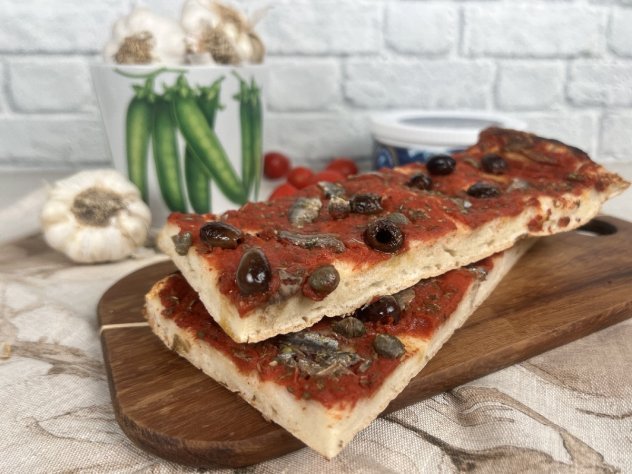
If you love focaccia with bold flavours, the Ligurian gluten-free Sardenaira will win you over at the very first bite. It’s a true explosion of taste: a soft dough topped with tomato sauce, enriched with anchovies, capers, and Taggiasca olives, for a result that carries all the scent of the sea and the essence of tradition.

I first discovered this dish in Sanremo, during a trip with my family: I still remember how much we wanted to try it all together, even though at the time there was no gluten-free version available. Today, with great satisfaction, I’ve recreated the Sardenaira without gluten—faithful to its authentic flavour but suitable for everyone, with that perfect balance between the savoury topping and the sweetness of the tomato.

A tip: don’t overdo it with salt, since the toppings are already naturally very flavourful. Try it, and I’m sure it will become one of your favourite focaccias!

If you prefer more delicate flavors, you might also enjoy my Buckwheat and Corn Focaccia.

ilaria-bertinelli-sardenaira-senza-glutine

Gluten-free Sardenaira

34g carbohydrates per 100g

Ingredients for a baking tray

  • 200g Mix B Schär flour**
  • 200g Nutrifree Pane flour**
  • 100g Fibrepan Farmo flour**
  • 250g water
  • 250g milk
  • 20g extra virgin olive oil
  • 12g brewer’s yeast
  • salt

For the topping 

  • 400 g tomato purée or peeled tomatoes
  • 100 g pitted Taggiasca olives*
  • 10 anchovy fillets in salt
  • 40 g salted capers
  • 2 cloves garlic
  • oregano
  • extra virgin olive oil

**Ingredients specific for celiacs

*Ingredients whose labels must read “gluten-free” (or, in Italy, present on  Prontuario AIC)

Preparation

  1. Dissolve the yeast in the water, pour it over the flours, add the milk, and knead well. Finish by adding oil and salt. The mixture should be quite creamy. Cover with cling film, place in a warm spot, and let rise until doubled in size.
  2. Meanwhile, thoroughly desalinate the capers and anchovies. If not using tomato purée, chop the peeled tomatoes.
  3. Once the dough has risen, spread it onto a baking tray lined with parchment paper, wetting your hands with cold water to help you stretch it out evenly to a thickness of about 1.5 cm. Top with tomato purée or chopped tomatoes, arrange the anchovies, capers, halved unpeeled garlic cloves, and olives on top. Sprinkle with oregano and drizzle with olive oil, then let it rise for another 30 minutes.
  4. Bake in a preheated fan oven at 210°C (410°F) for 25–30 minutes. Allow to cool slightly and serve the Sardenaira cut into square pieces.

Version with gluten of Sardenaira

Replace the 500 g gluten-free flours (Schär, Nutrifree, and Fibrepan) with 500 g all-purpose flour and knead with 250 g water instead of 500 g.

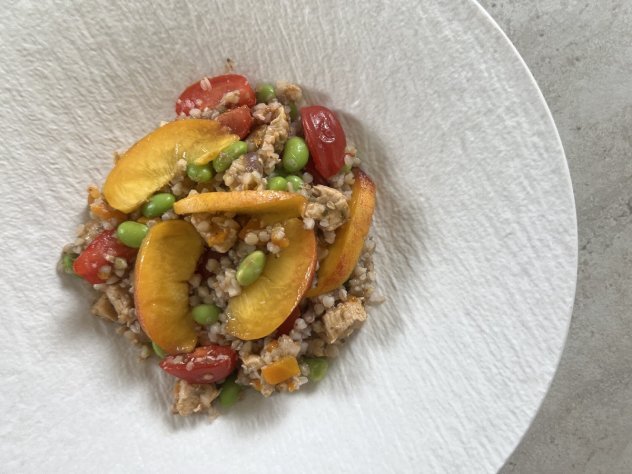
After a morning or evening run, your body needs clean energy and high-quality protein to recover at its best. This Buckwheat Salad with Chicken Ragout and Grilled Peaches is designed exactly for that: a complete meal rich in noble proteins from the chicken and edamame, low glycemic-index carbohydrates thanks to buckwheat, and plenty of vitamins and minerals from the peaches and cherry tomatoes, which refresh and hydrate.

A mix of delicate flavours and different textures that satisfies without weighing you down – perfect for those who love to take care of themselves at the table after a workout.

Discover all the secrets for perfect post-workout recovery with Bianca Balzarini, nutrition coach, with whom I created this very useful e-book.

Buckwheat Salad with Chicken Ragout and Grilled Peaches

8g carbohydrates per 100g

Ingredients for the salad

  • 140 g nectarines or peaches
  • 120 g edamame
  • 100 g buckwheat groats*
  • 10 cherry tomatoes

 Ingredients for the chicken ragout

  • 600 g chicken meat, finely chopped by knife
  • 100 g carrot
  • 40 g onion
  • 30 g celery
  • 1/2 glass of Marsala wine
  • chopped sage, mint, and thyme
  • extra virgin olive oil
  • salt and pepper

*Ingredients whose labels must read “gluten-free” (or, in Italy, present on  Prontuario AIC)

Preparation

  1. Prepare the chicken ragout first. Finely dice the onion, carrot, and celery, and soften them in a saucepan with a drizzle of extra virgin olive oil without letting them fry. Add the chopped herbs and the minced chicken meat.
  2. Mix well until the chicken turns white, then pour in the Marsala wine and let it evaporate. Cover and cook for about 20 minutes. Adjust with salt and pepper.
  3. Meanwhile, boil the buckwheat in lightly salted water and drain when cooked but still al dente.
  4. Blanch the edamame in lightly salted boiling water for 1.5 minutes, then drain and plunge them into cold water.
  5. Halve the cherry tomatoes and add them to the drained buckwheat, then add the edamame and finally the chicken ragout, mixing everything well. Serve with a few slices of nectarine or peach.

ilaria-bertinelli-insalata-di-grano-saraceno-e-pesche-grigliate

Version with gluten of Buckwheat Salad with Chicken Ragout and Grilled Peaches

The recipe is naturally gluten-free, so no adaptation is needed for the version with gluten.

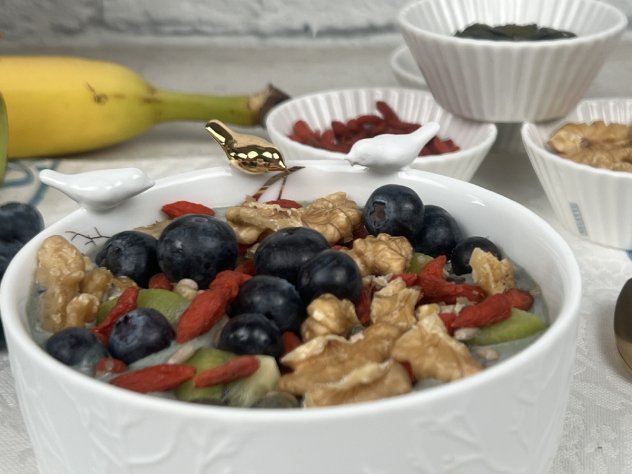
Since many of you often ask me where I get my energy from, I’m revealing one of my daily habits: my Blueberry Bowl, a colourful and energizing way to start the day.

I’m sharing this habit with you because the colour of the month, which I explore together with nutrition coach Bianca Balzarini, is blue—the same vibrant hue as two of the main ingredients in this bowl: blueberries and spirulina. In the world of food, blue is a rare shade, but it’s as fascinating as it is full of benefits.

The blue-violet colour of blueberries comes from their high content of anthocyanins, which help fight oxidative stress and protect cells from damage caused by free radicals. These little vitamin-rich fruits are low in calories and offer more than 3 grams of fibre per 100 grams, making them a low glycaemic index food.

Spirulina is a green-blue superfood with extraordinary properties. It’s a freshwater microalga made up of 60–70% high-quality protein that includes all essential amino acids. It’s rich in vitamins and minerals, a powerful antioxidant, and thanks to this exceptional nutritional profile, some studies suggest it may support metabolism and cardiovascular health.

Perfect for breakfast or as a functional snack, this bowl is packed with macro- and micronutrients. In addition to the benefits of blueberries and spirulina, it also provides protein from Greek yogurt, natural sugars from fruit, fibre, and healthy fats from seeds and nuts. All ingredients are naturally gluten-free, and the balance of carbohydrates, protein, and fibre makes this bowl an ideal choice for people with type 1 diabetes too.

What are you waiting for? Enjoy your breakfast!

Ilaria-bertinelli-bowl-ai-mirtilli

Blueberry Bowl

10.12g carbohydrates per 100g

Ingredients for 4 bowls

  • 300g fat-free Greek yoghurt
  • 150g banana
  • 125g blueberries
  • 3 dates
  • 1 level teaspoon of spirulina
  • 1 kiwi
  • suflower seeds
  • pumpkin seeds
  • goji berries
  • walnuts

**Ingredients specific for celiacs

*Ingredients whose labels must read “gluten-free” (or, in Italy, present on  Prontuario AIC)

Preparation

  1. Blend the yogurt with the banana, half of the blueberries, the pitted dates, and the spirulina until smooth.
  2. Divide the mixture between 4 bowls and top each with: 2 teaspoons sunflower seeds, 2 teaspoons goji berries, the kernels of 2 walnuts, 1 teaspoon pumpkin seeds, a few cubes of kiwi, and the remaining blueberries. Enjoy as breakfast or a snack.

Ilaria-bertinelli-bowl-ai-mirtilli


To celebrate Earth Day, which this year falls on 22 April, I created a simple and delicious recipe as my small contribution to reducing food waste. These Eggplant Rolls with Sun-Dried Tomatoes and Breadcrumbs are bursting with flavour and born from the desire to give leftover bread a second life. The filling is fragrant and enriched with Mediterranean ingredients like basil, almonds, and sun-dried tomatoes.

This dish is both light and nourishing: eggplants are an excellent source of fiber and antioxidants, wholemeal bread provides complex carbohydrates, while Pecorino cheese and almonds contribute protein and healthy fats. Everything is brought together by a simple, aromatic tomato sauce that makes the dish not only wholesome but also incredibly satisfying.

A tasty way to celebrate Earth, make the most of leftovers, and cook with awareness.

Eggplant rolls with sun-dried tomatoes and breadcrumbs

8g carbohydrates per 100g

Ingredients for the rolls

  • 2 eggplants (about 400g)
  • 100g milk
  • 70g leftover bread**
  • 50g Pecorino cheese, grated
  • 50g sun-dried tomatoes*, drained
  • 40g almonds
  • 12 basil leaves
  • salt and pepper

Ingredients for the sauce

  • 600g tomato purée
  • 1 shallot
  • 1 clove of garlic
  • extra virgin olive oil
  • chilli pepper
  • salt and pepper

**Ingredients specific for celiacs

*Ingredients whose labels must read “gluten-free” (or, in Italy, present on  Prontuario AIC)

Preparation

  1. Slice the eggplants and bake them in a preheated static oven at 180°C for about 20 minutes until soft.
  2. Soak the bread in milk, then place it in a blender along with the sun-dried tomatoes, almonds, and basil leaves. Add the Pecorino cheese in small pieces and blend until smooth. Season with salt and pepper to taste.
  3. Fill the eggplant slices with the mixture and roll them up tightly.
  4. For the sauce, sauté the finely chopped shallot in a non-stick pan with a drizzle of oil and the garlic clove. Add the tomato purée and chili pepper, then gently place the rolls in the sauce.
  5. Cook for 20 minutes and serve warm.

ilaria-bertinelli-involtini-di-melanzane-con-pane-avanzato

The Secret to a Great Sandwich? The Bread! Without a doubt, the key to a great sandwich is the bread! When I made the Tuna Melt, one of the elements that truly made a difference was my Wholemeal Gluten-Free Sandwich Bread—a recipe carefully designed to ensure softness, flavor, and a balanced impact on blood sugar levels.

This bread is perfect not only for gooey, irresistible sandwiches but also for breakfasts, sweet or savoury toasts, and creative bruschettas. Its soft texture and slightly rustic flavor make it an excellent base for many preparations—try using it to make these Bruschette Assortment!

If you’re looking for a gluten-free bread that doesn’t crumble and stays soft even the next day, this is the recipe for you!

Wholemeal gluten-free sandwich bread

47.50g carbohydrates per 100g

ilaria-bertinelli-pane-a-cassetta-integrale

Ingredients for one loaf

  • 270 g Nutrifree Bread Mix Flour**
  • 250 g milk
  • 250 g water
  • 200 g Nutrifree Wholemeal Bread Mix Flour**
  • 30 g hemp flour*
  • 30 g extra virgin olive oil
  • 12 g fresh yeast
  • salt

**Ingredients specific for celiacs

*Ingredients whose labels must read “gluten-free” (or, in Italy, present on Prontuario AIC)

Preparation

  1. In a planetary mixer, combine the flours. Dissolve the yeast in lukewarm water, then add it to the flours along with the milk.
  2. Mix at low speed for 2 minutes, then increase to high speed and mix for 4 more minutes.
  3. Add the salt and oil, ensuring they are well incorporated into the dough. Transfer the dough into a well-greased or non-stick sprayed sandwich bread mold (30×10 cm).
  4. Let the dough rise for at least 2 hours, or until it reaches almost the top of the mould.
  5. Bake in a preheated convection oven at 230°C for 45 minutes.
  6. Remove the bread from the mould immediately after taking it out of the oven.

My first encounter with Bagna Cauda dates back to a trip to Piedmont many years ago when I fell in love with the unmistakable flavour of this iconic dish, blissfully unaware of its after-effects. The potent and lingering “aroma” of garlic was so overwhelming that my husband made it clear there would be no second chance for this culinary experience.

From that amusing episode was born my version of Garlic-Free Bagna Cauda, which I jokingly call “anti-abandonment”: no garlic, but instead Jerusalem artichokes, which lend creaminess and a delicate flavour without any unpleasant aromatic consequences.

Jerusalem artichokes are not just a great substitute for garlic but also a true health ally. They are rich in fibre, particularly inulin, a prebiotic substance that supports gut health and helps maintain stable blood sugar levels. They are low in calories but high in minerals such as iron, potassium, and magnesium.

The result? A dish that saves lunches, marriages, and sensitive noses.

Discover how to prepare it, and if you love dipping sauces, be sure to try my Pinzimonio with Pistachio and Courgette Hummus.

Garlic-free Bagna cauda

12.3g carbohydrates per 100g of sauce

Ilaria-bertinelli-bagna-cauda-senza-aglio

Ingredients for 4 servings

  • boiled potatoes and vegetables of your choice
  • 400g Jerusalem artichokes
  • 200g milk
  • 40g salted or oil-packed anchovies (weight after cleaning)
  • extra virgin olive oil

Preparation

  1. Desalt and debone the salted anchovies or opt for oil-packed anchovies for convenience. Place them in a small pan with a drizzle of extra virgin olive oil and let them melt.
  2. Wash and peel the Jerusalem artichokes, then cut them into cubes. Add the cubes to the melted anchovies. Cover with milk, place a lid on the pan, and cook until the Jerusalem artichokes are soft enough to be mashed with a fork.
  3. Mash the Jerusalem artichokes and anchovies well with a fork until creamy.
  4. Serve the sauce with boiled potatoes and other vegetables of your choice, perfect for dipping into this incredibly tasty mixture.

With February’s arrival, nature offers us ingredients packed with nutrients and authentic flavours, perfect for those living with type 1 diabetes and coeliac disease. My February salads combine taste and health, ideal for enhancing your winter table.

February Salads: Winter Flavours and Wellness on Your Table

In the Cauliflower and Pumpkin Salad, these two vegetables create a delightful balance of flavours and textures. Cauliflower, with its low glycaemic index and high fibre content, helps maintain blood sugar levels stable. Pumpkin, besides adding a pop of colour, is rich in beta-carotene and vitamins. The addition of boiled eggs completes the dish with high-quality proteins, making it both nutritious and satisfying.

The Winter Greek Salad is my tribute to a recent adventure in Greece: crisp iceberg lettuce with flavourful black olives and a creamy Greek yoghurt dressing enriched with cucumber, reminiscent of the famous tzatziki sauce. Iceberg lettuce provides fibre and water, black olives offer healthy fats and antioxidants, and the creamy Greek yoghurt sauce with cucumber supports digestive health thanks to probiotics and cucumber fibre.

Why choose seasonal vegetables for February salads?
Opting for seasonal ingredients ensures maximum flavour and nutrients. Get ready to enjoy the best of winter with these salads that combine taste, colour, and wellness!

Winter Greek Salad

13.5g carbohydrates per 100g

insalata-greca-invernale

Ingredients for 4 servings

  • 200 g cooked chickpeas
  • 100 g feta cheese
  • 100 g leftover gluten-free bread**
  • 100 g cucumber
  • 100 g iceberg lettuce
  • 50 g Kalamata black olives
  • 30 g fat-free Greek yoghurt
  • 1 lemon
  • oregano
  • mint
  • extra virgin olive oil
  • salt and pepper

**Ingredients specific for celiacs

*Ingredients whose labels must read “gluten-free” (or, in Italy, present on Prontuario AIC)

Preparation

  1. Cut the bread into cubes and toast in a non-stick pan. When it starts to crisp, drizzle with a little oil, a pinch of salt, and oregano.
  2. Trim the cucumber, grate it, sprinkle with a pinch of salt, and place it in a colander to drain. Squeeze well, then blend it with the yoghurt, juice of half a lemon, a few mint leaves, salt, and pepper to create a sauce.
  3. Crumble the feta cheese and mix it in a bowl with the chickpeas, shredded lettuce, and olives, seasoning everything with a drizzle of oil.
  4. Serve on plates and top with the cucumber yoghurt sauce and crispy croutons.

Cauliflower and Pumpkin Salad

3g carbohydrates per 100g

insalata-di-cavolo-e-zucca

Ingredients for 4 servings

  • 500g mixed-colour cauliflower
  • 400g pumpkin
  • 4 boiled eggs
  • 100g baby spinach
  • thyme
  • oregano
  • extra virgin olive oil
  • salt and pepper

Preparation

  1. Separate the cauliflower into florets and cook in the microwave on high for 4 minutes.
  2. Cut the pumpkin into cubes and place them on a baking tray lined with parchment paper. Sprinkle with thyme, oregano, salt, and pepper, and drizzle with a little oil. Roast in a preheated fan oven at 180°C until golden.
  3. Place the spinach in a bowl and season with extra virgin olive oil and salt.
  4. Boil the eggs for 8 minutes, peel them, and separate the yolks from the whites.
  5. Assemble the plates by layering the spinach, followed by cauliflower florets, pumpkin cubes, and crumbled egg whites. Finish by passing the yolks through a sieve to create a pollen-like texture.
  6. Sprinkle with a pinch of salt, pepper, and a drizzle of extra virgin olive oil.


The cold season stimulates the desire for hot drinks that immediately bring us a sense of contentment and pleasure, especially when accompanied by a simple, light and old-fashioned sweet such as this Coffee-flavoured oil doughnut.

A few ingredients, a non-stick mould and the handy release agent spray are all you need for a guaranteed result.

You can use the Coffee-flavoured oil doughnut either as a dessert at the end of a meal, accompanying it with a cream of your choice, a scoop of ice cream, a spoonful of jam or a small glass of coffee liqueur, or enjoy it at breakfast accompanied by a refreshing and invigorating yoghurt.

More breakfast ideas? Try the Brioche braid.

Coffee-flavoured oil doughnut

46g carbohydrates per 100g

ciambella all'olio

Ingredients

  • 125g sugar
  • 100g potato starch*
  • 100g wholemeal rice flour*
  • 100g water
  • 100g coffee
  • 100g seed oil
  • 50g corn starch*
  • 3 eggs
  • 16g baking powder*
  • cinnamon powder
  • tonka bean

**Ingredients specific for celiacs

*Ingredients whose labels must read “gluten-free” (or, in Italy, present on  Prontuario AIC)

Preparation

  1. With an electric whisk, whip the eggs with the sugar until white and frothy, add the oil in a trickle, the warm coffee and water.
  2. Very slowly incorporate starch, flour and baking powder by sifting and continuing to stir.
  3. Flavour with cinnamon and grated tonka bean. Grease and flour a mould and pour in the mixture.
  4. Bake in a static oven preheated to 180°C for about 40 minutes.

Autumn in Parma means Porcini because the local town of Borgotaro has its Fungo Porcino PGI, protected by a Consortium. What recipes with Porcini mushrooms can we prepare? Certainly this delicious Omelette with Porcini and Provolone cheese.

Porcini mushrooms from Borgotaro are not cultivated, but they grow wildly and the hunting season goes from late spring to late autumn. Porcini are rounded and plump, they feature a typical mushroom smell and aromatic flavour. Depending on the type, their caps can range in colour from brown to red or from cream-white to chestnut or blackish brown.

From a nutritional point of view, it is important to remember that mushrooms should be eaten with moderation because, even if edible, they are always slightly toxic, yet they are very rich in micronutrients and low in calories. So, try this super fast omelette that will make you fall in love with it!

If you like omelettes, try my Rolled omelette.

Omelette with Porcini and Provolone cheese

2g carbohydrates per 100g

frittata-ai-porcini-e-provolone

Ingredients for 4 servings

  • 8 eggs
  • 400g peeled tomatoes
  • 300g mild or sharp Provolone cheese
  • 300g Porcini mushrooms
  • 2 sprigs of parsley
  • 4 twigs of basil
  • 1 clove of garlic
  • extra virgin olive oil
  • salt and pepper

**Ingredients specific for celiacs

*Ingredients whose labels must read “gluten-free” (or, in Italy, present on  Prontuario AIC)

Preparation

  1. Clean the mushrooms and slice them, sauté them in a large non-stick frying pan with a dribble of oil and the clove of garlic for 5-6 minutes. Adjust salt and pepper, then dust with chopped parsley and remove the garlic.
  2. Chop the onion thinly and put it in another frying pan with a dribble of oil, then add the peeled tomatoes in pieces and cook for 15-20 minutes adjusting salt.
  3. Beat 2 eggs in a bowl, add a pinch of salt and pepper, slightly oil a non-stick pan of 18cm diameter and pour the beaten eggs in it. Cook the omelette on one side only over medium heat.
  4. Spread on the surface ¼ of the warm Porcini and ¼ of the thinly sliced Provolone cheese, then fold the omelette and put it in the frying pan with the peeled tomatoes.
  5. Repeat the operation with the other 3 omelettes. Put a lid on the frying pan containing all the omelettes and heat them up to melt the cheese. Serve.


Full speed ahead: Stuffed omelette roll

How many times have you arrived home at dinner time without having any ideas of what to prepare? The Summer omelette roll is a solution to many situations.

In fact, all you need is fresh eggs and a little grated Parmesan cheese to prepare the magical and tasty omelette disc, then you can create the stuffing according to what you find in your fridge and pantry: each time you can serve a roll with a different flavour and colour.

My advice is to always try to use a good amount of vegetables for the stuffing in order to balance the protein- and fat-rich omelette with vitamins and fibre. You can then serve it with a nice slice of wholemeal bread to get the right amount of carbohydrates.

If you are a fan of omelettes, try this Stuffed Omelette.

rotolo-di-frittata-estivo

Summer omelette roll

 carbohydrates per 100g negligible

Ingredients for 4 servings

  • 7 eggs
  • 125g cow’s milk mozzarella
  • 40g Parmigiano Reggiano cheese, grated
  • 1 tomato
  • a handful of lettuce
  • 1 tbsp olive pâté*
  • extra virgin olive oil
  • salt and pepper

**Ingredients specific for celiacs

*Ingredients whose labels must read “gluten-free” (or, in Italy, present on  Prontuario AIC)

Preparation

  1. Beat the eggs well in a bowl with a fork, add the Parmesan cheese and a pinch of salt and pepper.
  2. Put a little oil in a 25-28cm diameter non-stick frying pan and pour in the egg mixture. Cook it over medium heat and, when it has set, turn it over with the help of a lid.
  3. Place the omelette disc on a board and stuff it: spread the lettuce, place the sliced tomato and  mozzarella on top, then the olive pâté evenly distributed.
  4. Roll the omelette tightly, then cut the cylinder in half to serve so that the colours of the ingredients inside can be seen.

Version with gluten of Summer Omelette Roll

The recipe contains only naturally gluten-free ingredients.