Tag Archive for: ricette sane

Flour and water gnocchi are an ancient recipe that takes us back to the roots of Italian cuisine, long before potatoes arrived from the Americas.
Made with just two ingredients and no eggs, these gnocchi have deep roots in peasant tradition, where simplicity and ingenuity went hand in hand. In fact, to bind the flour—rice flour in my gluten-free version, specifically brown rice flour from Mulino Marello—boiling water is used. This technique gelatinizes the starch, acting as a kind of pre-cooking step that makes the dough more flexible and prevents it from falling apart when cooked.

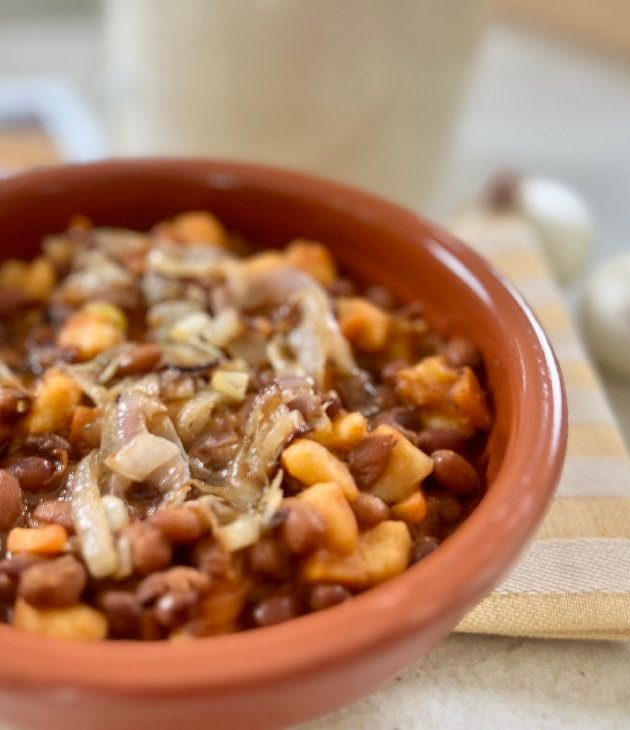
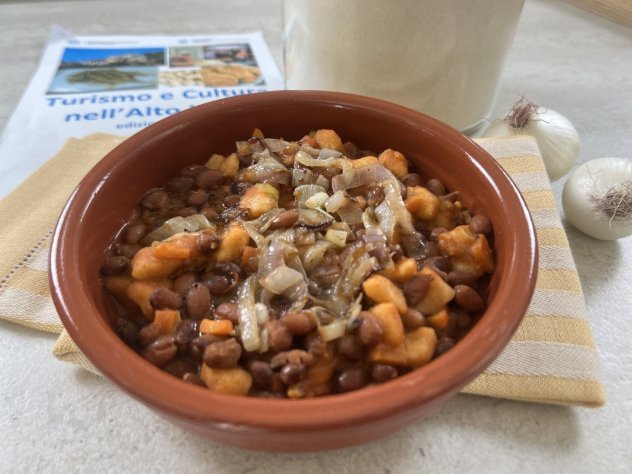
To accompany them, I chose a legume I discovered thanks to the Chamber of Commerce of Rieti and Viterbo: the Fagiolo Secondo or Fagiolo Giallo della Stoppia di San Lorenzo. This bean is a typical product of the Alta Tuscia Laziale Mountain Community, grown using sustainable farming methods that respect natural cycles.
Its curious name tells the story of its traditional cultivation: Secondo refers to the agricultural practice of sowing the beans as the second crop of the year, while della Stoppia (i.e. of the stubble) refers to the fact that they were sown directly onto the wheat stubble just after harvest, using crop residues as a natural growing medium.

This late cultivation allowed the beans to be harvested as early as the end of August, offering farming families a valuable source of plant-based protein as autumn approached. These small brown beans are not only delicious but also quick to cook and naturally sweet, qualities attributed to the volcanic origin of the local soil.

Rich in plant proteins and fiber, these beans are ideal for those looking for balanced dishes full of flavor and suitable even for beginner cooks.

ilaria-bertinelli-gnocchi-di-farina-e-acqua

Flour and water gnocchi with beans

  24.16g carbohydrates per 100g without onion topping

Ingredients for the gnocchi for 4 servings

  • 200g brown rice flour*
  • hot water
  • a pinch of salt

For the bean sauce

  • 400g tomato purée
  • 150g dried Fagioli secondi or Gialli della Stoppia
  • 70g carrot
  • 40g celery
  • 2 bay leaves
  • wild fennel
  • extravirgin olive oil Canino DOP
  • salt and pepper

For the onion

  • 5 Tropea onions
  • extravirgin olive oil Canino DOP
  • oregano
  • salt and pepper

**Ingredients specific for celiacs

*Ingredients whose labels must read “gluten-free” (or, in Italy, present on  Prontuario AIC)

Preparation

  1. Soak the dried beans overnight. The next day, boil them over low heat with two bay leaves until fully cooked. Turn off the heat and reserve the cooking water.
  2. Place the whole grain rice flour in a mixing bowl, add a pinch of salt, and pour in just enough lightly salted boiling water to create a smooth dough. You’ll need about half the weight of the flour in water. Cover with plastic wrap and let rest for at least 15 minutes.
  3. Finely chop the carrot and celery, and sauté them in a pan with a drizzle of olive oil. Add the vegetables and tomato purée to the pan, season with salt, and let the sauce simmer for about 20 minutes. Then add the cooked beans and allow to cook together for another 15 minutes. Finish with chopped wild fennel.
  4. Slice the Tropea spring onions and gently soften them in a pan with a little olive oil. Season with oregano, salt, and pepper.
  5. Prepare the gnocchi: roll the dough into cylinders on a board dusted with rice flour, cut into 2 cm pieces, and place them on a tray.
  6. Cook the gnocchi in lightly salted boiling water until they reach your preferred texture. Note: they are not ready as soon as they float—they’ll need a bit longer.
  7. Lift them out with a slotted spoon and add directly to the bean sauce. Stir to combine, then serve with the Tropea onions and a drizzle of Canino olive oil.

ilaria-bertinelli-gnocchi-di-farina-e-acqua

Spring brings us wonderful and versatile ingredients like asparagus — grown in many regions of Italy and the star of this simple yet impressive recipe. This Chicken and asparagus pie is a complete meal that combines flavour, nutritional balance and practicality. It’s perfect for anyone following a gluten-free diet with a mindful eye on the recipe’s composition, particularly its carbohydrate content.

Asparagus is an excellent source of fibre, B vitamins (especially folate), vitamin K and natural antioxidants. Thanks to its asparagine content, it also supports kidney function and has a natural diuretic effect. Combined with chicken, a great source of lean protein, and brown rice flour, which adds fibre and complex carbohydrates, this dish offers all the essential macronutrients and is suitable for those with specific dietary needs.

The crisp gluten-free puff pastry topping adds a rustic and visually appealing touch, making it ideal even for a last-minute dinner with guests when you don’t want to give up on seasonal vegetables. If you’re looking for another all-in-one dish, try the Vegetarian Moussaka too!

ilaria-bertinelli-pie-di-pollo-e-asparagi-al-feta

Chicken and asparagus pie with Feta cheese

7.8g carbohydrates per 100g

Ingredients for 6 servings

  • 1 pack of gluten-free puff pastry** (you will use about 200g)
  • 850g chicken breast
  • 420g asparagus
  • 120g Feta cheese
  • 70g leek
  • 30g brown rice flour*
  • 1 egg for brushing the surface
  • meat or vegetable stock*
  • extra virgin olive oil
  • salt and papper

**Ingredients specific for celiacs

*Ingredients whose labels must read “gluten-free” (or, in Italy, present on  Prontuario AIC)

Preparation

  1. Slice the leek and let it soften in a non-stick pan with a drizzle of olive oil. Add the chicken breast cut into cubes and cook until it turns white on all sides.
  2. Trim the woody ends off the asparagus, then divide the stalks from the tips. Cut the stalks into small pieces and add them to the chicken. Pour in a few ladles of broth, season with salt and pepper, and cook.
  3. When the chicken is nearly done, add the asparagus tips. Sprinkle in the rice flour and, if needed, add another ladle of broth — it will thicken into a sauce similar to béchamel.
  4. Transfer the chicken and asparagus mixture into a baking dish, top with crumbled Feta cheese and cover the top with the puff pastry. Seal the edges well to create a lid, cut a few slits to allow steam to escape, and brush the surface with beaten egg.
  5. Bake in a preheated fan oven at 180°C for 20 minutes. Remove from the oven, let rest for 10 minutes, then serve.

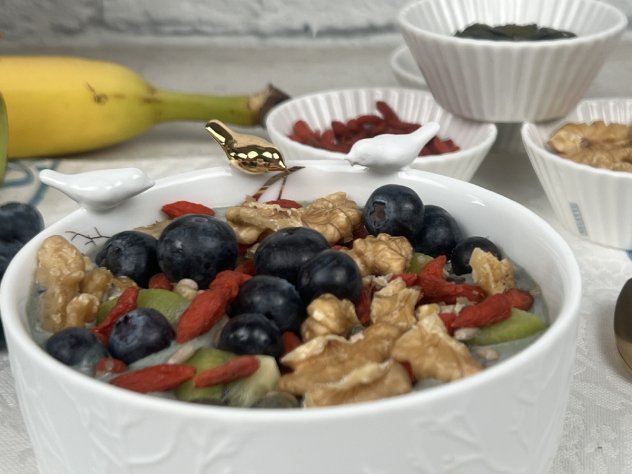
Since many of you often ask me where I get my energy from, I’m revealing one of my daily habits: my Blueberry Bowl, a colourful and energizing way to start the day.

I’m sharing this habit with you because the colour of the month, which I explore together with nutrition coach Bianca Balzarini, is blue—the same vibrant hue as two of the main ingredients in this bowl: blueberries and spirulina. In the world of food, blue is a rare shade, but it’s as fascinating as it is full of benefits.

The blue-violet colour of blueberries comes from their high content of anthocyanins, which help fight oxidative stress and protect cells from damage caused by free radicals. These little vitamin-rich fruits are low in calories and offer more than 3 grams of fibre per 100 grams, making them a low glycaemic index food.

Spirulina is a green-blue superfood with extraordinary properties. It’s a freshwater microalga made up of 60–70% high-quality protein that includes all essential amino acids. It’s rich in vitamins and minerals, a powerful antioxidant, and thanks to this exceptional nutritional profile, some studies suggest it may support metabolism and cardiovascular health.

Perfect for breakfast or as a functional snack, this bowl is packed with macro- and micronutrients. In addition to the benefits of blueberries and spirulina, it also provides protein from Greek yogurt, natural sugars from fruit, fibre, and healthy fats from seeds and nuts. All ingredients are naturally gluten-free, and the balance of carbohydrates, protein, and fibre makes this bowl an ideal choice for people with type 1 diabetes too.

What are you waiting for? Enjoy your breakfast!

Ilaria-bertinelli-bowl-ai-mirtilli

Blueberry Bowl

10.12g carbohydrates per 100g

Ingredients for 4 bowls

  • 300g fat-free Greek yoghurt
  • 150g banana
  • 125g blueberries
  • 3 dates
  • 1 level teaspoon of spirulina
  • 1 kiwi
  • suflower seeds
  • pumpkin seeds
  • goji berries
  • walnuts

**Ingredients specific for celiacs

*Ingredients whose labels must read “gluten-free” (or, in Italy, present on  Prontuario AIC)

Preparation

  1. Blend the yogurt with the banana, half of the blueberries, the pitted dates, and the spirulina until smooth.
  2. Divide the mixture between 4 bowls and top each with: 2 teaspoons sunflower seeds, 2 teaspoons goji berries, the kernels of 2 walnuts, 1 teaspoon pumpkin seeds, a few cubes of kiwi, and the remaining blueberries. Enjoy as breakfast or a snack.

Ilaria-bertinelli-bowl-ai-mirtilli


The Secret to a Great Sandwich? The Bread! Without a doubt, the key to a great sandwich is the bread! When I made the Tuna Melt, one of the elements that truly made a difference was my Wholemeal Gluten-Free Sandwich Bread—a recipe carefully designed to ensure softness, flavor, and a balanced impact on blood sugar levels.

This bread is perfect not only for gooey, irresistible sandwiches but also for breakfasts, sweet or savoury toasts, and creative bruschettas. Its soft texture and slightly rustic flavor make it an excellent base for many preparations—try using it to make these Bruschette Assortment!

If you’re looking for a gluten-free bread that doesn’t crumble and stays soft even the next day, this is the recipe for you!

Wholemeal gluten-free sandwich bread

47.50g carbohydrates per 100g

ilaria-bertinelli-pane-a-cassetta-integrale

Ingredients for one loaf

  • 270 g Nutrifree Bread Mix Flour**
  • 250 g milk
  • 250 g water
  • 200 g Nutrifree Wholemeal Bread Mix Flour**
  • 30 g hemp flour*
  • 30 g extra virgin olive oil
  • 12 g fresh yeast
  • salt

**Ingredients specific for celiacs

*Ingredients whose labels must read “gluten-free” (or, in Italy, present on Prontuario AIC)

Preparation

  1. In a planetary mixer, combine the flours. Dissolve the yeast in lukewarm water, then add it to the flours along with the milk.
  2. Mix at low speed for 2 minutes, then increase to high speed and mix for 4 more minutes.
  3. Add the salt and oil, ensuring they are well incorporated into the dough. Transfer the dough into a well-greased or non-stick sprayed sandwich bread mold (30×10 cm).
  4. Let the dough rise for at least 2 hours, or until it reaches almost the top of the mould.
  5. Bake in a preheated convection oven at 230°C for 45 minutes.
  6. Remove the bread from the mould immediately after taking it out of the oven.

My first encounter with Bagna Cauda dates back to a trip to Piedmont many years ago when I fell in love with the unmistakable flavour of this iconic dish, blissfully unaware of its after-effects. The potent and lingering “aroma” of garlic was so overwhelming that my husband made it clear there would be no second chance for this culinary experience.

From that amusing episode was born my version of Garlic-Free Bagna Cauda, which I jokingly call “anti-abandonment”: no garlic, but instead Jerusalem artichokes, which lend creaminess and a delicate flavour without any unpleasant aromatic consequences.

Jerusalem artichokes are not just a great substitute for garlic but also a true health ally. They are rich in fibre, particularly inulin, a prebiotic substance that supports gut health and helps maintain stable blood sugar levels. They are low in calories but high in minerals such as iron, potassium, and magnesium.

The result? A dish that saves lunches, marriages, and sensitive noses.

Discover how to prepare it, and if you love dipping sauces, be sure to try my Pinzimonio with Pistachio and Courgette Hummus.

Garlic-free Bagna cauda

12.3g carbohydrates per 100g of sauce

Ilaria-bertinelli-bagna-cauda-senza-aglio

Ingredients for 4 servings

  • boiled potatoes and vegetables of your choice
  • 400g Jerusalem artichokes
  • 200g milk
  • 40g salted or oil-packed anchovies (weight after cleaning)
  • extra virgin olive oil

Preparation

  1. Desalt and debone the salted anchovies or opt for oil-packed anchovies for convenience. Place them in a small pan with a drizzle of extra virgin olive oil and let them melt.
  2. Wash and peel the Jerusalem artichokes, then cut them into cubes. Add the cubes to the melted anchovies. Cover with milk, place a lid on the pan, and cook until the Jerusalem artichokes are soft enough to be mashed with a fork.
  3. Mash the Jerusalem artichokes and anchovies well with a fork until creamy.
  4. Serve the sauce with boiled potatoes and other vegetables of your choice, perfect for dipping into this incredibly tasty mixture.

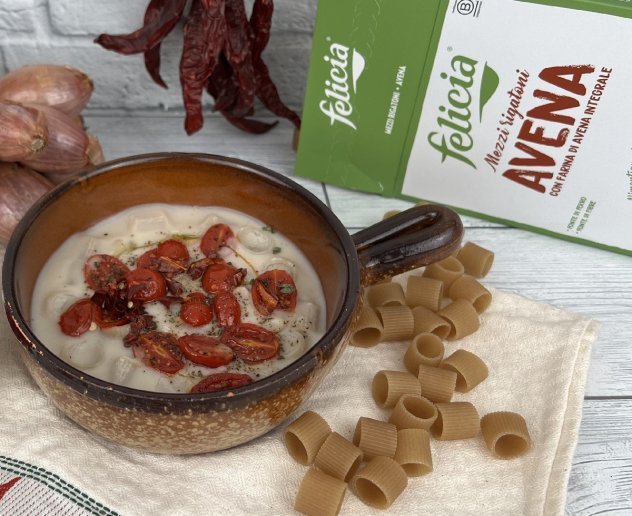
Can you think of those simple flavours that spark memories?  Oat pasta with cannellini beans is the perfect combination of traditional flavours and a touch of novelty.

One of the most typical dishes of Italian cuisine is in fact Pasta e fagioli (pasta and beans), a recipe often prepared with Borlotti beans and the addition of lard or bacon, which in the past were useful to give the necessary energy to face the hard work in the fields.

Instead, this version of Pasta e fagioli uses cannellini beans combined with oat pasta, where the wheat protein, gluten, is replaced by the high protein content in oat. Remember that beans are a valuable source of complex carbohydrates, plant proteins, fibre and are cholesterol-free, so the consumption of legumes is always a valuable ally in a balanced diet.

The flavour variation is the presence of sautéed cherry tomatoes with aromatic herbs that transform a classic taste into a fresher, juicier one.

If you love beans and tradition, try my Pisarei e fasò.

Oat pasta with cannellini beans

carbohydrates 13.63g per 100g

Mezzi-rigatoni-di-avena-ai-cannellini

Ingredients for 4 servings

  • 500g boiled cannellini beans (about 180g dry beans)
  • 240g cherry tomatoes
  • 140 g Oat pasta Felicia**
  • 1 shallots
  • 2 cloves of garlic
  • extra virgin olive oil
  • dried sweet pepper or Crusco pepper
  • bay leaf
  • oregano
  • thyme
  • rosemary
  • chilli pepper
  • salt and pepper

**Ingredients specific for celiacs

*Ingredients whose labels must read “gluten free” (or, in Italy, present on  Prontuario AIC)

Preparation

  1. Soak the cannellini beans for at least 12 hours, then boil them slowly in plenty of water with the addition of a bay leaf and, if available, a piece of Kombu seaweed to facilitate the beans’ future digestibility. Drain the beans and keep the cooking water.
  2. Cut the cherry tomatoes in half and sautée them for a few minutes on high heat in a non-stick pan with a little extra virgin olive oil, a clove of garlic cut in half, a chilli pepper and chopped herbs.
  3. Put a drizzle of extra virgin olive oil in a pan, brown a finely chopped shallot and a clove of garlic and add the cooked cannellini beans, cover with plenty of cooking water or vegetable stock and leave them to take on flavour for 10 minutes.
  4. Keep a few tablespoons of cannellini beans aside and blend the rest with an immersion blender, then reassemble the bean soup.
  5. Cook the oat pasta in plenty of salted water, drain and pour it into the cannellini soup, then complete the dish: place the pasta and beans on individual plates, complete with the herb flavoured tomatoes, a grinding of pepper, a drizzle of oil and some chopped dried sweet pepper or Crusco pepper.

Version with gluten of Oat pasta with cannellini beans

The recipe contains only naturally gluten-free ingredients.

September is the month when summer and autumn meet, just like the ingredients that characterise it: this is what you are going to discover in September Salads.

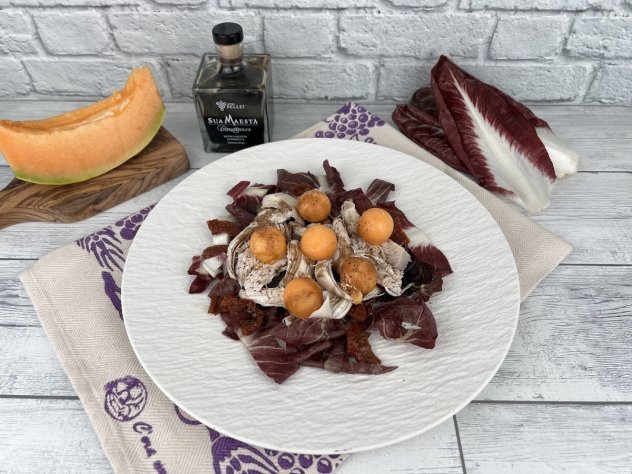
So what are the September salads? First of all, a tasty Chicken salad with radicchio and melon balls that is also perfect for your lunch box to take to the office as a balanced and light meal, or it can be a nice dinner to ensure a quiet night.

The second recipe is tasty and colourful, versatile and suitable for meals at home or away from home, the Salad of citrus flavoured cherry tomatoes with Venere rice introduces us to the quintessential winter fruit, i.e. oranges, which I have used here together with lemon to flavour the cherry tomatoes and make them really special.

So more colours to cheer us up into the less sunny days of September.

If you fancy some richer salads, check out the May and its fortified salads.

Chicken salad with radicchio and melon balls

carbohydrates 3.3g per 100g – 8.93g per serving

Insalata-di-pollo-al-radicchio-e-sfere-di-melone

Ingredients for 4 servings

  • 500g chicken breast
  • 280g melon
  • 180g red radicchio
  • 120g dried tomatoes in olive oil*
  • extra virgin olive oil
  • Aged Balsamic Vinegar of Modena
  • sage
  • bay leaf
  • 1 teaspoon green peppercorns
  • 3 cardamom berries
  • 1 star anise berry
  • salt and pepper

Preparation

  1. Put a pan of water on the stove with a few sage leaves, a bay leaf, cardamom, star anise, green pepper and salt, and boil the chicken breast in it for 20 minutes. Once cooked, leave the chicken to cool in its stock.
  2. Assemble your salad by cutting the radicchio into strips and placing it on the bottom of the plate. Flavour it with the dried cherry tomatoes cut into strips, thread the cooled chicken over it and complete with melon balls.
  3. Season with a pinch of salt and pepper and drizzle with a little extra virgin olive oil and balsamic vinegar.

Salad of citrus flavoured cherry tomatoes and Venere rice

carbohydrates 13.7g per 100g – 39.79g per serving

Insalata-di-pomodorini-agli-agrumi-e-riso-Venere

Ingredients for 4 servings

  • 600g mixed coloured cherry tomatoes
  • 140g Venere rice
  • 120g Greek feta cheese
  • 80g pitted green olives*
  • 80g pitted black olives*
  • 1/2 orange with edible peel
  • grated lemon peel
  • basil
  • extra virgin olive oil
  • salt and pepper

*Ingredients whose labels must read “gluten-free” (or, in Italy, present on  Prontuario AIC)

Preparation

  1. Boil the Venere rice in lightly salted water and drain when al dente.
  2. Cut the cherry tomatoes in halves or quarters, add the sliced olives and season for 15 minutes with orange slices and grated lemon peel.
  3. Put the Venere rice in the salad bowl, cover it with the cherry tomato and olive mixture after removing the orange slices. Season with a drizzle of oil and some freshly-ground pepper (no need for salt as the salad contains salty ingredients) and complete with crumbled feta cheese and a few basil leaves.


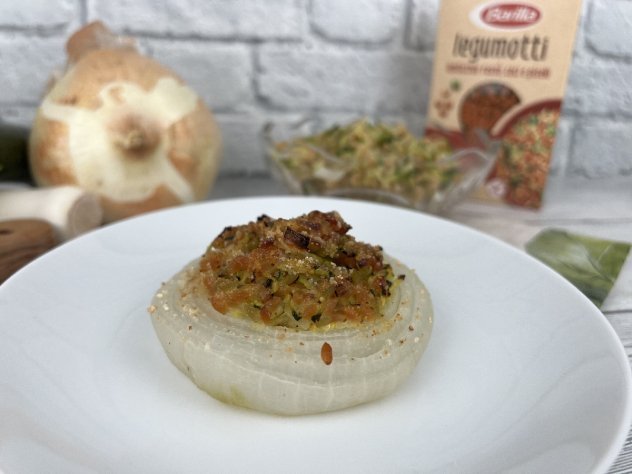
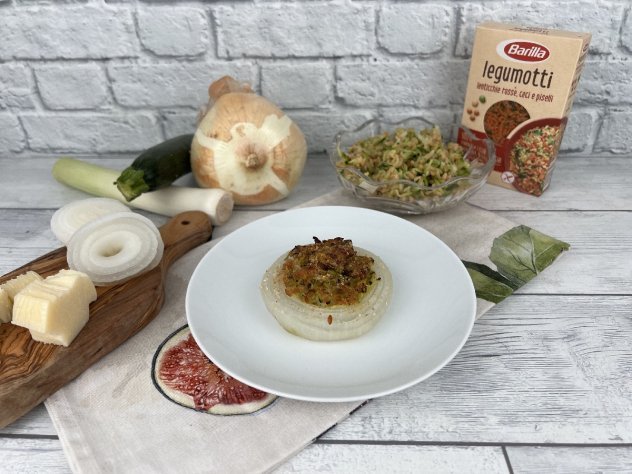
September is one of the months in which the Giarratane onions, the sweet, extra-large Sicilian onions that are perfect for stuffing and preparing in a thousand ways, are harvested: try these Giarratane onions stuffed with Legumotti.

The Giarratana onion is an onion grown in the area of the municipality of Giarratana in the south-east of Sicily. Its size is variable and a single bulb can weigh up to 3 kg. Its main characteristic is sweetness, which makes this onion particularly popular and part of the traditional Italian produce (P.A.T.) list created by the Ministry of Agriculture and Forestry.

Precisely because of its sweetness, this onion is also often eaten raw, but it is excellent with all types of cooking: boiled, grilled and baked au gratin.

Stuffed with my beloved Legumotti topped with lots of vegetables and a touch of melting cheese, it is a perfect main course for people affected by diabetes and coeliac disease for both lunch and dinner.

If you like Legumotti, try them in the Legumotti salad with caramelised Tropea onion.

Giarratane onions stuffed with Legumotti

carbohydrates 13.13g per 100g

cipolle-giarratane-ai-legumotti

Ingredients for 4 servings

  • 4 Giarratane onions of about 350g each
  • 180g courgettes
  • 150g leek
  • 120g Barilla Legumotti*
  • 50g sharp Provolone cheese
  • breadcrumbs*
  • extra virgin olive oil
  • oregano
  • salt and pepper

**Ingredients specific for celiacs

*Ingredients whose labels must read “gluten free” (or, in Italy, present on  Prontuario AIC)

Preparation

  1. Peel and trim the Giarratane onions then cut them in half horizontally.
  2. Put a pan of water on the heat, when it comes to the boil throw in the Giarratane onions cut in half and boil them for 5 minutes. Drain them with a skimmer and lay them on a cutting board to dry.
  3. Chop the leek very finely and sweat it in a non-stick pan with a little oil. Add grated sharp Provolone cheese and stir to melt.
  4. Use, if you like, the water used to blanch the onions to cook the Legumotti for 9 minutes, then drain and throw them into the non-stick pan with the vegetables; stir and season with salt and pepper.
  5. Remove some internal layers of the onions to form a hollow for the filling; use the inside of the onions for any other preparation (sauces, onion stuffing, caramelised onions, etc.).
  6. Stuff the emptied onions with the Legumotti, sprinkle with breadcrumbs and a drizzle of oil and put in a convection oven preheated to 200°C for 15 minutes to gratin.
  7. Serve the stuffed onions warm.

cipolle-giarratane-ai-legumotti

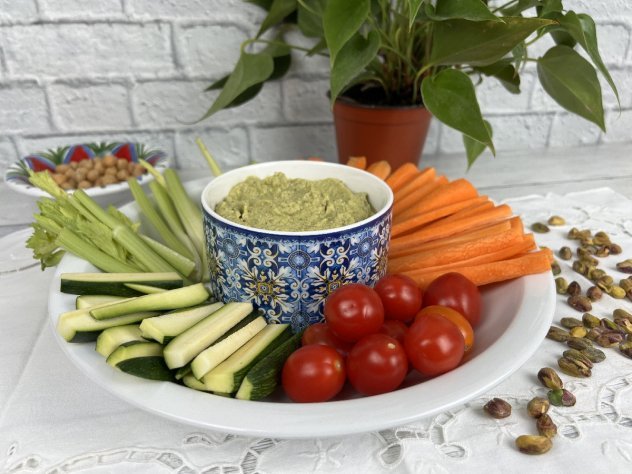
For the month of August, I thought of a salad ideal for sharing with friends: Pinzimonio with pistachio and courgette hummus.

Once you have prepared this delicious hummus, you can use it not only to accompany many seasonal vegetables, but also to top bruschettas or season a pasta dish: a recipe with a thousand possibilities!

Pinzimonio can be used throughout a meal, i.e. it can be an appetiser, a main course or a side dish, it all depends on your appetite and the other courses you have planned for the meal.

You could serve Pinzimonio with Meat mini-pizzas.

pinzimonio-hummus-di-ceci-e-zucchine

Pinzimonio with pistachio and courgette hummus

 5.7g carbohydrates per 100g hummus

Ingredients for 6-8 servings

  • vegetables to taste (courgettes, carrots, celery, cherry tomatoes, etc.)
  • 200g courgettes
  • 150g cooked chickpeas
  • 40g pistachio nuts
  • lemon juice
  • extra virgin olive oil
  • water
  • salt and pepper

**Ingredients specific for celiacs

*Ingredients whose labels must read “gluten-free” (or, in Italy, present on  Prontuario AIC)

Preparation

  1. Place courgettes, chickpeas, pistachios and lemon juice in a blender and start blending. While continuing to blend, gradually add water and oil to obtain a creamy texture, then season with salt and pepper.
  2. Cut the vegetables into sticks, while leaving the cherry tomatoes whole and arrange everything in a serving dish with the hummus in a bowl in the centre or put the hummus in small single-serving bowls for each of the diners.

pinzimonio-hummus-di-ceci-e-zucchine

Version with gluten of Pinzimonio with pistachio and courgette hummus

The recipe contains only naturally gluten-free ingredients.

Couscous combined with fish is a great classic, try it in this fresh version for summer: Couscous with octopus and avocado.

You can also indulge in the choice of the type of gluten-free couscous, the Bia company offers a wide range: maize and rice, chickpeas, peas, chickpeas and red lentils, buckwheat are all available options, although with this seasoning I would avoid buckwheat whose characteristic taste would risk covering that of fish.

Couscous combined with fish and vegetables, besides being a source of good fats such as avocado, makes this recipe a perfect one-course meal for lunch or dinner.

If you like couscous in summer, try also Couscous with prawn and courgette curry.

cous-cous-con-polpo-e-avocado

La ricetta del Couscous with octopus and avocado

15.3g carbohydrates per 100g

Ingredients for 4 servings

  • 1kg approx. octopus
  • 200g BIO Corn and rice couscous**
  • 200g courgettes
  • 100g avocado
  • 1 onion
  • 1 carrot
  • 1 celery stalk
  • 1 clove of garlic
  • lemon peel
  • extra virgin olive oil
  • mint
  • parsley
  • salt
  • pepper

**Ingredients specific for celiacs

*Ingredients whose labels must read “gluten-free” (or, in Italy, present on  Prontuario AIC)

Preparation

  1. Cook the octopus in a large saucepan with onion, carrot, celery and garlic, putting a few centimetres of water on the bottom and covering with a lid. Cook over low heat for about 45 minutes.
  2. Prepare the couscous according to the instructions on the packet, i.e. by soaking it with an equal amount of hot water.
  3. Julienne cut the courgettes and sauté them for a few minutes in a non-stick pan with a little oil. Season with salt and pepper.
  4. Separate the couscous well with a fork and season it by adding the courgettes, chopped mint and parsley, grated lemon zest, salt and pepper and a drizzle of extra virgin olive oil.
  5. Assemble the plates by placing the couscous on the bottom and the chopped octopus and avocado on top. Complete to taste with another drizzle of extra virgin olive oil and, if necessary, salt and pepper.

cous-cous-con-polpo-e-avocado

Version with gluten of Couscous with octopus and avocado

Replace the Corn and rice couscous with wheat couscous, while all other ingredients are naturally gluten-free.