Tag Archive for: naturalmente senza glutine

Full speed ahead: Stuffed omelette roll

How many times have you arrived home at dinner time without having any ideas of what to prepare? The Summer omelette roll is a solution to many situations.

In fact, all you need is fresh eggs and a little grated Parmesan cheese to prepare the magical and tasty omelette disc, then you can create the stuffing according to what you find in your fridge and pantry: each time you can serve a roll with a different flavour and colour.

My advice is to always try to use a good amount of vegetables for the stuffing in order to balance the protein- and fat-rich omelette with vitamins and fibre. You can then serve it with a nice slice of wholemeal bread to get the right amount of carbohydrates.

If you are a fan of omelettes, try this Stuffed Omelette.

rotolo-di-frittata-estivo

Summer omelette roll

 carbohydrates per 100g negligible

Ingredients for 4 servings

  • 7 eggs
  • 125g cow’s milk mozzarella
  • 40g Parmigiano Reggiano cheese, grated
  • 1 tomato
  • a handful of lettuce
  • 1 tbsp olive pâté*
  • extra virgin olive oil
  • salt and pepper

**Ingredients specific for celiacs

*Ingredients whose labels must read “gluten-free” (or, in Italy, present on  Prontuario AIC)

Preparation

  1. Beat the eggs well in a bowl with a fork, add the Parmesan cheese and a pinch of salt and pepper.
  2. Put a little oil in a 25-28cm diameter non-stick frying pan and pour in the egg mixture. Cook it over medium heat and, when it has set, turn it over with the help of a lid.
  3. Place the omelette disc on a board and stuff it: spread the lettuce, place the sliced tomato and  mozzarella on top, then the olive pâté evenly distributed.
  4. Roll the omelette tightly, then cut the cylinder in half to serve so that the colours of the ingredients inside can be seen.

Version with gluten of Summer Omelette Roll

The recipe contains only naturally gluten-free ingredients.

May brings us two ideas for what we call fortified salads, i.e. salads that are nutritionally complete and therefore perfect as one-course meals for lunch in the office, at school or for dinner.

The rule applies that ingredients must be in season in order to maximise their nutritional contribution, so asparagus and mixed greens, as well as frozen edamame beans, will be the vegetable protagonists of the dishes.

The protein part of our salads is mainly of animal origin, being represented by grilled chicken and egg, not forgetting the contribution of edamame beans, an excellent source of plant protein.

As always, fibre is our best ally and is provided not only by vegetables, but also by buckwheat grains, an excellent alternative to rice and cereals containing gluten (for those who can eat them).

So here’s how to prepare reinforced salads that you can put in your lunch box for an absolutely perfect lunch out.

Discover more ideas for your salads here!

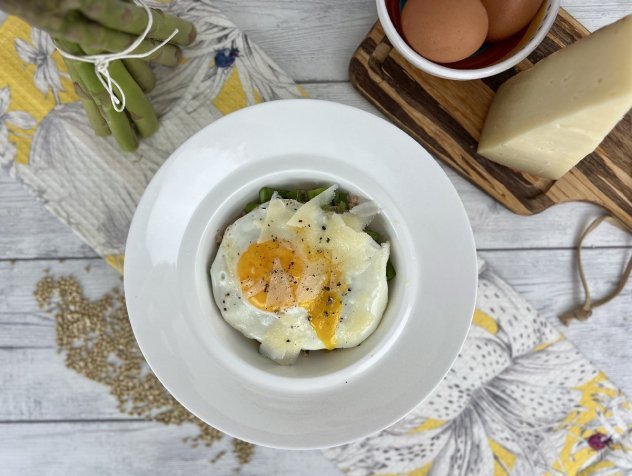
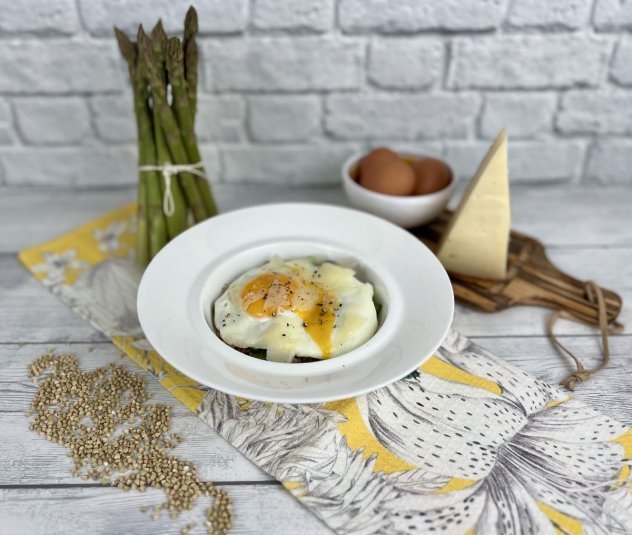
Buckwheat and asparagus salad

carbohydrates 24.48g for the whole serving

insalata-di-saraceno-e-asparagi

Ingredients for 1 serving

  • 4 asparagus
  • 40g buckwheat grains*
  • 1 egg
  • 15g Pecorino Romano cheese in very thin slices
  • 1 teaspoon of lemon juice
  • extra virgin olive oil
  • salt and pepper

*Ingredients whose labels must read “gluten-free” (or, in Italy, present on  Prontuario AIC)

Preparation

  1. Cook buckwheat grains in lightly salted boiling water, then drain and set aside.
  2. Place 4 asparagus in a container suitable for microwave cooking and cook for 4 minutes at maximum power.
  3. Put a drizzle of extra virgin olive oil in a non-stick pan, break the egg into it and cook for a few minutes until the egg white is cooked.
  4. Assemble the salad by placing the buckwheat grains in a soup plate, add the asparagus cut in pieces; dress with a sauce prepared whisking a tablespoon of extra virgin olive oil, a teaspoon of lemon juice, salt and pepper.
  5. Lay the hot egg on top of the asparagus and complete with very thin slices of Pecorino Romano cheese and a grinding of pepper.insalata-di-saraceno-e-asparagi

Chicken and edamame salad

carbohydrates15.77g for the whole serving

insalata-di-pollo-ed-edamame

Ingredients for 1 serving

  • 120g chicken breast
  • 50g edamame beans
  • baby lettuce or mixed greens
  • 15g raisins
  • 2 tablespoons of soy milk*
  • 1 tablespoon of pumpkin seeds
  • 1 teaspoon of mayonnaise*
  • 1 teaspoon of lemon juice
  • salt and pepper

*Ingredients whose labels must read “gluten-free” (or, in Italy, present on  Prontuario AIC)

Preparation

  1. Boil the edamame beans in lightly salted water for a few minutes, then  throw them in cold water. Drain them and set them aside.
  2. Grill the chicken breast. Cut it into strips horizontally.
  3. Prepare the dressing by putting the mayonnaise, lemon juice and soy milk in a small bowl, mix well with a fork and season with salt and pepper.
  4. Place the desired amount of lettuce or mixed greens in a soup plate, add the edamame beans and lay the chicken on top. Season with the mayonnaise emulsion, then top with raisins and pumpkin seeds.

insalata-di-pollo-ed-edamame

Version with gluten of Fortified salads

These recipes contain only naturally gluten free ingredients, so no adaptation is necessary for their version with gluten.

I have already introduced you to the black cherry liqueur Ratafià by the artisan company Scuppoz so today you will discover the second liqueur I love to use in the kitchen, namely the liquorice liqueur which I propose in this Almond panna cotta with liquorice reduction, which is also lactose-free.

Liquorice is Abruzzo’s black gold. In the past, this root was given to children instead of candies because it was just as sweet and available in nature along the paths from the mountains down to the sea.

Scuppoz Liquorice Liqueur is produced in a completely artisan way by infusing liquorice roots, which give the liqueur an unmistakable and harmonious flavour (here you can find the AIC rules for choosing gluten-free liqueurs). The ideal temperature for enjoying this liqueur is the refrigerator temperature, as is also the case in my recipe in which, however, we no longer have alcohol in order to serve it to children too!

Follow Scuppoz’s news on social media (https://www.instagram.com/scuppoz_spirits/ ): you won’t regret it!

panna cotta alle mandorle

Almond panna cotta with liquorice reduction

41.35g carbohydrates per 100g of Panna cotta without liquorice reduction

Ingredients for 4-5 servings

  • 200g vegetable cream*
  • 150g almond milk*
  • 70g sugar
  • 8g gelatine sheets*

Ingredients for the liquorice reduction

  • Scuppoz liquorice liqueur*

**Ingredients specific for celiacs

*Ingredients whose labels must read “gluten-free” (or, in Italy, present on  Prontuario AIC)

 Preparation

  1. Soak the gelatine in cold water.
  2. Put almond milk, vegetable cream and sugar on the stove to heat.
  3. Wring the gelatine and add it to the mixture over the heat so that it melts, then stir well and remove from the heat.
  4. Fill moulds of the desired shape, then place them in the refrigerator for a few hours so that the mixture solidifies.
  5. Prepare the liquorice liquor reduction. Put the desired amount in a small pan and when it comes to the boil, let it reduce for a few minutes, then allow it to cool completely. You can decide to put it in the refrigerator until the momento of serving.
  6. Remove the Panna cotta from the moulds and place it directly on the serving plate, then douse it with the liquorice liqueur.

panna cotta alle mandorle

Version with gluten of Almond panna cotta with liquorice reduction

The recipe contains only naturally gluten free ingredients, so no adaptation is necessary for its version with gluten.

If you want to surprise your friends with simplicity, this Tomato Bruschetta sauce can be an idea: with 3 ingredients and the aromatic herbs from your garden, you can have a topping that is as irresistible as cherries!

With so few ingredients, the secret for success is their quality and especially peeled tomatoes make the difference. My recommendation is for you to try Ciro Flagella Peeled Tomatoes that you will never forget after trying once.  Then, if you really want a treat, prepare 2 sauces following the same procedure, but using red tomatoes for one sauce and yellow tomatoes for the other: it will be like having a cone of Gelato with two scoops of your favourite flavours.

For a perfect Bruschetta sauce, remember to remove all the seeds from the peeled tomatoes and avoid pieces of aromatic herbs: use a specific bag or container for the herbs so that they can release their essential oils, but not lose leaves or seeds.

And if you have time to chop some extra shallot, make some extra sauce and store it in a jar in the refrigerator to serve with starters or main courses.

ingredienti

Tomato Bruschetta sauce

6.6g carbohydrates per 100g

Ingredients for 4 servings

  • 500g peeled tomatoes
  • 150g shallot
  • 50g extra virgin olive oil
  • 2 cloves of garlic
  • 1 bunch of aromatic herbs (rosemary, thyme, marjoram, summer savoury)
  • extra virgin olive oil, chilli pepper, garlic, salt

Preparation of the Bruschetta sauce

  1. Cut the peeled tomatoes in half, remove the seeds and dice the flesh.  Chop the shallot finely and sweat it with 50g olive oil, then add the diced tomato, the garlic and the aromatic herbs bouquet in a bag or colander so that it just releases its aroma.
  2. Allow to cook over low heat until the tomato has become creamy and the liquid has completely evaporated, therefore at least 1 hour.
  3. Use the sauce to top Bruschettas or with meat or fish.

salsa di pomodori gialli

Version with gluten of Tomato Bruschetta sauce 

The recipe contains only naturally gluten free ingredients, so no adaptation is necessary for its version with gluten.

Do you remember the book by my blogger friend Raffaella Fenoglio of the blog Tre civette sul comò entitled ’50 Shades of Coffee‘? Here is the second mouth-watering recipe: Coffee Tomini with yoghurt sauce and golden apples. And if you love coffee, try also Gnudi with coffee.

A chat with Raffaella

  1. Why a book about coffee?

Coffee is a cue that all three of us liked: myself, Silvia Casini and Francesco Pasqua. It is a universal element, with which music, literature and film are imbued. We added history, curiosities, caffeomancy, recipes, historical cafés, coffe painting, etiquette, star constellations, horoscopes, aphorisms… and many many experts and in the end we had collected so much material that we could have written an encyclopaedia! The difficult thing was to cut, trim, decide what was less interesting. The editor then worked on the infographics and the end result exceeded our expectations.

  1. Is there a recipe in the book that you are particularly fond of?

Let’s face it, the difficult part was the food & wine part: we didn’t want to lapse into banal recipes – you won’t find Tiramisù – and we imagined a complete menu based on the ‘wine from Arabia’. My favourite recipe, among the 50 suggestions, is Cheese with coffee fruit chutney.  We paired this recipe with a SAUVIGNON BLANC SESTO 21 from Casata Mergè. A wine from Latium, from 100% Sauvignon Blanc grapes, structured, suitable for accompanying special cheeses.

  1. In your latest publications, cooking is an integral part of other art forms such as poetry, literature and cinema. How did the idea for this approach come about and what else is boiling in the pot?

In 2020, together with Silvia Casini and Francesco Pasqua, we drew up some literary projects in which we could merge our skills – namely cinema, poetry, literature, music, food and wine. To our great joy, many of those projects, once they landed on the tables of publishers, were successful! So for the following two years you’re going to see some great things! Very interesting and eclectic volumes are coming out. Furthermore, the three of us, taken individually, are fiction writers and have one book each out.

  1. Our first meeting took place when your book Indice GliceAmico came out, a subject that is particularly dear to me because of the attention that diabetes requires of us, where did your interest in this subject come from?

Diabetes has touched my family. This stimulated me to focus on low glycaemic index recipes but until the cookbooks linked to my blog came out, I had no idea of how widespread diabetes was, especially among children.  I find your online cooking courses supported by a clinical nutritionist very interesting. This is the way to inform in the best way without frightening patients and their families.

Coffee Tomini with yoghurt sauce and golden apples

4.45g carbohydrates per 100g

Ingredients for 4 servings

  • 4 pieces of Tomino cheese of about 90g each
  • 200g apples
  • 125g plain fat-free Greek yoghurt
  • 1 cup of strong coffee
  • 30g ginger
  • 1 organic lemon, zest and juice

Preparation

  1. First put Tomini in a bowl to marinate with the cup of coffee and the peeled, sliced ginger. Let them rest for about an hour in the refrigerator.
  2. Peel the apple, cut it into segments and brown them in a little extra virgin olive oil in a non-stick pan until lightly browned on both sides.
  3. Remove the Tominos from the marinade, blot them with kitchen paper to remove excess coffee and cook them in a non-stick pan or on a grill.
  4. Prepare the yoghurt sauce by simply flavouring it with grated lemon zest and a few teaspoons of juice.
  5. Serve Tomini hot, accompanying them with the yoghurt sauce and a few apple slices.

tomini al caffè con salsa di yogur e mele dorate

Version with gluten of Coffee Tomini with yoghurt sauce and golden apples

The recipe contains only naturally gluten free ingredients, so no adaptation is necessary for its version with gluten.


Are you looking for light summer recipes? This Un-tuna veal will not disappoint you. But why un-tuna? Because it looks like veal with tuna sauce, which is a very traditional north Italian dish, but instead of tuna I have used an aubergine cream prepared only with vegetables and grated Pecorino cheese to prepare the recipe.

Aubergine cream is an idea that you can use not only to accompany veal, but also to top delicious Bruschettas, as a cream for vegetarian lasagna or as a sauce for a pasta dish, perhaps complemented by other diced vegetables. In this way, we can avoid using mayonnaise, which, although fresh and tasty, is very high in fat and calories, which, especially in summer, makes us very ‘uneasy’.

The final touch to the dish is definitely given by the capers: try Salina capersa product that has also become a Slow Food Presidium and give a flavour boost to all preparations.

More light summer recipes? Try Cherry tomatoes with bread and anchovies.

Un-tuna veal

negligible carbohydrates per 100g

Ingredients for 6-8 servings

  • 900g rump of beef
  • 2 large aubergines (approx. 500g pulp once cooked)
  • 40g Pecorino cheese, grated
  • 35g onions
  • 1 clove garlic
  • extra virgin olive oil
  • capers
  • salt and pepper
  • vegetables for cooking the veal (1 carrot, 1 celery leg, 1 onion, 1 clove of garlic, parsley)

Preparation

  1. Cook the meat loin in salted water with the vegetables cut into large pieces for about 1 hour, skimming off the stock from time to time. Let it cool down.
  2. In the meantime, cut the aubergines in half lengthwise, score the flesh to form a sort of grid and drizzle with a little extra virgin olive oil. Lay the aubergines on a baking tin covered with parchment paper with the cut side down. Bake the aubergines in a convection oven preheated to 200°C for 40 minutes.
  3. In a small non-stick pan, put a little oil with the chopped onion and the clove of garlic and brown them lightly; remove the garlic and put the cooked onion in a blender.
  4. With a spoon, scoop out the aubergine flesh and put it in the blender with the onion; purée, then add the grated Pecorino cheese and season with salt and pepper.
  5. Slice the rump and arrange the slices on a serving platter or individual plates, then season the meat with the aubergine cream and desalted capers. Serve with a grinding of pepper, a drizzle of oil and, if desired, fresh vegetables.

Finto vitello tonnato

Version with gluten of Un-tuna veal

The recipe contains only naturally gluten free ingredients, so no adaptation is necessary for its version with gluten.

When asparagus is in season, we can indulge in cooking it in a variety of ways, and here is an idea for a vegetarian one-course meal: Dairy-free asparagus loaf.

For someone like me who comes from a family of producers of Parmigiano Reggianogiving up cheese is not easy, but I am often on the lookout for ideas for recipes that do not include it as an ingredient precisely to avoid the risk of consuming too much of it, as I love cheese!

Having potatoes as the main ingredient, this recipe with asparagus is a dish that provides a good dose of carbohydrates combined with plenty of fibre due to the presence of so many vegetables, so simply accompanying it with a side dish of fresh vegetables makes for a complete meal.

And remember that asparagus can be cooked in the microwave for few minutes to retain all its flavour! Read how in the recipe procedure.

Dairy-free asparagus loaf

13.28g carbohydrates per 100g

Ingredients for 6 servings

  • 470g peeled potatoes
  • 350g asparagus
  • 210g onions
  • 100g leek
  • 2 egg whites
  • 15g breadcrumbs**
  • extra virgin olive oil
  • Crusco pepper to taste
  • oregano, mint
  • salt and pepper

**Ingredients specific for celiacs

*Ingredients whose labels must read “gluten-free” (or, in Italy, present on  Prontuario AIC)

Preparation of Dairy free asparagus loaf

  1. Cut the potatoes into small pieces and boil them in lightly salted water until soft.
  2. Mash the potatoes while they are still hot in a bowl and set them aside.
  3. Slice onions and leeks and fry them in a non-stick pan with a drizzle of extra virgin olive oil, season with salt and pepper and cook.
  4. Cook the asparagus. You can choose to cook the asparagus in the microwave oven by making a layer of spears in a container and cooking it for 4 minutes at 600W. Alternatively, cook the asparagus in a non-stick pan with a drizzle of extra virgin olive oil and a few tablespoons of water until soft.
  5. Put the mashed potatoes in a bowl, add the onions and leeks, chopped asparagus and egg whites; mix everything together, season with oregano, mint, pepper and salt.
  6. Lightly grease an oven dish, pour in the potato and vegetable mixture, flatten the surface and sprinkle it with breadcrumbs. Top with a drizzle of oil and cook au gratin in a convection oven preheated to 200°C until a golden crust forms on the surface.
Il polpettone con asparagi senza formaggio pronto per essere gustato

The Dairy free asparagus loaf ready to be enjoyed

Version with gluten of Dairy free asparagus loaf

Replace gluten free breadcrumbs with standard breadcrumbs; no other adaptation is needed.

Naturally gluten-free chocolate sweets with candied violets for Valentine’s Day: the candied flower from Parma to give a sweet scent to the palate.

Violette

Violets

Candied flowers and chocolate

Violets are the symbol of spring when their unmistakable colour begins to paint the still cold earth with purple and white brush strokes. This little flower, delicate in form and colour, bursts forth with its powerful scent to announce the magic of nature’s reawakening, which repeats itself every year like a rebirth.

Violets arrived in Parma thanks to Marie Louise of Austria, the second wife of Napoleon Bonaparte, who was Duchess of the Duchy of Parma, Piacenza and Guastalla between 1814 and 1847. The Duchess’s passion for this flower meant that many violet cultivations were planted in the area , which the monks of the Convento dell’Annunciata used to obtain the essence through steam distillation of flowers and leaves for the Duchess’s exclusive use. The fragrance created using the precious essential oil soon became famous throughout Europe under the name of Parma Violet.

Even today, at Marie Louise’s behest, her tomb in Vienna is always adorned with violets.

If the use of the violet in perfumery is no surprise, its use in cooking is certainly less well known, especially in the form of a candied sweet, made with painstaking care, artistry and charm by a few skilled hands.

Candying

The production of candied violets is closely linked to nature because, as we all know if we like to pick these fragrant flowers, their appearance along the paths and in the meadows varies according to the temperature, so the few companies dedicated to their processing have their binoculars aimed at spotting the mauve-coloured dots popping up on the horizon.

To be candied, the flowers must be quite large – as the process will reduce their size – and perfectly intact. Once carefully gathered into bunches, the violets are sprayed with fresh water to gently wash them, the stems are removed one by one, then the petals are brushed by hand with glucose syrup before being coated with caster sugar. Covered with sugar, violets are placed in tanks containing glucose and sugar, called Brillantiere, where they crystallise, taking on the appearance that characterises the finished product.

The most striking thing when eating a violet is the scent: a truly unusual experience. Personally, I only discovered in adulthood that these sweets on sale in Parma’s traditional pastry shops were real flowers treated with such passion and not sugar souvenirs for tourists!

Le violette candite sul dolcetto

The candied violets on the cake

In the month of love, a flower to eat.

I wanted to take the opportunity of Valentine’s Day, which I love celebrating in the Anglo-Saxon way (i.e. celebrating love in all its forms and not just between married couples or fiancés), to share with you this traditional preparation from my hometown because I thought you might find it nice to give a ‘bouquet’ of violets to use to make deliciously beautiful and fragrant, mouth-watering treats, to be consumed sparingly when approaching rich and precious things… like a chocolate treat! If you prefer to bake a cake, use candied violets to decorate the Lovers’ Sacher.

Where to find candied violets

In most confectioner’s shops in Parma, especially during the first months of the year, pretty packages of candied violets will pop up, ideal for having a little piece of tradition in a sweet. To be on the safe side, you can enter the realm of confectionery enthusiasts (both physical and online), the shop Dalla A allo Zucchero in the city centre, where you will find any ingredient or equipment to make your cakes, including these beautiful violets.

Chocolate sweets with candied violets

carbohydrates of shortbread bases 53.38g per 100g

carbohydrates of chocolate mousse 22.12g per 100g

Ingredients for the shortbread for 12 sweets

  • 110g wholemeal rice flour*
  • 65g butter
  • 65g brown or coconut sugar
  • 35g almond flour*
  • 25g potato starch*
  • 25g tapioca starch*
  • 10g bitter cocoa powder*
  • 1 egg
  • grated orange peel or orange paste*
  • 1 pinch of salt

Ingredients for the chocolate mousse

  • 200g fresh cream
  • 100g dark chocolate*
  • 50g milk
  • 30g egg white (about 1)
  • 30g sugar
  • 1/2 teaspoon lemon juice;
  • grated coconut*
  • candied violets*

*Ingredients whose labels must read “gluten-free” (or, in Italy, present on  Prontuario AIC)

Preparation of shortbread and mousse

  1. Prepare the shortbread by putting all the ingredients in the bowl of the planetary mixer; mix for a few minutes until the mixture is blended. Form a ball, cover it with cling film and place it in the refrigerator for the time needed to prepare the chocolate mousse
  2. Chop the dark chocolate finely; bring the milk to the boil and pour it over the dark chocolate, stirring with a whisk so that the chocolate melts completely.
  3. Whip the egg whites until stiff and add the sugar, mixing it in. Add this meringue to the melted chocolate, which will still be warm.
  4. Whip the cream until it has the texture of a Greek yoghurt (semi-whipped), then add this to the chocolate and egg white mixture. Place the mixture in the bowl of the planetary mixer and whip it for about 2 minutes with the whisk so that it is creamy, but soft. Allow to rest in the refrigerator for the time needed to prepare the shortbread bases.

Assembly of chocolate sweets

  1. Roll out the shortbread to a thickness of about 5mm with a rolling pin and cut out discs of the diameter corresponding to the tartlet mould (I use the non-stick mould for 12 muffins by Le Creusetit is very convenient because it doesn’t need to be greased), make them fit well in the hole, pierce the bottom with a fork and bake in a static oven preheated to 180°C for 10-13 minutes.
  2. If you have some shortbread left, cut some heart-shaped biscuits that you can use to decorate the sweets.
  3. Take the tartlets out of the oven and allow them to cool completely.
  4. Take a pastry bag and choose the tip you want: I chose the smooth 1.5cm diameter tip. Remove the mousse from the refrigerator, fill a pastry bag and top the tartlets as desired. Sprinkle with grated coconut and complete with a candied violet and a small biscuit.

Dolcetti per san valentino

Version with gluten of Chocolate sweets with candied violets

The recipe contains only naturally gluten free ingredients, so no adaptation is necessary for its version with gluten. If you want to use wheat flour, replace rice flour, potato starch and tapioca starch with equal amounts of wheat flour.

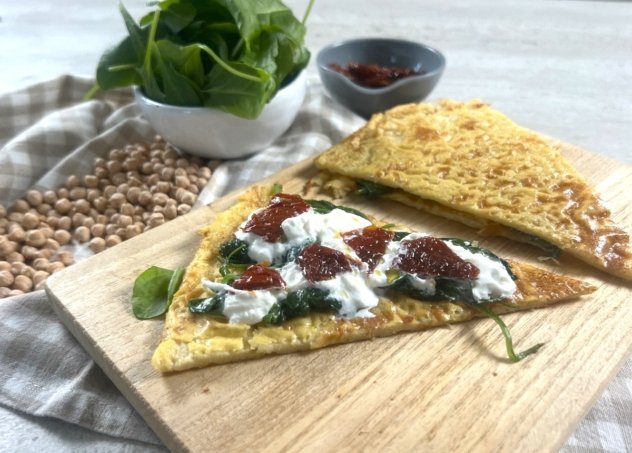
We finally have a chance to get out of the house and enjoy nature, the temperatures have risen and the colours around us charge us with energy, so the plates get coloured too: Pink chickpea hummus with chickpea Sfogliette.

This is the effect that colours have on me. Chickpea hummus turns pink to accompany a gift from Sarchio: delicious chickpea Sfogliette that have only good qualities as they are organic, gluten free, baked in the oven and with just the right amount of carbohydrates for a snack or a nice aperitif with friends.

I barely finished taking the photos after recording the video recipe before the family gathered around the small bowls to fill the little crispy sheets with creamy hummus, impatiently waiting for dinner.

Remember also that you can indulge in ‘colouring’ the hummus with your favourite flavours by using vegetables or spices to make it even tastier.


Pink chickpea hummus with chickpea Sfogliette

10.64g carbohydrates per 100g

67g carbohydrates per 100g Sarchio chickpea Sfogliette


Ingredients 

  • 230g cooked or canned chickpeas
  • 60g water
  • 40g tahini (sesame seed cream)*
  • 30g extra virgin olive oil
  • 20g red beet
  • 20g lemon juice
  • chives, optional
  • salt and pepper
  • Sarchio chickpea Sfogliette*

*Ingredients whose labels must read “gluten-free” (or, in Italy, present on  Prontuario AIC)

Preparation

  1. Take the red beet and cook it in boiling water for about 40 minutes or until soft when pierced with the tines of a fork. Take a small amount for this preparation, while keeping the other to use as a side dish to season with oil, vinegar and salt.
  2. Put the chickpeas in a blender with all the other ingredients and blend until smooth and even.
  3. Complement this beautiful and colourful hummus with chives or other spices to taste.
  4. It is ideal to serve as a dip or topping for croutons and Bruschetta.
Il colore brillante dell'hummus di ceci

Il colore brillante dell’hummus di ceci

Version with gluten of Pink chickpea hummus with chickpea Sfogliette

The recipe contains only naturally gluten-free ingredients, so no adaptation is necessary for its version with gluten.

What to do with a free-range chicken if you have a Tajine pot in your kitchen equipment? A naturally gluten free dish to bring diabetes and celiac disease together: Turmeric and lemon chicken tajine.

Looking out of the kitchen window, a picture that changes daily according to the colours the sky takes on has been accompanying me for weeks. This is the maple tree that has lived with us since we moved in our current place, and every year in autumn it gives us palettes of colour that turn on and off depending on how the sun’s rays or the rain hit its leaves.

It was the colours of these leaves that made me think of the orange of turmeric and the yellow of lemon. Add to that the fact that my parents gave me some free-range chickens directly from the farm where they live, well, I couldn’t help but prepare a dish that is as simple as I like, but absolutely unforgettable.

And you know what? Although the colours are those of autumn, this chicken is a delight at any time of the year and with whatever side dish you are comfortable preparing.

Turmeric and lemon chicken tajine

carbohydrates per 100g negliglible

Ingredients for 4 servings

  • 3-4 chicken legs (depending on size)
  • approx. 200g stock
  • 1 tbsp extra virgin olive oil
  • 1 onion
  • 2 cloves of garlic
  • 1 tsp turmeric
  • 2 tbsp chopped parsley or coriander
  • 1 lemon
  • extra virgin olive oil
  • salt and pepper

Preparation

  1. Heat the oil in the Tajine or in a saucepan. Gently fry the thinly sliced onion and the clove of garlic for 3-4 minutes without browning them. Add the chicken pieces and brown them evenly, turning the pieces often and adjusting the heat.
  2. Add turmeric, 1 tablespoon chopped parsley or coriander, stock, lemon peel (only the yellow part) in large pieces, salt and pepper, then simmer with the lid on for about 2 hours (cooking times depend on the chicken!).
  3. If necessary, remove the lid, turn up the heat and allow the cooking juices to thicken slightly.
  4. Serve accompanying the meat with a side dish of seasonal vegetables to taste or even these Cauliflower patties.
I colori della Tajine di pollo alla curcuma e limone

The colours of the Turmeric and lemon chicken tajine

Version with gluten of Turmeric and lemon chicken Tajine

The recipe contains only naturally gluten-free ingredients.