Tag Archive for: gluten free recipes

From north to south, Italy is waiting to be rediscovered… dish by dish, story by story. It is in this spirit that my project, Tour of Italy in 20 Recipes, was born. Starting in January 2026 and continuing over the next twenty months, I will take you on a culinary journey to explore regional Italian gastronomic traditions, reimagined in a gluten-free version, with careful attention to carbohydrate sharing and the most inclusive cooking possible.

ilaria-bertinelli-giro-d-italia-in-20-ricette

Tour of Italy in 20 recipes: a monthly appointment with regional gluten-free cuisine

This is not just about recipes. Every month, I will have the pleasure of meeting virtually with friends from all over Italy through video calls, where they will share their favourite recipe: the dish they missed the most after being diagnosed with celiac disease, the flavours that evoke memories of family, celebrations, and special moments.

My role will be to turn these stories into reality: I will recreate each dish gluten-free, preserving its flavours, textures, and soul, without compromise. Each recipe will also include carbohydrate information per 100g, helping those with diabetes calculate their insulin dose for the meal.

But this project is also a rediscovery of traditional Italian cuisine. From the rustic breads of the mountains in Valle d’Aosta, to Piedmontese stuffed pastas, to the sweets of the South, each stop will be an opportunity to explore the territory, the people, and their stories, bringing to the table dishes that convey identity, culture, and affection.

The Tour of Italy in 20 Recipes is not just a culinary journey: it is a journey through memories, emotions, and sharing, designed to make you feel part of every region, every story, and every dish.

Don’t miss a single stop! Every month, a new story, a new dish, a new piece of Italy to rediscover… and to enjoy in a gluten-free version.

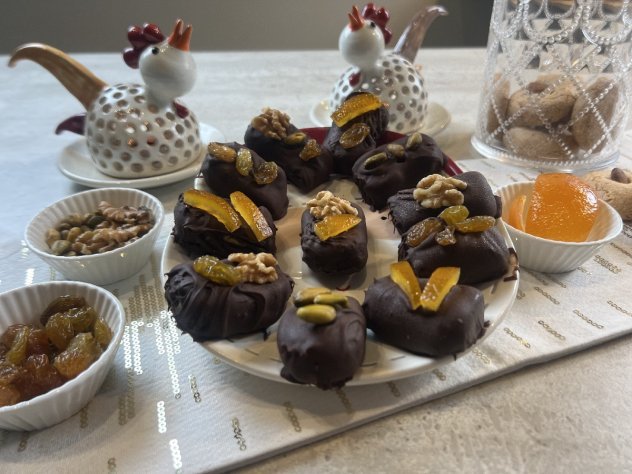
As the holiday season approaches, the desire to prepare simple yet impressive desserts grows—little treats to enjoy with a cup of tea or delightful bites to bring to the table and surprise family and friends. These gluten-free Pumpkin Bounty Bars are an easy and quick recipe, perfect for anyone looking for a Christmas sweet that brings together flavour, lightness, and a touch of festive colour.

Pumpkin, with its natural sweetness and creamy texture, makes each bite soft and comforting, while ricotta adds balance and lightness. The desiccated coconut completes the magic with its fresh, exotic note. The result? Small 25-gram treats—indulgent yet nutritionally balanced—ideal for a snack or as a mini dessert at the end of a meal.

Coated in dark chocolate and decorated with almonds, raisins, or candied orange peel, these Pumpkin Bounty Bars bring a charming mix of colours and aromas to your holiday table. They’re perfect for creating a Christmas dessert corner, enriching a festive buffet, or offering as a thoughtful homemade gift.

An inclusive, naturally gluten-free recipe that celebrates autumn flavours and the magic of Christmas with simplicity and creativity.

ilaria-bertinelli-bounty-alla-zucca

Pumpkin Bounty Bars

24.4 g carbohydrates per 100 g (without decorations)
6.1 g carbohydrates per 1 pumpkin bounty

Ingredients

  • 200 g ricotta cheese
  • 80 g desiccated grated coconut*
  • 70 g cooked pumpkin, already cleaned
  • 40 g icing sugar*
  • 150 g dark chocolate

Ingredients to decorate

  • Almonds, raisins, and orange peel

**Ingredients specific for celiacs

*Ingredients whose labels must read “gluten-free” (or, in Italy, present on  Prontuario AIC)

Preparation

  1. Mash the cooked pumpkin with a fork or blend it until smooth.
  2. Soften the ricotta in a bowl, then add the icing sugar, pumpkin purée, and finally the desiccated coconut.
  3. Shape the mixture into 25-gram bars, place them on a plate and refrigerate for at least 30 minutes.
  4. In the meantime, melt the dark chocolate over a bain-marie or in the microwave and let it cool slightly.
  5. Dip each coconut bar into the chocolate to coat it completely, lay it on a baking sheet lined with parchment paper, and decorate with raisins, almonds, or orange peel.
  6. Store in the fridge until ready to serve.

ilaria-bertinelli-bounty-alla-zucca

There are recipes that taste of home, affection, and tradition — and Grandma’s Soup with Frue is one of them. With just three simple ingredients — potatoes, pasta, and Frue cheese — it becomes the kind of comforting dish that nourishes body and soul.

I discovered this recipe in Sardinia thanks to a kind lady I met while waiting in line at a local dairy. She told me she was buying Frue, a goat-and-sheep’s milk cheese with a slightly tangy flavour, to prepare this soup for her granddaughter, who said it was her favourite dish. I immediately fell in love with it too.

In summer, you can make it fresher by adding a few chopped tomatoes — a simple twist for a delicious variation.

If you’re a soup lover, don’t miss trying my Pulse Pasta with Rascino Lentils as well.

ilaria-bertinelli-minestra-della-nonna-con-frue

Grandma’s Soup with Frue

11g carbohydrates per 100g

Ingredients for 4 servings

  • 400g potatoes
  • 120g mixed small pasta or broken spaghetti **
  • 120g Frue cheese
  • chopped herbs of your choice
  • coarse salt
  • black pepper

**Ingredients specific for celiacs

*Ingredients whose labels must read “gluten-free” (or, in Italy, present on  Prontuario AIC)

Preparation

  1. Cut the potatoes into ½ cm cubes and place them in a saucepan with water and a pinch of coarse salt. Cook for around 10 minutes, or until tender.
  2. Add the pasta — choose small shapes that cook in the same time, or use short pieces of broken spaghetti. Cook until al dente.
  3. Mash the Frue cheese with a fork in a separate bowl.
  4. When the pasta is ready, remove the saucepan from the heat, stir in the Frue until perfectly combined, then finish with chopped herbs and a grind of black pepper.

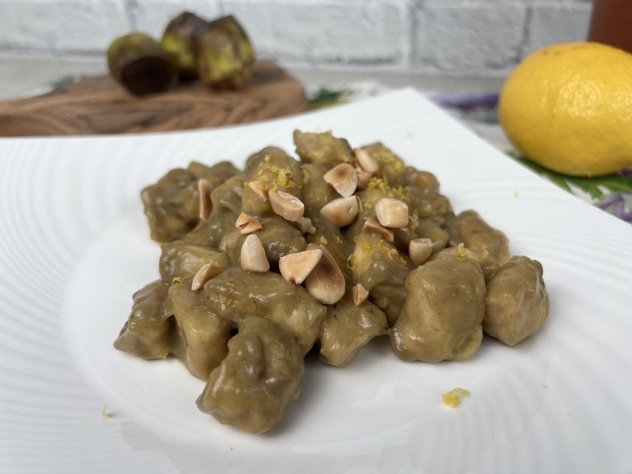
Polenta gnocchi with artichoke cream and toasted almonds: a no-waste recipe with great nutritional value.

Turning leftover polenta into a new and surprising dish is a fantastic way to reduce food waste while still enjoying delicious flavours. These alternative gnocchi, with their soft texture and delicate taste, pair perfectly with the artichoke cream, enhanced by the crunch of toasted almonds and the freshness of lemon zest.

A special touch comes from Miso, a fermented ingredient rich in probiotics, which adds depth of flavor and digestive benefits. This simple, nutritious, and inclusive dish is perfect for those who love sustainable and creative cuisine.

If you love gnocchi, try a classic with a spicy twist: Potato gnocchi with tomato sauce and ‘Nduja.

Polenta gnocchi with artichoke cream and toasted almonds

17.73g carbohydrates per 100g 

ilaria-bertinelli-gnocchi-di-polenta-ai-carciofi

Ingredients for the gnocchi

  • 300g cooked polenta*
  • 50g potato starch*
  • 50g brown rice flour*
  • 1 egg
  • 20g grated Parmigiano Reggiano
  • salt

Ingredients for the artichoke cream

  • 200g cleaned artichokes (about 4)
  • 100g medium potato
  • 30g shallot
  • 20g almonds (for garnish)
  • 1 scant teaspoon miso* (optional)
  • 1 garlic clove
  • 2 tablespoons extra virgin olive oil
  • zest and juice of ½ lemon
  • salt and pepper

**Ingredients specific for celiacs

*Ingredients whose labels must read “gluten-free” (or, in Italy, present on Prontuario AIC)

Preparation

  1. Blend the cold polenta and mix it with the egg, flour, grated Parmigiano Reggiano, salt, and pepper until you get a smooth dough.
    Lightly flour your work surface and shape the gnocchi.
  2. Clean the artichokes by removing the tough outer leaves, cutting off the tips, and slicing the hearts into thin wedges. Soak them in lemon water to prevent browning.
  3. In a non-stick pan, heat a drizzle of olive oil and sauté the chopped shallot with a garlic clove. Add the drained artichokes and the diced potato, letting them sauté for a few minutes. Then, add vegetable broth and cook for about 15 minutes, until the artichokes and potato are soft.
  4. Transfer everything to a blender and blend until smooth. Adjust with salt, pepper, and a scant teaspoon of Miso for an extra umami note.
  5. Cook the gnocchi in lightly salted boiling water, drain them, and toss them in a pan with the artichoke cream, adding a ladle of cooking water if needed. Plate and finish with toasted, lightly crushed almonds and grated lemon zest


Which salads can we prepare during the holiday season? December salads couldn’t but be suitable for a period of parties and celebrations.

In fact, these salads complement each other because one is perfect for enriching festive meals and the other for a detox meal before or after the Christmas treats.

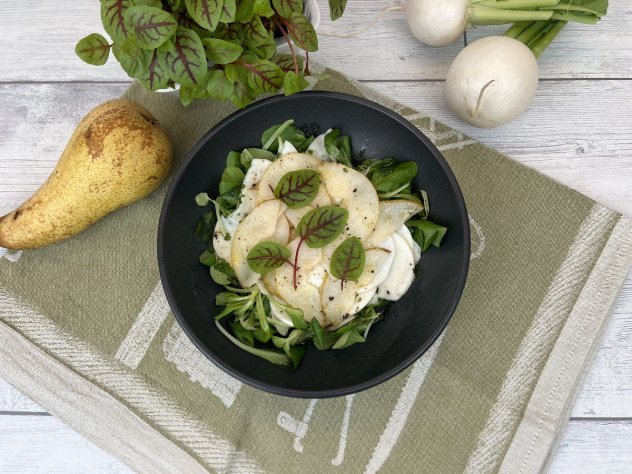
Turnip and lamb’s lettuce salad is a way to use two ingredients that we rarely bring to the table at our place. White turnip is very low in calories, contains no cholesterol, has only 6 carbohydrates per 100g, but is very rich in vitamins and minerals, so consuming it means providing a good dose of antioxidants to cope with the cold season.

Coleslaw Salad is a great classic of Anglo-Saxon cuisine, but especially of Newark buffets, to use the cabbage in a mouth-watering way. The name is in fact the transformation into English of the Dutch terms ‘kool’, cabbage, and ‘sla’, a nickname for salad. My version is a light interpretation of the original in that I eliminated sugar in the preparation and diluted the mayonnaise with equal amounts of zero-fat Greek yoghurt.

Happy holidays by bringing December salads to the table, but don’t forget to explore other salad ideas, e.g. October salads.

Turnip and lamb’s lettuce salad

9,56g carbohydrates per 100g

insalata-di-rapa-bianca-e-songino

Ingredients for 4 servings

  • 2 white turnips
  • 100g lamb’s lettuce or other leafy greens
  • 90g pear
  • 20g maple syrup or honey
  • lemon juice
  • a few parsley leaves
  • extra virgin olive oil
  • salt and pepper
  • wood sorrel (optional)

Preparation

  1. Peel the turnips with a peeler, slice them very thinly using a mandoline and macerate them for 10-15 minutes with an emulsion of lemon juice, extra virgin olive oil, salt and parsley.
  2. Slice the pear with the peel.
  3. Prepare a vinaigrette by mixing a few tablespoons of oil, lemon juice, salt, pepper and chopped parsley.
  4. Arrange the lamb’s lettuce on the bottom of each plate, lay the turnip and pear on top, drizzle with the vinaigrette and finish with a grinding of pepper and the sorrel leaves.

Coleslaw

7g carbohydrates per 100g

Insalata-coleslaw

Ingredients for 4 servings

  • 250g white cabbage (approx. 1/2 cabbage)
  • 170g carrots (approx. 2)
  • 1 Granny Smith apple
  • 2 celery stalks
  • 3 spring onions (the white part)
  • 40g raisins
  • 40g shelled walnuts
  • chopped fresh herbs
  • salt and pepper

Ingredients for the sauce

  • 150g mayonnaise*
  • 150g fat-free Greek yoghurt
  • 1 teaspoon of Dijon mustard*
  • 20g lemon juice
  • salt and pepper

**Ingredients specific for celiacs

*Ingredients whose labels must read “gluten-free” (or, in Italy, present on  Prontuario AIC)

Preparation

  1. Cut the cabbage into very thin strips; grate the carrots into julienne strips and slice the apples with the peel, but without the core.
  2. Chop the celery and spring onion finely, then put all the vegetables in a bowl.
  3. In a bowl, prepare the sauce: mix mayonnaise and yoghurt, season with mustard and lemon, then season with salt and pepper.
  4. Pour the dressing over the vegetables and mix well: the salad should be very well bound, i.e. have just the right amount of dressing to hold the vegetables together.
  5. Top the salad with sultanas and coarsely chopped walnuts, then complete with chopped fresh herbs to taste.

Can you think of those simple flavours that spark memories?  Oat pasta with cannellini beans is the perfect combination of traditional flavours and a touch of novelty.

One of the most typical dishes of Italian cuisine is in fact Pasta e fagioli (pasta and beans), a recipe often prepared with Borlotti beans and the addition of lard or bacon, which in the past were useful to give the necessary energy to face the hard work in the fields.

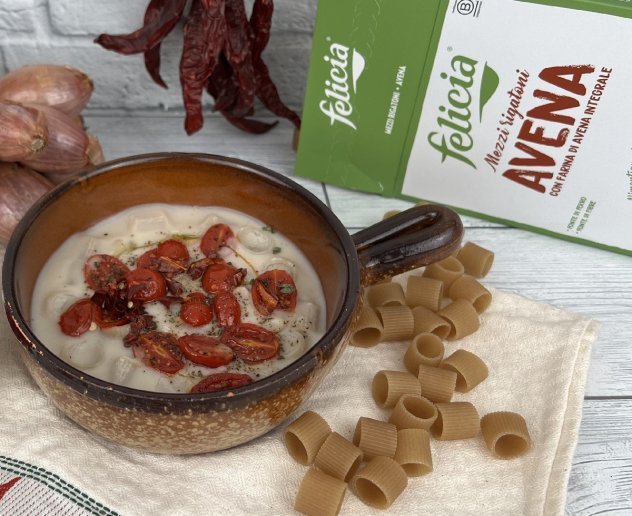
Instead, this version of Pasta e fagioli uses cannellini beans combined with oat pasta, where the wheat protein, gluten, is replaced by the high protein content in oat. Remember that beans are a valuable source of complex carbohydrates, plant proteins, fibre and are cholesterol-free, so the consumption of legumes is always a valuable ally in a balanced diet.

The flavour variation is the presence of sautéed cherry tomatoes with aromatic herbs that transform a classic taste into a fresher, juicier one.

If you love beans and tradition, try my Pisarei e fasò.

Oat pasta with cannellini beans

carbohydrates 13.63g per 100g

Mezzi-rigatoni-di-avena-ai-cannellini

Ingredients for 4 servings

  • 500g boiled cannellini beans (about 180g dry beans)
  • 240g cherry tomatoes
  • 140 g Oat pasta Felicia**
  • 1 shallots
  • 2 cloves of garlic
  • extra virgin olive oil
  • dried sweet pepper or Crusco pepper
  • bay leaf
  • oregano
  • thyme
  • rosemary
  • chilli pepper
  • salt and pepper

**Ingredients specific for celiacs

*Ingredients whose labels must read “gluten free” (or, in Italy, present on  Prontuario AIC)

Preparation

  1. Soak the cannellini beans for at least 12 hours, then boil them slowly in plenty of water with the addition of a bay leaf and, if available, a piece of Kombu seaweed to facilitate the beans’ future digestibility. Drain the beans and keep the cooking water.
  2. Cut the cherry tomatoes in half and sautée them for a few minutes on high heat in a non-stick pan with a little extra virgin olive oil, a clove of garlic cut in half, a chilli pepper and chopped herbs.
  3. Put a drizzle of extra virgin olive oil in a pan, brown a finely chopped shallot and a clove of garlic and add the cooked cannellini beans, cover with plenty of cooking water or vegetable stock and leave them to take on flavour for 10 minutes.
  4. Keep a few tablespoons of cannellini beans aside and blend the rest with an immersion blender, then reassemble the bean soup.
  5. Cook the oat pasta in plenty of salted water, drain and pour it into the cannellini soup, then complete the dish: place the pasta and beans on individual plates, complete with the herb flavoured tomatoes, a grinding of pepper, a drizzle of oil and some chopped dried sweet pepper or Crusco pepper.

Version with gluten of Oat pasta with cannellini beans

The recipe contains only naturally gluten-free ingredients.

Full speed ahead: Stuffed omelette roll

How many times have you arrived home at dinner time without having any ideas of what to prepare? The Summer omelette roll is a solution to many situations.

In fact, all you need is fresh eggs and a little grated Parmesan cheese to prepare the magical and tasty omelette disc, then you can create the stuffing according to what you find in your fridge and pantry: each time you can serve a roll with a different flavour and colour.

My advice is to always try to use a good amount of vegetables for the stuffing in order to balance the protein- and fat-rich omelette with vitamins and fibre. You can then serve it with a nice slice of wholemeal bread to get the right amount of carbohydrates.

If you are a fan of omelettes, try this Stuffed Omelette.

rotolo-di-frittata-estivo

Summer omelette roll

 carbohydrates per 100g negligible

Ingredients for 4 servings

  • 7 eggs
  • 125g cow’s milk mozzarella
  • 40g Parmigiano Reggiano cheese, grated
  • 1 tomato
  • a handful of lettuce
  • 1 tbsp olive pâté*
  • extra virgin olive oil
  • salt and pepper

**Ingredients specific for celiacs

*Ingredients whose labels must read “gluten-free” (or, in Italy, present on  Prontuario AIC)

Preparation

  1. Beat the eggs well in a bowl with a fork, add the Parmesan cheese and a pinch of salt and pepper.
  2. Put a little oil in a 25-28cm diameter non-stick frying pan and pour in the egg mixture. Cook it over medium heat and, when it has set, turn it over with the help of a lid.
  3. Place the omelette disc on a board and stuff it: spread the lettuce, place the sliced tomato and  mozzarella on top, then the olive pâté evenly distributed.
  4. Roll the omelette tightly, then cut the cylinder in half to serve so that the colours of the ingredients inside can be seen.

Version with gluten of Summer Omelette Roll

The recipe contains only naturally gluten-free ingredients.

Beat the heat with these July salads that will feature some of the most beloved seasonal ingredients, peaches and tomatoes.

Furthermore, back from my holidays in Sardinia, I wanted to use a Slow Food Presidium that I had never tried before: the cheese called Frue or Casu axedu, meaning “sour cheese” in Sardinian dialect, made with sheep’s or goat’s milk leaving the curd in the whey. The resulting cheese is a product that is a combination of yogurt and cheese, it is without rind, soft and sour. It is sold in small cubes or larger pieces always covered with whey.

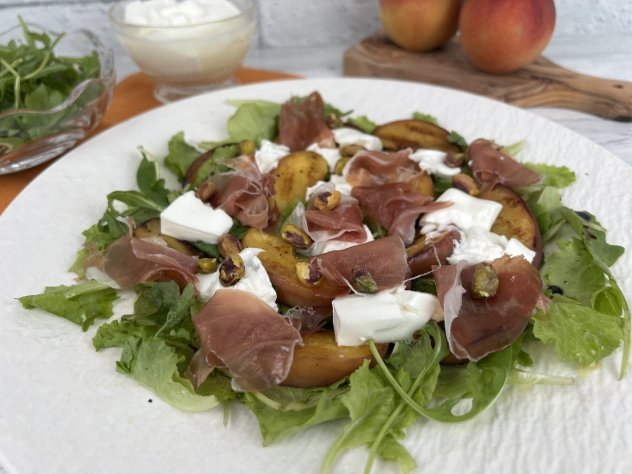
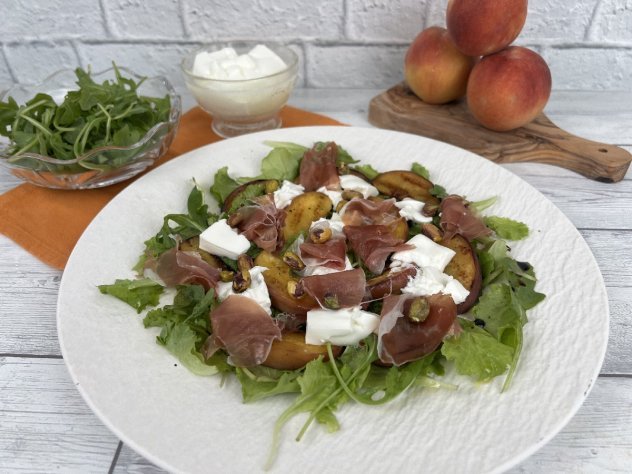
Because of its sour taste, Frue may be too strong for many people, so I decided to combine it with sweet grilled peaches and a savoury Prosciutto di Parma matured for 24 months: simply delicious!

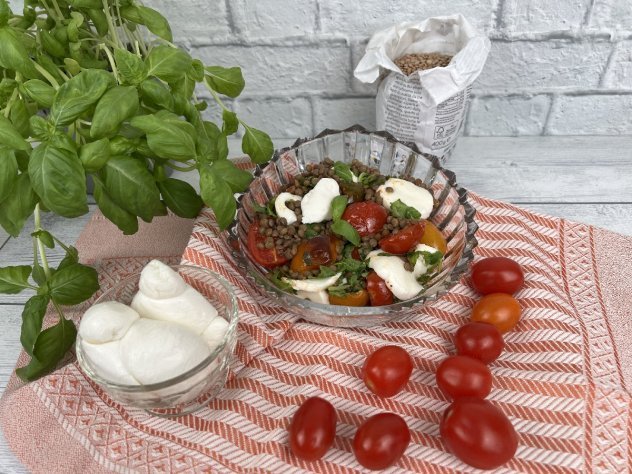
The second salad is a fun way of eating lentils also in summer making them fresh and colourful with cherry tomatoes, and the aroma of garden rocket and basil.

In addition to these July salads, for other fresh and easy-to-make ideas, have a loot at my June salads.

Salad of grilled peaches and Prosciutto

carbohydrates 6g for the whole serving

insalata-di-pesche-grigliate-e-prosciutto

Ingredients for 1 serving

  • 100g peaches with peel on
  • 80g Frue sour cheese or Mozzarella cherries
  • 40g Prosciutto di Parma (2 slices)
  • a handful of baby lettuce
  • a handful of garden rocket
  • 15g shelled pistachio nuts
  • spray extravirgin olive oil Fratelli Mantova
  • Balsamic vinegar of Modena
  • salt and pepper

Preparation

  1. Cut the peaches into thin segments and grill them without adding any grease or dressings.
  2. Form a layer of baby lettuce and garden rocket on the serving dish, then arrange the grilled peaches on top; dress with a pinch of salt, freshly ground pepper, a spray of extravirgin olive oil and a dribble of Balsamic vinegar.
  3. Complete with pieces of sour cheese or Mozzarella cherries, the slices of Prosciutto torn into smaller pieces and the pistachio nuts.

insalata-di-pesche-grigliate-e-prosciutto

Salad of lentils and sautéed cherry tomatoes

carbohydrates 37.41g for the whole serving

insalata-di-lenticchie-e-pomodori-arrostiti

Ingredients for 1 serving

  • 180g cherry tomatoes of various colours
  • 150g boiled lentils (about 50g dry lentils)
  • 70g Mozzarella cheese
  • garden rocket
  • basil
  • oregano
  • extravirgin olive oil
  • salt and pepper

Preparation

  1. Boil the lentils in water with carrot, celery, onion and garlic; drain and allow to cool down.
  2. Pour a dribble of extravirgin olive oil in a non-stick pan and sautéed the cherry tomatoes cut in half, intially with the cut side downwards. Adjust flavour with salt, pepper and oregano and cook for a couple of minutes.
  3. Dress the lentils with the sautéed tomatoes, adjust flavour with olive oil, salt and pepper if necessary, then finish with pieces of Mozzarella, strips of garden rocket and some basil leaves.

insalata-di-lenticchie-e-pomodori-arrostiti

What vegetables await you in our April salads? Cauliflower, peas and leek will be the stars with the red touch of strawberries: find out how to prepare them.

Let’s start with an uncommon use of cauliflower: raw. Have you ever tried it? You will be surprised to discover that it is sweet and has a much more delicate smell than when cooked. It is in fact during cooking that the typical sulphurous smell develops, which often makes cauliflower not liked, especially by children. In the first salad, cauliflower is grated to make a tasty, micronutrient-rich couscous with lots of flavour and few calories.

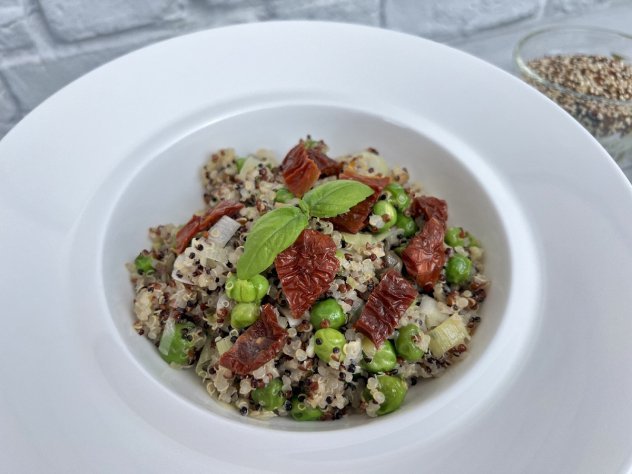
My Quinoa salad, on the other hand, is perfect for a refill of plant protein. Quinoa is a gluten-free pseudo-cereal that has all 8 essential amino acids (i.e. those that must be taken in with food as they are not produced by our body) and therefore has a very similar nutritional profile to foods of animal origin. Moreover, due to its wealth of other micronutrients, it is considered a super-food whose consumption is strongly recommended as an integral part of a healthy, balanced diet.

Remember to rinse quinoa before cooking to remove saponins, substances naturally present in many vegetables, which may cause irritation to mucous membranes, but are completely eliminated by a pre-cooking wash.

If you only have a few minutes available, see how to prepare Three five-minute salads!!

Cauliflower couscous with Radicchio variegato

carbohydrates 14g for the whole serving

cous-cous-di-cavolfiore-uvetta-e-fragole

Ingredients for 1 serving

  • 80g cauliflower
  • 40g radicchio variegato di Castelfranco
  • 15g raisins
  • 15g shelled walnuts
  • 1 teaspoon of toasted sunflower seeds
  • 1 teaspoon of pumpkin seeds
  • 1 strawberry
  • Traditional Balsamic Vinegar of Modena
  • extra virgin olive oil
  • salt and pepper

Preparation

  1. Grate the cauliflower with a coarse-hole grater to obtain a couscous-like consistency.
  2. Wash, dry and cut the Radicchio into pieces.
  3. Assemble the salad by placing the radicchio on the bottom of the plate and the cauliflower couscous on top; season with salt and pepper, oil and traditional balsamic vinegar of Modena, then complete by adding the raisins, nuts, seeds and finally the strawberry cut into thin slices.

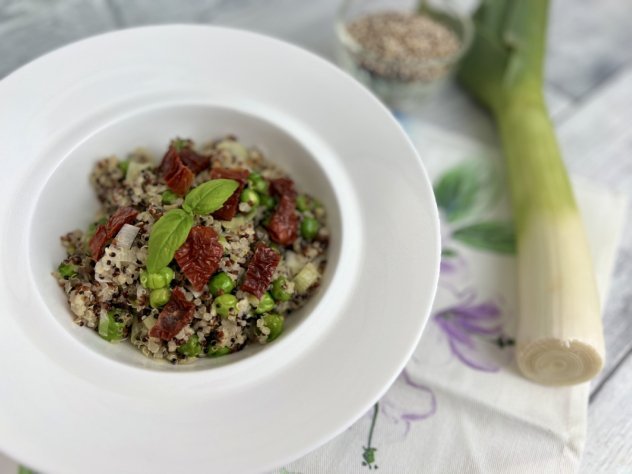
Quinoa salad with leek and peas

carbohydrates 20.11g for the whole serving

insalata-di-quinoa-e-piselli

Ingredients for 1 serving

  • 25g quinoa (weighed raw)
  • 40g shelled fresh peas
  • 30g leek
  • 7g desalted capers
  • chopped basil and sage
  • sun-dried tomatoes*
  • extra virgin olive oil
  • salt and pepper

Preparation

  1. Rinse the quinoa under running water and cook it in 75g of lightly salted water for about 20 minutes or until it has absorbed all the water.
  2. Put a little oil in a non-stick frying pan and brown the finely sliced leek and peas in it, adding a few tablespoons of water to cook them. Add desalted capers and chopped basil and sage. When the peas are almost cooked, add the quinoa and season with salt (if necessary) and pepper.
  3. Serve the quinoa topped with a few chunks of sun-dried tomatoes and basil leaves.

insalata-di-quinoa-e-piselli

Cous-cous-di-cavolfiore-uvetta-e-fragole

Version with gluten of April salads

The recipes contain only naturally gluten-free ingredients, so no adaptation is necessary for their version with gluten.

This idea for gluten-free carnival sweets came to me from my friends at the Rieti and Viterbo Chamber of Commerce, who, keeping alive an initiative conceived during the Covid-19 pandemic, organised FB lives from theOsteria Le Tre Porte in Rieti to publicise the products of the area by sending to bloggers and journalists throughout Italy the ingredients to prepare various dishes including Cicerchiata.

When I received the information about the recipes we would prepare together, I had not imagined that Cicerchiata would be a dessert. Instead, in the province of Rieti, it is the traditional Carnival dessert inspired by Campania’s ‘Struffoli‘. The traditional form is that of a garland, which is obtained by pouring the sweets into a doughnut mould, while I’m proposing a mini-serving version so as not to be tempted to eat too much of it.

Given the fundamental role of honey in this recipe, it seems that the spread of Cicerchiata is linked to the development of bee-keeping in this area of Italy, while the name is presumed to derive from the legume grass peas of which the sweet balls of dough reproduce the shape and colour, so Cicerchiata would be a nice ‘stack of grass peas’.

Like many Carnival sweets, Circerchiata symbolises regeneration through its circular shape, the frying that turns a cold dough into a delicacy, and the vitality of honey and colourful decorations.

A tip for those of us who have to be careful with both fried food and simple sugars? Form very small balls, just like dried chickpeas, and reduce the amount of honey to the minimum necessary to hold the precious compositions together.

Here are a few more ideas for Carnival: Krapfen with jam e Fried cream.

cicerchiata

Cicerchiata

60g carbohydrates per 100g without candied fruit and coloured sprinkles

Ingredients

  • 160g flour mix for bread, brand BiAglut**
  • 2 eggs + 15g egg white
  • 100g honey
  • 40g brown rice flour*
  • 25g sugar
  • 20g butter
  • lemon rind
  • slivered almonds*
  • candied fruit*
  • coloured sprinkles*

**Ingredients specific for celiacs

*Ingredients whose labels must read “gluten-free” (or, in Italy, present on  Prontuario AIC)

Preparation

  1. Pour the eggs into a bowl, beat them with a fork together with the sugar, add the soft butter and lemon zest. Gradually incorporate the flour, stirring with a fork until the mixture is firm enough to knead with your hands. Transfer everything onto the work surface and continue kneading with your hands until you obtain a smooth and homogeneous dough, similar to fresh pasta.
  2. Divide the dough into small portions, form them into sticks of dough having a diameter of about 8mm as for making Gnocchi, then cut them into chunks no more than 8mm-1cm long. Round the pieces of dough with your fingers to form small balls.
  3. Heat the seed oil to a temperature of 170-180°C and deep fry a few balls at a time. When they are golden brown, drain them well and let them cool on kitchen paper.
  4. Meanwhile, pour the honey into a large pan and heat it gently for a few minutes. When it has browned slightly, turn off the heat and add the fried balls, stirring to coat them evenly. Finally, add the almonds and sprinkles, taking care to keep some aside for decoration. Mix again, pour the mixture into the desired moulds, garnish with the almonds and sprinkles kept aside and serve.

Cicerchiata

Version with gluten of Cicerchiata

Replace BiAglut flour and rice flour with 250g wheat flour 00 and add 30g sugar instead of 25g.