This warm and creamy soup is true comfort food. Alongside its excellent nutritional properties, it features a delightful Middle Eastern touch with za’atar. Try my Sweet Potato and Artichoke Soup for a wholesome and flavourful dish!

Let’s take a closer look at the ingredients!

Sweet potatoes, often mistaken for regular potatoes, are actually quite different in both taste and nutritional value. Naturally sweet, they have a lower glycaemic index than regular potatoes, are rich in fibre, and contain a large amount of beta-carotene, ideal for boosting the immune system.

Artichokes, with their delicately bitter flavour, perfectly complement the soup by providing valuable fibre, inulin, and antioxidants, promoting digestive health and intestinal well-being.

What is za’atar? It’s an aromatic spice blend typical of Middle Eastern cuisine, traditionally made with thyme, oregano, sumac, and sesame seeds. In my version, I’ve replaced oregano with pumpkin seeds to create a more nutritionally interesting combination, thanks to their healthy fats.

Sumac is a bright red spice with a fresh, slightly citrusy flavour. It’s made from the dried and ground berries of the Rhus coriaria plant, native to the Mediterranean and Middle Eastern regions. Just a touch is enough to create the perfect balance between tradition and creativity!

Fancy more soups? Try the Chestnut and Grass Pea Soup.

Sweet potato and artichoke soup with za’atar

7g carbohydrates per 100g
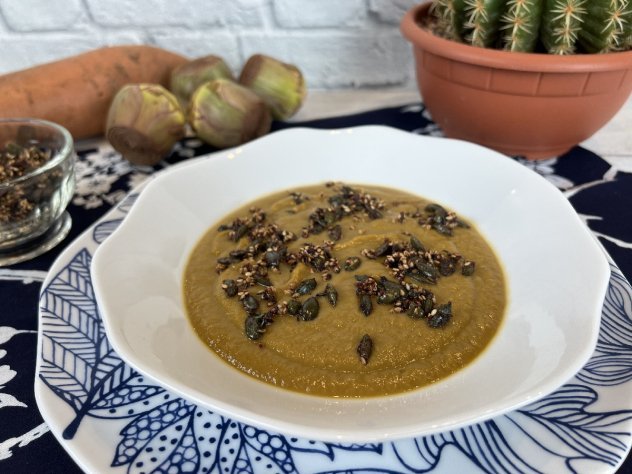
Ilaria-bertinelli-vellutata-di-patate-dolci-e-carciofi

Ingredients for 4-6 servings

  • 1 lt ca. vegetable stock* or water
  • 8 cleaned artichokes (approximately 600 g)
  • 2 sweet potatoes (approximately 500 g)
  • 1 shallot (approximately 30 g)
  • Extra virgin olive oil
  • Salt and pepper

Ingredients for za’atar

  • 2 tablespoons pumpkin seeds
  • 2 teaspoons sesame seeds
  • 1 teaspoon dried thyme
  • 1 teaspoon sumac
  • ½ teaspoon salt
  • Extra virgin olive oil

**Ingredients specific for celiacs

*Ingredients whose labels must read “gluten-free” (or, in Italy, present on Prontuario AIC)

Preparation 

  1. Finely chop the shallot and sauté it in a saucepan with a drizzle of olive oil. Add the artichokes cut into wedges and the cubed sweet potato. Let them sauté for a few minutes, then cover with water or vegetable stock and cook for about 30 minutes or until the artichokes are perfectly tender.
  2. Blend everything until smooth and adjust with salt and pepper to taste.
  3. Prepare the za’atar. Toast the pumpkin seeds in a non-stick pan with a tablespoon of olive oil. Add the other ingredients and let them sauté for a few minutes, then set aside.
  4. Serve the soup with a spoonful of za’atar.
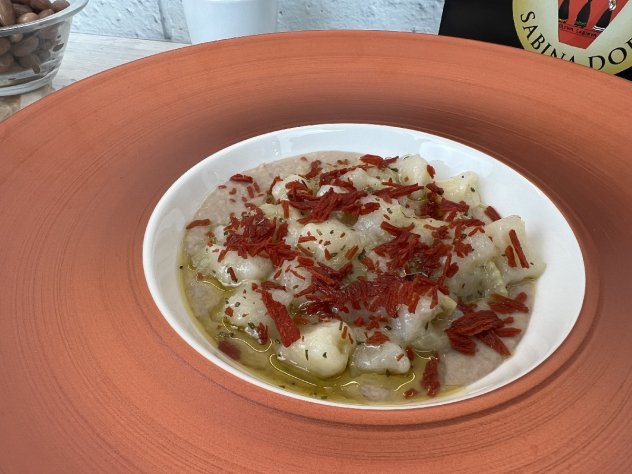
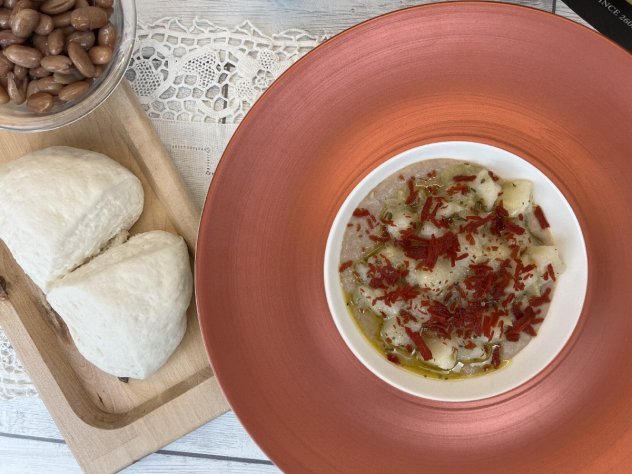
Would you like an original idea coming from the tradition of a land very dear to me? Here are the Pizzicotti with Fagiolo gentile di Labro bean cream topped with an irresistible oil flavoured with ginger and marjoram.

Once again, the gastronomic journey is in Lazio thanks to the Rieti Chamber of Commerce, which sent us the local ingredients to prepare this recipe with a very special ingredient: Fagiolo gentile di Labro a Slow Food Presidium and a product included in the list of Italian Traditional Agricultural Products (PAT in Italian).  It is a variety of bean that grows exclusively in the Avanzana Valley at the foot of the village of Labro, in the province of Rieti. It is light brown in colour and its fame is due to the tenderness of its skin and its delicate, sweet taste: the adjective ‘gentile’, i.e. gentle, by which it is called derives from such sweetness.

This traditional dish from Lazio is a perfect meal from a nutritional point of view, so why not use it as a holiday season dish? It is perfect both to brighten up banquets and to alternate meals characterised by the presence of meat and fish with a vegetarian recipe rich in plant protein and plenty of fibre.

To discover the great classic of the Rieti land, read my article and recipe for the The Perfect Amatriciana.

pizzicotti-con-crema-di-fagioli-di-labro

Pizzicotti with Fagiolo gentile di Labro bean cream and aromatic oil

29.6g carbohydrates per 100g 

Ingredients for 4 servings

  • 250g flour mix for bread, brand Nutrifree**
  • 180g water
  • 150g dried Fagiolo gentile di Labro beans
  • 4g brewer’s yeast
  • 50g extravirgin olive oil Sabina DOP
  • 20g dehydrated tomato flakes
  • 2 shallots
  • 2 celery sticks
  • 2 bay leaves
  • 1 piece of fresh ginger
  • 1 sprig of rosemary
  • marjoram
  • vegetable stock
  • grated Pecorino cheese
  • 1 pinch of bicarbonate of soda or 1 piece of Kombu seaweed

**Ingredients specific for celiacs

*Ingredients whose labels must read “gluten-free” (or, in Italy, present on  Prontuario AIC)

Preparation

  1. Soak the beans the night before in plenty of water and baking soda or a piece of Kombu seaweed.
  2. Warm up 50g of extra-virgin olive oil and infuse it with pieces of fresh ginger and marjoram leaves: you will obtain an aromatic oil that you can also use for other preparations.
  3. Dissolve the brewer’s yeast in a bit of water at room temperature, then pour it into a bowl with the flour and a pinch of salt and add the water required to obtain a smooth, not too hard dough.
  4. Divide the dough into at least 4 pieces, cover them with a tea towel and leave them to rise for about 20 minutes.
  5. In a saucepan, brown 1 shallot and 1 chopped celery stick in a little extra virgin olive oil and a sprig of rosemary, then add the soaked beans and bay leaves, cover with vegetable stock and cook (for at least 1 hour). When the beans are cooked, remove the bay leaf and rosemary and whisk to obtain a thick and creamy velouté. Season with salt and pepper.
  6. In a non-stick pan, put a drizzle of extra virgin olive oil and sauté the remaining shallot and celery finely chopped, season with chopped rosemary and sprinkle with vegetable stock to cook.
  7. After the dough has risen, bring a pot of water to the boil and lightly salt it. Take the pieces of dough, shape them into thin cylinders of about 1.5cm diameter and pinch them cutting off small knobs to be thrown into boiling water. Continue throwing the dough knobs into the boiling water and let them cook for at least 5 minutes considering that they would not become too cooked. Drain the ‘Pizzicotti’ with a slotted spoon, toss them into the non-stick pan with the chopped shallot and celery and allow them to cream slightly, adding a little cooking water.
  8. Serve on individual plates, preferably in a soup dish, forming a layer of bean cream topped with Pizzicotti and a dribble of aromatic oil, grated Pecorino cheese and a pinch of dried tomato flakes.

pizzicotti-con-crema-di-fagioli-di-labro

Version with gluten of Pizzicotti with Fagiolo gentile di Labro bean cream and aromatic oil

Replace the flour mix for bread Nutrifree with an equal amount of wheat flour and adjust the amount of water to obtain a bread-like texture.

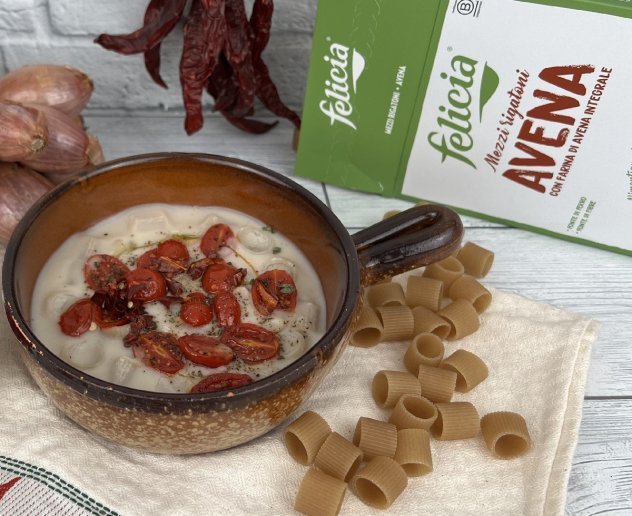
Can you think of those simple flavours that spark memories?  Oat pasta with cannellini beans is the perfect combination of traditional flavours and a touch of novelty.

One of the most typical dishes of Italian cuisine is in fact Pasta e fagioli (pasta and beans), a recipe often prepared with Borlotti beans and the addition of lard or bacon, which in the past were useful to give the necessary energy to face the hard work in the fields.

Instead, this version of Pasta e fagioli uses cannellini beans combined with oat pasta, where the wheat protein, gluten, is replaced by the high protein content in oat. Remember that beans are a valuable source of complex carbohydrates, plant proteins, fibre and are cholesterol-free, so the consumption of legumes is always a valuable ally in a balanced diet.

The flavour variation is the presence of sautéed cherry tomatoes with aromatic herbs that transform a classic taste into a fresher, juicier one.

If you love beans and tradition, try my Pisarei e fasò.

Oat pasta with cannellini beans

carbohydrates 13.63g per 100g

Mezzi-rigatoni-di-avena-ai-cannellini

Ingredients for 4 servings

  • 500g boiled cannellini beans (about 180g dry beans)
  • 240g cherry tomatoes
  • 140 g Oat pasta Felicia**
  • 1 shallots
  • 2 cloves of garlic
  • extra virgin olive oil
  • dried sweet pepper or Crusco pepper
  • bay leaf
  • oregano
  • thyme
  • rosemary
  • chilli pepper
  • salt and pepper

**Ingredients specific for celiacs

*Ingredients whose labels must read “gluten free” (or, in Italy, present on  Prontuario AIC)

Preparation

  1. Soak the cannellini beans for at least 12 hours, then boil them slowly in plenty of water with the addition of a bay leaf and, if available, a piece of Kombu seaweed to facilitate the beans’ future digestibility. Drain the beans and keep the cooking water.
  2. Cut the cherry tomatoes in half and sautée them for a few minutes on high heat in a non-stick pan with a little extra virgin olive oil, a clove of garlic cut in half, a chilli pepper and chopped herbs.
  3. Put a drizzle of extra virgin olive oil in a pan, brown a finely chopped shallot and a clove of garlic and add the cooked cannellini beans, cover with plenty of cooking water or vegetable stock and leave them to take on flavour for 10 minutes.
  4. Keep a few tablespoons of cannellini beans aside and blend the rest with an immersion blender, then reassemble the bean soup.
  5. Cook the oat pasta in plenty of salted water, drain and pour it into the cannellini soup, then complete the dish: place the pasta and beans on individual plates, complete with the herb flavoured tomatoes, a grinding of pepper, a drizzle of oil and some chopped dried sweet pepper or Crusco pepper.

Version with gluten of Oat pasta with cannellini beans

The recipe contains only naturally gluten-free ingredients.

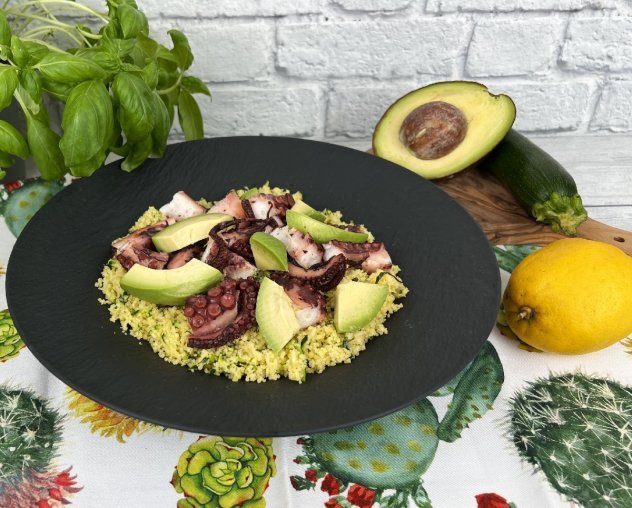
Couscous combined with fish is a great classic, try it in this fresh version for summer: Couscous with octopus and avocado.

You can also indulge in the choice of the type of gluten-free couscous, the Bia company offers a wide range: maize and rice, chickpeas, peas, chickpeas and red lentils, buckwheat are all available options, although with this seasoning I would avoid buckwheat whose characteristic taste would risk covering that of fish.

Couscous combined with fish and vegetables, besides being a source of good fats such as avocado, makes this recipe a perfect one-course meal for lunch or dinner.

If you like couscous in summer, try also Couscous with prawn and courgette curry.

cous-cous-con-polpo-e-avocado

La ricetta del Couscous with octopus and avocado

15.3g carbohydrates per 100g

Ingredients for 4 servings

  • 1kg approx. octopus
  • 200g BIO Corn and rice couscous**
  • 200g courgettes
  • 100g avocado
  • 1 onion
  • 1 carrot
  • 1 celery stalk
  • 1 clove of garlic
  • lemon peel
  • extra virgin olive oil
  • mint
  • parsley
  • salt
  • pepper

**Ingredients specific for celiacs

*Ingredients whose labels must read “gluten-free” (or, in Italy, present on  Prontuario AIC)

Preparation

  1. Cook the octopus in a large saucepan with onion, carrot, celery and garlic, putting a few centimetres of water on the bottom and covering with a lid. Cook over low heat for about 45 minutes.
  2. Prepare the couscous according to the instructions on the packet, i.e. by soaking it with an equal amount of hot water.
  3. Julienne cut the courgettes and sauté them for a few minutes in a non-stick pan with a little oil. Season with salt and pepper.
  4. Separate the couscous well with a fork and season it by adding the courgettes, chopped mint and parsley, grated lemon zest, salt and pepper and a drizzle of extra virgin olive oil.
  5. Assemble the plates by placing the couscous on the bottom and the chopped octopus and avocado on top. Complete to taste with another drizzle of extra virgin olive oil and, if necessary, salt and pepper.

cous-cous-con-polpo-e-avocado

Version with gluten of Couscous with octopus and avocado

Replace the Corn and rice couscous with wheat couscous, while all other ingredients are naturally gluten-free.

Pasta salads are one of the most popular dishes in summer and every year I like inventing new ones to make a tasty and balanced dish suitable for all occasions.

The protagonists are the Strozzapreti Zero+, organic pasta made with 100% red lentil flour and eggs from free-range hens by the Spinosi pasta factory, a pasta designed to reduce the glycemic index of Italy’s most popular dish while providing a high protein and fibre intake: discover the entire range of gluten-free egg pasta with legume flours to have fun in the kitchen.

This pasta salad proposal is meant to take us tastefully to Greece, using the same ingredients we find in traditional Greek salads, but combined in a slightly different way.

Thanks to the presence of egg in Strozzapreti, the pasta salad has a perfect texture even when cold, which is very unusual in the world of gluten-free pasta, especially with a legume base, so you can enjoy an exquisitely fresh dish that is both healthy and balanced.

If you are looking for more pasta salad ideas, try my Coronation Pasta Salad.

Greek-style Strozzapreti pasta

10.8 g carbohydrates per 100g

Ingredients for 4 servings

  • 250g Strozzapreti Zero+ with red lentil flour*
  • 200g fat free Greek yoghurt
  • 200g cherry tomatoes
  • 100g Greek pitted black olives*
  • 100g Greek feta cheese
  • 70g pickled cucumbers*
  • extra virgin olive oil
  • mint
  • salt and pepper

Preparation

  1. Boil Strozzapreti in lightly salted boiling water for 7 minutes. Drain them, mix them with a drizzle of extra virgin olive oil and leave them to cool.
  2. Cut the cherry tomatoes into 4 wedges and add them to the Strozzapreti together with the black olives, then crumble the feta cheese and mix well.
  3. Prepare a sauce mixing Greek yoghurt with finely chopped pickled cucumbers, season with salt and pepper and pour it over the cold pasta. Complete by adding a few mint leaves and serve.

strozzapreti-alla-greca

If you have been to Greece, you cannot have missed the Classic Mussakàs made with eggplants and meat sauce, a one-course meal rich dish that I thought I would revisit to create a lighter, vegetarian version: here is my
Vegetarian Mussakàs
.

This Vegetarian Mussakàs is the perfect substitute for Lasagna for the warmer months when light recipes rich in seasonal vegetables are preferred, but it is also loved by everyone in the family, including the little ones. It is also very useful for those who have to organise family meals, as it can be prepared in advance and then cooked with 30 minutes to spare.

If you don’t like peppers or find them indigestible, replace them with courgettes!

Remember that you can also prepare this recipe lactose-free by replacing the milk in the béchamel with vegetable stock: all other ingredients are lactose-free!

When you have eggplants in season, this recipe will be a dinner-saving one-course meal for every family need: enjoy!

mussakas-vegetariano

Vegetarian Mussakàs

9.26g carbohydrates per 100g

Ingredients for 6 servings

  • 1kg eggplants
  • 450g potatoes
  • 300g red pepper (or courgettes)
  • 200g tomato sauce
  • 150g carrots
  • 120g onions
  • Parmigiano Reggiano cheese, grated
  • breadcrumbs*
  • 2 cloves of garlic
  • extra virgin olive oil
  • basil
  • sage
  • salt and pepper

Ingredients for the béchamel sauce

  • 350g milk
  • 35g brown rice flour*
  • 35g grated Parmesan cheese
  • 30g extra virgin olive oil
  • salt

*Ingredients whose labels must read “gluten free” (or, in Italy, present on  Prontuario AIC)

Preparation

  1. Slice the eggplants and place them on a baking tin lined with parchment paper,  bake in a convection oven preheated to 180°C for about 20 minutes.
  2. Boil the potatoes with their skins on until they are soft enough to be sliced.
  3. Prepare the vegetable ragout browning the garlic in a little oil, then add the diced carrots and peppers; season with chopped basil and sage, add the tomato sauce, season with salt and pepper and cook for 15 minutes.
  4. Prepare a béchamel sauce by mixing the rice flour with the oil, then gradually add the milk so that no lumps form and heat until the mixture starts to thicken. Remove from the heat, add the Parmesan cheese, mix well and add salt to taste.
  5. Take a rectangular oven dish, form a layer of vegetable ragout, cover it with the wilted eggplants, the sliced potatoes, a sprinkling of Parmesan cheese and start the layers again: you should have two layers of aubergines and ragout and only one layer of potatoes. Finish with a layer of béchamel sauce and a sprinkling of breadcrumbs.
  6. Bake the Mussakàs in a convection oven preheated to 190°C for 20-30 minutes until crispy.

mussakas-vegetariano

Version with gluten of Vegetarian Mussakàs

Replace gluten free breadcrumbs with standard breadcrumbs; the rest of the recipe is naturally gluten-free, so no adaptation is needed for the version with gluten.


What does our lunch box contain today? When Gaia lifts the lid of the container, there are always new ideas waiting for her for lunches away from home, and today’s Legumotti with vegetable ragout and Jerusalem artichokes will be a surprise in terms of taste and energy.

Legumotti will provide you with carbohydrates and plant proteins that will help  you keep your blood sugar under control thanks to the fibre present in the many vegetables on the plate. What about Jerusalem artichoke? Do you know this exotically named ingredient?

Jerusalem artichoke is the root of a plant that is very common throughout Italy, so vital that it is considered almost a weed, growing in wet environments, preferably along watercourses. The root can be eaten either raw or cooked, just like in our lunch box, so you can enjoy its artichoke-like flavour when cooked and its pleasant crunchiness when eaten raw.

It is very suitable for people with diabetes as it has a low carbohydrate content and a high percentage of fibre, in addition to its high digestibility which makes it suitable for everyone. So what are you waiting for to try the recipe?

Follow me not to run short of ideas for out-of-home meals! And if you are looking for a lunch with a lower amount of carbs, try my Roastbeef with aubergine cream.

Legumotti with vegetable ragout and Jerusalem artichokes

42.26g carbohydrates for the whole lunch box

Ingredients for 1 lunch box

  • 280g Jerusalem artichokes
  • 80g carrot
  • 50g leek
  • 40g celery
  • 70g Barilla Legumotti*
  • 30g Parmigiano Reggiano 36 months
  • 20g shelled walnuts
  • 1 tbsp of lemon juice
  • extra virgin olive oil
  • salt and pepper

**Ingredients specific for celiacs

*Ingredients whose labels must read “gluten-free” (or, in Italy, present on  Prontuario AIC)

Preparation

  1. Chop the leek and sweat it in a non-stick pan with a little oil; dice the carrot, celery and some Jerusalem artichokes and add them to the pan with leek, then cook all the vegetables. Season with salt and pepper.
  2. Cook Legumotti in lightly salted boiling water, removing with a skimmer the foam that forms on the surface during cooking. Drain Legumotti and mix them with the vegetable ragout, seasoning with a little oil, salt and pepper.
  3. Preparate l’insalata di topinambur. Slice the Jerusalem artichokes with a mandoline or a well-sharpened knife; add Parmigiano Reggiano cheese cut into slivers, then season with lemon, extra virgin olive oil, salt and pepper, then top with walnuts.
  4. Fill the lunch box by placing Legumotti in one of the containers and the Jerusalem artichoke and Parmigiano Reggiano salad in another container. Close everything and take the lunch box with you!

legumotti con rafù di verdure e topinambur

Version with gluten of Legumotti with vegetable ragout and Jerusalem artichokes

The recipe does not need any adaptations for the version with gluten.

For me, the gastronomic journey in the Rieti area has become an annual appointment that has been repeated for three years now and that each time makes me discover new recipes of a cuisine made of few ingredients, authentic and with an unmistakable flavour: this is what Gnocchetti in frasca gluten-free dumplings make you experience.

But what are Gnocchetti in frasca? They are a dish handed down by the inhabitants of Micciani in Cittaducale, prepared with grains that were harvested and milled in the mills along the Peschiera river in the Velino Valley. These small dumplings were in fact prepared by mixing two flours, corn and wheat flour (which I have replaced with a gluten-free flour), on which the survival of families was based. The accompanying sauce is based on stewed beans that were flavoured with a few slices of guanciale, i.e. pork cheek, to give an unmistakable touch of flavour and the calories needed to cope with the hard work in the fields and the harsh temperatures of winter.

Today, considering instead that the need is to reduce calories more and more, we can possibly do without the splendid guanciale (which I used while remaining faithful to tradition, choosing the Guanciale amatriciano Sano) to prepare Gnocchetti in frasca with beans and tomato, thus transforming the recipe into a vegan and nutritionally balanced dish.

Tradition dictates that Gnocchetti are served as a soup by adding the cooking water from previously prepared Borlotti beans: in short, the perfect dish for cold winter days.

Read about the history of Spaghetti all’Amatriciana to get to know a land yet to be discovered.

gnocchetti-in-frasca

Gnocchetti in frasca gluten-free dumplings

20g carbohydrates per 100g

considering adding 500g of cooking water to the soup

Ingredients for 6 servings

  • 400g tomato sauce
  • 200g gluten-free pasta flour mix, brand Molino Dallagiovanna**
  • 200g coarse corn flour*
  • approx. 160g lukewarm water
  • 150g dry Borlotti beans
  • 2 slices of pork cheek*
  • 1 bay leaf
  • 1 piece of Kombu seaweed (optional)
  • extra virgin olive oil
  • salt and pepper

**Ingredients specific for celiacs

*Ingredients whose labels must read “gluten-free” (or, in Italy, present on  Prontuario AIC)

Preparation

  1. Soak the Borlotti beans for at least 12 hours, adding a piece of Kombu seaweed of your choice, which will help the digestion of the legumes once cooked. Cook the beans in plenty of water with the addition of a bay leaf, then keep them aside.
  2. Cut the pork cheek into cubes and put in a large pan to brown with a drizzle of oil, then add the tomato sauce and let it flavour for at least 15 minutes. Add the cooked Borlotti beans with a few ladles of their cooking water to make the soup rather liquid.
  3. Place the two flours on a chopping board forming a well, add a pinch of salt and start adding the lukewarm water in the centre of the well, mixing with a fork to start forming a dough. Add the water gradually as the amount may vary depending on the flour and humidity. When the flours are mixed enough to be worked by hand, start kneading them with your hands to obtain a homogeneous, smooth, firm and non-sticky mixture.
  4. Take pieces of dough, form long cylinders with your hands and cut them into 1 cm square dumplings.
  5. Put a large pot of water on the stove, salt it when it comes to the boil and throw in the dumplings to cook them. Drain them with a slotted spoon and pour them into the pan with the Borlotti bean sauce to allow them to take on flavour, adding more Borlotti cooking water. Season with salt and pepper and serve the Gnocchetti when they have the desired texture and flavour.

Version with gluten of Gnocchetti in frasca dumplings

Replace the Molino Dallagiovanna fresh pasta flour mix with an equal amount of wheat flour, adjusting the amount of water needed for kneading.

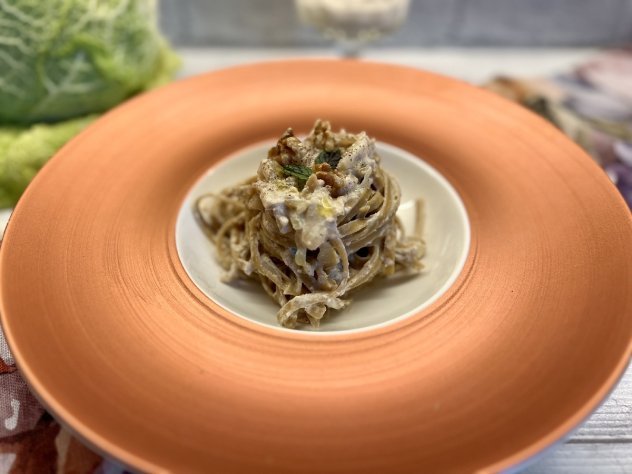
On Christmas Eve we have the tradition of preparing a long-shaped pasta dressed with tomato or walnut sauce, so this year I have decided to share an idea to cook Fettuccine with walnut sauce and cabbage using an artisan pasta made with legume flour and eggs by the pasta maker Spinosi in the Marche region.

Why a legume pasta? Certainly to reduce the carbohydrate amount of the pasta dish during a dinner made up of many courses, but also to increase the sense of satiety and thus reduce the craving for Christmas sweets at the end of the meal.

A characteristic that struck me in Fettuccine Zero+ Spinosi is the rough surface of the pasta, which is something very unusual in the world of gluten-free products. Furthermore, this pasta is an excellent ally in the diet of sports people thanks to its high (plant and animal) protein content.

Have I managed to relieve guilty feelings that are unavoidable during the holiday season? Then, let’s start cooking! and if you are looking for another pasta recipe, have a look at Paccheri filled with artichoke cream.

Fettuccine with walnut sauce and cabbage

15.35g carbohydrates per 100g

Ingredients for 4 servings

  • 300g cabbage or Savoy cabbage
  • 250g Fettuccine Zero+ Spinosi**
  • 1 clove of garlic
  • extra virgin olive oil
  • some walnut kernels
  • some mint leaves

Ingredients for the walnut sauce

  • 100g milk
  • 80g walnut kernels
  • 20g breadcrumbs**
  • a bit of garlic
  • salt and pepper

**Ingredients specific for celiacs

*Ingredients whose labels must read “gluten-free” (or, in Italy, present on  Prontuario AIC)

Preparation

  1. Sauté the cabbage or Savoy cabbage cut in thin strips in a large non-stick pan with a dribble of extra virgin olive oil and a clove of garlic adding some tablespoons of water to complete cooking; set aside.
  2. Prepare the walnut sauce. Soak the breadcrumbs in milk and, once soft, put in a blender with the remaining sauce ingredients. Blend to a smooth and even mixture.
  3. Put a pot of water on the heat, bring to the boil and salt it. Throw Fettuccine and cook al dente; drain and pour the pasta in the pan with the cooked cabbage, then mix adding the walnut sauce and some of the cooking water of Fettuccine.
  4. When Fettuccine are nice and creamy, serve and complete with some walnut kernels, freshly ground pepper, a dribble of extra virgin olive oil and some mint leaves.

fettuccine alla salsa di noci e verza

Version with gluten of Fettuccine with walnut sauce and cabbage

The recipe does not need adaptation for the version with gluten.

Ideas for out-of-home meals are always good because we increasingly eat lunch away from our kitchens. What does our lunch box contain today? An appetising Red rice salad with avocado cream.

Red rice is a wholemeal alternative to white rice, thus an excellent substitute, rich in flavour and, above all, fibre. In this lunch box you will find it paired with a tasty cream of avocado, a fruit rich in antioxidants and cholesterol-friendly mono-unsaturated fatty acids, and a vegetable salad enriched with the Omega 3 of tuna.

Here then is how you can prepare it for another good and satisfying lunch.

Follow me not to run short of ideas for out-of-home meals! And if you are looking for meals with a lower amount of carbs, try my Roastbeef with aubergine cream.

Red rice salad with avocado cream

51.72g carbohydrates for the whole lunch box

Ingredients for 1 lunch box

  • 60g Basmati rice
  • 1/2 avocado
  • 40g drained tuna
  • 40g iceberg lettuce
  • 30g fat free Greek yoghurt
  • 30g carrots
  • 30g pitted green olives
  • lemon juice
  • parsley
  • extra virgin olive oil
  • salt and pepper

**Ingredients specific for celiacs

*Ingredients whose labels must read “gluten-free” (or, in Italy, present on  Prontuario AIC)

Preparation

  1. Boil the red rice in lightly salted water, possibly making sure that the rice completely absorbs the liquid. Season with salt and pepper and drizzle with a little oil.
  2. Mash half an avocado in a bowl and add Greek yoghurt, season with parsley, salt and pepper.
  3. Prepare the salad by cutting iceberg lettuce into strips, grate the carrots, add the pitted olives and dress with extra virgin olive oil, salt and pepper.
  4. Fill the lunch box by placing the red rice in one of the containers with the drained tuna and the avocado cream, while placing the vegetable salad in the second container. Close it up and take it with you!

riso rosso con crema di avocado