Tag Archive for: gluten free with carb counting

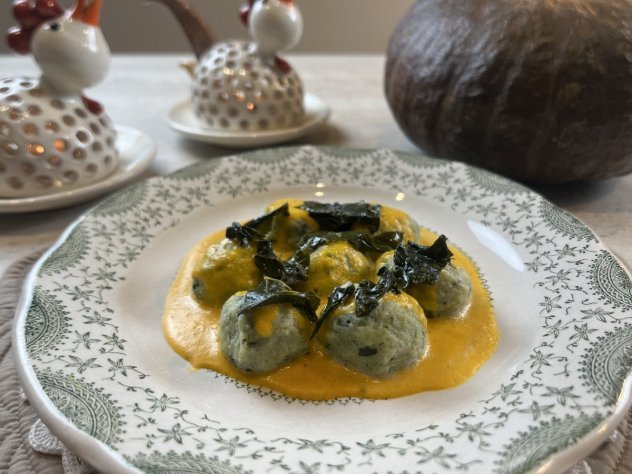
Today I’m bringing you a simple, tasty and wholesome first course: Black Kale Ricotta Bites served with a silky Pumpkin Fondue. This recipe is easy to make yet impressive on the plate—perfect for anyone looking for a colourful, nutritious and naturally gluten-free dish.

Black kale is a true nutritional powerhouse: rich in vitamins A, C and K, fibre and antioxidants, it adds both colour and a pleasant slightly bitter note, beautifully balanced by the creaminess of the ricotta. The pumpkin fondue completes the dish with its natural sweetness and velvety texture, creating a harmonious and irresistible contrast.

These little bites are well-balanced mouthfuls, ideal for those who want a healthy yet satisfying meal—perfect for everyday lunches or dinners with family and friends, as well as for special occasions. An inclusive recipe that celebrates the flavours of autumn with creativity, lightness and taste.

ilaria-bertinelli-pepite-al-cavolo-nero-con-fonduta-di-zucca

Black Kale Ricotta Bites with Pumpkin Fondue

10.4 g carbohydrates per 100 g

Ingredients for 4 servings

  • 375 g ricotta cheese
  • 100 g grated Parmigiano Reggiano
  • 90 g potato starch*
  • 20 g brown rice flour*
  • 150 g black kale
  • 1 egg
  • 1 garlic clove
  • extra virgin olive oil
  • brown rice flour*, for dusting
  • salt and pepper

 Ingredients for the pumpkin fondue

  • 300 g milk
  • 200 g cooked, peeled pumpkin (see below on how to cook it)
  • 100 g grated Parmigiano Reggiano
  • nutmeg
  • salt and pepper

**Ingredients specific for celiacs

*Ingredients whose labels must read “gluten-free” (or, in Italy, present on  Prontuario AIC)

 Preparation

  1. Wash the black kale, remove the tough stems and slice the leaves into thin strips. Place them in a non-stick pan with olive oil, a garlic clove, a pinch of salt and a ladle of water. Cook until the kale is tender.
  2. Set aside a few leaves to decorate your plates, then transfer the remaining kale to a blender and blend into a smooth mixture.
  3. In a bowl, combine the ricotta, flour, grated Parmigiano Reggiano, blended kale and the egg. Adjust the seasoning with salt, then shape the mixture into small balls about 3 cm in diameter. Place some wholegrain rice flour in a shallow bowl and roll the ricotta bites in it to lightly coat the surface.
  4. Pour the milk into a small saucepan and bring to a boil. Add the grated Parmigiano Reggiano, stir well, then add the cooked pumpkin mashed with a fork. Whisk until you obtain a smooth, creamy fondue. Adjust with salt, pepper and nutmeg.
  5. Spoon a little of the pumpkin fondue onto each serving plate.
  6. Bring a pot of water to a boil, salt it, then gently add the ricotta bites. Cook them until they rise to the surface. Remove them with a slotted spoon, place them on the pumpkin fondue and top with a little more fondue. Finish with the black kale leaves you set aside for decoration.
  7. Serve hot.

How to cook the pumpkin: Cut the pumpkin into cubes and cook it in the microwave at 800 W for 4 minutes, or in a small saucepan with a splash of water.

As the holiday season approaches, the desire to prepare simple yet impressive desserts grows—little treats to enjoy with a cup of tea or delightful bites to bring to the table and surprise family and friends. These gluten-free Pumpkin Bounty Bars are an easy and quick recipe, perfect for anyone looking for a Christmas sweet that brings together flavour, lightness, and a touch of festive colour.

Pumpkin, with its natural sweetness and creamy texture, makes each bite soft and comforting, while ricotta adds balance and lightness. The desiccated coconut completes the magic with its fresh, exotic note. The result? Small 25-gram treats—indulgent yet nutritionally balanced—ideal for a snack or as a mini dessert at the end of a meal.

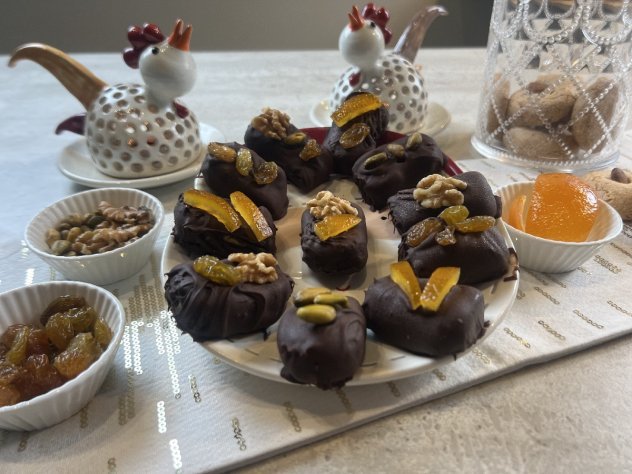
Coated in dark chocolate and decorated with almonds, raisins, or candied orange peel, these Pumpkin Bounty Bars bring a charming mix of colours and aromas to your holiday table. They’re perfect for creating a Christmas dessert corner, enriching a festive buffet, or offering as a thoughtful homemade gift.

An inclusive, naturally gluten-free recipe that celebrates autumn flavours and the magic of Christmas with simplicity and creativity.

ilaria-bertinelli-bounty-alla-zucca

Pumpkin Bounty Bars

24.4 g carbohydrates per 100 g (without decorations)
6.1 g carbohydrates per 1 pumpkin bounty

Ingredients

  • 200 g ricotta cheese
  • 80 g desiccated grated coconut*
  • 70 g cooked pumpkin, already cleaned
  • 40 g icing sugar*
  • 150 g dark chocolate

Ingredients to decorate

  • Almonds, raisins, and orange peel

**Ingredients specific for celiacs

*Ingredients whose labels must read “gluten-free” (or, in Italy, present on  Prontuario AIC)

Preparation

  1. Mash the cooked pumpkin with a fork or blend it until smooth.
  2. Soften the ricotta in a bowl, then add the icing sugar, pumpkin purée, and finally the desiccated coconut.
  3. Shape the mixture into 25-gram bars, place them on a plate and refrigerate for at least 30 minutes.
  4. In the meantime, melt the dark chocolate over a bain-marie or in the microwave and let it cool slightly.
  5. Dip each coconut bar into the chocolate to coat it completely, lay it on a baking sheet lined with parchment paper, and decorate with raisins, almonds, or orange peel.
  6. Store in the fridge until ready to serve.

ilaria-bertinelli-bounty-alla-zucca

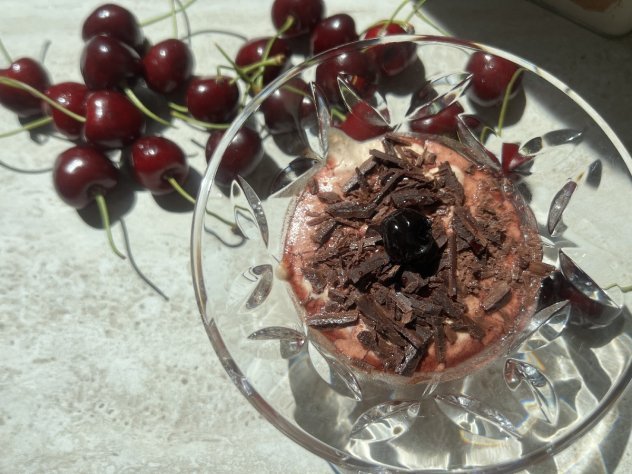
Cherry Mousse with Dark Chocolate is a simple and refreshing dessert, perfect for summer but also ideal all year round for lovers of chilled sweets.
It can easily be adapted with other seasonal fruits: peaches, apricots, berries or plums work wonderfully in place of cherries, allowing us to update the recipe month by month, following nature’s rhythm.

To reduce the fat content, I used fat-free Greek yogurt to balance out the cream.
Thanks to the natural sweetness of the fruit and the other ingredients used, there’s no need to add sugar: a few drops of sweetener are more than enough, depending on your personal taste and dietary needs.

This recipe is quick and easy, requires no baking, and is always visually impressive. It keeps well in the fridge and is perfect as a light and elegant summer dessert or an afternoon treat.

If you enjoy spoon desserts, here’s another summer idea: my Peach pudding with coconut and mint with no added sugars.

Cherry mousse with dark chocolate

 14.79g carbohydrates per 100g using liquid sweetener

Ingredients for 10-12 servings

  • 380 g cherries (pitted weight)
  • 250 g cream
  • 250 g fat-free Greek yogurt
  • 70 g dark chocolate*
  • 15 g sheet gelatin*
  • 10–12 Luxardo cherries in syrup*
  • Liquid sweetener* or sugar, to taste

*Ingredients whose labels must read “gluten-free” (or, in Italy, present on  Prontuario AIC)

Preparation

  1. Soak the gelatin in cold water, then melt it in 2 tablespoons of warm cream and let it cool slightly.
  2. Blend the cherries (or your chosen fruit) and set aside.
  3. Whip the cream and gently fold in the yogurt. Add the blended cherries and the dissolved gelatin. Sweeten to taste, then pour the mixture into individual serving bowls or glasses and refrigerate for a few hours to set.
  4. Before serving, top with chopped dark chocolate and one maraschino cherry with a little syrup (approx. 9 g per portion).

Ilaria-bertinelli-mousse-di-ciliegie-con-cioccolato-fondente

For a snack, an aperitif or to enrich the bread basket, try the Onion and anchovy flat bread.

Try a fibre-rich dough using not only wholemeal flour, but also soluble fibre i.einulinwhich is essential to reduce the glycaemic index of the preparation. The presence of a very simple filling of onions and anchovies also enriches the nutritional profile of the recipe: additional fibre from the onions and all the goodness of Omega 3 from the anchovies.

Since I had them available, I decided to try using Giarratane onions, the sweet, extra large Sicilian onions that are perfect when combined with tasty anchovies, for a truly mouth-watering result.

If you feel like turning on the oven and making Focaccia, try the Buckwheat and Corn Focaccia.

Onion and anchovy flat bread

carbohydrates 38.82g per 100g

schiaccia-di-cipolle-e-alici

Ingredients for a flat bread of 28cm diameter

  • 400g gluten free bread flour mix, brand Nutrifree** (for the version with gluten, see below)
  • 400g water
  • 400g onions
  • 60g brown rice flour*
  • 20 g inulin*
  • 20g buckwheat flour*
  • 10-12 anchovies in oil
  • 8g brewer’s yeast
  • 8g salt
  • extra virgin olive oil
  • dried oregano
  • salt and pepper

**Ingredients specific for celiacs

*Ingredients whose labels must read “gluten-free” (or, in Italy, present on  Prontuario AIC)

Preparation

  1. Dissolve the brewer’s yeast in the water.
  2. Place the flours and inulin in the bowl of a planetary mixer, start mixing and add the water with the yeast in a trickle; mix for 5 minutes at medium speed, then add the salt and 3 tablespoons of extra virgin olive oil, mixing for another 3-4 minutes.
  3. Form a ball with the dough, place it in a bowl and lightly grease the surface with extra virgin olive oil; cover with cling film and leave to rise until doubled in volume (approx. 2 hours).
  4. Meanwhile, slice the onions and slowly fry them in a non-stick pan with a little oil. Season with oregano, adjust salt and pepper and set aside.
  5. Divide the dough into two parts, one slightly larger to form the base of the flat bread: roll the dough out onto a sheet of baking paper and cover a baking tin at least 28 cm in diameter.
  6. Stuff with the onions left to cool and the chopped anchovies; cover the filling with a second disc of dough, pierce it with a fork and brush the surface with extra virgin olive oil.
  7. Bake in a convection oven preheated to 200°C for 30 minutes.

schiaccia-di-cipolle-e-alici

Version with gluten of Onion and anchovy flat bread

For the dough, replace the Nutrifree flour, rice flour and buckwheat flour with 500g of all-purpose flour and mix it with 330g of water. The preparation and filling remain unchanged.

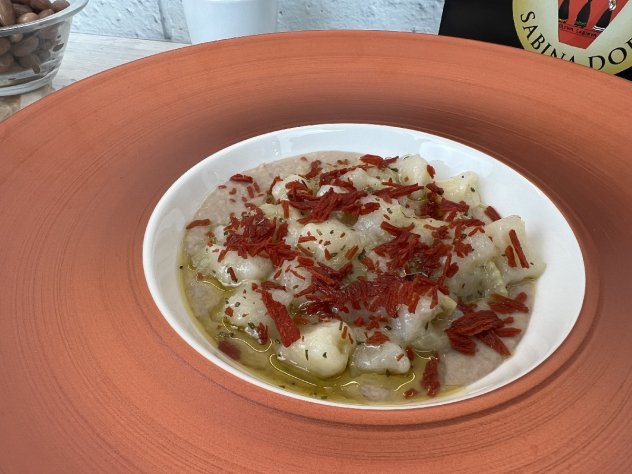
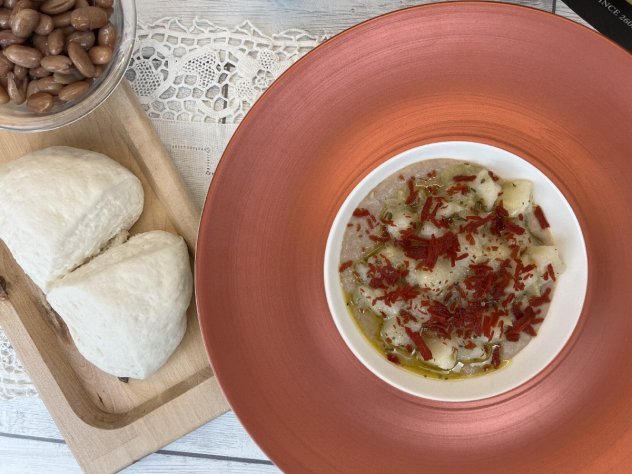
Would you like an original idea coming from the tradition of a land very dear to me? Here are the Pizzicotti with Fagiolo gentile di Labro bean cream topped with an irresistible oil flavoured with ginger and marjoram.

Once again, the gastronomic journey is in Lazio thanks to the Rieti Chamber of Commerce, which sent us the local ingredients to prepare this recipe with a very special ingredient: Fagiolo gentile di Labro a Slow Food Presidium and a product included in the list of Italian Traditional Agricultural Products (PAT in Italian).  It is a variety of bean that grows exclusively in the Avanzana Valley at the foot of the village of Labro, in the province of Rieti. It is light brown in colour and its fame is due to the tenderness of its skin and its delicate, sweet taste: the adjective ‘gentile’, i.e. gentle, by which it is called derives from such sweetness.

This traditional dish from Lazio is a perfect meal from a nutritional point of view, so why not use it as a holiday season dish? It is perfect both to brighten up banquets and to alternate meals characterised by the presence of meat and fish with a vegetarian recipe rich in plant protein and plenty of fibre.

To discover the great classic of the Rieti land, read my article and recipe for the The Perfect Amatriciana.

pizzicotti-con-crema-di-fagioli-di-labro

Pizzicotti with Fagiolo gentile di Labro bean cream and aromatic oil

29.6g carbohydrates per 100g 

Ingredients for 4 servings

  • 250g flour mix for bread, brand Nutrifree**
  • 180g water
  • 150g dried Fagiolo gentile di Labro beans
  • 4g brewer’s yeast
  • 50g extravirgin olive oil Sabina DOP
  • 20g dehydrated tomato flakes
  • 2 shallots
  • 2 celery sticks
  • 2 bay leaves
  • 1 piece of fresh ginger
  • 1 sprig of rosemary
  • marjoram
  • vegetable stock
  • grated Pecorino cheese
  • 1 pinch of bicarbonate of soda or 1 piece of Kombu seaweed

**Ingredients specific for celiacs

*Ingredients whose labels must read “gluten-free” (or, in Italy, present on  Prontuario AIC)

Preparation

  1. Soak the beans the night before in plenty of water and baking soda or a piece of Kombu seaweed.
  2. Warm up 50g of extra-virgin olive oil and infuse it with pieces of fresh ginger and marjoram leaves: you will obtain an aromatic oil that you can also use for other preparations.
  3. Dissolve the brewer’s yeast in a bit of water at room temperature, then pour it into a bowl with the flour and a pinch of salt and add the water required to obtain a smooth, not too hard dough.
  4. Divide the dough into at least 4 pieces, cover them with a tea towel and leave them to rise for about 20 minutes.
  5. In a saucepan, brown 1 shallot and 1 chopped celery stick in a little extra virgin olive oil and a sprig of rosemary, then add the soaked beans and bay leaves, cover with vegetable stock and cook (for at least 1 hour). When the beans are cooked, remove the bay leaf and rosemary and whisk to obtain a thick and creamy velouté. Season with salt and pepper.
  6. In a non-stick pan, put a drizzle of extra virgin olive oil and sauté the remaining shallot and celery finely chopped, season with chopped rosemary and sprinkle with vegetable stock to cook.
  7. After the dough has risen, bring a pot of water to the boil and lightly salt it. Take the pieces of dough, shape them into thin cylinders of about 1.5cm diameter and pinch them cutting off small knobs to be thrown into boiling water. Continue throwing the dough knobs into the boiling water and let them cook for at least 5 minutes considering that they would not become too cooked. Drain the ‘Pizzicotti’ with a slotted spoon, toss them into the non-stick pan with the chopped shallot and celery and allow them to cream slightly, adding a little cooking water.
  8. Serve on individual plates, preferably in a soup dish, forming a layer of bean cream topped with Pizzicotti and a dribble of aromatic oil, grated Pecorino cheese and a pinch of dried tomato flakes.

pizzicotti-con-crema-di-fagioli-di-labro

Version with gluten of Pizzicotti with Fagiolo gentile di Labro bean cream and aromatic oil

Replace the flour mix for bread Nutrifree with an equal amount of wheat flour and adjust the amount of water to obtain a bread-like texture.

What can you prepare when you are caving for a savoury snack, but you have little time available and don’t want to use the oven? This Pan-cooked creamy flatbread is a perfect solution for snacks, aperitifs, garden parties and unannounced guests.

Prepare the dough in few minutes, leave to rest for 30 minutes and that’s it: roll out two disks of dough and stuff them with your favourite ingredients or what you have available in the fridge or larder.

I found the perfect occastion to enjoy the vegetable creams with no preservatives and no gluten of the Citres company, my booth neighbours at the Cibus 2024 food exhibition. I made my Pan-cooked creamy flatbread both with Radicchio cream which you will find in the recipe below, and with Pumpkin cream which I used with slices of Taleggio cheese: cook both of them because it will be very hard to decide your favourite one.

Schiacciata-in-padella

Pan-cooked creamy flatbread

33.22g carbohydrates per 100g

Ingredients for the dough

  • 150g flour mix for bread, brand Nutrifree**
  • 100g milk
  • 10g extravirgin olive oil
  • salt

Ingredients for stuffing

**Ingredients specific for celiacs

*Ingredients whose labels must read “gluten-free” (or, in Italy, present on Prontuario AIC)

Preparation

  1. Prepare the dough mixing all the ingredients in a bowl until you obtain an even and firm mixture. Cover the dough with cling film and leave to rest for 30 minutes.
  2. Divide the dough in half and roll out each half with a rolling pin to obtain two disks of about 24cm diameter, but with one the two slightly larger.
  3. Spread the Radicchio cream and cream cheese on the larger disk leaving about 1-1.5cm along the permiter uncovered, then top with the second disk and fold the edge to seal the disks.
  4. Slightly grease a non-stick pan, better using spray extra virgin olive oil, and cook the flatbread for about 5 minutes on each side using a lid to turn it half-way through the cooking.
  5. Serve the flatbread hot and be creative with stuffing ideas!

Schiacciata-in-padella

As summer officially begins on 21st June, June salads will delight us with the addition of seasonal fruit.

Asparagus continues to be present, which we can enjoy with a mouth-watering cheese cream and plums for a salad that also becomes a green all-in-one dish, great to take to the office or to the pool in a convenient lunch box.

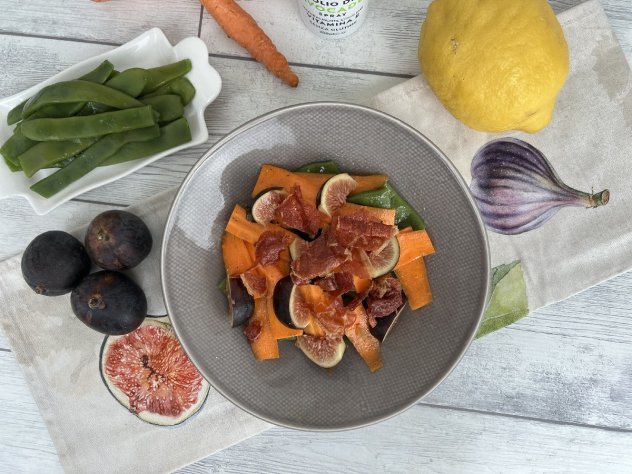
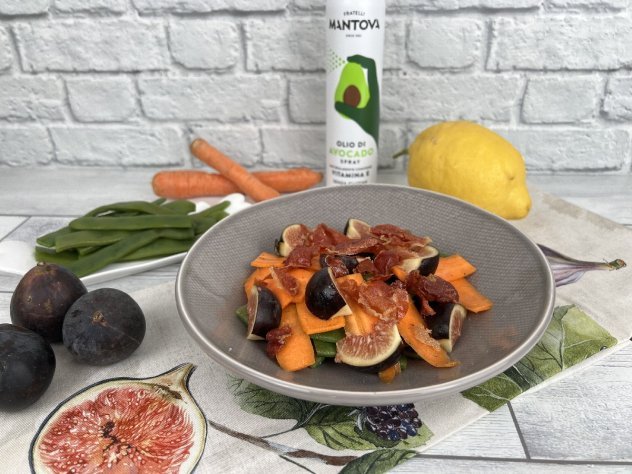
My salad with cooked vegetables features snow peas accompanied by carrots, but above all by the contrast of the sweetness of the figs and the saltiness of the crispy Prosciutto di Parma: as an appetiser, main course or as a one-course meal, the Salad of snow peas and figs will win you over with its explosion of flavours.

The tip I want to share with June salads is the use of spray oil, a very interesting way to dress our dishes. Why?

For two main reasons: the first is that we will use up to 90 per cent less oil for dressing, thus significantly reducing the calorie intake of the salads themselves; the second is that in the canned bag of Fratelli Mantova the oil is stored in the dark and protected from the air, thus guaranteeing ideal preservation.

My choice for these salads is avocado oil containing 100% oil extracted from the pulp of the avocado fruit, rich in vitamin E, with a light and delicate taste and texture.

For more ideas, see also the reinforced salads of May.

Asparagus and plum salad

carbohydrates 7.76g for 1 serving

insalata-di-asparagi-e-prugne

Ingredients for 1 salad

  • 3-4 asparagus
  • 50g plums
  • 30g soy milk*
  • 30g Ricotta cheese
  • 20g Robiola cheese
  • shelled pistachios
  • 1 lemon with edible zest
  • Fratelli Mantova’s avocado oil
  • salt and pepper

*Ingredients whose labels must read “gluten free” (or, in Italy, present on  Prontuario AIC)

Preparation

  1. With a mandoline, slice the asparagus into ribbons and marinate them for at least 15 minutes with a teaspoon of lemon juice, salt, pepper and a splash of avocado oil.
  2. Prepare a cream by mixing ricotta, robiola, grated lemon peel and a grinding of pepper.
  3. Assemble the salad by placing the asparagus ribbons in a salad bowl, the cheese cream, the plums cut into wedges and a sprinkling of shelled pistachios.

insalata-di-asparagi-e-prugne

Snow pea and fig salad

carbohydrates 9.58g for 1 serving

insalata-di-taccole-e-fichi

Ingredients for 1 serving

Preparation

  1. Slice the carrots into ribbons using a mandoline, season them with lemon juice, salt, pepper and a splash of avocado oil, then allow to rest for the time needed to prepare the other ingredients.
  2. Boil the snow peas in boiling salted water until cooked but still firm. Plunge them into cold water, then drain immediately.
  3. Place the Prosciutto slice on a plate and let it crisp up in the microwave or in a non-stick frying pan: in the microwave, set the oven on low power for short periods of time until the desired crispiness is reached; in the frying pan, do not grease the bottom and cook on low heat until crispy.
  4. Assemble the salad by placing the snow beans on the bottom of the salad bowl, the carrot ribbons and a well-washed fig cut into wedges, season with a pinch of salt, pepper and a splash of avocado oil, then finish by adding the crispy prosciutto slice.

insalata-di-taccole-e-fichi

For me, the gastronomic journey in the Rieti area has become an annual appointment that has been repeated for three years now and that each time makes me discover new recipes of a cuisine made of few ingredients, authentic and with an unmistakable flavour: this is what Gnocchetti in frasca gluten-free dumplings make you experience.

But what are Gnocchetti in frasca? They are a dish handed down by the inhabitants of Micciani in Cittaducale, prepared with grains that were harvested and milled in the mills along the Peschiera river in the Velino Valley. These small dumplings were in fact prepared by mixing two flours, corn and wheat flour (which I have replaced with a gluten-free flour), on which the survival of families was based. The accompanying sauce is based on stewed beans that were flavoured with a few slices of guanciale, i.e. pork cheek, to give an unmistakable touch of flavour and the calories needed to cope with the hard work in the fields and the harsh temperatures of winter.

Today, considering instead that the need is to reduce calories more and more, we can possibly do without the splendid guanciale (which I used while remaining faithful to tradition, choosing the Guanciale amatriciano Sano) to prepare Gnocchetti in frasca with beans and tomato, thus transforming the recipe into a vegan and nutritionally balanced dish.

Tradition dictates that Gnocchetti are served as a soup by adding the cooking water from previously prepared Borlotti beans: in short, the perfect dish for cold winter days.

Read about the history of Spaghetti all’Amatriciana to get to know a land yet to be discovered.

gnocchetti-in-frasca

Gnocchetti in frasca gluten-free dumplings

20g carbohydrates per 100g

considering adding 500g of cooking water to the soup

Ingredients for 6 servings

  • 400g tomato sauce
  • 200g gluten-free pasta flour mix, brand Molino Dallagiovanna**
  • 200g coarse corn flour*
  • approx. 160g lukewarm water
  • 150g dry Borlotti beans
  • 2 slices of pork cheek*
  • 1 bay leaf
  • 1 piece of Kombu seaweed (optional)
  • extra virgin olive oil
  • salt and pepper

**Ingredients specific for celiacs

*Ingredients whose labels must read “gluten-free” (or, in Italy, present on  Prontuario AIC)

Preparation

  1. Soak the Borlotti beans for at least 12 hours, adding a piece of Kombu seaweed of your choice, which will help the digestion of the legumes once cooked. Cook the beans in plenty of water with the addition of a bay leaf, then keep them aside.
  2. Cut the pork cheek into cubes and put in a large pan to brown with a drizzle of oil, then add the tomato sauce and let it flavour for at least 15 minutes. Add the cooked Borlotti beans with a few ladles of their cooking water to make the soup rather liquid.
  3. Place the two flours on a chopping board forming a well, add a pinch of salt and start adding the lukewarm water in the centre of the well, mixing with a fork to start forming a dough. Add the water gradually as the amount may vary depending on the flour and humidity. When the flours are mixed enough to be worked by hand, start kneading them with your hands to obtain a homogeneous, smooth, firm and non-sticky mixture.
  4. Take pieces of dough, form long cylinders with your hands and cut them into 1 cm square dumplings.
  5. Put a large pot of water on the stove, salt it when it comes to the boil and throw in the dumplings to cook them. Drain them with a slotted spoon and pour them into the pan with the Borlotti bean sauce to allow them to take on flavour, adding more Borlotti cooking water. Season with salt and pepper and serve the Gnocchetti when they have the desired texture and flavour.

Version with gluten of Gnocchetti in frasca dumplings

Replace the Molino Dallagiovanna fresh pasta flour mix with an equal amount of wheat flour, adjusting the amount of water needed for kneading.

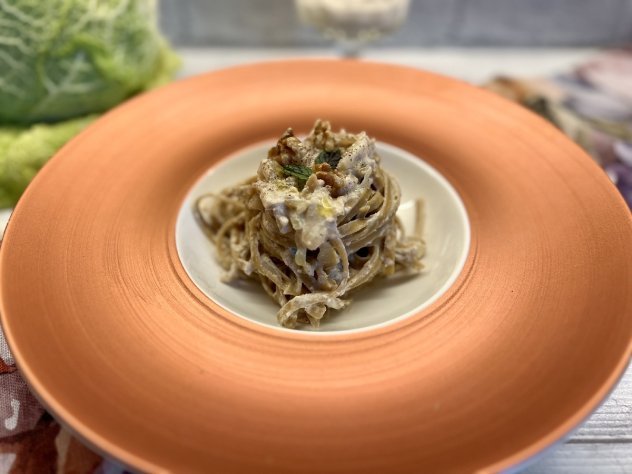
On Christmas Eve we have the tradition of preparing a long-shaped pasta dressed with tomato or walnut sauce, so this year I have decided to share an idea to cook Fettuccine with walnut sauce and cabbage using an artisan pasta made with legume flour and eggs by the pasta maker Spinosi in the Marche region.

Why a legume pasta? Certainly to reduce the carbohydrate amount of the pasta dish during a dinner made up of many courses, but also to increase the sense of satiety and thus reduce the craving for Christmas sweets at the end of the meal.

A characteristic that struck me in Fettuccine Zero+ Spinosi is the rough surface of the pasta, which is something very unusual in the world of gluten-free products. Furthermore, this pasta is an excellent ally in the diet of sports people thanks to its high (plant and animal) protein content.

Have I managed to relieve guilty feelings that are unavoidable during the holiday season? Then, let’s start cooking! and if you are looking for another pasta recipe, have a look at Paccheri filled with artichoke cream.

Fettuccine with walnut sauce and cabbage

15.35g carbohydrates per 100g

Ingredients for 4 servings

  • 300g cabbage or Savoy cabbage
  • 250g Fettuccine Zero+ Spinosi**
  • 1 clove of garlic
  • extra virgin olive oil
  • some walnut kernels
  • some mint leaves

Ingredients for the walnut sauce

  • 100g milk
  • 80g walnut kernels
  • 20g breadcrumbs**
  • a bit of garlic
  • salt and pepper

**Ingredients specific for celiacs

*Ingredients whose labels must read “gluten-free” (or, in Italy, present on  Prontuario AIC)

Preparation

  1. Sauté the cabbage or Savoy cabbage cut in thin strips in a large non-stick pan with a dribble of extra virgin olive oil and a clove of garlic adding some tablespoons of water to complete cooking; set aside.
  2. Prepare the walnut sauce. Soak the breadcrumbs in milk and, once soft, put in a blender with the remaining sauce ingredients. Blend to a smooth and even mixture.
  3. Put a pot of water on the heat, bring to the boil and salt it. Throw Fettuccine and cook al dente; drain and pour the pasta in the pan with the cooked cabbage, then mix adding the walnut sauce and some of the cooking water of Fettuccine.
  4. When Fettuccine are nice and creamy, serve and complete with some walnut kernels, freshly ground pepper, a dribble of extra virgin olive oil and some mint leaves.

fettuccine alla salsa di noci e verza

Version with gluten of Fettuccine with walnut sauce and cabbage

The recipe does not need adaptation for the version with gluten.

Easter is approaching and with it the traditions of Easter sweet and savoury recipes with which we celebrate it. This year I thought I would share with you the recipe for a biscuit that I love and that was the star of the course dedicated to Italian Biscuits: I am talking about the gluten-free and traditional  Canestrelli  recipe that you can give to your loved ones with the certainty of making them happy, a perfect gift also for Father’s Day.

The Canestrelli recipe between legends and truths

Canestrelli biscruits are so famous and popular that they need no introduction, yet not many people know their history and preparation techniques.

Their origin dates back to the Middle Ages and even then they were so popular to be depicted on Genovini, i.e. the coins minted from 1252 onwards by the Genoese Republic. The value of this biscuit was linked not only to its taste, but also to the ingredients used, namely white flour and butter, which in the hinterland of Genoa, in the Val di Trebbia, were true rarities, so much so that Canestrelli were used for centuries as currency.

And the name Canestrello is also linked to notoriety as it first appeared in an official document in 1576 that reported on a hapless muleteer stabbed and robbed of a ‘basket’ of biscuits (basket being ‘canestro’ in Italian, hence the name of the biscuits), confirming the value that was attributed to this product.

Precious ingredients and… magical mistakes

While it was considered scandalous to ‘waste’ white flour and butter on a biscuit, there is no shortage of legends to explain why hard-boiled egg yolks are used in the Canestrelli dough instead of fresh eggs (in fact, shortcrust pastry made with hard-boiled egg yolks is a specific type of dough that results in cakes with a crumbly, silky texture).

One such story tells of a woman baker who, on the very day she had a large order of biscuits to prepare, did not wake up as usual. Her husband, in an attempt to help her, had hard-boiled all the eggs to have them ready for breakfast the following days. Having no time to buy more eggs, the baker decided to use the hard-boiled yolks to prepare the biscuit dough: these biscuits were so successful that they became famous throughout the region.

As is often the case in Italy, typical recipes have countless local and even family variants, and Canestrelli are no exception, so although they are recognised as Traditional Food Products (PAT) of Liguria, ingredients and preparation may vary slightly from area to area.

But what are their main characteristics?

Definitely the daisy shape that goes from a diameter of about 10cm with scalloped edges to smaller diameters to be eaten in one bite. The central hole is proportionate to the diameter, while the thickness is always quite high, at least 7 millimetres. The colour is barely golden, made even lighter by the icing sugar with which the surface is dusted.

So, are you now feeling like turning on the oven and baking some biscuits? Do you have some paper bags ready to wrap them for daddy or as a gift for Easter? Have fun with my gluten free Canestrelli!

Canestrelli senza glutine

The typical flower shape of Canestrelli

Gluten free and traditional Canestrelli

carbohydrates 64.31g per 100g canestrelli without icing sugar on the surface

Ingredients for 23 biscuits

  • 120g butter
  • 100g gluten free flour mix for bread, brand BiAglut** (wheat flour for a version with gluten)
  • 100g potato starch or corn starch*
  • 50g icing sugar*
  • 2 yolks of hard-boiled eggs
  • grated rind of 1/2 lemon
  • 1 pinch of salt
  • 1 egg white for brushing
  • icing sugar* to complete

**Ingredients specific for celiacs

*Ingredients whose labels must read “gluten-free” (or, in Italy, present on  Prontuario AIC)

Preparation

  1. Put the eggs in boiling water and boil them for 8 minutes; shell them and extract the hard-boiled yolks.
  2. Place the flour, icing sugar, soft butter, starch and sifted egg yolks in a bowl or planetary mixer and start mixing, add the pinch of salt and grated lemon zest, then knead until smooth and firm. Initially the dough will seem dry, but once the butter is mixed in, it will be soft and smooth. Cover the mixture with cling film and put in the refrigerator for 1 hour.
  3. Roll out the shortcrust pastry to a thickness of approx. 7mm-1cm, then cut the biscuits using the flower-shaped cookie mould with the hole in the centre. Brush them with egg white.
  4. Put Canestrelli on a baking tin covered with parchment paper and bake them in a static oven preheated to 170°C for about 15-20 minutes without allowing them to get brow: it is important not to bake them too much!
  5. Let them cool down, then dust with icing sugar.

The mould for cutting Canestrelli 

Version with gluten of Canestrelli

Replace the gluten-free flour with an equal amount of wheat flour.