Tag Archive for: carb count

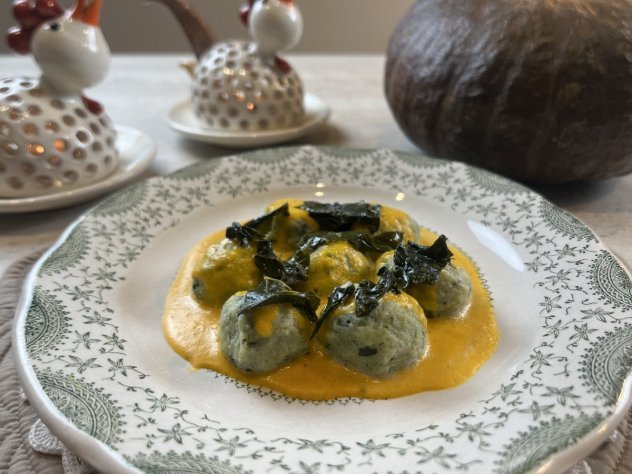
Today I’m bringing you a simple, tasty and wholesome first course: Black Kale Ricotta Bites served with a silky Pumpkin Fondue. This recipe is easy to make yet impressive on the plate—perfect for anyone looking for a colourful, nutritious and naturally gluten-free dish.

Black kale is a true nutritional powerhouse: rich in vitamins A, C and K, fibre and antioxidants, it adds both colour and a pleasant slightly bitter note, beautifully balanced by the creaminess of the ricotta. The pumpkin fondue completes the dish with its natural sweetness and velvety texture, creating a harmonious and irresistible contrast.

These little bites are well-balanced mouthfuls, ideal for those who want a healthy yet satisfying meal—perfect for everyday lunches or dinners with family and friends, as well as for special occasions. An inclusive recipe that celebrates the flavours of autumn with creativity, lightness and taste.

ilaria-bertinelli-pepite-al-cavolo-nero-con-fonduta-di-zucca

Black Kale Ricotta Bites with Pumpkin Fondue

10.4 g carbohydrates per 100 g

Ingredients for 4 servings

  • 375 g ricotta cheese
  • 100 g grated Parmigiano Reggiano
  • 90 g potato starch*
  • 20 g brown rice flour*
  • 150 g black kale
  • 1 egg
  • 1 garlic clove
  • extra virgin olive oil
  • brown rice flour*, for dusting
  • salt and pepper

 Ingredients for the pumpkin fondue

  • 300 g milk
  • 200 g cooked, peeled pumpkin (see below on how to cook it)
  • 100 g grated Parmigiano Reggiano
  • nutmeg
  • salt and pepper

**Ingredients specific for celiacs

*Ingredients whose labels must read “gluten-free” (or, in Italy, present on  Prontuario AIC)

 Preparation

  1. Wash the black kale, remove the tough stems and slice the leaves into thin strips. Place them in a non-stick pan with olive oil, a garlic clove, a pinch of salt and a ladle of water. Cook until the kale is tender.
  2. Set aside a few leaves to decorate your plates, then transfer the remaining kale to a blender and blend into a smooth mixture.
  3. In a bowl, combine the ricotta, flour, grated Parmigiano Reggiano, blended kale and the egg. Adjust the seasoning with salt, then shape the mixture into small balls about 3 cm in diameter. Place some wholegrain rice flour in a shallow bowl and roll the ricotta bites in it to lightly coat the surface.
  4. Pour the milk into a small saucepan and bring to a boil. Add the grated Parmigiano Reggiano, stir well, then add the cooked pumpkin mashed with a fork. Whisk until you obtain a smooth, creamy fondue. Adjust with salt, pepper and nutmeg.
  5. Spoon a little of the pumpkin fondue onto each serving plate.
  6. Bring a pot of water to a boil, salt it, then gently add the ricotta bites. Cook them until they rise to the surface. Remove them with a slotted spoon, place them on the pumpkin fondue and top with a little more fondue. Finish with the black kale leaves you set aside for decoration.
  7. Serve hot.

How to cook the pumpkin: Cut the pumpkin into cubes and cook it in the microwave at 800 W for 4 minutes, or in a small saucepan with a splash of water.

As the holiday season approaches, the desire to prepare simple yet impressive desserts grows—little treats to enjoy with a cup of tea or delightful bites to bring to the table and surprise family and friends. These gluten-free Pumpkin Bounty Bars are an easy and quick recipe, perfect for anyone looking for a Christmas sweet that brings together flavour, lightness, and a touch of festive colour.

Pumpkin, with its natural sweetness and creamy texture, makes each bite soft and comforting, while ricotta adds balance and lightness. The desiccated coconut completes the magic with its fresh, exotic note. The result? Small 25-gram treats—indulgent yet nutritionally balanced—ideal for a snack or as a mini dessert at the end of a meal.

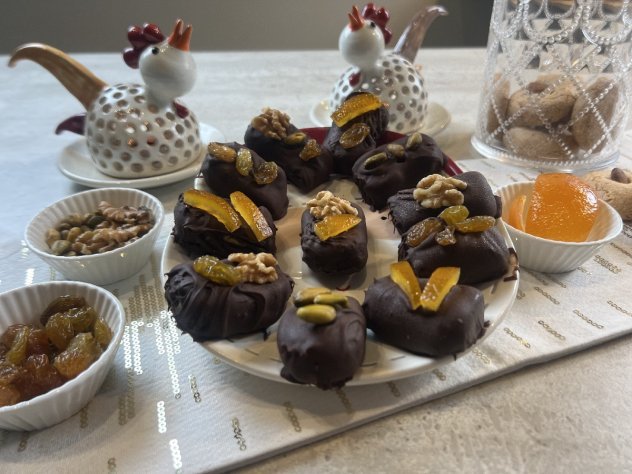
Coated in dark chocolate and decorated with almonds, raisins, or candied orange peel, these Pumpkin Bounty Bars bring a charming mix of colours and aromas to your holiday table. They’re perfect for creating a Christmas dessert corner, enriching a festive buffet, or offering as a thoughtful homemade gift.

An inclusive, naturally gluten-free recipe that celebrates autumn flavours and the magic of Christmas with simplicity and creativity.

ilaria-bertinelli-bounty-alla-zucca

Pumpkin Bounty Bars

24.4 g carbohydrates per 100 g (without decorations)
6.1 g carbohydrates per 1 pumpkin bounty

Ingredients

  • 200 g ricotta cheese
  • 80 g desiccated grated coconut*
  • 70 g cooked pumpkin, already cleaned
  • 40 g icing sugar*
  • 150 g dark chocolate

Ingredients to decorate

  • Almonds, raisins, and orange peel

**Ingredients specific for celiacs

*Ingredients whose labels must read “gluten-free” (or, in Italy, present on  Prontuario AIC)

Preparation

  1. Mash the cooked pumpkin with a fork or blend it until smooth.
  2. Soften the ricotta in a bowl, then add the icing sugar, pumpkin purée, and finally the desiccated coconut.
  3. Shape the mixture into 25-gram bars, place them on a plate and refrigerate for at least 30 minutes.
  4. In the meantime, melt the dark chocolate over a bain-marie or in the microwave and let it cool slightly.
  5. Dip each coconut bar into the chocolate to coat it completely, lay it on a baking sheet lined with parchment paper, and decorate with raisins, almonds, or orange peel.
  6. Store in the fridge until ready to serve.

ilaria-bertinelli-bounty-alla-zucca

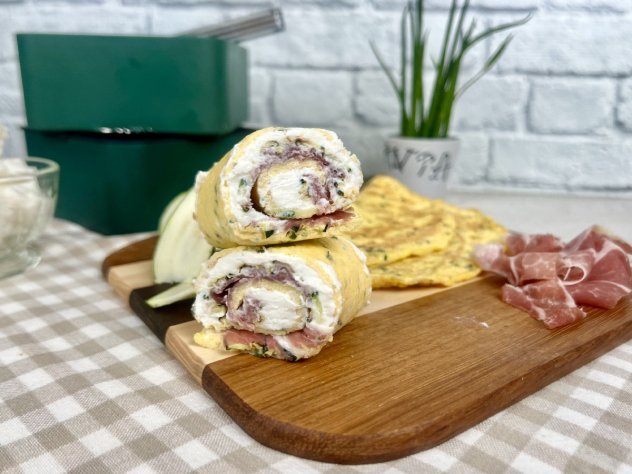
With the return to school and university, the challenge is always the same: finding practical, healthy, and tasty lunch box ideas. This Creamy Frittata with Grilled Courgettes is the perfect solution: quick to prepare, light yet full of flavor, and made irresistible by its creamy ricotta layer, grilled zucchini, and the special touch of Parma Ham.

Rolled up and cut in half, it fits perfectly into a lunch box and is easy to enjoy anywhere.

Paired with bread, seasonal fruit, and some crunchy vegetables, it becomes a complete meal you can conveniently take with you.

Discover more lunch box ideas, such as this Venere rice salad with cherry tomatoes and pistachios.

ilaria-bertinelli-frittata-cremosa-con-zucchine-grigliate

Creamy frittata with grilled courgettes

2g carbohydrates per 100g

Ingredients for 2 Frittatas

  • 200g sheep’s ricotta
  • 4 eggs
  • 1 courgette
  • 30g grated Parmigiano Reggiano
  • Parma Ham (I used the shank part)
  • chopped fresh herbs
  • extra virgin olive oil
  • salt and pepper

**Ingredients specific for celiacs

*Ingredients whose labels must read “gluten-free” (or, in Italy, present on  Prontuario AIC)

Preparation

  1. Slice the courgettes thinly with a mandoline and quickly grill them on both sides.
  2. Beat the eggs in a bowl with a pinch of salt, add the grated Parmigiano, and cook 2 frittatas in a 22 cm non-stick pan until set.
  3. Sieve the ricotta to make it creamy, season it with chopped herbs, one tablespoon of olive oil, salt, and pepper.
  4. Spread the frittatas out, cover with a layer of ricotta, add the grilled courgettes, and finish with slices of Parma Ham. Roll them up and place in the lunch box, cut in half.

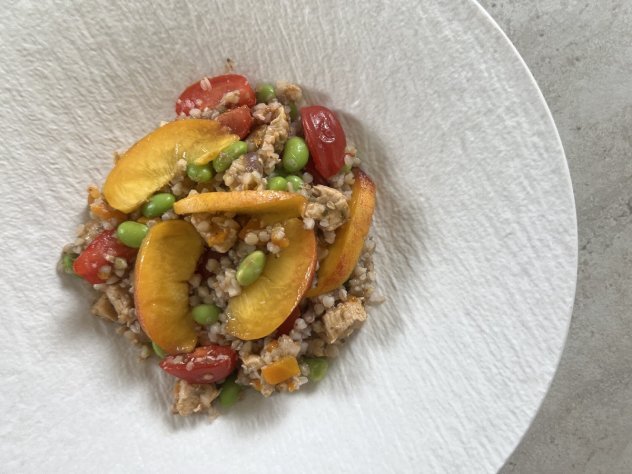
After a morning or evening run, your body needs clean energy and high-quality protein to recover at its best. This Buckwheat Salad with Chicken Ragout and Grilled Peaches is designed exactly for that: a complete meal rich in noble proteins from the chicken and edamame, low glycemic-index carbohydrates thanks to buckwheat, and plenty of vitamins and minerals from the peaches and cherry tomatoes, which refresh and hydrate.

A mix of delicate flavours and different textures that satisfies without weighing you down – perfect for those who love to take care of themselves at the table after a workout.

Discover all the secrets for perfect post-workout recovery with Bianca Balzarini, nutrition coach, with whom I created this very useful e-book.

Buckwheat Salad with Chicken Ragout and Grilled Peaches

8g carbohydrates per 100g

Ingredients for the salad

  • 140 g nectarines or peaches
  • 120 g edamame
  • 100 g buckwheat groats*
  • 10 cherry tomatoes

 Ingredients for the chicken ragout

  • 600 g chicken meat, finely chopped by knife
  • 100 g carrot
  • 40 g onion
  • 30 g celery
  • 1/2 glass of Marsala wine
  • chopped sage, mint, and thyme
  • extra virgin olive oil
  • salt and pepper

*Ingredients whose labels must read “gluten-free” (or, in Italy, present on  Prontuario AIC)

Preparation

  1. Prepare the chicken ragout first. Finely dice the onion, carrot, and celery, and soften them in a saucepan with a drizzle of extra virgin olive oil without letting them fry. Add the chopped herbs and the minced chicken meat.
  2. Mix well until the chicken turns white, then pour in the Marsala wine and let it evaporate. Cover and cook for about 20 minutes. Adjust with salt and pepper.
  3. Meanwhile, boil the buckwheat in lightly salted water and drain when cooked but still al dente.
  4. Blanch the edamame in lightly salted boiling water for 1.5 minutes, then drain and plunge them into cold water.
  5. Halve the cherry tomatoes and add them to the drained buckwheat, then add the edamame and finally the chicken ragout, mixing everything well. Serve with a few slices of nectarine or peach.

ilaria-bertinelli-insalata-di-grano-saraceno-e-pesche-grigliate

Version with gluten of Buckwheat Salad with Chicken Ragout and Grilled Peaches

The recipe is naturally gluten-free, so no adaptation is needed for the version with gluten.

Who said healthy snacks can’t be irresistible? These Brown rice crackers with turmeric are not only naturally gluten-free, lactose-free, and vegan, but they also feature the incredible power of an extraordinary spice.

Turmeric, with its vibrant golden colour, is much more than just an ingredient—it’s a true ally for wellbeing. Known for its anti-inflammatory and antioxidant properties, this spice adds a lively touch to any dish. And in these crackers, its mildly spicy flavour perfectly complements the crunchiness of brown rice.

Perfect for snacking on their own or pairing with dips and hummus, these crackers are the ideal guilt-free treat for those looking for both flavour and lightness in every bite!

Brown rice crackers with turmeric

45.8g carbohydrates per 100g

Ilaria-bertinelli-cracker-di-riso-alla-curcuma

Ingredients

  • 210g brown rice flour*
  • 100g water
  • 100g blended almonds (ground into flour)
  • 40g extra virgin olive oil
  • 5g baking powder for savoury recipes*
  • turmeric
  • salt

**Ingredients specific for celiacs

*Ingredients whose labels must read “gluten-free” (or, in Italy, present on Prontuario AIC)

Preparation

  1. Mix all ingredients until you obtain a smooth, homogeneous dough.
  2. Cover the dough with plastic wrap and let it rest for 30 minutes.
  3. Roll out the dough with a rolling pin, cut it into strips of your desired size, and bake in a preheated static oven at 200°C for 10 minutes or until crispy.

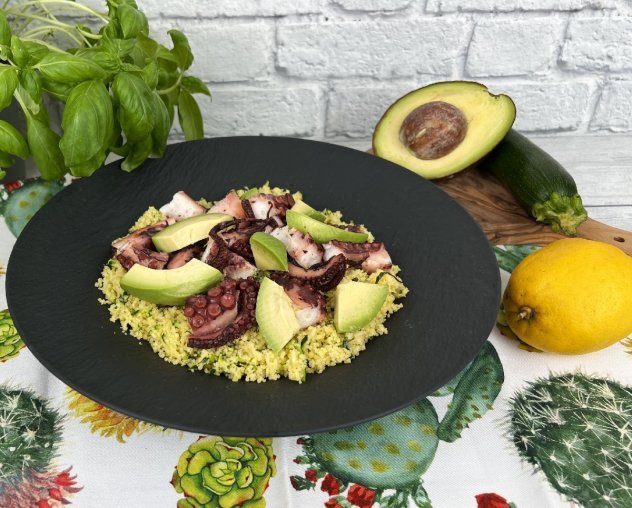
Couscous combined with fish is a great classic, try it in this fresh version for summer: Couscous with octopus and avocado.

You can also indulge in the choice of the type of gluten-free couscous, the Bia company offers a wide range: maize and rice, chickpeas, peas, chickpeas and red lentils, buckwheat are all available options, although with this seasoning I would avoid buckwheat whose characteristic taste would risk covering that of fish.

Couscous combined with fish and vegetables, besides being a source of good fats such as avocado, makes this recipe a perfect one-course meal for lunch or dinner.

If you like couscous in summer, try also Couscous with prawn and courgette curry.

cous-cous-con-polpo-e-avocado

La ricetta del Couscous with octopus and avocado

15.3g carbohydrates per 100g

Ingredients for 4 servings

  • 1kg approx. octopus
  • 200g BIO Corn and rice couscous**
  • 200g courgettes
  • 100g avocado
  • 1 onion
  • 1 carrot
  • 1 celery stalk
  • 1 clove of garlic
  • lemon peel
  • extra virgin olive oil
  • mint
  • parsley
  • salt
  • pepper

**Ingredients specific for celiacs

*Ingredients whose labels must read “gluten-free” (or, in Italy, present on  Prontuario AIC)

Preparation

  1. Cook the octopus in a large saucepan with onion, carrot, celery and garlic, putting a few centimetres of water on the bottom and covering with a lid. Cook over low heat for about 45 minutes.
  2. Prepare the couscous according to the instructions on the packet, i.e. by soaking it with an equal amount of hot water.
  3. Julienne cut the courgettes and sauté them for a few minutes in a non-stick pan with a little oil. Season with salt and pepper.
  4. Separate the couscous well with a fork and season it by adding the courgettes, chopped mint and parsley, grated lemon zest, salt and pepper and a drizzle of extra virgin olive oil.
  5. Assemble the plates by placing the couscous on the bottom and the chopped octopus and avocado on top. Complete to taste with another drizzle of extra virgin olive oil and, if necessary, salt and pepper.

cous-cous-con-polpo-e-avocado

Version with gluten of Couscous with octopus and avocado

Replace the Corn and rice couscous with wheat couscous, while all other ingredients are naturally gluten-free.

I love salads and am constantly thinking of new combinations that can be prepared with tasty ingredients in a very short time, so here’s how to prepare Three 5-minute salads.

Each of these salads will delight both the eyes and the palate, and as they are ready in a matter of minutes, you can indulge yourself and prepare all 3 in case you want to use them for a complete dinner instead of just a side dish.

Follow me not to run short of ideas for everyday cooking and have a look at my Lentil and chickpea burgers to discover a solution for your lunches away from home.

Tre-insalate-da-5-minuti

Treviso radicchio salad

5g carbohydrates for 1 serving

Ingredients for 1 serving

  • 1/2 tuft of Treviso radicchio
  • 40g pear
  • 2 shelled walnuts
  • slivers of Parmigiano Reggiano cheese
  • Balsamic Vinegar of Modena
  • extra virgin olive oil
  • salt and pepper

Preparation

  1. Cut the Treviso radicchio into small pieces and put them in a salad or soup dish.
  2. Add the Parmesan slivers, the sliced pear and the walnut kernels slightly broken up using your hands.
  3. Complete with salt, pepper, balsamic vinegar and extra virgin olive oil.

insalata-di-trevigiano

Aromatic cabbage and carrot salad

14g carbohydrates for 1 serving

Ingredients for 1 serving

  • 1 handful of thinly sliced white cabbage
  • 1 handful of thinly sliced purple cabbage
  • 1 carrot (mine was 80g)
  • 1 teaspoon of Dijon mustard*
  • 1 tablespoon maple syrup*
  • 1 tablespoon apple vinegar
  • sunflower seeds
  • pumpking seeds
  • extra virgin olive oil
  • salt and pepper

**Ingredients specific for celiacs

*Ingredients whose labels must read “gluten-free” (or, in Italy, present on  Prontuario AIC)

Preparation

  1. Cut the cabbage using a slicer or by hand so that it is very thin and grate the carrot into julienne.
  2. Prepare the aromatic dressing by mixing mustard, maple syrup, apple vinegar and extra virgin olive oil, then season with salt and pepper. Mix well with a fork.
  3. Place the sliced cabbage and carrot in a deep dish, then drizzle with the dressing and top with sunflower seeds and pumpkin seeds.

insalata-di-cappucci-aromatica

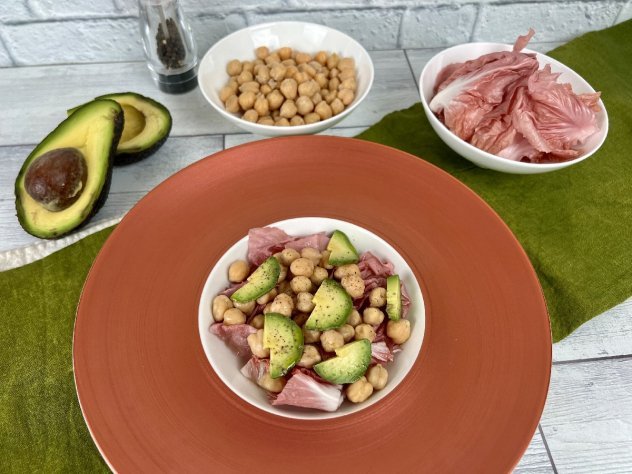
Chickpea salad with pink chicory

13.9g carbohydrates for 1 serving

Ingredients for 1 serving

  • 1/2 tuft of pink chicory
  • 100g cooked chickpeas
  • 30g avocado
  • lemon juice
  • extra virgin olive oil
  • salt and pepper

Preparatio

  1. Cut the pink chicory leaves and place them in a salad or soup dish.
  2. Top them with the cooked chickpeas and sliced avocado.
  3. Drizzle with a little lemon juice and complete the seasoning with extra virgin olive oil, salt and pepper.


Insalata-di-ceci-e-radicchio-rosa-mantovano

My passion for cheese stems from my roots and is ignited whenever cheese is the protagonist of an initiative. For this reason, also this year I enthusiastically accepted to participate in the “Choose your taste, sweet or spicy, only from Europe” project in collaboration with the European Commission and the Italian Food Blogger Association to promote knowledge and consumption of Provolone Valpadana PDO.

Spicy Provolone Valpadana PDO in my Valentine’s Day dessert

provolone valpadana DOP

I told you how Provolone Valpadana PDO is produced when I prepared my Savoury Muffinsbut this time I used the spicy version of this cheese to prepare a fantastic dessert that left all my guests literally speechless. For those who do not have time to read about the production process of Provolone Valpadana PDOit is really interesting to know that the sharpness of this cheese is only determined by the use of kidrennet instead of calf rennet: every tiny detail opens up a world of differences in cheese with Designations of Origin!

Why this recipe? Because I wanted to propose a perfect idea for Valentine’s Day, namely a spicy dessert, just like love! And also because I love cheese eaten with pears and walnuts, two very classic pairings that reconfirm time and again that sweet and savoury can give us great taste pleasures.

So I prepared a custard using coconut milk so that this dessert could be eaten not only by those who are gluten intolerant, but also by those who are lactose intolerant because Provolone Valpadana is naturally lactose-free! The other star is pears in red wine, a fragrant winter pampering, the ideal partner for cheese. Finally, I created crunchiness with toasted breadcrumbs and walnuts, which are the most neutral part of the recipe, essential to bind all the elements together in a warm and affectionate hug.

Have I convinced you? Run to buy the ingredients and surprise your loved ones… with just the right amount of sweet spiciness.

Coconut Cream with spicy red wine pears

21.23 g carbohydrates per 100g

Ingredients for the coconut cream for 4 servings

  • 225g coconut milk
  • 3 egg yolks
  • 40g sugar
  • vanilla from the pod

Ingredients for the spicy red wine pears

  • 4 Kaiser pears of about 140g each
  • 250g red wine
  • 50g sugar
  • 1/2 star anise berry
  • 2 cardamom berries
  • 1/2 tsp cinnamon

Ingredients to complete

  • 40g breadcrumbs**
  • 30g shelled walnuts
  • 10g butter
  • spicy Provolone Valpadana PDO

**Ingredients specific for celiacs

*Ingredients whose labels must read “gluten-free” (or, in Italy, present on  Prontuario AIC)

Preparation

  1. Heat up the coconut milk on the stove and in the meantime whisk the egg yolks with the sugar and a dash of vanilla. When the milk is about to come to the boil, remove it from the heat and pour it over the beaten egg yolks, stirring with a whisk; put the cream back on the heat and let it thicken for a few minutes. Put it aside to cool, then store it in the refrigerator.
  2. Prepare the pears: peel them, leaving the stalks, and place them in a saucepan large enough to hold the pears close together. Pour the wine, sugar and spices into the saucepan, then put the lid on, bring everything to the boil, then lower the heat to maintain a gentle simmer for 30 minutes. Let the pears cool in their cooking liquid, then remove them and allow the liquid to reduce to a caramel-like thickness.
  3. Put the knob of butter in a non-stick pan, melt it and add the breadcrumbs to toast them. When the bread is almost ready, add the walnuts after breaking them up lightly with your hands. Toast for a few minutes.
  4. Assemble the cake at the time of serving. In a deep dish, pour a small ladle of custard and place one pear in the centre of the dish. Using a large hole grater, grate slivers of Provolone Valpadana cheese over the cream and pear; top with the toasted bread and walnuts and the reduced wine sauce. Serve the dessert cold, possibly paired with a small glass of Barolo Chinato or Port wine.

crema al cocco con pere speziate al vino rosso

Version with gluten of Coconut cream with spicy red wine pears

With the exception of the breadcrumbs, the recipe contains only naturally gluten-free ingredients, so replace the gluten-free breadcrumbs with conventional breadcrumbs.

Are you running short of ideas for out-of-home meals? Here comes another load of recipes for our lunch box ideas for a quick, balanced and tasty lunch to carry with your, wherever you go.

In this way, eating gluten free and counting carbs is no longer a programme, not even when eating out of home, i.e. when meals are always a challenge: the lunch box becomes a travel companion and moment of joy and pleasure.

We found the perfect lunch box for our needs at our friend’s store “I love my house” whom I always ask for help when I am looking for equipment and kitchen solutions: here is where you can find our LUNCH BOX.

Follow me not to run short of ideas for out-of-home meals and watch this vegetarian alternative Venere rice salad with cherry tomatoes and pistachio nuts.

Quinoa salad with Primo sale cheese and salmon

38.6g carbohydrates for the whole lunch box

Ingredients for 1 lunch box

  • 100g green beans
  • 50g quinoa
  • 50g Primo sale cheese or another semi-soft cheese you like
  • 50g smoked salmon
  • 10g shelled walnuts
  • 1 clove garlic
  • extra virgin olive oil
  • parsley
  • salt

**Ingredients specific for celiacs

*Ingredients whose labels must read “gluten-free” (in Italy they may be listed on  Prontuario AIC)

Preparation

  1. Boil the quinoa in double the amount of water of its weight for about 20 minutes or until the water has been completely absorbed.
  2. Boil the green beans, strain into cold water, drain and cuthttp://unochefpergaia.it/wp-content/uploads/2022/11/Insalata-di-quinoa-con-primo-sale-e-salmone-7.jpg into pieces.
  3. Pour a dribble of oil in a non-stick pan and brown a clove of garlic in it, then add chopped parsley and the green bean pieces: allow to gain flavour for a couple of minutes.
  4. Dress the quinoa with the green beans, the cheese in dices, the smoked salmon in slices and the shelled and slightly crushed walnuts; adjust salt if necessary.

insalata di quinoa

Version with gluten of Quinoa salad with Primo sale cheese and salmon

The recipe contains only naturally gluten free ingredients, so no adaptation is necessary for its version with gluten.


Naturally gluten-free chocolate sweets with candied violets for Valentine’s Day: the candied flower from Parma to give a sweet scent to the palate.

Violette

Violets

Candied flowers and chocolate

Violets are the symbol of spring when their unmistakable colour begins to paint the still cold earth with purple and white brush strokes. This little flower, delicate in form and colour, bursts forth with its powerful scent to announce the magic of nature’s reawakening, which repeats itself every year like a rebirth.

Violets arrived in Parma thanks to Marie Louise of Austria, the second wife of Napoleon Bonaparte, who was Duchess of the Duchy of Parma, Piacenza and Guastalla between 1814 and 1847. The Duchess’s passion for this flower meant that many violet cultivations were planted in the area , which the monks of the Convento dell’Annunciata used to obtain the essence through steam distillation of flowers and leaves for the Duchess’s exclusive use. The fragrance created using the precious essential oil soon became famous throughout Europe under the name of Parma Violet.

Even today, at Marie Louise’s behest, her tomb in Vienna is always adorned with violets.

If the use of the violet in perfumery is no surprise, its use in cooking is certainly less well known, especially in the form of a candied sweet, made with painstaking care, artistry and charm by a few skilled hands.

Candying

The production of candied violets is closely linked to nature because, as we all know if we like to pick these fragrant flowers, their appearance along the paths and in the meadows varies according to the temperature, so the few companies dedicated to their processing have their binoculars aimed at spotting the mauve-coloured dots popping up on the horizon.

To be candied, the flowers must be quite large – as the process will reduce their size – and perfectly intact. Once carefully gathered into bunches, the violets are sprayed with fresh water to gently wash them, the stems are removed one by one, then the petals are brushed by hand with glucose syrup before being coated with caster sugar. Covered with sugar, violets are placed in tanks containing glucose and sugar, called Brillantiere, where they crystallise, taking on the appearance that characterises the finished product.

The most striking thing when eating a violet is the scent: a truly unusual experience. Personally, I only discovered in adulthood that these sweets on sale in Parma’s traditional pastry shops were real flowers treated with such passion and not sugar souvenirs for tourists!

Le violette candite sul dolcetto

The candied violets on the cake

In the month of love, a flower to eat.

I wanted to take the opportunity of Valentine’s Day, which I love celebrating in the Anglo-Saxon way (i.e. celebrating love in all its forms and not just between married couples or fiancés), to share with you this traditional preparation from my hometown because I thought you might find it nice to give a ‘bouquet’ of violets to use to make deliciously beautiful and fragrant, mouth-watering treats, to be consumed sparingly when approaching rich and precious things… like a chocolate treat! If you prefer to bake a cake, use candied violets to decorate the Lovers’ Sacher.

Where to find candied violets

In most confectioner’s shops in Parma, especially during the first months of the year, pretty packages of candied violets will pop up, ideal for having a little piece of tradition in a sweet. To be on the safe side, you can enter the realm of confectionery enthusiasts (both physical and online), the shop Dalla A allo Zucchero in the city centre, where you will find any ingredient or equipment to make your cakes, including these beautiful violets.

Chocolate sweets with candied violets

carbohydrates of shortbread bases 53.38g per 100g

carbohydrates of chocolate mousse 22.12g per 100g

Ingredients for the shortbread for 12 sweets

  • 110g wholemeal rice flour*
  • 65g butter
  • 65g brown or coconut sugar
  • 35g almond flour*
  • 25g potato starch*
  • 25g tapioca starch*
  • 10g bitter cocoa powder*
  • 1 egg
  • grated orange peel or orange paste*
  • 1 pinch of salt

Ingredients for the chocolate mousse

  • 200g fresh cream
  • 100g dark chocolate*
  • 50g milk
  • 30g egg white (about 1)
  • 30g sugar
  • 1/2 teaspoon lemon juice;
  • grated coconut*
  • candied violets*

*Ingredients whose labels must read “gluten-free” (or, in Italy, present on  Prontuario AIC)

Preparation of shortbread and mousse

  1. Prepare the shortbread by putting all the ingredients in the bowl of the planetary mixer; mix for a few minutes until the mixture is blended. Form a ball, cover it with cling film and place it in the refrigerator for the time needed to prepare the chocolate mousse
  2. Chop the dark chocolate finely; bring the milk to the boil and pour it over the dark chocolate, stirring with a whisk so that the chocolate melts completely.
  3. Whip the egg whites until stiff and add the sugar, mixing it in. Add this meringue to the melted chocolate, which will still be warm.
  4. Whip the cream until it has the texture of a Greek yoghurt (semi-whipped), then add this to the chocolate and egg white mixture. Place the mixture in the bowl of the planetary mixer and whip it for about 2 minutes with the whisk so that it is creamy, but soft. Allow to rest in the refrigerator for the time needed to prepare the shortbread bases.

Assembly of chocolate sweets

  1. Roll out the shortbread to a thickness of about 5mm with a rolling pin and cut out discs of the diameter corresponding to the tartlet mould (I use the non-stick mould for 12 muffins by Le Creusetit is very convenient because it doesn’t need to be greased), make them fit well in the hole, pierce the bottom with a fork and bake in a static oven preheated to 180°C for 10-13 minutes.
  2. If you have some shortbread left, cut some heart-shaped biscuits that you can use to decorate the sweets.
  3. Take the tartlets out of the oven and allow them to cool completely.
  4. Take a pastry bag and choose the tip you want: I chose the smooth 1.5cm diameter tip. Remove the mousse from the refrigerator, fill a pastry bag and top the tartlets as desired. Sprinkle with grated coconut and complete with a candied violet and a small biscuit.

Dolcetti per san valentino

Version with gluten of Chocolate sweets with candied violets

The recipe contains only naturally gluten free ingredients, so no adaptation is necessary for its version with gluten. If you want to use wheat flour, replace rice flour, potato starch and tapioca starch with equal amounts of wheat flour.