After a refreshing swim in the pool or sea, there’s nothing better than a fresh and nourishing dish to restore your energy without feeling heavy. This Quinoa Salad with Watermelon, Feta, and Mint is exactly what you need.

Light yet complete, quinoa provides complex carbohydrates while feta offers a good protein boost. Watermelon and cucumber ensure hydration and freshness, while mint adds an aromatic touch that makes this recipe irresistible even on the hottest days.

Prepare it in advance and take it with you to the beach, the pool, or enjoy it at home after your workout. It’s a healthy, practical, and colourful one-dish meal that will make you feel like you’re on holiday with the very first bite. And if you want to know what’s best to do after swimming for optimal recovery, check out the tips from Bianca Balzarini.

Looking for more summer ideas? Try our Couscous with Octopus and Avocado.

ilaria-bertinelli-insalata-di-quinoa-e-anguria

Quinoa Salad with Watermelon, Feta, and Mint

9.8g carbohydrates per 100g

Ingredients for 4 servings

  • 300g watermelon (net weight, without rind and seeds)
  • 100g quinoa (white or mixed)
  • 160g cucumber
  • 150g feta cheese
  • 1 bunch fresh mint
  • ½ lemon
  • 3 tablespoons extra virgin olive oil
  • salt and pepper
  • pumpkin seeds

Preparation

  1. Rinse the quinoa thoroughly under running water to remove any saponins, then cook it with triple its weight in lightly salted water for about 12-15 minutes with the lid on, until it has absorbed all the water. Turn off the heat and let it cool slightly.
  2. Peel and coarsely grate the cucumber, sprinkle with salt, place in a colander, and let it rest to release its water.
  3. Cut the watermelon into small cubes, removing all seeds.
  4. Crumble the feta cheese with your hands.
  5. Mix the cooled quinoa with the watermelon, well-drained cucumber, crumbled feta, and finely chopped mint.
  6. Dress with lemon juice mixed with olive oil, salt, and pepper.
  7. Garnish with pumpkin seeds for a crunchy touch and a few mint leaves.
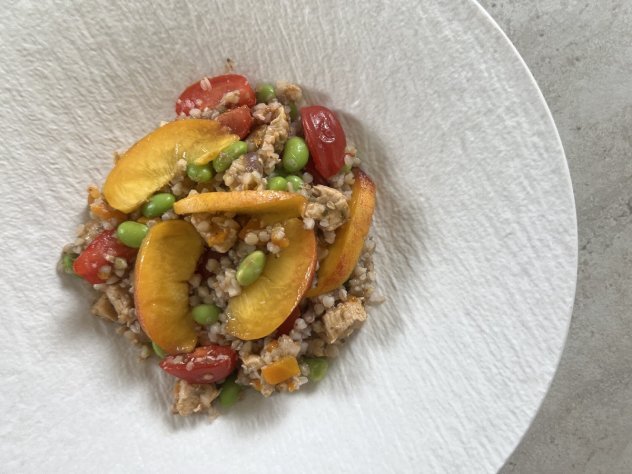
After a morning or evening run, your body needs clean energy and high-quality protein to recover at its best. This Buckwheat Salad with Chicken Ragout and Grilled Peaches is designed exactly for that: a complete meal rich in noble proteins from the chicken and edamame, low glycemic-index carbohydrates thanks to buckwheat, and plenty of vitamins and minerals from the peaches and cherry tomatoes, which refresh and hydrate.

A mix of delicate flavours and different textures that satisfies without weighing you down – perfect for those who love to take care of themselves at the table after a workout.

Discover all the secrets for perfect post-workout recovery with Bianca Balzarini, nutrition coach, with whom I created this very useful e-book.

Buckwheat Salad with Chicken Ragout and Grilled Peaches

8g carbohydrates per 100g

Ingredients for the salad

  • 140 g nectarines or peaches
  • 120 g edamame
  • 100 g buckwheat groats*
  • 10 cherry tomatoes

 Ingredients for the chicken ragout

  • 600 g chicken meat, finely chopped by knife
  • 100 g carrot
  • 40 g onion
  • 30 g celery
  • 1/2 glass of Marsala wine
  • chopped sage, mint, and thyme
  • extra virgin olive oil
  • salt and pepper

*Ingredients whose labels must read “gluten-free” (or, in Italy, present on  Prontuario AIC)

Preparation

  1. Prepare the chicken ragout first. Finely dice the onion, carrot, and celery, and soften them in a saucepan with a drizzle of extra virgin olive oil without letting them fry. Add the chopped herbs and the minced chicken meat.
  2. Mix well until the chicken turns white, then pour in the Marsala wine and let it evaporate. Cover and cook for about 20 minutes. Adjust with salt and pepper.
  3. Meanwhile, boil the buckwheat in lightly salted water and drain when cooked but still al dente.
  4. Blanch the edamame in lightly salted boiling water for 1.5 minutes, then drain and plunge them into cold water.
  5. Halve the cherry tomatoes and add them to the drained buckwheat, then add the edamame and finally the chicken ragout, mixing everything well. Serve with a few slices of nectarine or peach.

ilaria-bertinelli-insalata-di-grano-saraceno-e-pesche-grigliate

Version with gluten of Buckwheat Salad with Chicken Ragout and Grilled Peaches

The recipe is naturally gluten-free, so no adaptation is needed for the version with gluten.

Spring brings us wonderful and versatile ingredients like asparagus — grown in many regions of Italy and the star of this simple yet impressive recipe. This Chicken and asparagus pie is a complete meal that combines flavour, nutritional balance and practicality. It’s perfect for anyone following a gluten-free diet with a mindful eye on the recipe’s composition, particularly its carbohydrate content.

Asparagus is an excellent source of fibre, B vitamins (especially folate), vitamin K and natural antioxidants. Thanks to its asparagine content, it also supports kidney function and has a natural diuretic effect. Combined with chicken, a great source of lean protein, and brown rice flour, which adds fibre and complex carbohydrates, this dish offers all the essential macronutrients and is suitable for those with specific dietary needs.

The crisp gluten-free puff pastry topping adds a rustic and visually appealing touch, making it ideal even for a last-minute dinner with guests when you don’t want to give up on seasonal vegetables. If you’re looking for another all-in-one dish, try the Vegetarian Moussaka too!

ilaria-bertinelli-pie-di-pollo-e-asparagi-al-feta

Chicken and asparagus pie with Feta cheese

7.8g carbohydrates per 100g

Ingredients for 6 servings

  • 1 pack of gluten-free puff pastry** (you will use about 200g)
  • 850g chicken breast
  • 420g asparagus
  • 120g Feta cheese
  • 70g leek
  • 30g brown rice flour*
  • 1 egg for brushing the surface
  • meat or vegetable stock*
  • extra virgin olive oil
  • salt and papper

**Ingredients specific for celiacs

*Ingredients whose labels must read “gluten-free” (or, in Italy, present on  Prontuario AIC)

Preparation

  1. Slice the leek and let it soften in a non-stick pan with a drizzle of olive oil. Add the chicken breast cut into cubes and cook until it turns white on all sides.
  2. Trim the woody ends off the asparagus, then divide the stalks from the tips. Cut the stalks into small pieces and add them to the chicken. Pour in a few ladles of broth, season with salt and pepper, and cook.
  3. When the chicken is nearly done, add the asparagus tips. Sprinkle in the rice flour and, if needed, add another ladle of broth — it will thicken into a sauce similar to béchamel.
  4. Transfer the chicken and asparagus mixture into a baking dish, top with crumbled Feta cheese and cover the top with the puff pastry. Seal the edges well to create a lid, cut a few slits to allow steam to escape, and brush the surface with beaten egg.
  5. Bake in a preheated fan oven at 180°C for 20 minutes. Remove from the oven, let rest for 10 minutes, then serve.

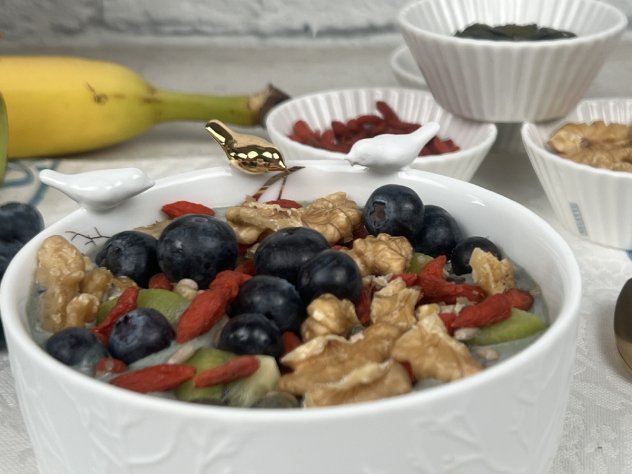
Since many of you often ask me where I get my energy from, I’m revealing one of my daily habits: my Blueberry Bowl, a colourful and energizing way to start the day.

I’m sharing this habit with you because the colour of the month, which I explore together with nutrition coach Bianca Balzarini, is blue—the same vibrant hue as two of the main ingredients in this bowl: blueberries and spirulina. In the world of food, blue is a rare shade, but it’s as fascinating as it is full of benefits.

The blue-violet colour of blueberries comes from their high content of anthocyanins, which help fight oxidative stress and protect cells from damage caused by free radicals. These little vitamin-rich fruits are low in calories and offer more than 3 grams of fibre per 100 grams, making them a low glycaemic index food.

Spirulina is a green-blue superfood with extraordinary properties. It’s a freshwater microalga made up of 60–70% high-quality protein that includes all essential amino acids. It’s rich in vitamins and minerals, a powerful antioxidant, and thanks to this exceptional nutritional profile, some studies suggest it may support metabolism and cardiovascular health.

Perfect for breakfast or as a functional snack, this bowl is packed with macro- and micronutrients. In addition to the benefits of blueberries and spirulina, it also provides protein from Greek yogurt, natural sugars from fruit, fibre, and healthy fats from seeds and nuts. All ingredients are naturally gluten-free, and the balance of carbohydrates, protein, and fibre makes this bowl an ideal choice for people with type 1 diabetes too.

What are you waiting for? Enjoy your breakfast!

Ilaria-bertinelli-bowl-ai-mirtilli

Blueberry Bowl

10.12g carbohydrates per 100g

Ingredients for 4 bowls

  • 300g fat-free Greek yoghurt
  • 150g banana
  • 125g blueberries
  • 3 dates
  • 1 level teaspoon of spirulina
  • 1 kiwi
  • suflower seeds
  • pumpkin seeds
  • goji berries
  • walnuts

**Ingredients specific for celiacs

*Ingredients whose labels must read “gluten-free” (or, in Italy, present on  Prontuario AIC)

Preparation

  1. Blend the yogurt with the banana, half of the blueberries, the pitted dates, and the spirulina until smooth.
  2. Divide the mixture between 4 bowls and top each with: 2 teaspoons sunflower seeds, 2 teaspoons goji berries, the kernels of 2 walnuts, 1 teaspoon pumpkin seeds, a few cubes of kiwi, and the remaining blueberries. Enjoy as breakfast or a snack.

Ilaria-bertinelli-bowl-ai-mirtilli


The Tuna Melt is one of those timeless comfort foods, likely born by accident, as often happens with the best recipes. Its origins date back to the 1950s in the United States, when a cook at a diner in South Carolina supposedly added melted cheese to a classic tuna sandwich by mistake. The result? An absolute hit that has delighted generations ever since.

My version of the Tuna Melt is reimagined to make this indulgent sandwich lighter, as I’ve completely removed butter and made it more diabetes-friendly by using homemade wholegrain gluten-free sandwich bread — a recipe I’ll be sharing with you soon. I also simplified the sandwich by using only two slices of bread instead of three, avoiding the double filling. After all, it’s hard to stop at just one sandwich, so I opted for smaller portions!

The combination of savoury tuna and gooey melted cheese is simply irresistible — perfect for a casual dinner, just like the one we treated ourselves to!

If you’re a sandwich lover, don’t miss my Stuffed picnic baguettes.

Tuna Melt

17.71g carbohydrates per 100g

ilaria-bertinelli-tuna-melts

Ingredients for 4 sandwiches

  • 250g non-smoked scamorza cheese or other melting cheese
  • 8 slices of sandwich bread** (about 240 g)
  • 200g drained tuna in oil
  • 2 tablespoons of mayonnaise*
  • 2 teaspoons of mustard*
  • 1 celery stalk
  • 20g honey
  • 10g lemon juice

**Ingredients specific for celiacs

*Ingredients whose labels must read “gluten-free” (or, in Italy, present on Prontuario AIC)

Preparation

  1. Mix the tuna with the mayonnaise until you get a smooth cream. Finely chop the celery and add it to the tuna. Stir in the mustard, honey, and lemon juice, mixing well. Taste the mixture and adjust with salt and pepper if needed.
  2. Place slices of scamorza cheese between two slices of sandwich bread. Toast the sandwiches in the oven or on a flat toaster until the bread turns golden and crispy, and the cheese is melted.
  3. Complete the sandwich by spreading the tuna mixture on top of the melted cheese, then close the sandwich.
  4. Serve the sandwich whole or cut it in half.

With February’s arrival, nature offers us ingredients packed with nutrients and authentic flavours, perfect for those living with type 1 diabetes and coeliac disease. My February salads combine taste and health, ideal for enhancing your winter table.

February Salads: Winter Flavours and Wellness on Your Table

In the Cauliflower and Pumpkin Salad, these two vegetables create a delightful balance of flavours and textures. Cauliflower, with its low glycaemic index and high fibre content, helps maintain blood sugar levels stable. Pumpkin, besides adding a pop of colour, is rich in beta-carotene and vitamins. The addition of boiled eggs completes the dish with high-quality proteins, making it both nutritious and satisfying.

The Winter Greek Salad is my tribute to a recent adventure in Greece: crisp iceberg lettuce with flavourful black olives and a creamy Greek yoghurt dressing enriched with cucumber, reminiscent of the famous tzatziki sauce. Iceberg lettuce provides fibre and water, black olives offer healthy fats and antioxidants, and the creamy Greek yoghurt sauce with cucumber supports digestive health thanks to probiotics and cucumber fibre.

Why choose seasonal vegetables for February salads?
Opting for seasonal ingredients ensures maximum flavour and nutrients. Get ready to enjoy the best of winter with these salads that combine taste, colour, and wellness!

Winter Greek Salad

13.5g carbohydrates per 100g

insalata-greca-invernale

Ingredients for 4 servings

  • 200 g cooked chickpeas
  • 100 g feta cheese
  • 100 g leftover gluten-free bread**
  • 100 g cucumber
  • 100 g iceberg lettuce
  • 50 g Kalamata black olives
  • 30 g fat-free Greek yoghurt
  • 1 lemon
  • oregano
  • mint
  • extra virgin olive oil
  • salt and pepper

**Ingredients specific for celiacs

*Ingredients whose labels must read “gluten-free” (or, in Italy, present on Prontuario AIC)

Preparation

  1. Cut the bread into cubes and toast in a non-stick pan. When it starts to crisp, drizzle with a little oil, a pinch of salt, and oregano.
  2. Trim the cucumber, grate it, sprinkle with a pinch of salt, and place it in a colander to drain. Squeeze well, then blend it with the yoghurt, juice of half a lemon, a few mint leaves, salt, and pepper to create a sauce.
  3. Crumble the feta cheese and mix it in a bowl with the chickpeas, shredded lettuce, and olives, seasoning everything with a drizzle of oil.
  4. Serve on plates and top with the cucumber yoghurt sauce and crispy croutons.

Cauliflower and Pumpkin Salad

3g carbohydrates per 100g

insalata-di-cavolo-e-zucca

Ingredients for 4 servings

  • 500g mixed-colour cauliflower
  • 400g pumpkin
  • 4 boiled eggs
  • 100g baby spinach
  • thyme
  • oregano
  • extra virgin olive oil
  • salt and pepper

Preparation

  1. Separate the cauliflower into florets and cook in the microwave on high for 4 minutes.
  2. Cut the pumpkin into cubes and place them on a baking tray lined with parchment paper. Sprinkle with thyme, oregano, salt, and pepper, and drizzle with a little oil. Roast in a preheated fan oven at 180°C until golden.
  3. Place the spinach in a bowl and season with extra virgin olive oil and salt.
  4. Boil the eggs for 8 minutes, peel them, and separate the yolks from the whites.
  5. Assemble the plates by layering the spinach, followed by cauliflower florets, pumpkin cubes, and crumbled egg whites. Finish by passing the yolks through a sieve to create a pollen-like texture.
  6. Sprinkle with a pinch of salt, pepper, and a drizzle of extra virgin olive oil.


September is the month when summer and autumn meet, just like the ingredients that characterise it: this is what you are going to discover in September Salads.

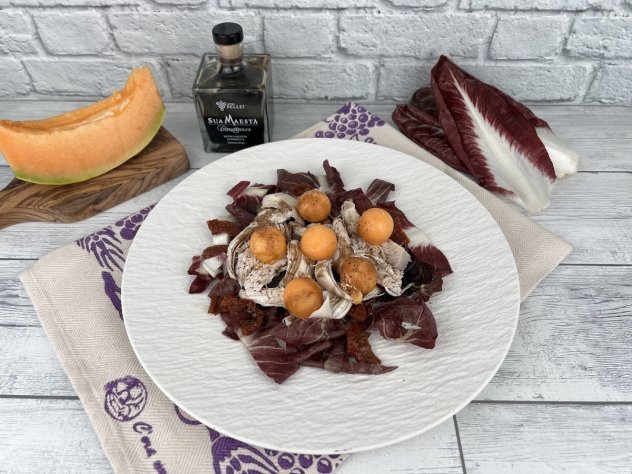
So what are the September salads? First of all, a tasty Chicken salad with radicchio and melon balls that is also perfect for your lunch box to take to the office as a balanced and light meal, or it can be a nice dinner to ensure a quiet night.

The second recipe is tasty and colourful, versatile and suitable for meals at home or away from home, the Salad of citrus flavoured cherry tomatoes with Venere rice introduces us to the quintessential winter fruit, i.e. oranges, which I have used here together with lemon to flavour the cherry tomatoes and make them really special.

So more colours to cheer us up into the less sunny days of September.

If you fancy some richer salads, check out the May and its fortified salads.

Chicken salad with radicchio and melon balls

carbohydrates 3.3g per 100g – 8.93g per serving

Insalata-di-pollo-al-radicchio-e-sfere-di-melone

Ingredients for 4 servings

  • 500g chicken breast
  • 280g melon
  • 180g red radicchio
  • 120g dried tomatoes in olive oil*
  • extra virgin olive oil
  • Aged Balsamic Vinegar of Modena
  • sage
  • bay leaf
  • 1 teaspoon green peppercorns
  • 3 cardamom berries
  • 1 star anise berry
  • salt and pepper

Preparation

  1. Put a pan of water on the stove with a few sage leaves, a bay leaf, cardamom, star anise, green pepper and salt, and boil the chicken breast in it for 20 minutes. Once cooked, leave the chicken to cool in its stock.
  2. Assemble your salad by cutting the radicchio into strips and placing it on the bottom of the plate. Flavour it with the dried cherry tomatoes cut into strips, thread the cooled chicken over it and complete with melon balls.
  3. Season with a pinch of salt and pepper and drizzle with a little extra virgin olive oil and balsamic vinegar.

Salad of citrus flavoured cherry tomatoes and Venere rice

carbohydrates 13.7g per 100g – 39.79g per serving

Insalata-di-pomodorini-agli-agrumi-e-riso-Venere

Ingredients for 4 servings

  • 600g mixed coloured cherry tomatoes
  • 140g Venere rice
  • 120g Greek feta cheese
  • 80g pitted green olives*
  • 80g pitted black olives*
  • 1/2 orange with edible peel
  • grated lemon peel
  • basil
  • extra virgin olive oil
  • salt and pepper

*Ingredients whose labels must read “gluten-free” (or, in Italy, present on  Prontuario AIC)

Preparation

  1. Boil the Venere rice in lightly salted water and drain when al dente.
  2. Cut the cherry tomatoes in halves or quarters, add the sliced olives and season for 15 minutes with orange slices and grated lemon peel.
  3. Put the Venere rice in the salad bowl, cover it with the cherry tomato and olive mixture after removing the orange slices. Season with a drizzle of oil and some freshly-ground pepper (no need for salt as the salad contains salty ingredients) and complete with crumbled feta cheese and a few basil leaves.


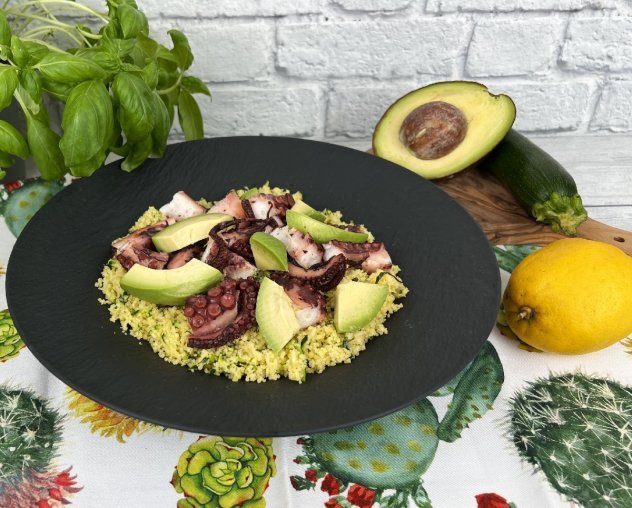
Couscous combined with fish is a great classic, try it in this fresh version for summer: Couscous with octopus and avocado.

You can also indulge in the choice of the type of gluten-free couscous, the Bia company offers a wide range: maize and rice, chickpeas, peas, chickpeas and red lentils, buckwheat are all available options, although with this seasoning I would avoid buckwheat whose characteristic taste would risk covering that of fish.

Couscous combined with fish and vegetables, besides being a source of good fats such as avocado, makes this recipe a perfect one-course meal for lunch or dinner.

If you like couscous in summer, try also Couscous with prawn and courgette curry.

cous-cous-con-polpo-e-avocado

La ricetta del Couscous with octopus and avocado

15.3g carbohydrates per 100g

Ingredients for 4 servings

  • 1kg approx. octopus
  • 200g BIO Corn and rice couscous**
  • 200g courgettes
  • 100g avocado
  • 1 onion
  • 1 carrot
  • 1 celery stalk
  • 1 clove of garlic
  • lemon peel
  • extra virgin olive oil
  • mint
  • parsley
  • salt
  • pepper

**Ingredients specific for celiacs

*Ingredients whose labels must read “gluten-free” (or, in Italy, present on  Prontuario AIC)

Preparation

  1. Cook the octopus in a large saucepan with onion, carrot, celery and garlic, putting a few centimetres of water on the bottom and covering with a lid. Cook over low heat for about 45 minutes.
  2. Prepare the couscous according to the instructions on the packet, i.e. by soaking it with an equal amount of hot water.
  3. Julienne cut the courgettes and sauté them for a few minutes in a non-stick pan with a little oil. Season with salt and pepper.
  4. Separate the couscous well with a fork and season it by adding the courgettes, chopped mint and parsley, grated lemon zest, salt and pepper and a drizzle of extra virgin olive oil.
  5. Assemble the plates by placing the couscous on the bottom and the chopped octopus and avocado on top. Complete to taste with another drizzle of extra virgin olive oil and, if necessary, salt and pepper.

cous-cous-con-polpo-e-avocado

Version with gluten of Couscous with octopus and avocado

Replace the Corn and rice couscous with wheat couscous, while all other ingredients are naturally gluten-free.

Beat the heat with these July salads that will feature some of the most beloved seasonal ingredients, peaches and tomatoes.

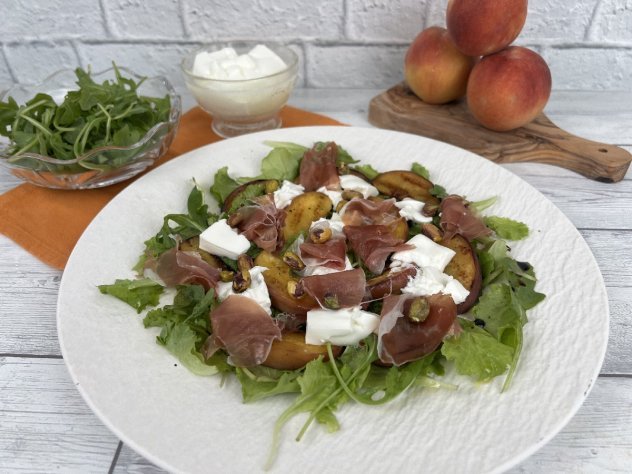
Furthermore, back from my holidays in Sardinia, I wanted to use a Slow Food Presidium that I had never tried before: the cheese called Frue or Casu axedu, meaning “sour cheese” in Sardinian dialect, made with sheep’s or goat’s milk leaving the curd in the whey. The resulting cheese is a product that is a combination of yogurt and cheese, it is without rind, soft and sour. It is sold in small cubes or larger pieces always covered with whey.

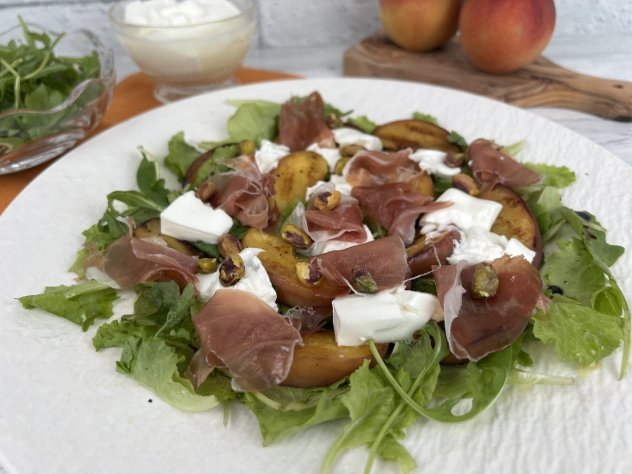
Because of its sour taste, Frue may be too strong for many people, so I decided to combine it with sweet grilled peaches and a savoury Prosciutto di Parma matured for 24 months: simply delicious!

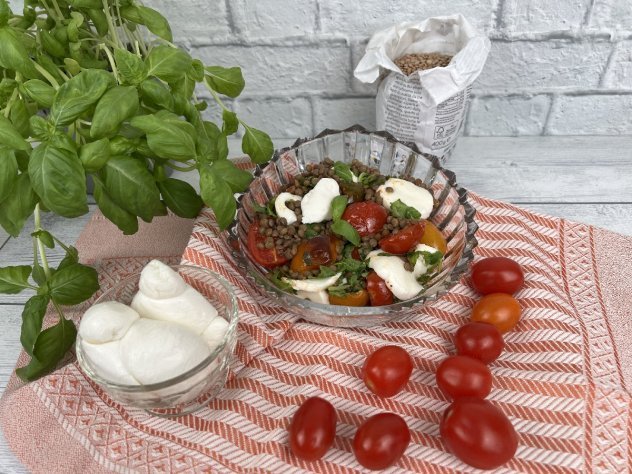
The second salad is a fun way of eating lentils also in summer making them fresh and colourful with cherry tomatoes, and the aroma of garden rocket and basil.

In addition to these July salads, for other fresh and easy-to-make ideas, have a loot at my June salads.

Salad of grilled peaches and Prosciutto

carbohydrates 6g for the whole serving

insalata-di-pesche-grigliate-e-prosciutto

Ingredients for 1 serving

  • 100g peaches with peel on
  • 80g Frue sour cheese or Mozzarella cherries
  • 40g Prosciutto di Parma (2 slices)
  • a handful of baby lettuce
  • a handful of garden rocket
  • 15g shelled pistachio nuts
  • spray extravirgin olive oil Fratelli Mantova
  • Balsamic vinegar of Modena
  • salt and pepper

Preparation

  1. Cut the peaches into thin segments and grill them without adding any grease or dressings.
  2. Form a layer of baby lettuce and garden rocket on the serving dish, then arrange the grilled peaches on top; dress with a pinch of salt, freshly ground pepper, a spray of extravirgin olive oil and a dribble of Balsamic vinegar.
  3. Complete with pieces of sour cheese or Mozzarella cherries, the slices of Prosciutto torn into smaller pieces and the pistachio nuts.

insalata-di-pesche-grigliate-e-prosciutto

Salad of lentils and sautéed cherry tomatoes

carbohydrates 37.41g for the whole serving

insalata-di-lenticchie-e-pomodori-arrostiti

Ingredients for 1 serving

  • 180g cherry tomatoes of various colours
  • 150g boiled lentils (about 50g dry lentils)
  • 70g Mozzarella cheese
  • garden rocket
  • basil
  • oregano
  • extravirgin olive oil
  • salt and pepper

Preparation

  1. Boil the lentils in water with carrot, celery, onion and garlic; drain and allow to cool down.
  2. Pour a dribble of extravirgin olive oil in a non-stick pan and sautéed the cherry tomatoes cut in half, intially with the cut side downwards. Adjust flavour with salt, pepper and oregano and cook for a couple of minutes.
  3. Dress the lentils with the sautéed tomatoes, adjust flavour with olive oil, salt and pepper if necessary, then finish with pieces of Mozzarella, strips of garden rocket and some basil leaves.

insalata-di-lenticchie-e-pomodori-arrostiti

As summer officially begins on 21st June, June salads will delight us with the addition of seasonal fruit.

Asparagus continues to be present, which we can enjoy with a mouth-watering cheese cream and plums for a salad that also becomes a green all-in-one dish, great to take to the office or to the pool in a convenient lunch box.

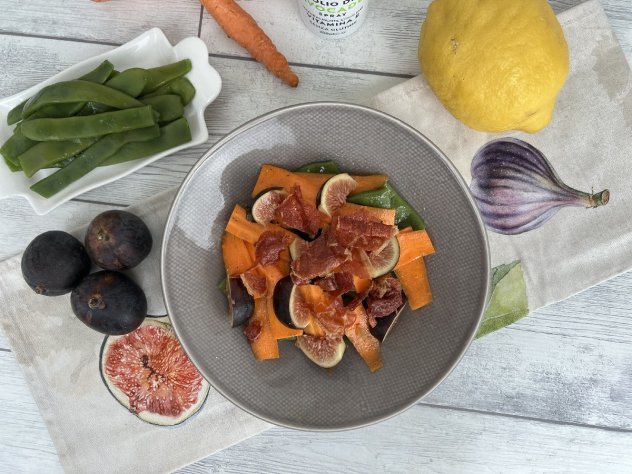
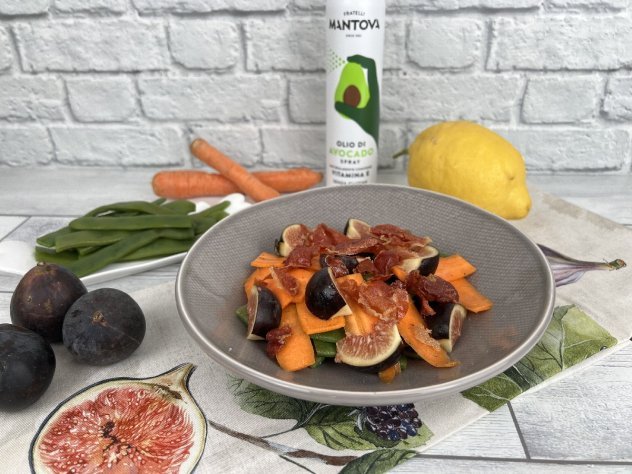
My salad with cooked vegetables features snow peas accompanied by carrots, but above all by the contrast of the sweetness of the figs and the saltiness of the crispy Prosciutto di Parma: as an appetiser, main course or as a one-course meal, the Salad of snow peas and figs will win you over with its explosion of flavours.

The tip I want to share with June salads is the use of spray oil, a very interesting way to dress our dishes. Why?

For two main reasons: the first is that we will use up to 90 per cent less oil for dressing, thus significantly reducing the calorie intake of the salads themselves; the second is that in the canned bag of Fratelli Mantova the oil is stored in the dark and protected from the air, thus guaranteeing ideal preservation.

My choice for these salads is avocado oil containing 100% oil extracted from the pulp of the avocado fruit, rich in vitamin E, with a light and delicate taste and texture.

For more ideas, see also the reinforced salads of May.

Asparagus and plum salad

carbohydrates 7.76g for 1 serving

insalata-di-asparagi-e-prugne

Ingredients for 1 salad

  • 3-4 asparagus
  • 50g plums
  • 30g soy milk*
  • 30g Ricotta cheese
  • 20g Robiola cheese
  • shelled pistachios
  • 1 lemon with edible zest
  • Fratelli Mantova’s avocado oil
  • salt and pepper

*Ingredients whose labels must read “gluten free” (or, in Italy, present on  Prontuario AIC)

Preparation

  1. With a mandoline, slice the asparagus into ribbons and marinate them for at least 15 minutes with a teaspoon of lemon juice, salt, pepper and a splash of avocado oil.
  2. Prepare a cream by mixing ricotta, robiola, grated lemon peel and a grinding of pepper.
  3. Assemble the salad by placing the asparagus ribbons in a salad bowl, the cheese cream, the plums cut into wedges and a sprinkling of shelled pistachios.

insalata-di-asparagi-e-prugne

Snow pea and fig salad

carbohydrates 9.58g for 1 serving

insalata-di-taccole-e-fichi

Ingredients for 1 serving

Preparation

  1. Slice the carrots into ribbons using a mandoline, season them with lemon juice, salt, pepper and a splash of avocado oil, then allow to rest for the time needed to prepare the other ingredients.
  2. Boil the snow peas in boiling salted water until cooked but still firm. Plunge them into cold water, then drain immediately.
  3. Place the Prosciutto slice on a plate and let it crisp up in the microwave or in a non-stick frying pan: in the microwave, set the oven on low power for short periods of time until the desired crispiness is reached; in the frying pan, do not grease the bottom and cook on low heat until crispy.
  4. Assemble the salad by placing the snow beans on the bottom of the salad bowl, the carrot ribbons and a well-washed fig cut into wedges, season with a pinch of salt, pepper and a splash of avocado oil, then finish by adding the crispy prosciutto slice.

insalata-di-taccole-e-fichi