Tag Archive for: ricette con conta dei carboidrati

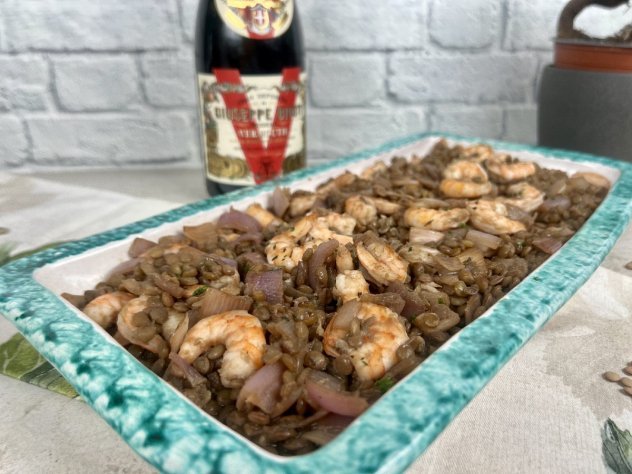
When I’m looking for a light but nourishing one-dish meal, I like to combine the taste of legumes with that of seafood. That’s how these Prawns and Lentils with Vermouth were born — a balanced, gluten-free, glycemia-friendly recipe. The aroma of the artisanal Vermouth from Acetaia Giusti of Modena gives the dish a refined and surprising fragrance, turning a simple pairing into an elegant, special experience.

You can swap the lentils for chickpeas if you prefer them.

If you like combining shellfish with legumes, try my Prawns with Cream of Cannellini Beans recipe.

ilaria-bertinelli-mazzancolle-e-lenticchie-al-vermouth

Prawns and Lentils with Vermouth

9.2g carbohydrates per 100g

Ingredients for 4 servings

  • 280g cooked lentils
  • 24 peeled and deveined prawns
  • 5 shallots
  • 100g Vermouth*
  • 2 tablespoons Modena IGP balsamic vinegar (~30g)
  • extra virgin olive oil
  • thyme
  • salt and pepper

**Ingredients specific for celiacs

*Ingredients whose labels must read “gluten-free” (or, in Italy, present on  Prontuario AIC)

Preparation

  1. Chop the shallots and sauté them in a non-stick pan with a drizzle of extra virgin olive oil, a few sprigs of thyme and the balsamic vinegar.
  2. Add the cooked lentils, a few tablespoons of water and let them gain flavour for about ten minutes.
  3. Turn up the heat under the pan with shallots and lentils, add the prawns, deglaze with the Vermouth, cook for 2 minutes, season with salt and pepper and serve.

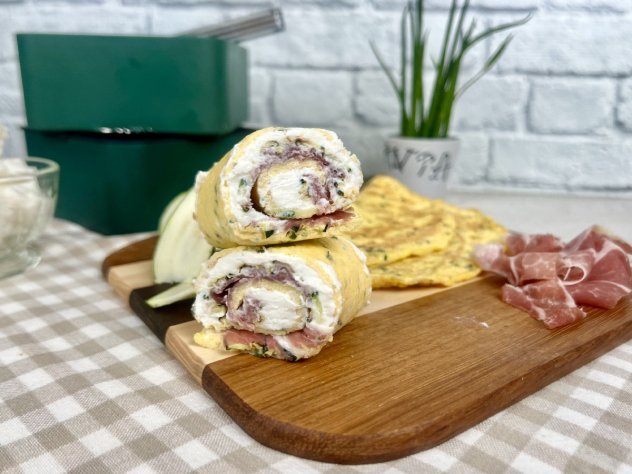
With the return to school and university, the challenge is always the same: finding practical, healthy, and tasty lunch box ideas. This Creamy Frittata with Grilled Courgettes is the perfect solution: quick to prepare, light yet full of flavor, and made irresistible by its creamy ricotta layer, grilled zucchini, and the special touch of Parma Ham.

Rolled up and cut in half, it fits perfectly into a lunch box and is easy to enjoy anywhere.

Paired with bread, seasonal fruit, and some crunchy vegetables, it becomes a complete meal you can conveniently take with you.

Discover more lunch box ideas, such as this Venere rice salad with cherry tomatoes and pistachios.

ilaria-bertinelli-frittata-cremosa-con-zucchine-grigliate

Creamy frittata with grilled courgettes

2g carbohydrates per 100g

Ingredients for 2 Frittatas

  • 200g sheep’s ricotta
  • 4 eggs
  • 1 courgette
  • 30g grated Parmigiano Reggiano
  • Parma Ham (I used the shank part)
  • chopped fresh herbs
  • extra virgin olive oil
  • salt and pepper

**Ingredients specific for celiacs

*Ingredients whose labels must read “gluten-free” (or, in Italy, present on  Prontuario AIC)

Preparation

  1. Slice the courgettes thinly with a mandoline and quickly grill them on both sides.
  2. Beat the eggs in a bowl with a pinch of salt, add the grated Parmigiano, and cook 2 frittatas in a 22 cm non-stick pan until set.
  3. Sieve the ricotta to make it creamy, season it with chopped herbs, one tablespoon of olive oil, salt, and pepper.
  4. Spread the frittatas out, cover with a layer of ricotta, add the grilled courgettes, and finish with slices of Parma Ham. Roll them up and place in the lunch box, cut in half.

After a refreshing swim in the pool or sea, there’s nothing better than a fresh and nourishing dish to restore your energy without feeling heavy. This Quinoa Salad with Watermelon, Feta, and Mint is exactly what you need.

Light yet complete, quinoa provides complex carbohydrates while feta offers a good protein boost. Watermelon and cucumber ensure hydration and freshness, while mint adds an aromatic touch that makes this recipe irresistible even on the hottest days.

Prepare it in advance and take it with you to the beach, the pool, or enjoy it at home after your workout. It’s a healthy, practical, and colourful one-dish meal that will make you feel like you’re on holiday with the very first bite. And if you want to know what’s best to do after swimming for optimal recovery, check out the tips from Bianca Balzarini.

Looking for more summer ideas? Try our Couscous with Octopus and Avocado.

ilaria-bertinelli-insalata-di-quinoa-e-anguria

Quinoa Salad with Watermelon, Feta, and Mint

9.8g carbohydrates per 100g

Ingredients for 4 servings

  • 300g watermelon (net weight, without rind and seeds)
  • 100g quinoa (white or mixed)
  • 160g cucumber
  • 150g feta cheese
  • 1 bunch fresh mint
  • ½ lemon
  • 3 tablespoons extra virgin olive oil
  • salt and pepper
  • pumpkin seeds

Preparation

  1. Rinse the quinoa thoroughly under running water to remove any saponins, then cook it with triple its weight in lightly salted water for about 12-15 minutes with the lid on, until it has absorbed all the water. Turn off the heat and let it cool slightly.
  2. Peel and coarsely grate the cucumber, sprinkle with salt, place in a colander, and let it rest to release its water.
  3. Cut the watermelon into small cubes, removing all seeds.
  4. Crumble the feta cheese with your hands.
  5. Mix the cooled quinoa with the watermelon, well-drained cucumber, crumbled feta, and finely chopped mint.
  6. Dress with lemon juice mixed with olive oil, salt, and pepper.
  7. Garnish with pumpkin seeds for a crunchy touch and a few mint leaves.

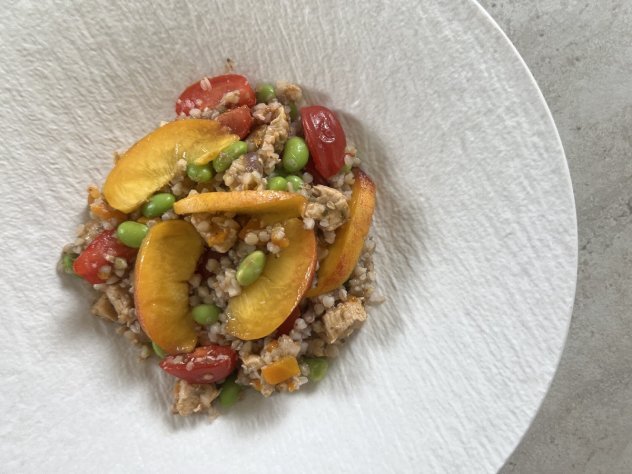
After a morning or evening run, your body needs clean energy and high-quality protein to recover at its best. This Buckwheat Salad with Chicken Ragout and Grilled Peaches is designed exactly for that: a complete meal rich in noble proteins from the chicken and edamame, low glycemic-index carbohydrates thanks to buckwheat, and plenty of vitamins and minerals from the peaches and cherry tomatoes, which refresh and hydrate.

A mix of delicate flavours and different textures that satisfies without weighing you down – perfect for those who love to take care of themselves at the table after a workout.

Discover all the secrets for perfect post-workout recovery with Bianca Balzarini, nutrition coach, with whom I created this very useful e-book.

Buckwheat Salad with Chicken Ragout and Grilled Peaches

8g carbohydrates per 100g

Ingredients for the salad

  • 140 g nectarines or peaches
  • 120 g edamame
  • 100 g buckwheat groats*
  • 10 cherry tomatoes

 Ingredients for the chicken ragout

  • 600 g chicken meat, finely chopped by knife
  • 100 g carrot
  • 40 g onion
  • 30 g celery
  • 1/2 glass of Marsala wine
  • chopped sage, mint, and thyme
  • extra virgin olive oil
  • salt and pepper

*Ingredients whose labels must read “gluten-free” (or, in Italy, present on  Prontuario AIC)

Preparation

  1. Prepare the chicken ragout first. Finely dice the onion, carrot, and celery, and soften them in a saucepan with a drizzle of extra virgin olive oil without letting them fry. Add the chopped herbs and the minced chicken meat.
  2. Mix well until the chicken turns white, then pour in the Marsala wine and let it evaporate. Cover and cook for about 20 minutes. Adjust with salt and pepper.
  3. Meanwhile, boil the buckwheat in lightly salted water and drain when cooked but still al dente.
  4. Blanch the edamame in lightly salted boiling water for 1.5 minutes, then drain and plunge them into cold water.
  5. Halve the cherry tomatoes and add them to the drained buckwheat, then add the edamame and finally the chicken ragout, mixing everything well. Serve with a few slices of nectarine or peach.

ilaria-bertinelli-insalata-di-grano-saraceno-e-pesche-grigliate

Version with gluten of Buckwheat Salad with Chicken Ragout and Grilled Peaches

The recipe is naturally gluten-free, so no adaptation is needed for the version with gluten.

Flour and water gnocchi are an ancient recipe that takes us back to the roots of Italian cuisine, long before potatoes arrived from the Americas.
Made with just two ingredients and no eggs, these gnocchi have deep roots in peasant tradition, where simplicity and ingenuity went hand in hand. In fact, to bind the flour—rice flour in my gluten-free version, specifically brown rice flour from Mulino Marello—boiling water is used. This technique gelatinizes the starch, acting as a kind of pre-cooking step that makes the dough more flexible and prevents it from falling apart when cooked.

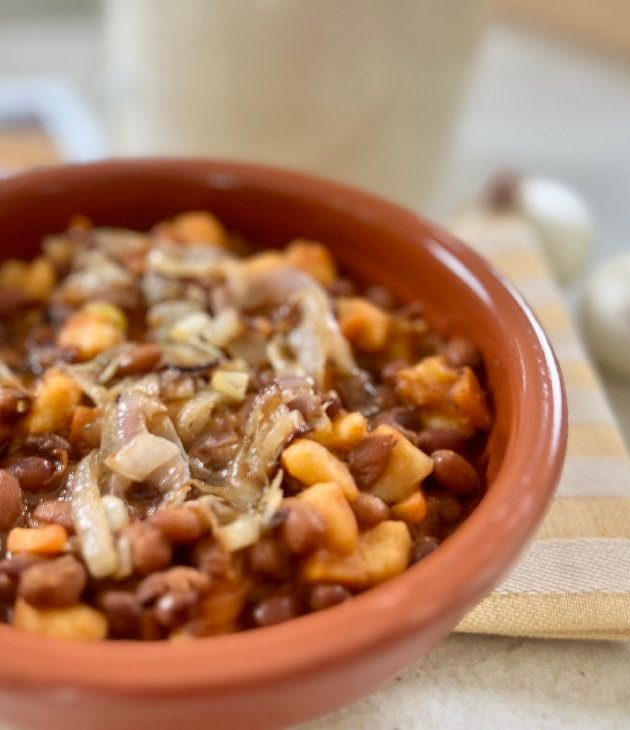
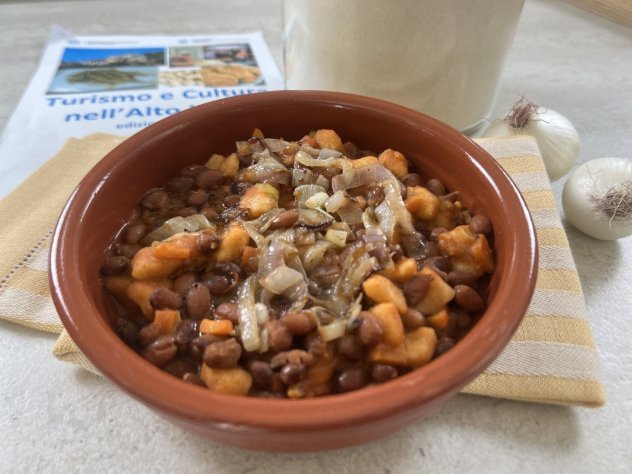
To accompany them, I chose a legume I discovered thanks to the Chamber of Commerce of Rieti and Viterbo: the Fagiolo Secondo or Fagiolo Giallo della Stoppia di San Lorenzo. This bean is a typical product of the Alta Tuscia Laziale Mountain Community, grown using sustainable farming methods that respect natural cycles.
Its curious name tells the story of its traditional cultivation: Secondo refers to the agricultural practice of sowing the beans as the second crop of the year, while della Stoppia (i.e. of the stubble) refers to the fact that they were sown directly onto the wheat stubble just after harvest, using crop residues as a natural growing medium.

This late cultivation allowed the beans to be harvested as early as the end of August, offering farming families a valuable source of plant-based protein as autumn approached. These small brown beans are not only delicious but also quick to cook and naturally sweet, qualities attributed to the volcanic origin of the local soil.

Rich in plant proteins and fiber, these beans are ideal for those looking for balanced dishes full of flavor and suitable even for beginner cooks.

ilaria-bertinelli-gnocchi-di-farina-e-acqua

Flour and water gnocchi with beans

  24.16g carbohydrates per 100g without onion topping

Ingredients for the gnocchi for 4 servings

  • 200g brown rice flour*
  • hot water
  • a pinch of salt

For the bean sauce

  • 400g tomato purée
  • 150g dried Fagioli secondi or Gialli della Stoppia
  • 70g carrot
  • 40g celery
  • 2 bay leaves
  • wild fennel
  • extravirgin olive oil Canino DOP
  • salt and pepper

For the onion

  • 5 Tropea onions
  • extravirgin olive oil Canino DOP
  • oregano
  • salt and pepper

**Ingredients specific for celiacs

*Ingredients whose labels must read “gluten-free” (or, in Italy, present on  Prontuario AIC)

Preparation

  1. Soak the dried beans overnight. The next day, boil them over low heat with two bay leaves until fully cooked. Turn off the heat and reserve the cooking water.
  2. Place the whole grain rice flour in a mixing bowl, add a pinch of salt, and pour in just enough lightly salted boiling water to create a smooth dough. You’ll need about half the weight of the flour in water. Cover with plastic wrap and let rest for at least 15 minutes.
  3. Finely chop the carrot and celery, and sauté them in a pan with a drizzle of olive oil. Add the vegetables and tomato purée to the pan, season with salt, and let the sauce simmer for about 20 minutes. Then add the cooked beans and allow to cook together for another 15 minutes. Finish with chopped wild fennel.
  4. Slice the Tropea spring onions and gently soften them in a pan with a little olive oil. Season with oregano, salt, and pepper.
  5. Prepare the gnocchi: roll the dough into cylinders on a board dusted with rice flour, cut into 2 cm pieces, and place them on a tray.
  6. Cook the gnocchi in lightly salted boiling water until they reach your preferred texture. Note: they are not ready as soon as they float—they’ll need a bit longer.
  7. Lift them out with a slotted spoon and add directly to the bean sauce. Stir to combine, then serve with the Tropea onions and a drizzle of Canino olive oil.

ilaria-bertinelli-gnocchi-di-farina-e-acqua

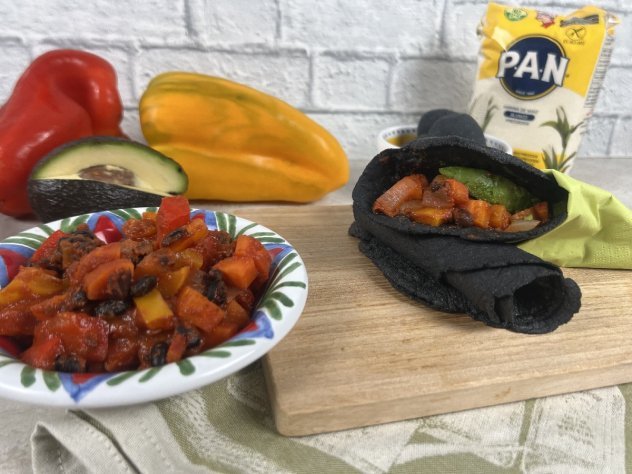
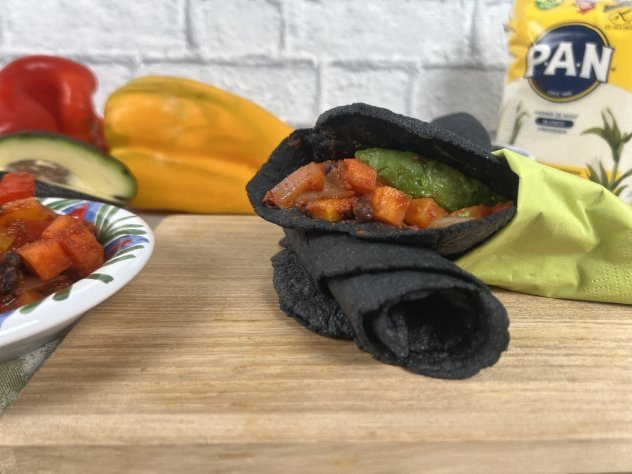
Bold colours and intense flavours come together in a recipe that celebrates plant-based cuisine with a creative and inclusive twist: these White corn tortillas with activated charcoal and vegetable chili are the perfect option for anyone looking for a satisfying yet balanced dish, also suitable for those who have to keep an eye on their blood sugar levels or following a gluten-free diet.

The tortillas are made with white corn flour, a naturally gluten-free ingredient rich in resistant starch and generally with a lower glycemic index than yellow corn. The addition of activated charcoal not only gives a striking look but may also help reduce bloating thanks to its adsorbing properties.

The vegetable chili is a powerhouse of fibre, vitamins, and antioxidants: bell peppers provide vitamin C and beta-carotene, carrots contribute soluble fibre and vitamin A, and Mexican black beans are an excellent source of plant-based protein, iron, magnesium, and more fibre to help regulate carbohydrate absorption, making the dish even more balanced. Chili pepper and paprika add a pleasant spiciness and help stimulate metabolism—without needing to rely on a lot of salt for flavour.

Let’s take a flavourful trip into Mexican-inspired cooking with this wholesome and satisfying dish and if you like Latin American cuisine, try also this Dominican Salad.ilaria-bertinelli-tortillas-di-mais-bianco

White corn tortillas with activated charcoal and vegetable chili

18g carbohydrates per 100g

Ingredients for the tortillas

  • 250g water
  • 170g white corn flour*
  • ½ teaspoon of activated charcoal
  • a pinch of salt

For the vegetable chili

  • 400g tomato purée
  • 300g yellow bell pepper
  • 300g red bell pepper
  • 250g carrots
  • 250g cooked Mexican black beans
  • 40g onion
  • 1 small piece of chili pepper
  • extra virgin olive oil
  • paprika
  • parsley
  • salt

To complete

  • avocado

**Ingredients specific for celiacs

*Ingredients whose labels must read “gluten-free” (or, in Italy, present on  Prontuario AIC)

Preparation

  1. Place the white corn flour in a mixing bowl, add a pinch of salt and the activated charcoal, then pour in the water and mix until you get a smooth, uniform dough. Cover and let it rest for at least 15 minutes. If mixing by hand, your fingers may get stained black—but don’t worry, it rinses off easily.
  2. Finely chop the onion and sauté it in a deep skillet with a drizzle of olive oil, along with a clove of garlic and a small amount of chili pepper according to your heat preference. Meanwhile, slice the carrots and dice the peppers, then add them to the pan along with the tomato purée. Season with salt and paprika. Cook for about 15 minutes, then add the black beans. Let everything simmer for another 10 minutes, stir in chopped parsley, and adjust seasoning if needed.
  3. Prepare the tortillas: divide the dough into 10 pieces of about 40 g each. Flatten each one between two sheets of parchment paper to about 1–1.5 mm thickness.
  4. Cook the tortillas in a very hot non-stick pan on both sides, flipping them twice—the second flip will often make them puff up slightly. Once cooked, stack them between two plates to keep warm.
  5. Fill each tortilla with the vegetable chili and a slice of avocado.
  6. ilaria-bertinelli-tortillas-di-mais-bianco


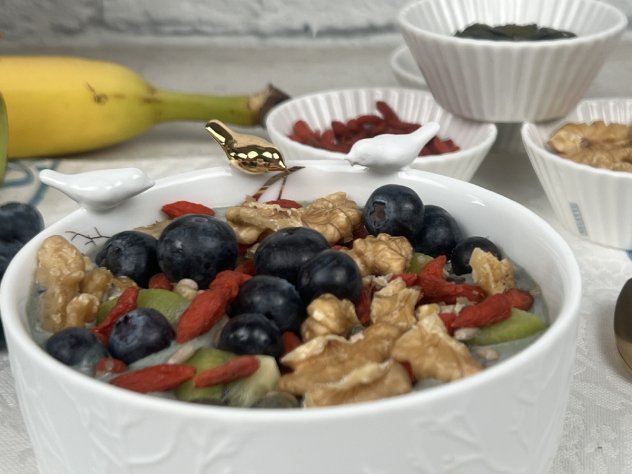
Since many of you often ask me where I get my energy from, I’m revealing one of my daily habits: my Blueberry Bowl, a colourful and energizing way to start the day.

I’m sharing this habit with you because the colour of the month, which I explore together with nutrition coach Bianca Balzarini, is blue—the same vibrant hue as two of the main ingredients in this bowl: blueberries and spirulina. In the world of food, blue is a rare shade, but it’s as fascinating as it is full of benefits.

The blue-violet colour of blueberries comes from their high content of anthocyanins, which help fight oxidative stress and protect cells from damage caused by free radicals. These little vitamin-rich fruits are low in calories and offer more than 3 grams of fibre per 100 grams, making them a low glycaemic index food.

Spirulina is a green-blue superfood with extraordinary properties. It’s a freshwater microalga made up of 60–70% high-quality protein that includes all essential amino acids. It’s rich in vitamins and minerals, a powerful antioxidant, and thanks to this exceptional nutritional profile, some studies suggest it may support metabolism and cardiovascular health.

Perfect for breakfast or as a functional snack, this bowl is packed with macro- and micronutrients. In addition to the benefits of blueberries and spirulina, it also provides protein from Greek yogurt, natural sugars from fruit, fibre, and healthy fats from seeds and nuts. All ingredients are naturally gluten-free, and the balance of carbohydrates, protein, and fibre makes this bowl an ideal choice for people with type 1 diabetes too.

What are you waiting for? Enjoy your breakfast!

Ilaria-bertinelli-bowl-ai-mirtilli

Blueberry Bowl

10.12g carbohydrates per 100g

Ingredients for 4 bowls

  • 300g fat-free Greek yoghurt
  • 150g banana
  • 125g blueberries
  • 3 dates
  • 1 level teaspoon of spirulina
  • 1 kiwi
  • suflower seeds
  • pumpkin seeds
  • goji berries
  • walnuts

**Ingredients specific for celiacs

*Ingredients whose labels must read “gluten-free” (or, in Italy, present on  Prontuario AIC)

Preparation

  1. Blend the yogurt with the banana, half of the blueberries, the pitted dates, and the spirulina until smooth.
  2. Divide the mixture between 4 bowls and top each with: 2 teaspoons sunflower seeds, 2 teaspoons goji berries, the kernels of 2 walnuts, 1 teaspoon pumpkin seeds, a few cubes of kiwi, and the remaining blueberries. Enjoy as breakfast or a snack.

Ilaria-bertinelli-bowl-ai-mirtilli


To celebrate Earth Day, which this year falls on 22 April, I created a simple and delicious recipe as my small contribution to reducing food waste. These Eggplant Rolls with Sun-Dried Tomatoes and Breadcrumbs are bursting with flavour and born from the desire to give leftover bread a second life. The filling is fragrant and enriched with Mediterranean ingredients like basil, almonds, and sun-dried tomatoes.

This dish is both light and nourishing: eggplants are an excellent source of fiber and antioxidants, wholemeal bread provides complex carbohydrates, while Pecorino cheese and almonds contribute protein and healthy fats. Everything is brought together by a simple, aromatic tomato sauce that makes the dish not only wholesome but also incredibly satisfying.

A tasty way to celebrate Earth, make the most of leftovers, and cook with awareness.

Eggplant rolls with sun-dried tomatoes and breadcrumbs

8g carbohydrates per 100g

Ingredients for the rolls

  • 2 eggplants (about 400g)
  • 100g milk
  • 70g leftover bread**
  • 50g Pecorino cheese, grated
  • 50g sun-dried tomatoes*, drained
  • 40g almonds
  • 12 basil leaves
  • salt and pepper

Ingredients for the sauce

  • 600g tomato purée
  • 1 shallot
  • 1 clove of garlic
  • extra virgin olive oil
  • chilli pepper
  • salt and pepper

**Ingredients specific for celiacs

*Ingredients whose labels must read “gluten-free” (or, in Italy, present on  Prontuario AIC)

Preparation

  1. Slice the eggplants and bake them in a preheated static oven at 180°C for about 20 minutes until soft.
  2. Soak the bread in milk, then place it in a blender along with the sun-dried tomatoes, almonds, and basil leaves. Add the Pecorino cheese in small pieces and blend until smooth. Season with salt and pepper to taste.
  3. Fill the eggplant slices with the mixture and roll them up tightly.
  4. For the sauce, sauté the finely chopped shallot in a non-stick pan with a drizzle of oil and the garlic clove. Add the tomato purée and chili pepper, then gently place the rolls in the sauce.
  5. Cook for 20 minutes and serve warm.

ilaria-bertinelli-involtini-di-melanzane-con-pane-avanzato

Polenta gnocchi with artichoke cream and toasted almonds: a no-waste recipe with great nutritional value.

Turning leftover polenta into a new and surprising dish is a fantastic way to reduce food waste while still enjoying delicious flavours. These alternative gnocchi, with their soft texture and delicate taste, pair perfectly with the artichoke cream, enhanced by the crunch of toasted almonds and the freshness of lemon zest.

A special touch comes from Miso, a fermented ingredient rich in probiotics, which adds depth of flavor and digestive benefits. This simple, nutritious, and inclusive dish is perfect for those who love sustainable and creative cuisine.

If you love gnocchi, try a classic with a spicy twist: Potato gnocchi with tomato sauce and ‘Nduja.

Polenta gnocchi with artichoke cream and toasted almonds

17.73g carbohydrates per 100g 

ilaria-bertinelli-gnocchi-di-polenta-ai-carciofi

Ingredients for the gnocchi

  • 300g cooked polenta*
  • 50g potato starch*
  • 50g brown rice flour*
  • 1 egg
  • 20g grated Parmigiano Reggiano
  • salt

Ingredients for the artichoke cream

  • 200g cleaned artichokes (about 4)
  • 100g medium potato
  • 30g shallot
  • 20g almonds (for garnish)
  • 1 scant teaspoon miso* (optional)
  • 1 garlic clove
  • 2 tablespoons extra virgin olive oil
  • zest and juice of ½ lemon
  • salt and pepper

**Ingredients specific for celiacs

*Ingredients whose labels must read “gluten-free” (or, in Italy, present on Prontuario AIC)

Preparation

  1. Blend the cold polenta and mix it with the egg, flour, grated Parmigiano Reggiano, salt, and pepper until you get a smooth dough.
    Lightly flour your work surface and shape the gnocchi.
  2. Clean the artichokes by removing the tough outer leaves, cutting off the tips, and slicing the hearts into thin wedges. Soak them in lemon water to prevent browning.
  3. In a non-stick pan, heat a drizzle of olive oil and sauté the chopped shallot with a garlic clove. Add the drained artichokes and the diced potato, letting them sauté for a few minutes. Then, add vegetable broth and cook for about 15 minutes, until the artichokes and potato are soft.
  4. Transfer everything to a blender and blend until smooth. Adjust with salt, pepper, and a scant teaspoon of Miso for an extra umami note.
  5. Cook the gnocchi in lightly salted boiling water, drain them, and toss them in a pan with the artichoke cream, adding a ladle of cooking water if needed. Plate and finish with toasted, lightly crushed almonds and grated lemon zest


This warm and creamy soup is true comfort food. Alongside its excellent nutritional properties, it features a delightful Middle Eastern touch with za’atar. Try my Sweet Potato and Artichoke Soup for a wholesome and flavourful dish!

Let’s take a closer look at the ingredients!

Sweet potatoes, often mistaken for regular potatoes, are actually quite different in both taste and nutritional value. Naturally sweet, they have a lower glycaemic index than regular potatoes, are rich in fibre, and contain a large amount of beta-carotene, ideal for boosting the immune system.

Artichokes, with their delicately bitter flavour, perfectly complement the soup by providing valuable fibre, inulin, and antioxidants, promoting digestive health and intestinal well-being.

What is za’atar? It’s an aromatic spice blend typical of Middle Eastern cuisine, traditionally made with thyme, oregano, sumac, and sesame seeds. In my version, I’ve replaced oregano with pumpkin seeds to create a more nutritionally interesting combination, thanks to their healthy fats.

Sumac is a bright red spice with a fresh, slightly citrusy flavour. It’s made from the dried and ground berries of the Rhus coriaria plant, native to the Mediterranean and Middle Eastern regions. Just a touch is enough to create the perfect balance between tradition and creativity!

Fancy more soups? Try the Chestnut and Grass Pea Soup.

Sweet potato and artichoke soup with za’atar

7g carbohydrates per 100g

Ilaria-bertinelli-vellutata-di-patate-dolci-e-carciofi

Ingredients for 4-6 servings

  • 1 lt ca. vegetable stock* or water
  • 8 cleaned artichokes (approximately 600 g)
  • 2 sweet potatoes (approximately 500 g)
  • 1 shallot (approximately 30 g)
  • Extra virgin olive oil
  • Salt and pepper

Ingredients for za’atar

  • 2 tablespoons pumpkin seeds
  • 2 teaspoons sesame seeds
  • 1 teaspoon dried thyme
  • 1 teaspoon sumac
  • ½ teaspoon salt
  • Extra virgin olive oil

**Ingredients specific for celiacs

*Ingredients whose labels must read “gluten-free” (or, in Italy, present on Prontuario AIC)

Preparation 

  1. Finely chop the shallot and sauté it in a saucepan with a drizzle of olive oil. Add the artichokes cut into wedges and the cubed sweet potato. Let them sauté for a few minutes, then cover with water or vegetable stock and cook for about 30 minutes or until the artichokes are perfectly tender.
  2. Blend everything until smooth and adjust with salt and pepper to taste.
  3. Prepare the za’atar. Toast the pumpkin seeds in a non-stick pan with a tablespoon of olive oil. Add the other ingredients and let them sauté for a few minutes, then set aside.
  4. Serve the soup with a spoonful of za’atar.