Tag Archive for: low gi recipes

My first encounter with Bagna Cauda dates back to a trip to Piedmont many years ago when I fell in love with the unmistakable flavour of this iconic dish, blissfully unaware of its after-effects. The potent and lingering “aroma” of garlic was so overwhelming that my husband made it clear there would be no second chance for this culinary experience.

From that amusing episode was born my version of Garlic-Free Bagna Cauda, which I jokingly call “anti-abandonment”: no garlic, but instead Jerusalem artichokes, which lend creaminess and a delicate flavour without any unpleasant aromatic consequences.

Jerusalem artichokes are not just a great substitute for garlic but also a true health ally. They are rich in fibre, particularly inulin, a prebiotic substance that supports gut health and helps maintain stable blood sugar levels. They are low in calories but high in minerals such as iron, potassium, and magnesium.

The result? A dish that saves lunches, marriages, and sensitive noses.

Discover how to prepare it, and if you love dipping sauces, be sure to try my Pinzimonio with Pistachio and Courgette Hummus.

Garlic-free Bagna cauda

12.3g carbohydrates per 100g of sauce

Ilaria-bertinelli-bagna-cauda-senza-aglio

Ingredients for 4 servings

  • boiled potatoes and vegetables of your choice
  • 400g Jerusalem artichokes
  • 200g milk
  • 40g salted or oil-packed anchovies (weight after cleaning)
  • extra virgin olive oil

Preparation

  1. Desalt and debone the salted anchovies or opt for oil-packed anchovies for convenience. Place them in a small pan with a drizzle of extra virgin olive oil and let them melt.
  2. Wash and peel the Jerusalem artichokes, then cut them into cubes. Add the cubes to the melted anchovies. Cover with milk, place a lid on the pan, and cook until the Jerusalem artichokes are soft enough to be mashed with a fork.
  3. Mash the Jerusalem artichokes and anchovies well with a fork until creamy.
  4. Serve the sauce with boiled potatoes and other vegetables of your choice, perfect for dipping into this incredibly tasty mixture.
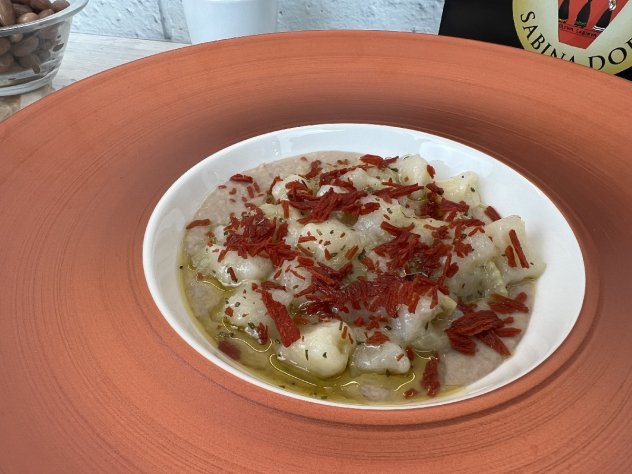
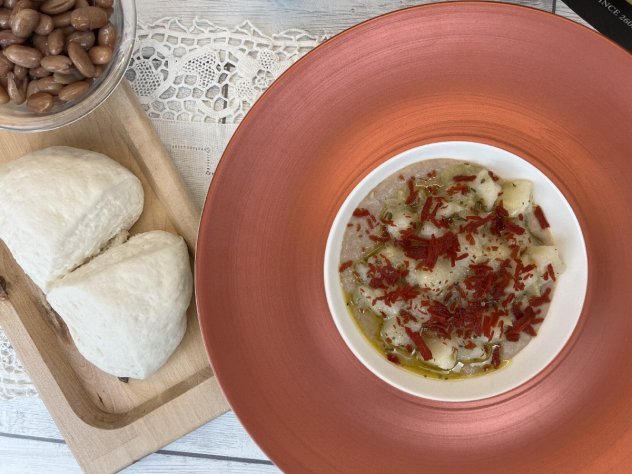
Would you like an original idea coming from the tradition of a land very dear to me? Here are the Pizzicotti with Fagiolo gentile di Labro bean cream topped with an irresistible oil flavoured with ginger and marjoram.

Once again, the gastronomic journey is in Lazio thanks to the Rieti Chamber of Commerce, which sent us the local ingredients to prepare this recipe with a very special ingredient: Fagiolo gentile di Labro a Slow Food Presidium and a product included in the list of Italian Traditional Agricultural Products (PAT in Italian).  It is a variety of bean that grows exclusively in the Avanzana Valley at the foot of the village of Labro, in the province of Rieti. It is light brown in colour and its fame is due to the tenderness of its skin and its delicate, sweet taste: the adjective ‘gentile’, i.e. gentle, by which it is called derives from such sweetness.

This traditional dish from Lazio is a perfect meal from a nutritional point of view, so why not use it as a holiday season dish? It is perfect both to brighten up banquets and to alternate meals characterised by the presence of meat and fish with a vegetarian recipe rich in plant protein and plenty of fibre.

To discover the great classic of the Rieti land, read my article and recipe for the The Perfect Amatriciana.

pizzicotti-con-crema-di-fagioli-di-labro

Pizzicotti with Fagiolo gentile di Labro bean cream and aromatic oil

29.6g carbohydrates per 100g 

Ingredients for 4 servings

  • 250g flour mix for bread, brand Nutrifree**
  • 180g water
  • 150g dried Fagiolo gentile di Labro beans
  • 4g brewer’s yeast
  • 50g extravirgin olive oil Sabina DOP
  • 20g dehydrated tomato flakes
  • 2 shallots
  • 2 celery sticks
  • 2 bay leaves
  • 1 piece of fresh ginger
  • 1 sprig of rosemary
  • marjoram
  • vegetable stock
  • grated Pecorino cheese
  • 1 pinch of bicarbonate of soda or 1 piece of Kombu seaweed

**Ingredients specific for celiacs

*Ingredients whose labels must read “gluten-free” (or, in Italy, present on  Prontuario AIC)

Preparation

  1. Soak the beans the night before in plenty of water and baking soda or a piece of Kombu seaweed.
  2. Warm up 50g of extra-virgin olive oil and infuse it with pieces of fresh ginger and marjoram leaves: you will obtain an aromatic oil that you can also use for other preparations.
  3. Dissolve the brewer’s yeast in a bit of water at room temperature, then pour it into a bowl with the flour and a pinch of salt and add the water required to obtain a smooth, not too hard dough.
  4. Divide the dough into at least 4 pieces, cover them with a tea towel and leave them to rise for about 20 minutes.
  5. In a saucepan, brown 1 shallot and 1 chopped celery stick in a little extra virgin olive oil and a sprig of rosemary, then add the soaked beans and bay leaves, cover with vegetable stock and cook (for at least 1 hour). When the beans are cooked, remove the bay leaf and rosemary and whisk to obtain a thick and creamy velouté. Season with salt and pepper.
  6. In a non-stick pan, put a drizzle of extra virgin olive oil and sauté the remaining shallot and celery finely chopped, season with chopped rosemary and sprinkle with vegetable stock to cook.
  7. After the dough has risen, bring a pot of water to the boil and lightly salt it. Take the pieces of dough, shape them into thin cylinders of about 1.5cm diameter and pinch them cutting off small knobs to be thrown into boiling water. Continue throwing the dough knobs into the boiling water and let them cook for at least 5 minutes considering that they would not become too cooked. Drain the ‘Pizzicotti’ with a slotted spoon, toss them into the non-stick pan with the chopped shallot and celery and allow them to cream slightly, adding a little cooking water.
  8. Serve on individual plates, preferably in a soup dish, forming a layer of bean cream topped with Pizzicotti and a dribble of aromatic oil, grated Pecorino cheese and a pinch of dried tomato flakes.

pizzicotti-con-crema-di-fagioli-di-labro

Version with gluten of Pizzicotti with Fagiolo gentile di Labro bean cream and aromatic oil

Replace the flour mix for bread Nutrifree with an equal amount of wheat flour and adjust the amount of water to obtain a bread-like texture.

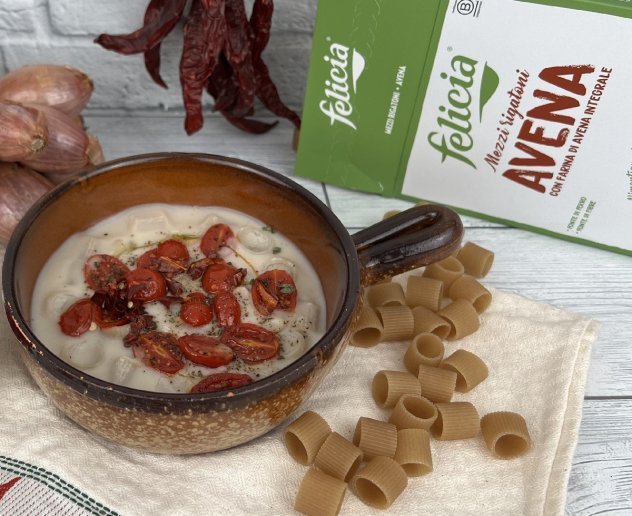
Can you think of those simple flavours that spark memories?  Oat pasta with cannellini beans is the perfect combination of traditional flavours and a touch of novelty.

One of the most typical dishes of Italian cuisine is in fact Pasta e fagioli (pasta and beans), a recipe often prepared with Borlotti beans and the addition of lard or bacon, which in the past were useful to give the necessary energy to face the hard work in the fields.

Instead, this version of Pasta e fagioli uses cannellini beans combined with oat pasta, where the wheat protein, gluten, is replaced by the high protein content in oat. Remember that beans are a valuable source of complex carbohydrates, plant proteins, fibre and are cholesterol-free, so the consumption of legumes is always a valuable ally in a balanced diet.

The flavour variation is the presence of sautéed cherry tomatoes with aromatic herbs that transform a classic taste into a fresher, juicier one.

If you love beans and tradition, try my Pisarei e fasò.

Oat pasta with cannellini beans

carbohydrates 13.63g per 100g

Mezzi-rigatoni-di-avena-ai-cannellini

Ingredients for 4 servings

  • 500g boiled cannellini beans (about 180g dry beans)
  • 240g cherry tomatoes
  • 140 g Oat pasta Felicia**
  • 1 shallots
  • 2 cloves of garlic
  • extra virgin olive oil
  • dried sweet pepper or Crusco pepper
  • bay leaf
  • oregano
  • thyme
  • rosemary
  • chilli pepper
  • salt and pepper

**Ingredients specific for celiacs

*Ingredients whose labels must read “gluten free” (or, in Italy, present on  Prontuario AIC)

Preparation

  1. Soak the cannellini beans for at least 12 hours, then boil them slowly in plenty of water with the addition of a bay leaf and, if available, a piece of Kombu seaweed to facilitate the beans’ future digestibility. Drain the beans and keep the cooking water.
  2. Cut the cherry tomatoes in half and sautée them for a few minutes on high heat in a non-stick pan with a little extra virgin olive oil, a clove of garlic cut in half, a chilli pepper and chopped herbs.
  3. Put a drizzle of extra virgin olive oil in a pan, brown a finely chopped shallot and a clove of garlic and add the cooked cannellini beans, cover with plenty of cooking water or vegetable stock and leave them to take on flavour for 10 minutes.
  4. Keep a few tablespoons of cannellini beans aside and blend the rest with an immersion blender, then reassemble the bean soup.
  5. Cook the oat pasta in plenty of salted water, drain and pour it into the cannellini soup, then complete the dish: place the pasta and beans on individual plates, complete with the herb flavoured tomatoes, a grinding of pepper, a drizzle of oil and some chopped dried sweet pepper or Crusco pepper.

Version with gluten of Oat pasta with cannellini beans

The recipe contains only naturally gluten-free ingredients.

September is the month when summer and autumn meet, just like the ingredients that characterise it: this is what you are going to discover in September Salads.

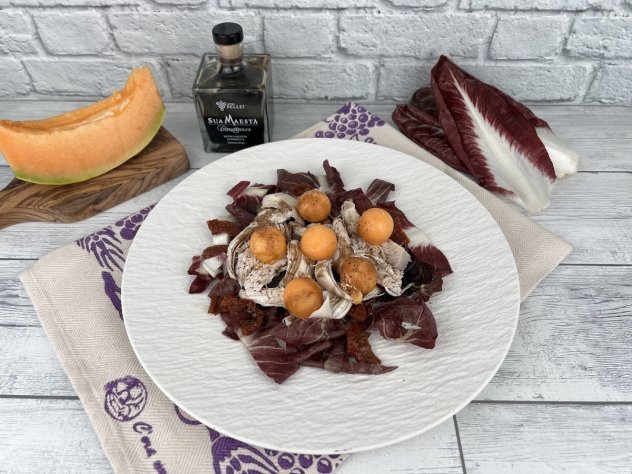
So what are the September salads? First of all, a tasty Chicken salad with radicchio and melon balls that is also perfect for your lunch box to take to the office as a balanced and light meal, or it can be a nice dinner to ensure a quiet night.

The second recipe is tasty and colourful, versatile and suitable for meals at home or away from home, the Salad of citrus flavoured cherry tomatoes with Venere rice introduces us to the quintessential winter fruit, i.e. oranges, which I have used here together with lemon to flavour the cherry tomatoes and make them really special.

So more colours to cheer us up into the less sunny days of September.

If you fancy some richer salads, check out the May and its fortified salads.

Chicken salad with radicchio and melon balls

carbohydrates 3.3g per 100g – 8.93g per serving

Insalata-di-pollo-al-radicchio-e-sfere-di-melone

Ingredients for 4 servings

  • 500g chicken breast
  • 280g melon
  • 180g red radicchio
  • 120g dried tomatoes in olive oil*
  • extra virgin olive oil
  • Aged Balsamic Vinegar of Modena
  • sage
  • bay leaf
  • 1 teaspoon green peppercorns
  • 3 cardamom berries
  • 1 star anise berry
  • salt and pepper

Preparation

  1. Put a pan of water on the stove with a few sage leaves, a bay leaf, cardamom, star anise, green pepper and salt, and boil the chicken breast in it for 20 minutes. Once cooked, leave the chicken to cool in its stock.
  2. Assemble your salad by cutting the radicchio into strips and placing it on the bottom of the plate. Flavour it with the dried cherry tomatoes cut into strips, thread the cooled chicken over it and complete with melon balls.
  3. Season with a pinch of salt and pepper and drizzle with a little extra virgin olive oil and balsamic vinegar.

Salad of citrus flavoured cherry tomatoes and Venere rice

carbohydrates 13.7g per 100g – 39.79g per serving

Insalata-di-pomodorini-agli-agrumi-e-riso-Venere

Ingredients for 4 servings

  • 600g mixed coloured cherry tomatoes
  • 140g Venere rice
  • 120g Greek feta cheese
  • 80g pitted green olives*
  • 80g pitted black olives*
  • 1/2 orange with edible peel
  • grated lemon peel
  • basil
  • extra virgin olive oil
  • salt and pepper

*Ingredients whose labels must read “gluten-free” (or, in Italy, present on  Prontuario AIC)

Preparation

  1. Boil the Venere rice in lightly salted water and drain when al dente.
  2. Cut the cherry tomatoes in halves or quarters, add the sliced olives and season for 15 minutes with orange slices and grated lemon peel.
  3. Put the Venere rice in the salad bowl, cover it with the cherry tomato and olive mixture after removing the orange slices. Season with a drizzle of oil and some freshly-ground pepper (no need for salt as the salad contains salty ingredients) and complete with crumbled feta cheese and a few basil leaves.


Full speed ahead: Stuffed omelette roll

How many times have you arrived home at dinner time without having any ideas of what to prepare? The Summer omelette roll is a solution to many situations.

In fact, all you need is fresh eggs and a little grated Parmesan cheese to prepare the magical and tasty omelette disc, then you can create the stuffing according to what you find in your fridge and pantry: each time you can serve a roll with a different flavour and colour.

My advice is to always try to use a good amount of vegetables for the stuffing in order to balance the protein- and fat-rich omelette with vitamins and fibre. You can then serve it with a nice slice of wholemeal bread to get the right amount of carbohydrates.

If you are a fan of omelettes, try this Stuffed Omelette.

rotolo-di-frittata-estivo

Summer omelette roll

 carbohydrates per 100g negligible

Ingredients for 4 servings

  • 7 eggs
  • 125g cow’s milk mozzarella
  • 40g Parmigiano Reggiano cheese, grated
  • 1 tomato
  • a handful of lettuce
  • 1 tbsp olive pâté*
  • extra virgin olive oil
  • salt and pepper

**Ingredients specific for celiacs

*Ingredients whose labels must read “gluten-free” (or, in Italy, present on  Prontuario AIC)

Preparation

  1. Beat the eggs well in a bowl with a fork, add the Parmesan cheese and a pinch of salt and pepper.
  2. Put a little oil in a 25-28cm diameter non-stick frying pan and pour in the egg mixture. Cook it over medium heat and, when it has set, turn it over with the help of a lid.
  3. Place the omelette disc on a board and stuff it: spread the lettuce, place the sliced tomato and  mozzarella on top, then the olive pâté evenly distributed.
  4. Roll the omelette tightly, then cut the cylinder in half to serve so that the colours of the ingredients inside can be seen.

Version with gluten of Summer Omelette Roll

The recipe contains only naturally gluten-free ingredients.

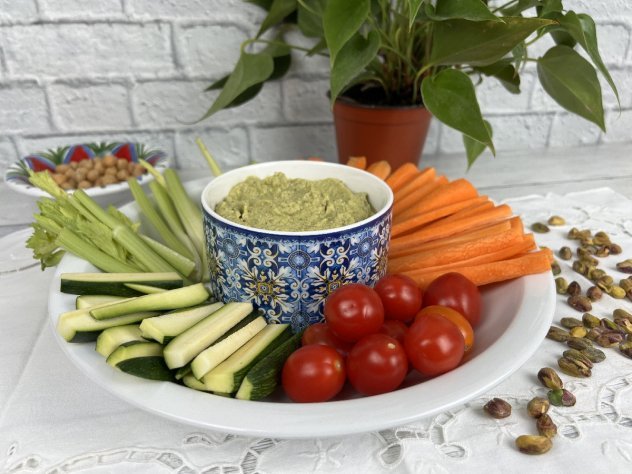
For the month of August, I thought of a salad ideal for sharing with friends: Pinzimonio with pistachio and courgette hummus.

Once you have prepared this delicious hummus, you can use it not only to accompany many seasonal vegetables, but also to top bruschettas or season a pasta dish: a recipe with a thousand possibilities!

Pinzimonio can be used throughout a meal, i.e. it can be an appetiser, a main course or a side dish, it all depends on your appetite and the other courses you have planned for the meal.

You could serve Pinzimonio with Meat mini-pizzas.

pinzimonio-hummus-di-ceci-e-zucchine

Pinzimonio with pistachio and courgette hummus

 5.7g carbohydrates per 100g hummus

Ingredients for 6-8 servings

  • vegetables to taste (courgettes, carrots, celery, cherry tomatoes, etc.)
  • 200g courgettes
  • 150g cooked chickpeas
  • 40g pistachio nuts
  • lemon juice
  • extra virgin olive oil
  • water
  • salt and pepper

**Ingredients specific for celiacs

*Ingredients whose labels must read “gluten-free” (or, in Italy, present on  Prontuario AIC)

Preparation

  1. Place courgettes, chickpeas, pistachios and lemon juice in a blender and start blending. While continuing to blend, gradually add water and oil to obtain a creamy texture, then season with salt and pepper.
  2. Cut the vegetables into sticks, while leaving the cherry tomatoes whole and arrange everything in a serving dish with the hummus in a bowl in the centre or put the hummus in small single-serving bowls for each of the diners.

pinzimonio-hummus-di-ceci-e-zucchine

Version with gluten of Pinzimonio with pistachio and courgette hummus

The recipe contains only naturally gluten-free ingredients.

As summer officially begins on 21st June, June salads will delight us with the addition of seasonal fruit.

Asparagus continues to be present, which we can enjoy with a mouth-watering cheese cream and plums for a salad that also becomes a green all-in-one dish, great to take to the office or to the pool in a convenient lunch box.

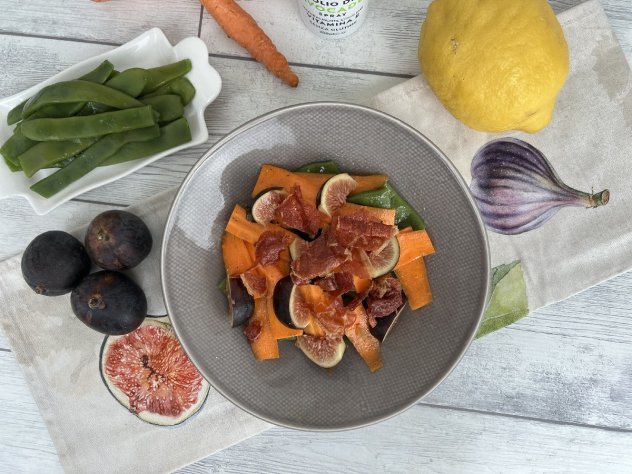
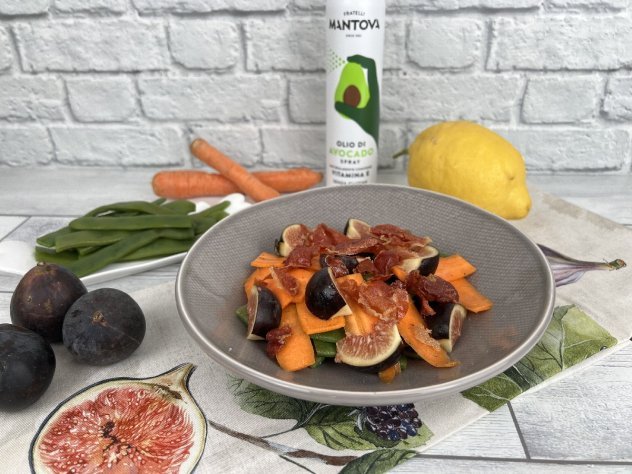
My salad with cooked vegetables features snow peas accompanied by carrots, but above all by the contrast of the sweetness of the figs and the saltiness of the crispy Prosciutto di Parma: as an appetiser, main course or as a one-course meal, the Salad of snow peas and figs will win you over with its explosion of flavours.

The tip I want to share with June salads is the use of spray oil, a very interesting way to dress our dishes. Why?

For two main reasons: the first is that we will use up to 90 per cent less oil for dressing, thus significantly reducing the calorie intake of the salads themselves; the second is that in the canned bag of Fratelli Mantova the oil is stored in the dark and protected from the air, thus guaranteeing ideal preservation.

My choice for these salads is avocado oil containing 100% oil extracted from the pulp of the avocado fruit, rich in vitamin E, with a light and delicate taste and texture.

For more ideas, see also the reinforced salads of May.

Asparagus and plum salad

carbohydrates 7.76g for 1 serving

insalata-di-asparagi-e-prugne

Ingredients for 1 salad

  • 3-4 asparagus
  • 50g plums
  • 30g soy milk*
  • 30g Ricotta cheese
  • 20g Robiola cheese
  • shelled pistachios
  • 1 lemon with edible zest
  • Fratelli Mantova’s avocado oil
  • salt and pepper

*Ingredients whose labels must read “gluten free” (or, in Italy, present on  Prontuario AIC)

Preparation

  1. With a mandoline, slice the asparagus into ribbons and marinate them for at least 15 minutes with a teaspoon of lemon juice, salt, pepper and a splash of avocado oil.
  2. Prepare a cream by mixing ricotta, robiola, grated lemon peel and a grinding of pepper.
  3. Assemble the salad by placing the asparagus ribbons in a salad bowl, the cheese cream, the plums cut into wedges and a sprinkling of shelled pistachios.

insalata-di-asparagi-e-prugne

Snow pea and fig salad

carbohydrates 9.58g for 1 serving

insalata-di-taccole-e-fichi

Ingredients for 1 serving

Preparation

  1. Slice the carrots into ribbons using a mandoline, season them with lemon juice, salt, pepper and a splash of avocado oil, then allow to rest for the time needed to prepare the other ingredients.
  2. Boil the snow peas in boiling salted water until cooked but still firm. Plunge them into cold water, then drain immediately.
  3. Place the Prosciutto slice on a plate and let it crisp up in the microwave or in a non-stick frying pan: in the microwave, set the oven on low power for short periods of time until the desired crispiness is reached; in the frying pan, do not grease the bottom and cook on low heat until crispy.
  4. Assemble the salad by placing the snow beans on the bottom of the salad bowl, the carrot ribbons and a well-washed fig cut into wedges, season with a pinch of salt, pepper and a splash of avocado oil, then finish by adding the crispy prosciutto slice.

insalata-di-taccole-e-fichi

What vegetables await you in our April salads? Cauliflower, peas and leek will be the stars with the red touch of strawberries: find out how to prepare them.

Let’s start with an uncommon use of cauliflower: raw. Have you ever tried it? You will be surprised to discover that it is sweet and has a much more delicate smell than when cooked. It is in fact during cooking that the typical sulphurous smell develops, which often makes cauliflower not liked, especially by children. In the first salad, cauliflower is grated to make a tasty, micronutrient-rich couscous with lots of flavour and few calories.

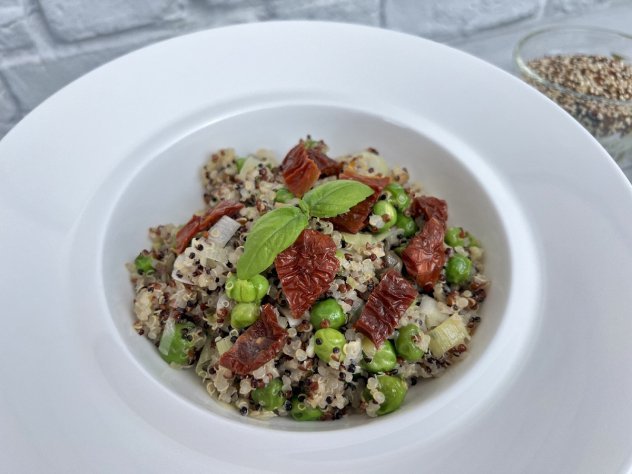
My Quinoa salad, on the other hand, is perfect for a refill of plant protein. Quinoa is a gluten-free pseudo-cereal that has all 8 essential amino acids (i.e. those that must be taken in with food as they are not produced by our body) and therefore has a very similar nutritional profile to foods of animal origin. Moreover, due to its wealth of other micronutrients, it is considered a super-food whose consumption is strongly recommended as an integral part of a healthy, balanced diet.

Remember to rinse quinoa before cooking to remove saponins, substances naturally present in many vegetables, which may cause irritation to mucous membranes, but are completely eliminated by a pre-cooking wash.

If you only have a few minutes available, see how to prepare Three five-minute salads!!

Cauliflower couscous with Radicchio variegato

carbohydrates 14g for the whole serving

cous-cous-di-cavolfiore-uvetta-e-fragole

Ingredients for 1 serving

  • 80g cauliflower
  • 40g radicchio variegato di Castelfranco
  • 15g raisins
  • 15g shelled walnuts
  • 1 teaspoon of toasted sunflower seeds
  • 1 teaspoon of pumpkin seeds
  • 1 strawberry
  • Traditional Balsamic Vinegar of Modena
  • extra virgin olive oil
  • salt and pepper

Preparation

  1. Grate the cauliflower with a coarse-hole grater to obtain a couscous-like consistency.
  2. Wash, dry and cut the Radicchio into pieces.
  3. Assemble the salad by placing the radicchio on the bottom of the plate and the cauliflower couscous on top; season with salt and pepper, oil and traditional balsamic vinegar of Modena, then complete by adding the raisins, nuts, seeds and finally the strawberry cut into thin slices.

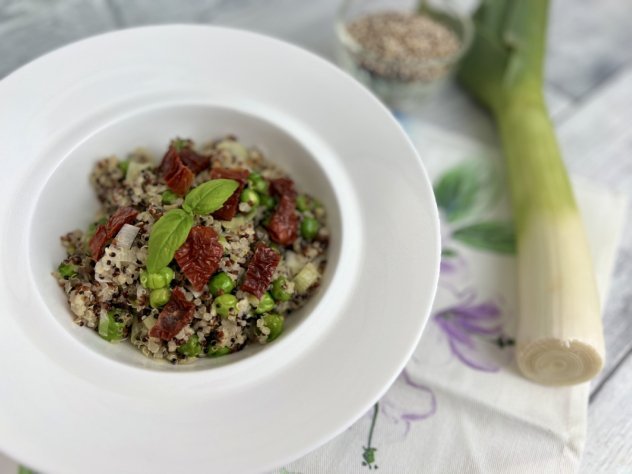
Quinoa salad with leek and peas

carbohydrates 20.11g for the whole serving

insalata-di-quinoa-e-piselli

Ingredients for 1 serving

  • 25g quinoa (weighed raw)
  • 40g shelled fresh peas
  • 30g leek
  • 7g desalted capers
  • chopped basil and sage
  • sun-dried tomatoes*
  • extra virgin olive oil
  • salt and pepper

Preparation

  1. Rinse the quinoa under running water and cook it in 75g of lightly salted water for about 20 minutes or until it has absorbed all the water.
  2. Put a little oil in a non-stick frying pan and brown the finely sliced leek and peas in it, adding a few tablespoons of water to cook them. Add desalted capers and chopped basil and sage. When the peas are almost cooked, add the quinoa and season with salt (if necessary) and pepper.
  3. Serve the quinoa topped with a few chunks of sun-dried tomatoes and basil leaves.

insalata-di-quinoa-e-piselli

Cous-cous-di-cavolfiore-uvetta-e-fragole

Version with gluten of April salads

The recipes contain only naturally gluten-free ingredients, so no adaptation is necessary for their version with gluten.

If you have been to Greece, you cannot have missed the Classic Mussakàs made with eggplants and meat sauce, a one-course meal rich dish that I thought I would revisit to create a lighter, vegetarian version: here is my
Vegetarian Mussakàs
.

This Vegetarian Mussakàs is the perfect substitute for Lasagna for the warmer months when light recipes rich in seasonal vegetables are preferred, but it is also loved by everyone in the family, including the little ones. It is also very useful for those who have to organise family meals, as it can be prepared in advance and then cooked with 30 minutes to spare.

If you don’t like peppers or find them indigestible, replace them with courgettes!

Remember that you can also prepare this recipe lactose-free by replacing the milk in the béchamel with vegetable stock: all other ingredients are lactose-free!

When you have eggplants in season, this recipe will be a dinner-saving one-course meal for every family need: enjoy!

mussakas-vegetariano

Vegetarian Mussakàs

9.26g carbohydrates per 100g

Ingredients for 6 servings

  • 1kg eggplants
  • 450g potatoes
  • 300g red pepper (or courgettes)
  • 200g tomato sauce
  • 150g carrots
  • 120g onions
  • Parmigiano Reggiano cheese, grated
  • breadcrumbs*
  • 2 cloves of garlic
  • extra virgin olive oil
  • basil
  • sage
  • salt and pepper

Ingredients for the béchamel sauce

  • 350g milk
  • 35g brown rice flour*
  • 35g grated Parmesan cheese
  • 30g extra virgin olive oil
  • salt

*Ingredients whose labels must read “gluten free” (or, in Italy, present on  Prontuario AIC)

Preparation

  1. Slice the eggplants and place them on a baking tin lined with parchment paper,  bake in a convection oven preheated to 180°C for about 20 minutes.
  2. Boil the potatoes with their skins on until they are soft enough to be sliced.
  3. Prepare the vegetable ragout browning the garlic in a little oil, then add the diced carrots and peppers; season with chopped basil and sage, add the tomato sauce, season with salt and pepper and cook for 15 minutes.
  4. Prepare a béchamel sauce by mixing the rice flour with the oil, then gradually add the milk so that no lumps form and heat until the mixture starts to thicken. Remove from the heat, add the Parmesan cheese, mix well and add salt to taste.
  5. Take a rectangular oven dish, form a layer of vegetable ragout, cover it with the wilted eggplants, the sliced potatoes, a sprinkling of Parmesan cheese and start the layers again: you should have two layers of aubergines and ragout and only one layer of potatoes. Finish with a layer of béchamel sauce and a sprinkling of breadcrumbs.
  6. Bake the Mussakàs in a convection oven preheated to 190°C for 20-30 minutes until crispy.

mussakas-vegetariano

Version with gluten of Vegetarian Mussakàs

Replace gluten free breadcrumbs with standard breadcrumbs; the rest of the recipe is naturally gluten-free, so no adaptation is needed for the version with gluten.


I love salads and am constantly thinking of new combinations that can be prepared with tasty ingredients in a very short time, so here’s how to prepare Three 5-minute salads.

Each of these salads will delight both the eyes and the palate, and as they are ready in a matter of minutes, you can indulge yourself and prepare all 3 in case you want to use them for a complete dinner instead of just a side dish.

Follow me not to run short of ideas for everyday cooking and have a look at my Lentil and chickpea burgers to discover a solution for your lunches away from home.

Tre-insalate-da-5-minuti

Treviso radicchio salad

5g carbohydrates for 1 serving

Ingredients for 1 serving

  • 1/2 tuft of Treviso radicchio
  • 40g pear
  • 2 shelled walnuts
  • slivers of Parmigiano Reggiano cheese
  • Balsamic Vinegar of Modena
  • extra virgin olive oil
  • salt and pepper

Preparation

  1. Cut the Treviso radicchio into small pieces and put them in a salad or soup dish.
  2. Add the Parmesan slivers, the sliced pear and the walnut kernels slightly broken up using your hands.
  3. Complete with salt, pepper, balsamic vinegar and extra virgin olive oil.

insalata-di-trevigiano

Aromatic cabbage and carrot salad

14g carbohydrates for 1 serving

Ingredients for 1 serving

  • 1 handful of thinly sliced white cabbage
  • 1 handful of thinly sliced purple cabbage
  • 1 carrot (mine was 80g)
  • 1 teaspoon of Dijon mustard*
  • 1 tablespoon maple syrup*
  • 1 tablespoon apple vinegar
  • sunflower seeds
  • pumpking seeds
  • extra virgin olive oil
  • salt and pepper

**Ingredients specific for celiacs

*Ingredients whose labels must read “gluten-free” (or, in Italy, present on  Prontuario AIC)

Preparation

  1. Cut the cabbage using a slicer or by hand so that it is very thin and grate the carrot into julienne.
  2. Prepare the aromatic dressing by mixing mustard, maple syrup, apple vinegar and extra virgin olive oil, then season with salt and pepper. Mix well with a fork.
  3. Place the sliced cabbage and carrot in a deep dish, then drizzle with the dressing and top with sunflower seeds and pumpkin seeds.

insalata-di-cappucci-aromatica

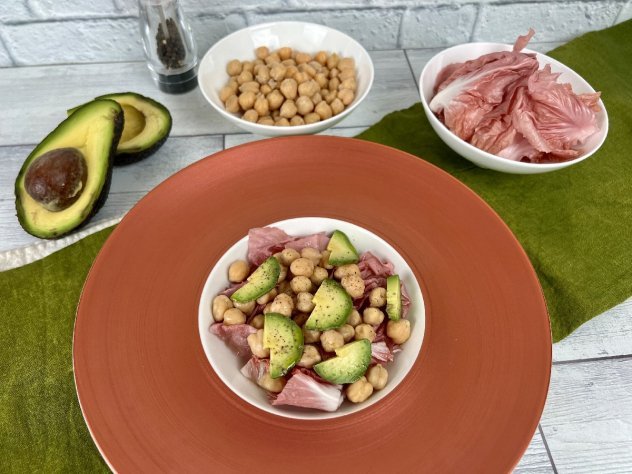
Chickpea salad with pink chicory

13.9g carbohydrates for 1 serving

Ingredients for 1 serving

  • 1/2 tuft of pink chicory
  • 100g cooked chickpeas
  • 30g avocado
  • lemon juice
  • extra virgin olive oil
  • salt and pepper

Preparatio

  1. Cut the pink chicory leaves and place them in a salad or soup dish.
  2. Top them with the cooked chickpeas and sliced avocado.
  3. Drizzle with a little lemon juice and complete the seasoning with extra virgin olive oil, salt and pepper.


Insalata-di-ceci-e-radicchio-rosa-mantovano