Autumn in Parma means Porcini because the local town of Borgotaro has its Fungo Porcino PGI, protected by a Consortium. What recipes with Porcini mushrooms can we prepare? Certainly this delicious Omelette with Porcini and Provolone cheese.

Porcini mushrooms from Borgotaro are not cultivated, but they grow wildly and the hunting season goes from late spring to late autumn. Porcini are rounded and plump, they feature a typical mushroom smell and aromatic flavour. Depending on the type, their caps can range in colour from brown to red or from cream-white to chestnut or blackish brown.

From a nutritional point of view, it is important to remember that mushrooms should be eaten with moderation because, even if edible, they are always slightly toxic, yet they are very rich in micronutrients and low in calories. So, try this super fast omelette that will make you fall in love with it!

If you like omelettes, try my Rolled omelette.

Omelette with Porcini and Provolone cheese

2g carbohydrates per 100g

frittata-ai-porcini-e-provolone

Ingredients for 4 servings

  • 8 eggs
  • 400g peeled tomatoes
  • 300g mild or sharp Provolone cheese
  • 300g Porcini mushrooms
  • 2 sprigs of parsley
  • 4 twigs of basil
  • 1 clove of garlic
  • extra virgin olive oil
  • salt and pepper

**Ingredients specific for celiacs

*Ingredients whose labels must read “gluten-free” (or, in Italy, present on  Prontuario AIC)

Preparation

  1. Clean the mushrooms and slice them, sauté them in a large non-stick frying pan with a dribble of oil and the clove of garlic for 5-6 minutes. Adjust salt and pepper, then dust with chopped parsley and remove the garlic.
  2. Chop the onion thinly and put it in another frying pan with a dribble of oil, then add the peeled tomatoes in pieces and cook for 15-20 minutes adjusting salt.
  3. Beat 2 eggs in a bowl, add a pinch of salt and pepper, slightly oil a non-stick pan of 18cm diameter and pour the beaten eggs in it. Cook the omelette on one side only over medium heat.
  4. Spread on the surface ¼ of the warm Porcini and ¼ of the thinly sliced Provolone cheese, then fold the omelette and put it in the frying pan with the peeled tomatoes.
  5. Repeat the operation with the other 3 omelettes. Put a lid on the frying pan containing all the omelettes and heat them up to melt the cheese. Serve.


In October you can choose between a super-light salad or a rich one that you can use as a main course, so find out what the Salads of October are.

October is often a time that holds surprises for us in terms of temperatures because we can enjoy days that are still like summer or we can be plunged into the first cold days of winter: so choose the most suitable salad for autumn days.

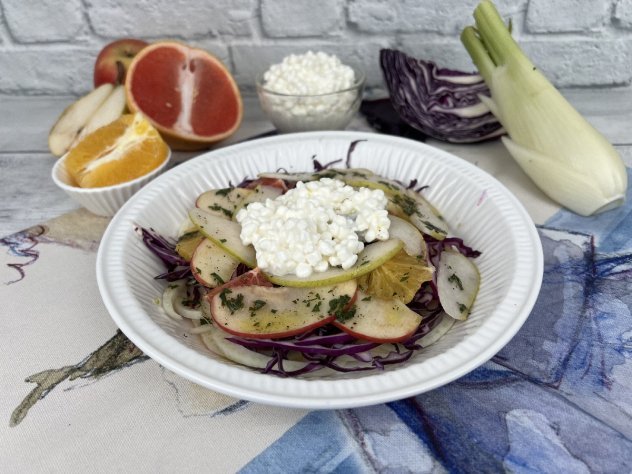
The Fruit and vegetable salad is prepared with some of the most iconic fruits of winter, namely orange, apple and pear. The same applies to vegetables, where the purple cabbage is king. The addition of milk flakes is consistent with the lightness of this salad, but you might be tempted to replace them with grilled Tomino cheese without thinking too much about the calorie intake.

The legume and salmon salad, on the other hand, will be a great way to fill up on both animal and vegetable proteins with the strong touch of mustard sauce to bind all the flavours together.

Don’t miss out on more ideas for your salads and also discover the raw and cooked salads of April.

Fruit and vegetable salad

13.16g carbohydrates for the whole serving

Ingredients for 1 serving

  • 50g milk flakes*
  • 40g purple cabbage
  • 40g fennel
  • 30g Pink Lady apple
  • 30g pink grapefruit
  • 30g pear
  • 30g orange
  • 1 lemon
  • a few parsley leaves
  • extra virgin olive oil
  • salt and pepper

**Ingredients specific for celiacs

*Ingredients whose labels must read “gluten free” (or, in Italy, present on  Prontuario AIC)

Preparation

  1. Peel the orange and grapefruit. Slice the apple and pear leaving the peel, sprinkle with lemon juice, salt and pepper.
  2. Slice the fennel with a mandoline so that it is very thin and do the same with the purple cabbage.
  3. Prepare a vinaigrette by mixing a few tablespoons of oil, lemon juice, salt, pepper and chopped parsley.
  4. Arrange the fruit and vegetables on a plate, dress with the vinaigrette and top with a few teaspoons of cheese flakes.

Insalatona-di-frutta-e-verdura

Lentil and salmon salad

7.5g carbohydrates per 100g

Ingredients for 4 servings

  • 300g cooked lentils
  • 200g smoked wild salmon
  • 100g Pink Lady or Granny Smith apple
  • iceberg lettuce
  • lemon juice

Ingredients for the sauce

  • 60g soy milk*
  • 50g extra virgin olive oil
  • 30g Dijon mustard*
  • 6 anchovy fillets
  • 20g lemon juice
  • dill
  • salt and pepper

**Ingredients specific for celiacs

*Ingredients whose labels must read “gluten free” (or, in Italy, present on  Prontuario AIC)

Preparation

  1. Pour all the ingredients for the sauce into a tall glass and blend them with an immersion blender to obtain a smooth and creamy sauce.
  2. Slice the apple thinly with the peel and spray it lightly with lemon juice so that it does not darken.
  3. Take four plates, cover the bottom of each plate with iceberg lettuce cut into pieces, lay a quarter of the cooked lentils, the apple slices, the wild salmon and season with mustard sauce on top of the salad. Complete with some dill leaves.

Insalata-di-lenticchie-e-salmone

September is the month when summer and autumn meet, just like the ingredients that characterise it: this is what you are going to discover in September Salads.

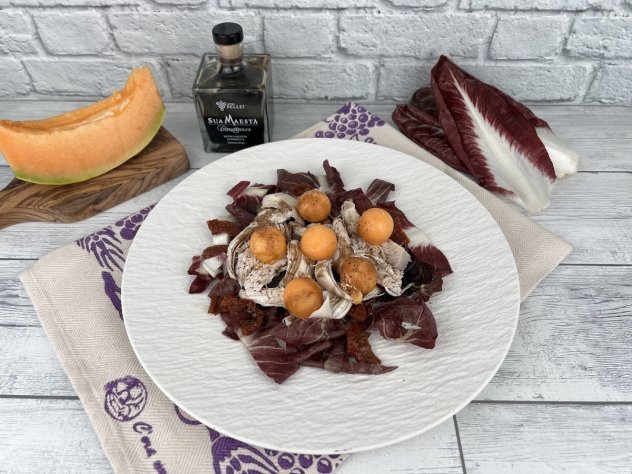
So what are the September salads? First of all, a tasty Chicken salad with radicchio and melon balls that is also perfect for your lunch box to take to the office as a balanced and light meal, or it can be a nice dinner to ensure a quiet night.

The second recipe is tasty and colourful, versatile and suitable for meals at home or away from home, the Salad of citrus flavoured cherry tomatoes with Venere rice introduces us to the quintessential winter fruit, i.e. oranges, which I have used here together with lemon to flavour the cherry tomatoes and make them really special.

So more colours to cheer us up into the less sunny days of September.

If you fancy some richer salads, check out the May and its fortified salads.

Chicken salad with radicchio and melon balls

carbohydrates 3.3g per 100g – 8.93g per serving

Insalata-di-pollo-al-radicchio-e-sfere-di-melone

Ingredients for 4 servings

  • 500g chicken breast
  • 280g melon
  • 180g red radicchio
  • 120g dried tomatoes in olive oil*
  • extra virgin olive oil
  • Aged Balsamic Vinegar of Modena
  • sage
  • bay leaf
  • 1 teaspoon green peppercorns
  • 3 cardamom berries
  • 1 star anise berry
  • salt and pepper

Preparation

  1. Put a pan of water on the stove with a few sage leaves, a bay leaf, cardamom, star anise, green pepper and salt, and boil the chicken breast in it for 20 minutes. Once cooked, leave the chicken to cool in its stock.
  2. Assemble your salad by cutting the radicchio into strips and placing it on the bottom of the plate. Flavour it with the dried cherry tomatoes cut into strips, thread the cooled chicken over it and complete with melon balls.
  3. Season with a pinch of salt and pepper and drizzle with a little extra virgin olive oil and balsamic vinegar.

Salad of citrus flavoured cherry tomatoes and Venere rice

carbohydrates 13.7g per 100g – 39.79g per serving

Insalata-di-pomodorini-agli-agrumi-e-riso-Venere

Ingredients for 4 servings

  • 600g mixed coloured cherry tomatoes
  • 140g Venere rice
  • 120g Greek feta cheese
  • 80g pitted green olives*
  • 80g pitted black olives*
  • 1/2 orange with edible peel
  • grated lemon peel
  • basil
  • extra virgin olive oil
  • salt and pepper

*Ingredients whose labels must read “gluten-free” (or, in Italy, present on  Prontuario AIC)

Preparation

  1. Boil the Venere rice in lightly salted water and drain when al dente.
  2. Cut the cherry tomatoes in halves or quarters, add the sliced olives and season for 15 minutes with orange slices and grated lemon peel.
  3. Put the Venere rice in the salad bowl, cover it with the cherry tomato and olive mixture after removing the orange slices. Season with a drizzle of oil and some freshly-ground pepper (no need for salt as the salad contains salty ingredients) and complete with crumbled feta cheese and a few basil leaves.


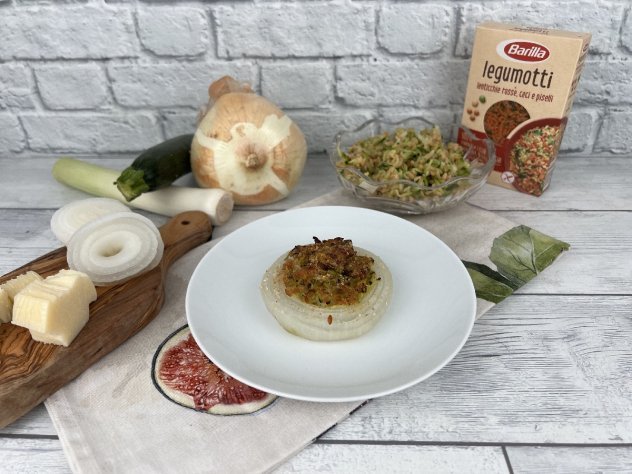
September is one of the months in which the Giarratane onions, the sweet, extra-large Sicilian onions that are perfect for stuffing and preparing in a thousand ways, are harvested: try these Giarratane onions stuffed with Legumotti.

The Giarratana onion is an onion grown in the area of the municipality of Giarratana in the south-east of Sicily. Its size is variable and a single bulb can weigh up to 3 kg. Its main characteristic is sweetness, which makes this onion particularly popular and part of the traditional Italian produce (P.A.T.) list created by the Ministry of Agriculture and Forestry.

Precisely because of its sweetness, this onion is also often eaten raw, but it is excellent with all types of cooking: boiled, grilled and baked au gratin.

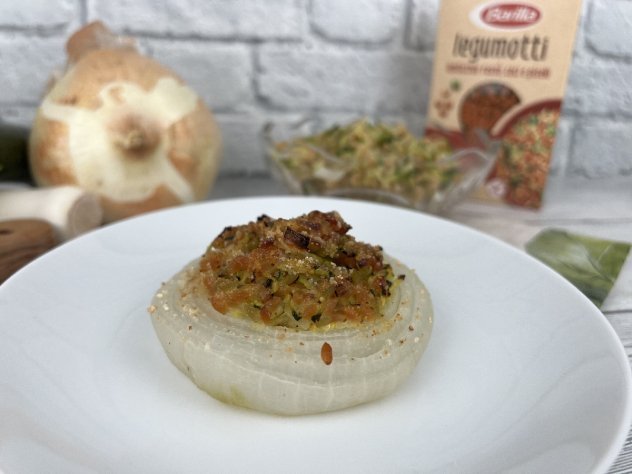
Stuffed with my beloved Legumotti topped with lots of vegetables and a touch of melting cheese, it is a perfect main course for people affected by diabetes and coeliac disease for both lunch and dinner.

If you like Legumotti, try them in the Legumotti salad with caramelised Tropea onion.

Giarratane onions stuffed with Legumotti

carbohydrates 13.13g per 100g

cipolle-giarratane-ai-legumotti

Ingredients for 4 servings

  • 4 Giarratane onions of about 350g each
  • 180g courgettes
  • 150g leek
  • 120g Barilla Legumotti*
  • 50g sharp Provolone cheese
  • breadcrumbs*
  • extra virgin olive oil
  • oregano
  • salt and pepper

**Ingredients specific for celiacs

*Ingredients whose labels must read “gluten free” (or, in Italy, present on  Prontuario AIC)

Preparation

  1. Peel and trim the Giarratane onions then cut them in half horizontally.
  2. Put a pan of water on the heat, when it comes to the boil throw in the Giarratane onions cut in half and boil them for 5 minutes. Drain them with a skimmer and lay them on a cutting board to dry.
  3. Chop the leek very finely and sweat it in a non-stick pan with a little oil. Add grated sharp Provolone cheese and stir to melt.
  4. Use, if you like, the water used to blanch the onions to cook the Legumotti for 9 minutes, then drain and throw them into the non-stick pan with the vegetables; stir and season with salt and pepper.
  5. Remove some internal layers of the onions to form a hollow for the filling; use the inside of the onions for any other preparation (sauces, onion stuffing, caramelised onions, etc.).
  6. Stuff the emptied onions with the Legumotti, sprinkle with breadcrumbs and a drizzle of oil and put in a convection oven preheated to 200°C for 15 minutes to gratin.
  7. Serve the stuffed onions warm.

cipolle-giarratane-ai-legumotti

Full speed ahead: Stuffed omelette roll

How many times have you arrived home at dinner time without having any ideas of what to prepare? The Summer omelette roll is a solution to many situations.

In fact, all you need is fresh eggs and a little grated Parmesan cheese to prepare the magical and tasty omelette disc, then you can create the stuffing according to what you find in your fridge and pantry: each time you can serve a roll with a different flavour and colour.

My advice is to always try to use a good amount of vegetables for the stuffing in order to balance the protein- and fat-rich omelette with vitamins and fibre. You can then serve it with a nice slice of wholemeal bread to get the right amount of carbohydrates.

If you are a fan of omelettes, try this Stuffed Omelette.

rotolo-di-frittata-estivo

Summer omelette roll

 carbohydrates per 100g negligible

Ingredients for 4 servings

  • 7 eggs
  • 125g cow’s milk mozzarella
  • 40g Parmigiano Reggiano cheese, grated
  • 1 tomato
  • a handful of lettuce
  • 1 tbsp olive pâté*
  • extra virgin olive oil
  • salt and pepper

**Ingredients specific for celiacs

*Ingredients whose labels must read “gluten-free” (or, in Italy, present on  Prontuario AIC)

Preparation

  1. Beat the eggs well in a bowl with a fork, add the Parmesan cheese and a pinch of salt and pepper.
  2. Put a little oil in a 25-28cm diameter non-stick frying pan and pour in the egg mixture. Cook it over medium heat and, when it has set, turn it over with the help of a lid.
  3. Place the omelette disc on a board and stuff it: spread the lettuce, place the sliced tomato and  mozzarella on top, then the olive pâté evenly distributed.
  4. Roll the omelette tightly, then cut the cylinder in half to serve so that the colours of the ingredients inside can be seen.

Version with gluten of Summer Omelette Roll

The recipe contains only naturally gluten-free ingredients.

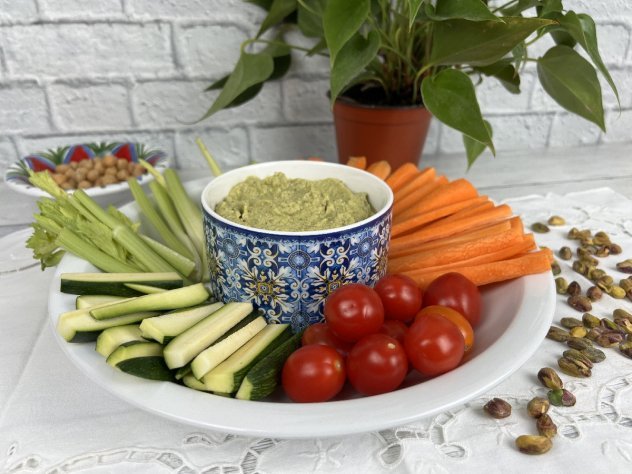
For the month of August, I thought of a salad ideal for sharing with friends: Pinzimonio with pistachio and courgette hummus.

Once you have prepared this delicious hummus, you can use it not only to accompany many seasonal vegetables, but also to top bruschettas or season a pasta dish: a recipe with a thousand possibilities!

Pinzimonio can be used throughout a meal, i.e. it can be an appetiser, a main course or a side dish, it all depends on your appetite and the other courses you have planned for the meal.

You could serve Pinzimonio with Meat mini-pizzas.

pinzimonio-hummus-di-ceci-e-zucchine

Pinzimonio with pistachio and courgette hummus

 5.7g carbohydrates per 100g hummus

Ingredients for 6-8 servings

  • vegetables to taste (courgettes, carrots, celery, cherry tomatoes, etc.)
  • 200g courgettes
  • 150g cooked chickpeas
  • 40g pistachio nuts
  • lemon juice
  • extra virgin olive oil
  • water
  • salt and pepper

**Ingredients specific for celiacs

*Ingredients whose labels must read “gluten-free” (or, in Italy, present on  Prontuario AIC)

Preparation

  1. Place courgettes, chickpeas, pistachios and lemon juice in a blender and start blending. While continuing to blend, gradually add water and oil to obtain a creamy texture, then season with salt and pepper.
  2. Cut the vegetables into sticks, while leaving the cherry tomatoes whole and arrange everything in a serving dish with the hummus in a bowl in the centre or put the hummus in small single-serving bowls for each of the diners.

pinzimonio-hummus-di-ceci-e-zucchine

Version with gluten of Pinzimonio with pistachio and courgette hummus

The recipe contains only naturally gluten-free ingredients.

Beat the heat with these July salads that will feature some of the most beloved seasonal ingredients, peaches and tomatoes.

Furthermore, back from my holidays in Sardinia, I wanted to use a Slow Food Presidium that I had never tried before: the cheese called Frue or Casu axedu, meaning “sour cheese” in Sardinian dialect, made with sheep’s or goat’s milk leaving the curd in the whey. The resulting cheese is a product that is a combination of yogurt and cheese, it is without rind, soft and sour. It is sold in small cubes or larger pieces always covered with whey.

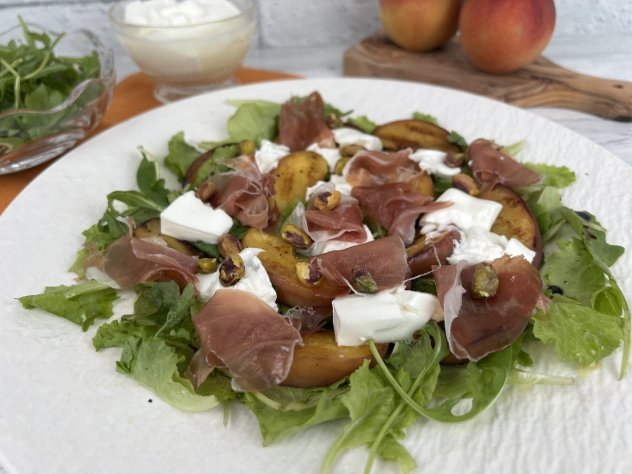
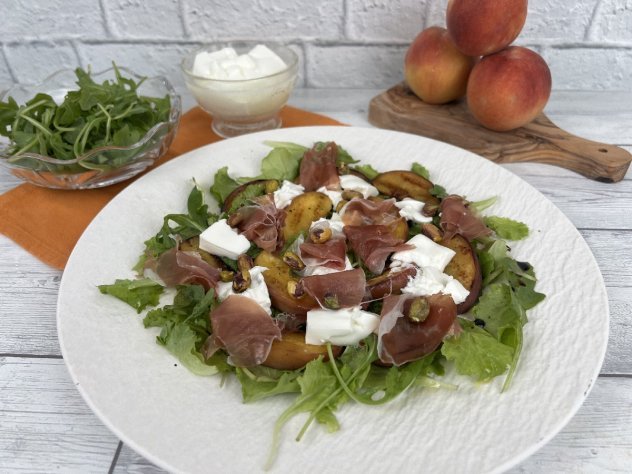
Because of its sour taste, Frue may be too strong for many people, so I decided to combine it with sweet grilled peaches and a savoury Prosciutto di Parma matured for 24 months: simply delicious!

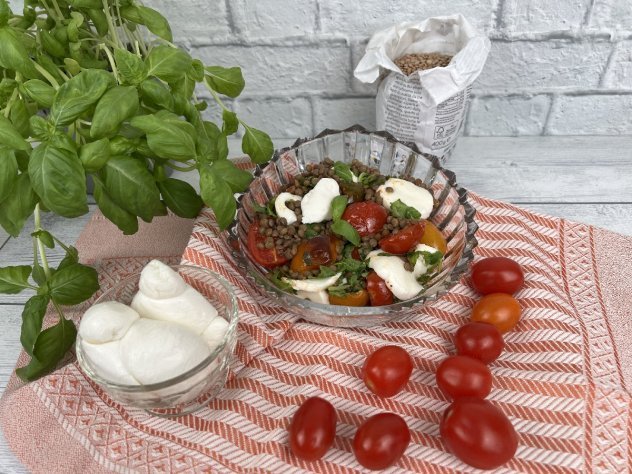
The second salad is a fun way of eating lentils also in summer making them fresh and colourful with cherry tomatoes, and the aroma of garden rocket and basil.

In addition to these July salads, for other fresh and easy-to-make ideas, have a loot at my June salads.

Salad of grilled peaches and Prosciutto

carbohydrates 6g for the whole serving

insalata-di-pesche-grigliate-e-prosciutto

Ingredients for 1 serving

  • 100g peaches with peel on
  • 80g Frue sour cheese or Mozzarella cherries
  • 40g Prosciutto di Parma (2 slices)
  • a handful of baby lettuce
  • a handful of garden rocket
  • 15g shelled pistachio nuts
  • spray extravirgin olive oil Fratelli Mantova
  • Balsamic vinegar of Modena
  • salt and pepper

Preparation

  1. Cut the peaches into thin segments and grill them without adding any grease or dressings.
  2. Form a layer of baby lettuce and garden rocket on the serving dish, then arrange the grilled peaches on top; dress with a pinch of salt, freshly ground pepper, a spray of extravirgin olive oil and a dribble of Balsamic vinegar.
  3. Complete with pieces of sour cheese or Mozzarella cherries, the slices of Prosciutto torn into smaller pieces and the pistachio nuts.

insalata-di-pesche-grigliate-e-prosciutto

Salad of lentils and sautéed cherry tomatoes

carbohydrates 37.41g for the whole serving

insalata-di-lenticchie-e-pomodori-arrostiti

Ingredients for 1 serving

  • 180g cherry tomatoes of various colours
  • 150g boiled lentils (about 50g dry lentils)
  • 70g Mozzarella cheese
  • garden rocket
  • basil
  • oregano
  • extravirgin olive oil
  • salt and pepper

Preparation

  1. Boil the lentils in water with carrot, celery, onion and garlic; drain and allow to cool down.
  2. Pour a dribble of extravirgin olive oil in a non-stick pan and sautéed the cherry tomatoes cut in half, intially with the cut side downwards. Adjust flavour with salt, pepper and oregano and cook for a couple of minutes.
  3. Dress the lentils with the sautéed tomatoes, adjust flavour with olive oil, salt and pepper if necessary, then finish with pieces of Mozzarella, strips of garden rocket and some basil leaves.

insalata-di-lenticchie-e-pomodori-arrostiti

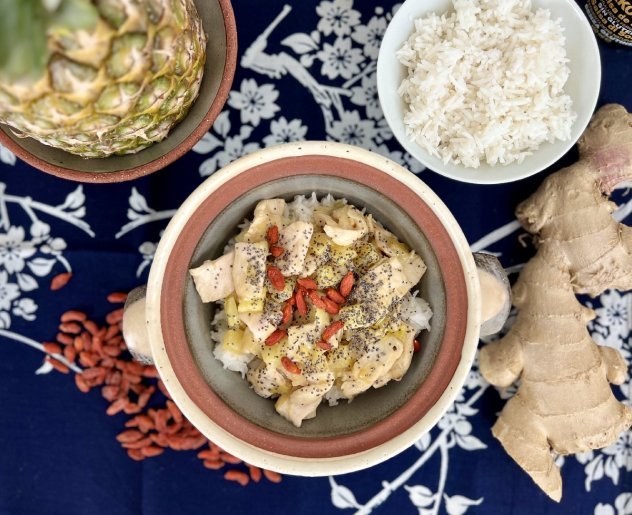
Poke is a traditional Hawaiian dish prepared with marinated raw fish accompanied by other ingredients making it a fresh, tasty and complete meal; my Pineapple chicken poke is my interpretation of a one-course meal that is equally tasty and complete, but made with meat as a source of protein.

In fact, who has difficulties in finding fresh chicken and pineapple? Normally nobody, therefore having a recipe that can answer the age-old question of what to cook for dinner is a great relief, also because this Poke will be ready in 10 minutes, practically the time Basmati rice takes to cook.

If you can, remember to soak the Basmati rice for 10 minutes before boiling it: its grains will be plump and long once cooked for an extra taste pleasure!

Try also Basmati rice with curry, tuna and peppers if you want a touch of Oriental cuisine on your table.

Pineapple chicken poke

22.28g carbohydrates per 100g

poke-di-pollo-allananas

Ingredients for 4 servings

  • 350g chicken breast sliced very thinly
  • 200g Basmati rice
  • 200g fresh pineapple
  • 100g green onions
  • 20g corn starch*
  • 1 piece of fresh ginger
  • gluten-free soy sauce*
  • Goji berries to taste
  • poppy seeds to taste

*Ingredients whose labels must read “gluten-free” (or, in Italy, present on  Prontuario AIC)

Preparation

  1. Soak the Basmati rice in water for 10 minutes before boiling it in 400g of water and a pinch of salt. Once cooked, set it aside.
  2. Coat the chichen slices with corn starch making sure you shake them well so that only a think layer of starch remains on the meat. Cut the chicken slices to strips.
  3. Cut a thick slice of pineapple, remove the peel and dice it.
  4. Cut the green onions into rounds and sweat them in a non-stick pan with a dribble of oil, ginger to taste chopped very thinly and some spoons of water. When the green onions are soft, add the chicken on high heat, stir and douse with soy sauce cooking for some minutes.
  5. Add the pineapple, half a glass of water to form a runny sauce and cook for some more minutes.
  6. Assemble your poke: put the basmati rice in a soup dish or bowl, top it with the pineapple chicken and finish with Goji berries and poppy seeds to taste.

poke-di-pollo-allananas

Version with gluten of Pineapple chicken poke

The recipe contains only naturally gluten-free ingredients, so no adaptation is necessary for its version with gluten.


May brings us two ideas for what we call fortified salads, i.e. salads that are nutritionally complete and therefore perfect as one-course meals for lunch in the office, at school or for dinner.

The rule applies that ingredients must be in season in order to maximise their nutritional contribution, so asparagus and mixed greens, as well as frozen edamame beans, will be the vegetable protagonists of the dishes.

The protein part of our salads is mainly of animal origin, being represented by grilled chicken and egg, not forgetting the contribution of edamame beans, an excellent source of plant protein.

As always, fibre is our best ally and is provided not only by vegetables, but also by buckwheat grains, an excellent alternative to rice and cereals containing gluten (for those who can eat them).

So here’s how to prepare reinforced salads that you can put in your lunch box for an absolutely perfect lunch out.

Discover more ideas for your salads here!

Buckwheat and asparagus salad

carbohydrates 24.48g for the whole serving

insalata-di-saraceno-e-asparagi

Ingredients for 1 serving

  • 4 asparagus
  • 40g buckwheat grains*
  • 1 egg
  • 15g Pecorino Romano cheese in very thin slices
  • 1 teaspoon of lemon juice
  • extra virgin olive oil
  • salt and pepper

*Ingredients whose labels must read “gluten-free” (or, in Italy, present on  Prontuario AIC)

Preparation

  1. Cook buckwheat grains in lightly salted boiling water, then drain and set aside.
  2. Place 4 asparagus in a container suitable for microwave cooking and cook for 4 minutes at maximum power.
  3. Put a drizzle of extra virgin olive oil in a non-stick pan, break the egg into it and cook for a few minutes until the egg white is cooked.
  4. Assemble the salad by placing the buckwheat grains in a soup plate, add the asparagus cut in pieces; dress with a sauce prepared whisking a tablespoon of extra virgin olive oil, a teaspoon of lemon juice, salt and pepper.
  5. Lay the hot egg on top of the asparagus and complete with very thin slices of Pecorino Romano cheese and a grinding of pepper.insalata-di-saraceno-e-asparagi

Chicken and edamame salad

carbohydrates15.77g for the whole serving

insalata-di-pollo-ed-edamame

Ingredients for 1 serving

  • 120g chicken breast
  • 50g edamame beans
  • baby lettuce or mixed greens
  • 15g raisins
  • 2 tablespoons of soy milk*
  • 1 tablespoon of pumpkin seeds
  • 1 teaspoon of mayonnaise*
  • 1 teaspoon of lemon juice
  • salt and pepper

*Ingredients whose labels must read “gluten-free” (or, in Italy, present on  Prontuario AIC)

Preparation

  1. Boil the edamame beans in lightly salted water for a few minutes, then  throw them in cold water. Drain them and set them aside.
  2. Grill the chicken breast. Cut it into strips horizontally.
  3. Prepare the dressing by putting the mayonnaise, lemon juice and soy milk in a small bowl, mix well with a fork and season with salt and pepper.
  4. Place the desired amount of lettuce or mixed greens in a soup plate, add the edamame beans and lay the chicken on top. Season with the mayonnaise emulsion, then top with raisins and pumpkin seeds.

insalata-di-pollo-ed-edamame

Version with gluten of Fortified salads

These recipes contain only naturally gluten free ingredients, so no adaptation is necessary for their version with gluten.

A chickpea flour flan with lots of vegetables, also perfect for using the leftover vegetables in the fridge: try the Chickpea and Vegetable Flan.

I love this recipe that a friend taught me because it not only allows me to have a one-course meal that is perfect for diabetes and coeliac disease, but also because I can prepare it using just one pot! Thanks to the Berndes pot I found at my friend Michela’s store, I Love My House, you can in fact cook the vegetables on the stove first, then complete the recipe by putting the pot in the oven.

The vegetables I used are just an indication, but you can use your favourite vegetables or any vegetables that you may have in small quantities: a tasty and easy anti-waste recipe.

Furthermore, the leftover flan is a perfect lunch box to take to the office or to school.

If you’re running out of ideas for lunch boxes, here are some ideas.

Chickpea and vegetable flan

carbohydrates 11g per 100g

sformato-di-ceci-e-verdure

Ingredients for a 28cm flan

  • 600g water
  • 200g chickpea flour*
  • 150g Tropea onions
  • 150g courgettes
  • 150g carrots
  • 80g Swiss chard
  • 30g Parmigiano Reggiano cheese
  • extra virgin olive oil
  • salt and pepper

*Ingredients whose labels must read “gluten-free” (or, in Italy, present on  Prontuario AIC)

Preparation

  1. Put the chickpea flour in a bowl and pour the water over it in a trickle stirring with a whisk so that no lumps form. Let the batter rest for at least 3 hours.
  2. Slice the Tropea onions and brown them in a non-stick pan suitable for use in the oven too; add the julienne-cut carrots and courgettes, then a few tablespoons of water to prevent the vegetables from frying. Stir well, cook for a few minutes, then add the herbs. Season with salt and pepper and remove from the heat when the Swiss chard has wilted.
  3. Add a pinch of salt and a drizzle of oil to the chickpea batter, then pour it into the pan containing the vegetables and bake in a convection oven preheated to 160°C for 25 minutes.
  4. Open the oven, sprinkle the surface with grated Parmesan cheese and a drizzle of oil, then put back in the oven for another 5 minutes.
  5. Serve the flan warm cut into slices.

sformato-di-ceci-e-verdure

Version with gluten of Chickpea and vegetable flan

The recipe contains only naturally gluten free ingredients, so no adaptation is necessary for its version with gluten.