Tag Archive for: healthy food

Polenta gnocchi with artichoke cream and toasted almonds: a no-waste recipe with great nutritional value.

Turning leftover polenta into a new and surprising dish is a fantastic way to reduce food waste while still enjoying delicious flavours. These alternative gnocchi, with their soft texture and delicate taste, pair perfectly with the artichoke cream, enhanced by the crunch of toasted almonds and the freshness of lemon zest.

A special touch comes from Miso, a fermented ingredient rich in probiotics, which adds depth of flavor and digestive benefits. This simple, nutritious, and inclusive dish is perfect for those who love sustainable and creative cuisine.

If you love gnocchi, try a classic with a spicy twist: Potato gnocchi with tomato sauce and ‘Nduja.

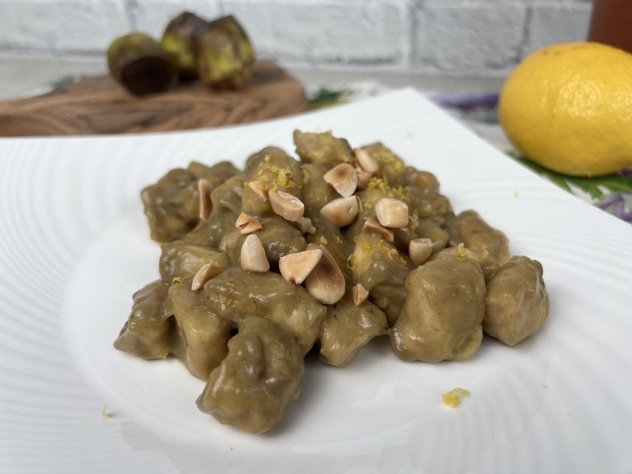
Polenta gnocchi with artichoke cream and toasted almonds

17.73g carbohydrates per 100g 
ilaria-bertinelli-gnocchi-di-polenta-ai-carciofi

Ingredients for the gnocchi

  • 300g cooked polenta*
  • 50g potato starch*
  • 50g brown rice flour*
  • 1 egg
  • 20g grated Parmigiano Reggiano
  • salt

Ingredients for the artichoke cream

  • 200g cleaned artichokes (about 4)
  • 100g medium potato
  • 30g shallot
  • 20g almonds (for garnish)
  • 1 scant teaspoon miso* (optional)
  • 1 garlic clove
  • 2 tablespoons extra virgin olive oil
  • zest and juice of ½ lemon
  • salt and pepper

**Ingredients specific for celiacs

*Ingredients whose labels must read “gluten-free” (or, in Italy, present on Prontuario AIC)

Preparation

  1. Blend the cold polenta and mix it with the egg, flour, grated Parmigiano Reggiano, salt, and pepper until you get a smooth dough.
    Lightly flour your work surface and shape the gnocchi.
  2. Clean the artichokes by removing the tough outer leaves, cutting off the tips, and slicing the hearts into thin wedges. Soak them in lemon water to prevent browning.
  3. In a non-stick pan, heat a drizzle of olive oil and sauté the chopped shallot with a garlic clove. Add the drained artichokes and the diced potato, letting them sauté for a few minutes. Then, add vegetable broth and cook for about 15 minutes, until the artichokes and potato are soft.
  4. Transfer everything to a blender and blend until smooth. Adjust with salt, pepper, and a scant teaspoon of Miso for an extra umami note.
  5. Cook the gnocchi in lightly salted boiling water, drain them, and toss them in a pan with the artichoke cream, adding a ladle of cooking water if needed. Plate and finish with toasted, lightly crushed almonds and grated lemon zest
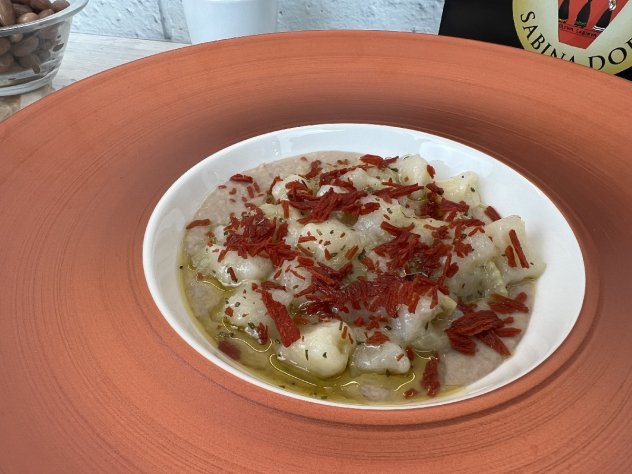
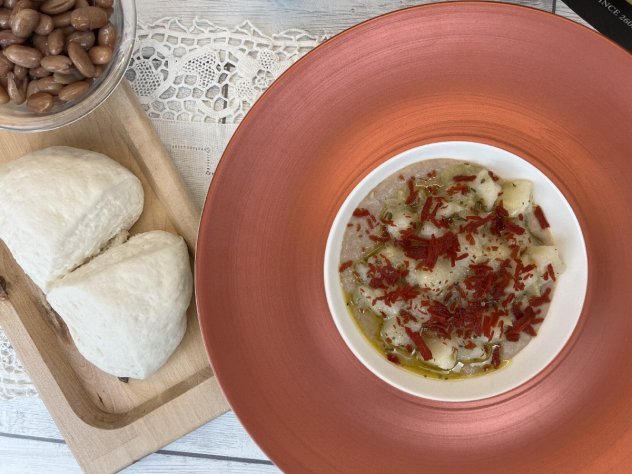
 

Would you like an original idea coming from the tradition of a land very dear to me? Here are the Pizzicotti with Fagiolo gentile di Labro bean cream topped with an irresistible oil flavoured with ginger and marjoram.

Once again, the gastronomic journey is in Lazio thanks to the Rieti Chamber of Commerce, which sent us the local ingredients to prepare this recipe with a very special ingredient: Fagiolo gentile di Labro a Slow Food Presidium and a product included in the list of Italian Traditional Agricultural Products (PAT in Italian).  It is a variety of bean that grows exclusively in the Avanzana Valley at the foot of the village of Labro, in the province of Rieti. It is light brown in colour and its fame is due to the tenderness of its skin and its delicate, sweet taste: the adjective ‘gentile’, i.e. gentle, by which it is called derives from such sweetness.

This traditional dish from Lazio is a perfect meal from a nutritional point of view, so why not use it as a holiday season dish? It is perfect both to brighten up banquets and to alternate meals characterised by the presence of meat and fish with a vegetarian recipe rich in plant protein and plenty of fibre.

To discover the great classic of the Rieti land, read my article and recipe for the The Perfect Amatriciana.

pizzicotti-con-crema-di-fagioli-di-labro

Pizzicotti with Fagiolo gentile di Labro bean cream and aromatic oil

29.6g carbohydrates per 100g 

Ingredients for 4 servings

  • 250g flour mix for bread, brand Nutrifree**
  • 180g water
  • 150g dried Fagiolo gentile di Labro beans
  • 4g brewer’s yeast
  • 50g extravirgin olive oil Sabina DOP
  • 20g dehydrated tomato flakes
  • 2 shallots
  • 2 celery sticks
  • 2 bay leaves
  • 1 piece of fresh ginger
  • 1 sprig of rosemary
  • marjoram
  • vegetable stock
  • grated Pecorino cheese
  • 1 pinch of bicarbonate of soda or 1 piece of Kombu seaweed

**Ingredients specific for celiacs

*Ingredients whose labels must read “gluten-free” (or, in Italy, present on  Prontuario AIC)

Preparation

  1. Soak the beans the night before in plenty of water and baking soda or a piece of Kombu seaweed.
  2. Warm up 50g of extra-virgin olive oil and infuse it with pieces of fresh ginger and marjoram leaves: you will obtain an aromatic oil that you can also use for other preparations.
  3. Dissolve the brewer’s yeast in a bit of water at room temperature, then pour it into a bowl with the flour and a pinch of salt and add the water required to obtain a smooth, not too hard dough.
  4. Divide the dough into at least 4 pieces, cover them with a tea towel and leave them to rise for about 20 minutes.
  5. In a saucepan, brown 1 shallot and 1 chopped celery stick in a little extra virgin olive oil and a sprig of rosemary, then add the soaked beans and bay leaves, cover with vegetable stock and cook (for at least 1 hour). When the beans are cooked, remove the bay leaf and rosemary and whisk to obtain a thick and creamy velouté. Season with salt and pepper.
  6. In a non-stick pan, put a drizzle of extra virgin olive oil and sauté the remaining shallot and celery finely chopped, season with chopped rosemary and sprinkle with vegetable stock to cook.
  7. After the dough has risen, bring a pot of water to the boil and lightly salt it. Take the pieces of dough, shape them into thin cylinders of about 1.5cm diameter and pinch them cutting off small knobs to be thrown into boiling water. Continue throwing the dough knobs into the boiling water and let them cook for at least 5 minutes considering that they would not become too cooked. Drain the ‘Pizzicotti’ with a slotted spoon, toss them into the non-stick pan with the chopped shallot and celery and allow them to cream slightly, adding a little cooking water.
  8. Serve on individual plates, preferably in a soup dish, forming a layer of bean cream topped with Pizzicotti and a dribble of aromatic oil, grated Pecorino cheese and a pinch of dried tomato flakes.

pizzicotti-con-crema-di-fagioli-di-labro

Version with gluten of Pizzicotti with Fagiolo gentile di Labro bean cream and aromatic oil

Replace the flour mix for bread Nutrifree with an equal amount of wheat flour and adjust the amount of water to obtain a bread-like texture.

May brings us two ideas for what we call fortified salads, i.e. salads that are nutritionally complete and therefore perfect as one-course meals for lunch in the office, at school or for dinner.

The rule applies that ingredients must be in season in order to maximise their nutritional contribution, so asparagus and mixed greens, as well as frozen edamame beans, will be the vegetable protagonists of the dishes.

The protein part of our salads is mainly of animal origin, being represented by grilled chicken and egg, not forgetting the contribution of edamame beans, an excellent source of plant protein.

As always, fibre is our best ally and is provided not only by vegetables, but also by buckwheat grains, an excellent alternative to rice and cereals containing gluten (for those who can eat them).

So here’s how to prepare reinforced salads that you can put in your lunch box for an absolutely perfect lunch out.

Discover more ideas for your salads here!

Buckwheat and asparagus salad

carbohydrates 24.48g for the whole serving

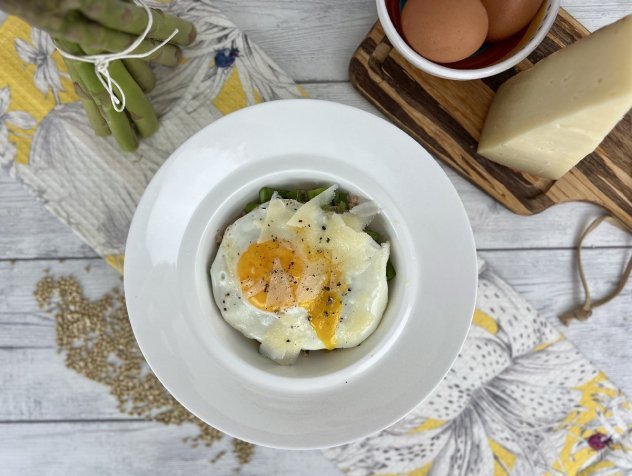
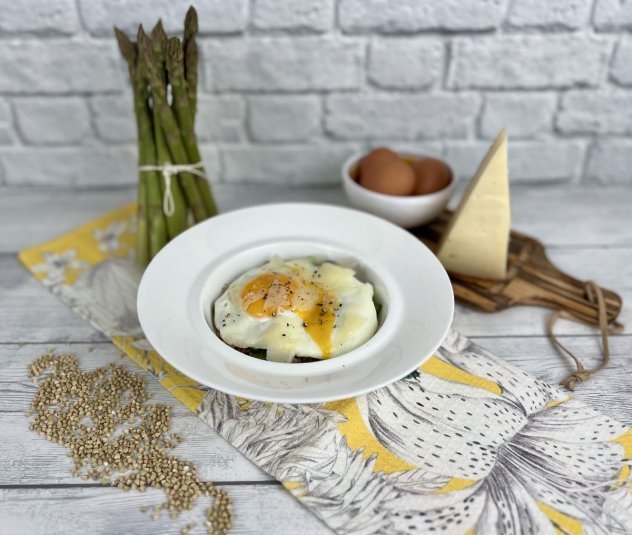
insalata-di-saraceno-e-asparagi

Ingredients for 1 serving

  • 4 asparagus
  • 40g buckwheat grains*
  • 1 egg
  • 15g Pecorino Romano cheese in very thin slices
  • 1 teaspoon of lemon juice
  • extra virgin olive oil
  • salt and pepper

*Ingredients whose labels must read “gluten-free” (or, in Italy, present on  Prontuario AIC)

Preparation

  1. Cook buckwheat grains in lightly salted boiling water, then drain and set aside.
  2. Place 4 asparagus in a container suitable for microwave cooking and cook for 4 minutes at maximum power.
  3. Put a drizzle of extra virgin olive oil in a non-stick pan, break the egg into it and cook for a few minutes until the egg white is cooked.
  4. Assemble the salad by placing the buckwheat grains in a soup plate, add the asparagus cut in pieces; dress with a sauce prepared whisking a tablespoon of extra virgin olive oil, a teaspoon of lemon juice, salt and pepper.
  5. Lay the hot egg on top of the asparagus and complete with very thin slices of Pecorino Romano cheese and a grinding of pepper.insalata-di-saraceno-e-asparagi

Chicken and edamame salad

carbohydrates15.77g for the whole serving

insalata-di-pollo-ed-edamame

Ingredients for 1 serving

  • 120g chicken breast
  • 50g edamame beans
  • baby lettuce or mixed greens
  • 15g raisins
  • 2 tablespoons of soy milk*
  • 1 tablespoon of pumpkin seeds
  • 1 teaspoon of mayonnaise*
  • 1 teaspoon of lemon juice
  • salt and pepper

*Ingredients whose labels must read “gluten-free” (or, in Italy, present on  Prontuario AIC)

Preparation

  1. Boil the edamame beans in lightly salted water for a few minutes, then  throw them in cold water. Drain them and set them aside.
  2. Grill the chicken breast. Cut it into strips horizontally.
  3. Prepare the dressing by putting the mayonnaise, lemon juice and soy milk in a small bowl, mix well with a fork and season with salt and pepper.
  4. Place the desired amount of lettuce or mixed greens in a soup plate, add the edamame beans and lay the chicken on top. Season with the mayonnaise emulsion, then top with raisins and pumpkin seeds.

insalata-di-pollo-ed-edamame

Version with gluten of Fortified salads

These recipes contain only naturally gluten free ingredients, so no adaptation is necessary for their version with gluten.

It was a dream I had had for a long time that of attending a training course that could provide me with knowledge in health and performance cuisine: this is the Health and Performance Chef Master’s Degree course  which I attended at the prestigious ALMA, the International School of Italian Cuisine founded by Gualtiero Marchesi.

diploma ilaria

Being the chef of a new world

This first edition of ALMA’s Master’s course is designed to build a professional figure who combines the chef’s gastronomic and taste skills with the scientific and functional skills of expert nutritionists and dieticians, to meet the needs of areas such as wellness, sport, and above all the nutritional needs in the case of diseases linked to incorrect lifestyles.

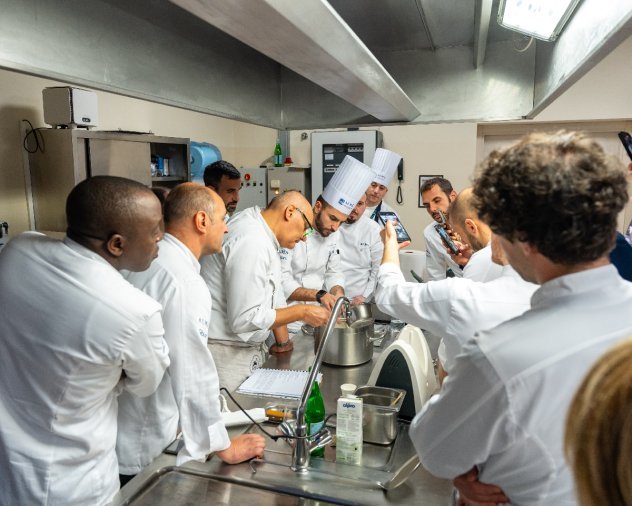
Una delle attività di training con lo Chef Bruno Ruffini

One of our training activities with Chef Bruno Ruffini

Sponsored by UEFA, the course is designed to broaden the professional horizons of chefs towards the needs of those who find in food their true medicine in terms of energy for performance or for their psychophysical well-being.

That’s why I decided to take 6 weeks to go back to school and to enter the professional kitchens of ALMA in a full immersion of study, practice, insights and workshops together with 13 other fantastic schoolmates.

The Master’s Degree’s teachers: a perfect cocktail of knowledge and expertise

Alcuni dei docenti del Master Health and Performance Chef

Some of the teachers of the Health and Performance Chef Master’s Degree

Cerimonia di apertura del Master con presentazione a compagni e docenti

Master’s Degree opening ceremony with self-introduction to schoolmates and teachers

The teachers? Extraordinary specialists who decided to share their knowledge and expertise for a decidedly unexpected educational cocktail:

Paola Rossi, Professor in the Department of Biology and Biotechnology at the University of Pavia, where she carries out intensive research and teaching activities and is the author of more than 70 articles in international journals with a high Impact Factor. She is the author of numerous works in the field of Physiology and Nutrition.

Natale Gentile, a consultant in the performance area of the FIGC since 2016, is in charge of nutrition and supplementation for the National Women’s Football team. Since 2019, he has also been a nutrition consultant for the Inter youth sector and women’s first team.

Biochimica degli alimenti con il Prof. Natale Gentile

Food biochemistry with nutritionist Natale Gentile

Andrea Valigi, sports and performance nutritionist, is the team nutritionist for AC Monza and F.I.G.C. for the Under-17 Men’s National Team.

Chef Simone Salvini, a symbol of plant-based cuisine who grew up in the kitchen of Pietro Leemann’s Joia restaurant in Milan, where he became Executive Chef, winning a Michelin star. Today an ambassador for the Alce Nero brand and an absolute reference point for vegan cuisine.

Lo Chef Simone Salvini ci insegna i segreti della cucina vegetale

Chef Simone Salvini teaches the secrets of plant-based cuisine

Impariamo a produrre il tofu

Learning about tofu

Il nostro tofu

Our tofu

Chef Filippo Tawil, Wellness Chef Consultant & Designer, benchmark of wellness food in the most renowned clinics around the world.

Chef Bruno Ruffini, Chef Fulvio Vailati Canta and Chef Matteo Papa, three pillars of ALMA education in charge of in-depth studies and practical workshops on fermentation, pastry-making and low-calorie menus.

A lezione di fermentazioni con lo Chef Fulvio Vailati

Learning fermentations with Chef Fulvio Vailati

Verdure fermentate preparate da noi studenti

Fermented vegetables prepared by us students

Il momento dell'assaggio

Time for tasting

A chef for all

Loaded with theoretical and practical knowledge, after the closing ceremony and the awarding of the Master’s diplomas, I returned to my ‘normality’ as a mother, entrepreneur and this time really Chef, not only for Gaia, but for anyone eager to discover the secrets of food tailored to their needs because each one of us is a masterpiece of complexity that deserves a little masterpiece on the plate.
La mia pasta e fagioli

My pasta with beans

La cucina vegana di Chef Simone Salvini

Chef Simone Salvini’s vegan cuisine


Yoghurt flat bread means homemade bread, which is one of the most satisfying preparations: what could be nicer than the fragrance of bread baking that fills the room? But we don’t always have time to let bread rise and bake it for 45 minutes or more. Try this simple:

Yoghurt flat bread made with baking powder and wholemeal flour.

So a convenient, homemade bread, ready in minutes: we only need 30 minutes to let the dough rest, which is the time needed to set the table, dress the salad and serve the other courses or ingredients with which to top our flat bread. And besides being able to prepare it with and without gluten, this wholemeal version is also very diabetes-friendly thanks to fibre content and yoghurt, which slow down the absorption rate of carbohydrates.

A bread from the Orient

In the cuisine of many Central and South Asian countries, as well as in the Middle East, flat and rounded types of bread are prepared that are suitable for meat, fish and vegetable dishes in small pieces, making them easy to eat as street food.

One of the most popular types of these breads is Naana bread made famous by Indian restaurants all over the world. It is served hot to accompany other dishes and seasoned with butter or ghee (clarified butter used in this cuisine) as well as being flavoured with spices and herbs.

For convenience, it is nowadays prepared using baking powder and yoghurt in the dough instead of water to make it softer. And while in India they use the characteristic clay oven called Tandoor, the oven used to cook tandoori chicken, perhaps the best-known Indian dish outside its country of origin and always present on the menus of these ethnic restaurants, we will use a simple non-stick frying pan with a thick bottom.

In this video recipe you can see how to prepare the wholemeal yoghurt bread and I suggest you serve it in the Emilian way, therefore with some of the products of this land such as Squacquerone cheese and Prosciutto di Parma, but when you have a moment of time I invite you to try it with some meat and vegetable dishes accompanied by curry and spice sauces that will certainly make you travel with flavours at this time when physically doing so is still rather difficult.

Focaccina allo yogurt farcita

Yoghurt flat bread ready to be enjoyed

Wholemeal yoghurt flat bread 

38.32g carbohydrates per 100g

Ingredients for 12 pieces

  • 400g fat free Greek yoghurt
  • 300g gluten-free wholemeal bread flour mix, brand Massimo Zero**
  • 100g brown rice flour* (you can also change the proportions and make 350g Massimo Zero Bread Mix** and 50g buckwheat flour: the dough will be darker and easier to roll out)
  • 8g baking powder*
  • aromatic herbs to taste
  • dried cherry tomatoes to taste (optional)
  • salt
  • dusting flour**

**Ingredients specific for celiacs

*Ingredients whose labels must read “gluten-free” (or, in Italy, present on  Prontuario AIC)

Preparation

  1. Mix the flour with yoghurt, baking powder and a pinch of salt until smooth.
  2. Cover it with cling film and let it rest for 30 minutes.
  3. Divide the dough into 3 parts and flavour one part with chopped herbs, a second part with dried tomatoes to taste and leave the third part plain. Finally, divide the dough into 4 pieces of each type, form them into balls, then roll them out with a rolling pin to a thickness of 3-4mm.
  4. Heat a non-stick frying pan or a smooth griddle. When it is hot, place the bread on it and cook it on both sides until brown, with darker bubbles scattered on the surface.
Cottura della focaccina

Cooking the bread

  1. Serve the bread with toppings to taste. And if you like flat bread and have a little more time available, try also potato patties.
Focaccine allo yogurt con Squacquerone,Prosciutto di Parma e rucola

Yoghurt flat bread with Squacquerone cheese, Parma ham and rocket

Version with gluten

Replace the gluten-free flour and rice flour with 400g of wholemeal wheat flour and mix it with 350g of fat free Greek yoghurt.

Cream of escarole with Speck and croutons is a perfect idea for warm dinners in the first cold days of autumn. Being vegetable-based, the cream itself is naturally gluten free and has very low carbohydrate content, possibly offset by the addition of fragrant and tasty croutons.

Escarole cream is very much appreciated by those who like slightly bitter flavours, while it might not appeal to children who are not used to these notes: my children love it and enjoy alternating Speck with cubes of sweet Salame Felino  (something that Parma’s homes almost always have in stock) which helps to balance the dish.

The version I propose is also lactose and egg free. If you like, and always lactose free, you can also season it with Parmesan cheese slivers and a few walnuts for a completely different taste.

In the calculation of carbohydrates, I have not considered croutons because the amount added to the escarole cream may vary greatly, as can the type of bread we decide to use to prepare them: personally, I am partial to wholemeal bread, such as the Dark bread with flax seedswhich allows us to obtain very fragrant croutons.

So with the cold weather approaching, be prepared that we won’t run out of creams and soups!

Escarole Cream with Speak and croutons   

2.70g carbohydrates per 100g without croutons

Ingredients for 4 servings

  • 1kg escarole
  • 300g leek
  • 300g vegetable stock
  • 120g Speck in strips*
  • 30g extra virgin olive oil
  • salt and pepper

Ingredients for croutons

  • 3 slices of wholemeal bread**
  • 30g extra virgin olive oil
  • salt, pepper, dried marjoram

Preparation

  1. Slice the leeks and sautée them in a large saucepan with extra virgin olive oil and a few whole chilli peppers, which you will then remove before blending; add the escarole cut into strips, allow it to take on flavour for about 5 minutes, then add 2 ladles of stock, cover and cook for 15 minutes. Transfer everything into the jar of a food processor and blend to a fairly thick cream; season with salt and pepper. Should the cream be too runny, return it to the heat and let it thicken.
  2. Meanwhile, prepare the croutons. Cut the bread slices into 2cm pieces. Heat extra virgin olive oil in a non-stick frying pan, add the bread pieces and let them toast slowly until crispy. Towards the end, season with salt, pepper and a sprinkling of marjoram, then leave to season and turn off the heat.
  3. Serve the escarole cream in soup plates and complete with the Speck in strips, croutons and a drizzle of extra virgin olive oil.

Crema di scarola con speck e crostini

Version with gluten of Escarole cream with Speak and croutons

The recipe contains only naturally gluten free ingredients except for the croutons, so replace the gluten free croutons with standard croutons.