Tag Archive for: gluten-free with carb count

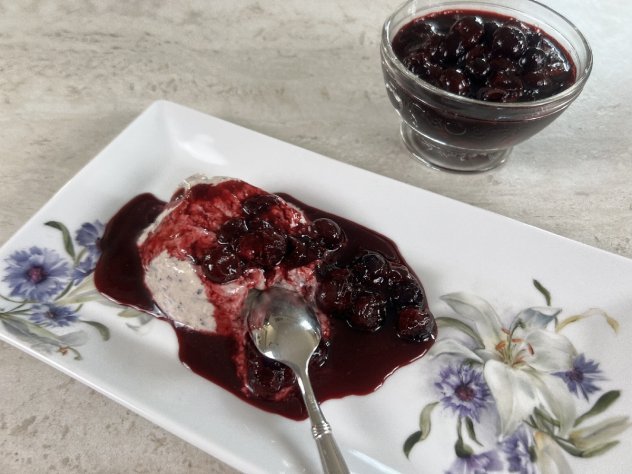
Blueberry panna cotta with fruit-only sugars is a light and naturally sweet dessert, perfect for those looking for a delicious yet mindful treat. Made without added sugars and with the option to use plant-based milk and cream, this recipe is also ideal for those who are lactose intolerant or follow a vegan diet.

What makes this dessert so special are the dates—rich in fiber, minerals, and natural sugars with a low glycemic index—and the blueberries, true health allies thanks to their high content of antioxidants, vitamin C, and anthocyanins, compounds that support microcirculation and skin wellness.

Its low carbohydrate content makes it a great dessert or snack for anyone who needs to manage their blood glucose levels, like us: enjoy every spoonful of this fresh, colorful, and versatile treat!

If you’re looking for more desserts with no added sugars, try our Peach pudding with coconut and mint.

Blueberry panna cotta with fruit-only sugars

10.73g carbohydrates per 100g

Ingredients for 7 servings

  • 500g blueberries
  • 500g plant-based* or dairy milk
  • 250g plant-based* or dairy cream
  • 100g dates
  • 20g sheet gelatine*
  • lemon juice

*Ingredients whose labels must read “gluten-free” (or, in Italy, present on Prontuario AIC)

Preparation

  1. Soak the gelatine sheets in cold water until soft.
  2. Heat a small amount of milk and stir in the softened gelatine until fully dissolved.
  3. In a tall container, combine the milk, cream, pitted dates, and half the blueberries. Blend with an immersion blender until smooth, then add the dissolved gelatine.
  4. Pour the mixture into 7 silicone moulds (for unmoulding later) or into small serving glasses. Refrigerate until set.
  5. Meanwhile, cook the remaining blueberries in a non-stick pan with lemon juice until they release a thick, bright sauce. Let cool.
  6. Unmould the panna cotta or serve in glasses, topping with the blueberry sauce.

ilaria-bertinelli-panna-cotta-ai-mirtilli-con-solo-zuccheri-della-frutta

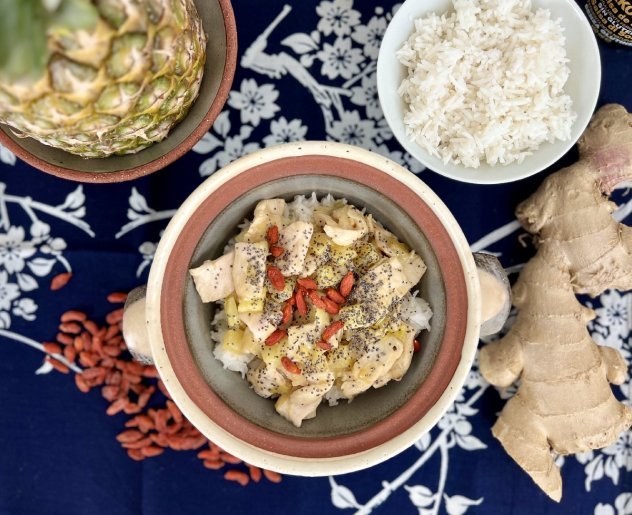
Poke is a traditional Hawaiian dish prepared with marinated raw fish accompanied by other ingredients making it a fresh, tasty and complete meal; my Pineapple chicken poke is my interpretation of a one-course meal that is equally tasty and complete, but made with meat as a source of protein.

In fact, who has difficulties in finding fresh chicken and pineapple? Normally nobody, therefore having a recipe that can answer the age-old question of what to cook for dinner is a great relief, also because this Poke will be ready in 10 minutes, practically the time Basmati rice takes to cook.

If you can, remember to soak the Basmati rice for 10 minutes before boiling it: its grains will be plump and long once cooked for an extra taste pleasure!

Try also Basmati rice with curry, tuna and peppers if you want a touch of Oriental cuisine on your table.

Pineapple chicken poke

22.28g carbohydrates per 100g

poke-di-pollo-allananas

Ingredients for 4 servings

  • 350g chicken breast sliced very thinly
  • 200g Basmati rice
  • 200g fresh pineapple
  • 100g green onions
  • 20g corn starch*
  • 1 piece of fresh ginger
  • gluten-free soy sauce*
  • Goji berries to taste
  • poppy seeds to taste

*Ingredients whose labels must read “gluten-free” (or, in Italy, present on  Prontuario AIC)

Preparation

  1. Soak the Basmati rice in water for 10 minutes before boiling it in 400g of water and a pinch of salt. Once cooked, set it aside.
  2. Coat the chichen slices with corn starch making sure you shake them well so that only a think layer of starch remains on the meat. Cut the chicken slices to strips.
  3. Cut a thick slice of pineapple, remove the peel and dice it.
  4. Cut the green onions into rounds and sweat them in a non-stick pan with a dribble of oil, ginger to taste chopped very thinly and some spoons of water. When the green onions are soft, add the chicken on high heat, stir and douse with soy sauce cooking for some minutes.
  5. Add the pineapple, half a glass of water to form a runny sauce and cook for some more minutes.
  6. Assemble your poke: put the basmati rice in a soup dish or bowl, top it with the pineapple chicken and finish with Goji berries and poppy seeds to taste.

poke-di-pollo-allananas

Version with gluten of Pineapple chicken poke

The recipe contains only naturally gluten-free ingredients, so no adaptation is necessary for its version with gluten.


May brings us two ideas for what we call fortified salads, i.e. salads that are nutritionally complete and therefore perfect as one-course meals for lunch in the office, at school or for dinner.

The rule applies that ingredients must be in season in order to maximise their nutritional contribution, so asparagus and mixed greens, as well as frozen edamame beans, will be the vegetable protagonists of the dishes.

The protein part of our salads is mainly of animal origin, being represented by grilled chicken and egg, not forgetting the contribution of edamame beans, an excellent source of plant protein.

As always, fibre is our best ally and is provided not only by vegetables, but also by buckwheat grains, an excellent alternative to rice and cereals containing gluten (for those who can eat them).

So here’s how to prepare reinforced salads that you can put in your lunch box for an absolutely perfect lunch out.

Discover more ideas for your salads here!

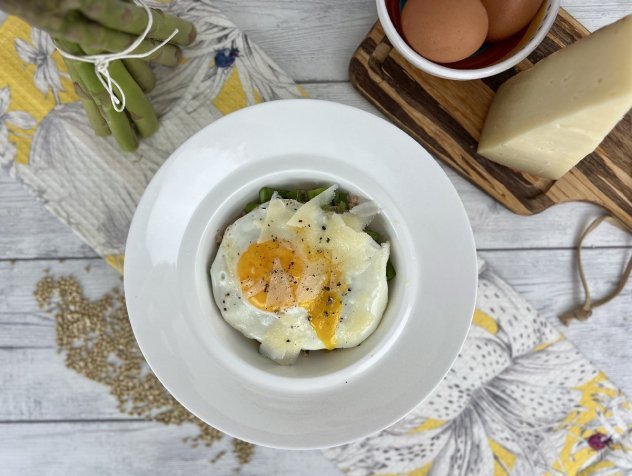
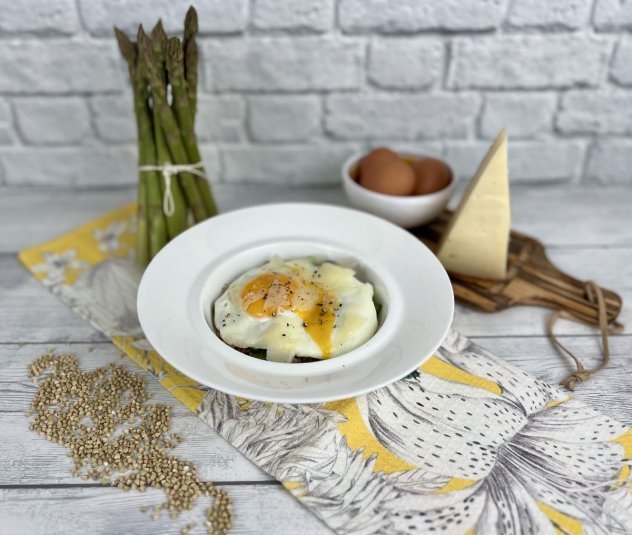
Buckwheat and asparagus salad

carbohydrates 24.48g for the whole serving

insalata-di-saraceno-e-asparagi

Ingredients for 1 serving

  • 4 asparagus
  • 40g buckwheat grains*
  • 1 egg
  • 15g Pecorino Romano cheese in very thin slices
  • 1 teaspoon of lemon juice
  • extra virgin olive oil
  • salt and pepper

*Ingredients whose labels must read “gluten-free” (or, in Italy, present on  Prontuario AIC)

Preparation

  1. Cook buckwheat grains in lightly salted boiling water, then drain and set aside.
  2. Place 4 asparagus in a container suitable for microwave cooking and cook for 4 minutes at maximum power.
  3. Put a drizzle of extra virgin olive oil in a non-stick pan, break the egg into it and cook for a few minutes until the egg white is cooked.
  4. Assemble the salad by placing the buckwheat grains in a soup plate, add the asparagus cut in pieces; dress with a sauce prepared whisking a tablespoon of extra virgin olive oil, a teaspoon of lemon juice, salt and pepper.
  5. Lay the hot egg on top of the asparagus and complete with very thin slices of Pecorino Romano cheese and a grinding of pepper.insalata-di-saraceno-e-asparagi

Chicken and edamame salad

carbohydrates15.77g for the whole serving

insalata-di-pollo-ed-edamame

Ingredients for 1 serving

  • 120g chicken breast
  • 50g edamame beans
  • baby lettuce or mixed greens
  • 15g raisins
  • 2 tablespoons of soy milk*
  • 1 tablespoon of pumpkin seeds
  • 1 teaspoon of mayonnaise*
  • 1 teaspoon of lemon juice
  • salt and pepper

*Ingredients whose labels must read “gluten-free” (or, in Italy, present on  Prontuario AIC)

Preparation

  1. Boil the edamame beans in lightly salted water for a few minutes, then  throw them in cold water. Drain them and set them aside.
  2. Grill the chicken breast. Cut it into strips horizontally.
  3. Prepare the dressing by putting the mayonnaise, lemon juice and soy milk in a small bowl, mix well with a fork and season with salt and pepper.
  4. Place the desired amount of lettuce or mixed greens in a soup plate, add the edamame beans and lay the chicken on top. Season with the mayonnaise emulsion, then top with raisins and pumpkin seeds.

insalata-di-pollo-ed-edamame

Version with gluten of Fortified salads

These recipes contain only naturally gluten free ingredients, so no adaptation is necessary for their version with gluten.

A recipe for all occasions and all year round: Ricotta and tuna patties with vegan mayonnaise.

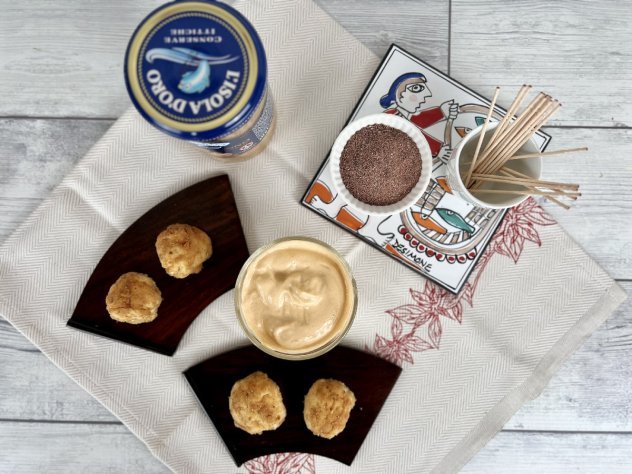
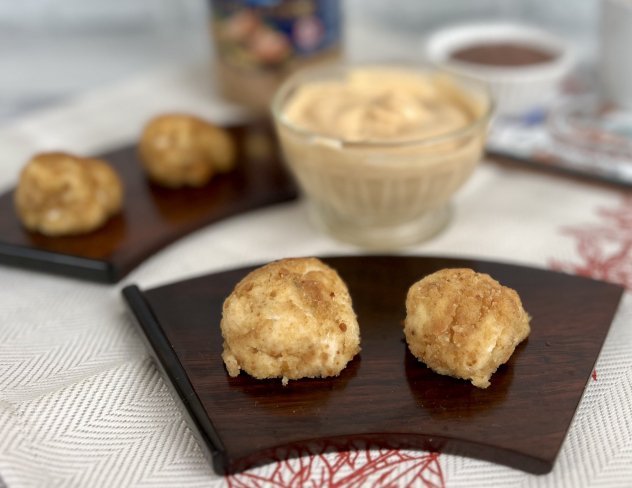
Patties are always a successful dish with children and adults alike. These Ricotta and tuna patties are the solution for a quick, but tasty and nutritionally rich meal with the protein of ricotta and tuna.

I decided to prepare this recipe to be served as finger food during the Cibus exhibition in Parma during which I will be at the booth of the Isola d’oro company that produces Tonnotto, delicious 100% Italian tuna fillets that I used in my recipe.

To win over our visitors, I have prepared a very special vegan mayonnaise, flavoured with smoked paprika and Kala namak salt. What is Kala namak and why use it?

Kala namak is a dark, grey to violet coloured salt that is extracted from mines in northern India and the lakes surrounding the Himalayas rich in sulphurous springs. In fact, what characterises this salt is thehard-boiled egg smell that has made it particularly popular among those on a vegan diet as it is a perfect aromatic substitute for egg.

In addition to its organoleptic characteristics, this salt is recommended by Ayurvedic cooking in case of gastric disorders and is excellent for fighting bad cholesterol: that’s why I decided to use it instead of ordinary salt for my vegan mayonnaise! Be careful to the amount used because it is saltier than the salt we are used to.

Are you ready to experiment?

Polpette-di-ricotta-e-tonno-con-maio-vegana

Ricotta and tuna patties with vegan mayonnaise

5.5g carbohydrates per 100g of patties without mayonnaise

Ingredients for 6 servings

  • 500g cow’s milk ricotta
  • 150g Tonnotto l’Isola d’oro tuna fillets
  • chopped parsley or other herbs to taste
  • gluten-free breadcrumbs**
  • salt and pepper

Ingredients for the vegan mayonnaise

  • 100g sunflower seed oil
  • 50g soy milk*
  • 1 teaspoon of lemon juice
  • kala Namak salt
  • smoked paprika

**Ingredients specific for celiacs

*Ingredients whose labels must read “gluten-free” (or, in Italy, present on  Prontuario AIC)

Preparation

  1. Put ricotta in a bowl and mix it with the drained, chopped tuna; add salt and season with pepper and chopped parsley or other herbs to taste. Form patties and coat them with breadcrumbs.
  2. Arrange them on a baking tin lined with parchment paper and bake at 200°C in grill mode for 15 minutes.
  3. Prepare the mayonnaise by placing all the ingredients in a tall glass and mix with an immersion blender for a few minutes to obtain a smooth, homogeneous mayonnaise.
  4. Serve the patties warm or cold with vegan mayonnaise.

Polpette-di-ricotta-e-tonno-con-maio-vegana

Version with gluten of Ricotta and tuna patties with vegan mayonnaise

Replace the gluten-free breadcrumbs with conventional breadcrumbs, the rest of the recipe is naturally gluten-free.


I love salads and am constantly thinking of new combinations that can be prepared with tasty ingredients in a very short time, so here’s how to prepare Three 5-minute salads.

Each of these salads will delight both the eyes and the palate, and as they are ready in a matter of minutes, you can indulge yourself and prepare all 3 in case you want to use them for a complete dinner instead of just a side dish.

Follow me not to run short of ideas for everyday cooking and have a look at my Lentil and chickpea burgers to discover a solution for your lunches away from home.

Tre-insalate-da-5-minuti

Treviso radicchio salad

5g carbohydrates for 1 serving

Ingredients for 1 serving

  • 1/2 tuft of Treviso radicchio
  • 40g pear
  • 2 shelled walnuts
  • slivers of Parmigiano Reggiano cheese
  • Balsamic Vinegar of Modena
  • extra virgin olive oil
  • salt and pepper

Preparation

  1. Cut the Treviso radicchio into small pieces and put them in a salad or soup dish.
  2. Add the Parmesan slivers, the sliced pear and the walnut kernels slightly broken up using your hands.
  3. Complete with salt, pepper, balsamic vinegar and extra virgin olive oil.

insalata-di-trevigiano

Aromatic cabbage and carrot salad

14g carbohydrates for 1 serving

Ingredients for 1 serving

  • 1 handful of thinly sliced white cabbage
  • 1 handful of thinly sliced purple cabbage
  • 1 carrot (mine was 80g)
  • 1 teaspoon of Dijon mustard*
  • 1 tablespoon maple syrup*
  • 1 tablespoon apple vinegar
  • sunflower seeds
  • pumpking seeds
  • extra virgin olive oil
  • salt and pepper

**Ingredients specific for celiacs

*Ingredients whose labels must read “gluten-free” (or, in Italy, present on  Prontuario AIC)

Preparation

  1. Cut the cabbage using a slicer or by hand so that it is very thin and grate the carrot into julienne.
  2. Prepare the aromatic dressing by mixing mustard, maple syrup, apple vinegar and extra virgin olive oil, then season with salt and pepper. Mix well with a fork.
  3. Place the sliced cabbage and carrot in a deep dish, then drizzle with the dressing and top with sunflower seeds and pumpkin seeds.

insalata-di-cappucci-aromatica

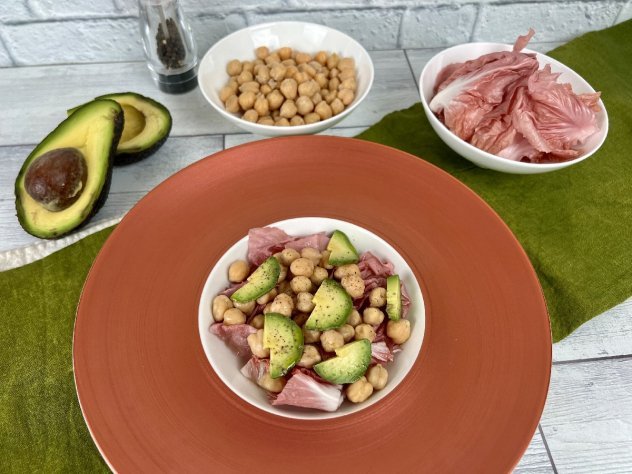
Chickpea salad with pink chicory

13.9g carbohydrates for 1 serving

Ingredients for 1 serving

  • 1/2 tuft of pink chicory
  • 100g cooked chickpeas
  • 30g avocado
  • lemon juice
  • extra virgin olive oil
  • salt and pepper

Preparatio

  1. Cut the pink chicory leaves and place them in a salad or soup dish.
  2. Top them with the cooked chickpeas and sliced avocado.
  3. Drizzle with a little lemon juice and complete the seasoning with extra virgin olive oil, salt and pepper.


Insalata-di-ceci-e-radicchio-rosa-mantovano

Today I want to take you on a trip to the mountains of the Abruzzo region to discover artisan liqueurs created, as if by magic, by a family of nature and food lovers, which I want to propose to you in this recipe, also lactose-free, to prepare my Prawns with cream of Cannellini beans flavoured with Ratafià.

Artisan liqueurs in the kitchen

Let me introduce the liqueurs by the Scuppoz company starting with the name. The term ‘Scuppoz’ is an onomatopoeic word from Abruzzo that sounds like glasses clinking for toasting and celebrating, but today, Scuppoz is an artisan company that produces liqueurs using what the land of the mountains has to offer: wild herbs, berries and a lot of creative energy.

Before I met the Scuppoz liqueurs, I met Anna, the irrepressible wife of the second generation of herb alchemists whose passion in telling about the battles and challenges of making liqueurs in the hostile mountains of Abruzzo conquered me to the point that I couldn’t but find out about these ‘strong and gentle spirits’, as the motto of the ‘Medicinette’ liqueur collection reads.

Le "Medicinette" dell'azienda Scuppoz

The “Medicinette” collecion by Scuppoz

Ratafià: black cherry liqueur from the hills and Montepulciano wine

For my recipe, I chose the black cherry liqueur Ratafià made with black cherries from the hills and Montepulciano wine, ingredients that give the liqueur a powerful structure. Scuppoz Ratafià can be enjoyed by people with coeliac disease because it is prepared only with red wine, sour cherry juice and alcohol, i.e. without the addition of flavourings (here you will find the AIC rules for choosing gluten-free liqueurs).

Where does the name Ratafià come from? From the Latin expression‘ut rata fiat’, let the deed be ratified, because it was customary to drink this liqueur (prepared by women, but drunk mostly by men) immediately after signing a notarial contract to sanction its validity.

Scuppoz liqueurs are a journey of aromas, flavours and mountain stories, which I have brought to you in this recipe so that even the little ones at home can fully enjoy the experience without taking the alcoholic part for which they will have to wait a while!

And remember to follow Anna’s adventures on social media (https://www.instagram.com/scuppoz_spirits/ ): you won’t regret it!

gamberi con crema di cannellini al ratafia

Prawns with cream of Cannellini beans flavoured with Ratafià

14.10g carbohydrates per 100g

Ingredients for 4 servings

  • 400g red onion from Acquaviva delle Fonti (or Tropea onion)
  • 400g cooked chickpeas
  • 8 prawn tails
  • 2 shallots
  • vegetable stock
  • Ratafià – Scuppoz black cherry liqueur*
  • extra virgin olive oil
  • salt and pepper

**Ingredients specific for celiacs

*Ingredients whose labels must read “gluten-free” (or, in Italy, present on  Prontuario AIC)

Preparation

  1. Slice the red onion and brown it in a non-stick pan with a little oil for a few minutes, then cover with vegetable stock and let it cook without browning.
  2. When the onion is soft and the stock has evaporated, deglaze with 4-5 tablespoons of Ratafià, add salt and pepper and let the liquor thicken for a few minutes, then turn off the heat.
  3. Prepare the Cannellini cream. Put the chopped shallot in a non-stick pan, let it brown, then add the cooked Cannellini beans and let them season for about 5 minutes.
  4. Transfer the Cannellini beans to a blender, add the necessary amount of stock to obtain a thick cream and blend. Season with salt and pepper.
  5. Transfer the onion cooked in Ratafià to a bowl so that you can use the frying pan to cook the prawns: leaving the cooking juices of the onion, cook the prawn tails for a maximum of 2 minutes on each side.
  6. Now assemble the dish: with a ring, form a disc of Cannelli cream, place the Ratafià flavoured onion on top, then 2 prawns and finish with a grinding of pepper and a very light drizzle of oil.

gamberi con crema di cannellini al ratafia

Version with gluten of Prawns with cream of Cannellini beans flavoured with Ratafià

The recipe contains only naturally gluten free ingredients, so no adaptation is necessary for its version with gluten.

E’ arrivata l’estate e con essa il caldo che ci va venire voglia di piatti freschi e gustosi e allora è il momento ideale per preparare queste Cheesecake salate con zucchine e olive senza dovere accendere forno o fornelli!


Summer has arrived and with it the heat that makes us crave for fresh, tasty dishes, so now is the perfect time to prepare these Savoury cheesecakes with courgettes and olives without having to turn on the oven or cooker!

All the ingredients are typical for a cheesecake, but the shape is more unusual in the small glass, ideal for a cheerful and colourful appetiser. Lemon peel and mint give freshness with their scent, courgettes provide crispness and olives the unmistakable sapidity – in short, a complete experience for the senses and great joy for diners!

What are you waiting for? You only need a few ingredients, you can follow the video and in 15 minutes you will have everything ready to impress family and friends. And if you want to end the meal with a sweet version of a cheesecake, try these Strawberry Cheesecakes.

Savoury cheesecakes with courgettes and olives

10.70g carbohydrates per 100g

Ingredients for 8 small glasses

  • 300g Ricotta cheese
  • 100g courgettes
  • 40g Le Veneziane mini breadsticks**
  • 40g pitted black olives
  • 20g Pecorino cheese, grated
  • 20g peeled and roasted almonds
  • 1 lemon zest
  • fresh oregano or caper powder*
  • mint leaves
  • extra virgin olive oil
  • salt and pepper

**Ingredients specific for celiacs

*Ingredients whose labels must read “gluten-free” (or, in Italy, present on  Prontuario AIC)

Preparation

  1. Wash the courgettes and cut them into chunks, place them in a small bowl with the diced olives, 3 tablespoons of extra virgin olive oil and a grating of lemon zest, salt and pepper. Stir and allow to gain flavour.
  2. Prepare the ricotta cream: put Ricotta in a bowl, add grated Pecorino Romano cheese, add a pinch of chopped fresh oregano or caper powder, and finally season with salt and pepper.
  3. Crumble the breadsticks and place them on the bottom of 8 small glasses. Cover them with the Ricotta cream and complete the preparation with the courgette and olive salad and the lightly chopped toasted almonds.
Le cheesecake pronte per essere gustate

Cheesecakes ready to be enjoyed

Version with gluten of Savoury cheesecakes with courgettes and olives

Simply replace the gluten-free breadsticks with standard ones, all other ingredients are naturally gluten-free.

Do we really know where this dish comes from and how to prepare a Perfect Amatriciana?

Pronta a cucinare online dalla mia cucina

Ready to cook online from my kitchen

Discovering Amatriciana

Although the fame of Amatriciana sauce is linked to the city of Rome, its true cradle lies in the heart of our country. If you were to take a compass and place it in the centre of Italy, its point would probably end in Rieti, the easternmost city in Lazio between Umbria and Abruzzo, which gathers gastronomic traditions and extraordinary products from all these regions, and in whose province the city of Amatrice is located.

And it is from Rieti that the virtual journey in which I participated together with other bloggers, journalists and cooking enthusiasts began. Since we could not physically go there due to Covid restrictions, the Rieti Chamber of Commerce thought of making the products travel and sent us the kits containing the ingredients to prepare some traditional local recipes, more or less well-known outside their province of origin.

For our journey, from every region of Italy we went online armed with equipment, ingredients and a lot of curiosity. As good and diligent students, we listened to find out where the products we had received came from and how we should use them in our recipes, guided step by step by a local chef.

The perfect Amatriciana

First gastronomic encounter of the trip: Gricia and Amatriciana. Having to choose which of the two recipes to cook live, at my place they overwhelmingly opted for Amatriciana… and we didn’t regret it! This is how I find out that Amatriciana is a Traditional Speciality Guaranteed regulated by Specifications where, I must admit, some ingredients are a surprise. In fact, in addition to the ever-present guanciale (mind you, not pancetta!), extra virgin olive oil and  tomato sauce or peeled tomatoes, there are also white wine and chilli pepper. Naturally, the recommended ingredient is Pecorino cheese of the Amatriciano or Pecorino Romano DOP type.

Io, pronta per la diretta per cucinare gli spaghetti all'Amatriciana

Waiting to cook spaghetti all’Amatriciana live

Ingredients

Each of these ingredients tells a story. The matured pork cheek, Guanciale, tells us of the shepherds who were forced away from home for 4-5 months, usually from May to September, for the transhumance. For their sustenance, they carried some easy to store and nutritious products, such as Guanciale and flour. In an iron frying pan with a long handle, shepherds could thus cook their frugal, hearty main course: Pastasciutta (i.e. pasta), where pecorino cheese was the ingredient always available in the cool mountain pastures.

And the tomato? Just think that in Italy, this much-loved fruit only met pasta in the 1800s and, in the Amatrice area, the encounter became eternal love, giving rise to one of the best-known dishes of Italian cuisine. From here, shepards arrived in Rome with the many inhabitants of the town of Amatrice who emigrated there in search of work and found it mainly in restaurants and food shops offering products from their area of origin, which soon became the symbol of cheap, popular cuisine.

Which pasta shape should be cooked with Amatriciana sauce? Our precious kit contained artisan spaghetti made with Senatore Capelli wheat which we had to give up due to the presence of gluten, so we replaced them with a gluten free version accessible to the whole family. The alternative to spaghetti is definitely Bucatini, a shape that I have, however, never found on the market in a gluten free version.

I must admit that this Amatriciana was indeed one of the best I have ever tasted and, given the simplicity of its preparation, it is once again confirmed that it is the ingredients that make the difference. Guanciale by Salumificio Sanolocated between the Monti della Laga and Monti Sibillini National Parks, caressed our palate with the soft and fragrant crunchiness of the strips dipped in sweet tomato, but the product that really bewitched me was the mature Pecorino cheese from Azienda Agricola D’Ascenzoa small business located in the heart of the Riserva Naturale dei Laghi Lungo e Ripasottile, a green oasis in the Rieti plain where the flock can graze freely, feeding on fresh herbs that give the cheese scents and flavours that leave their mark.

So are you ready? Would you like to know how we prepared our Amatriciana?

Here is the recipe!

Spaghetti all’amatriciana

26g of carbohydrates per 100g

Ingredients for 4 servings

  • 400g spaghetti**
  • 400g peeled tomatoes or tomato sauce
  • 200g Guanciale Amatriciano Sano* (pork cheek)
  • 80g matured Pecorino, La Riserva D’Ascenzo, grated
  • 50g white wine
  • extra virgin olive oil
  • chili
  • a grinding of black pepper

**Ingredients specific for celiacs

*Ingredients whose labels must read “gluten-free” (or, in Italy, present on  Prontuario AIC)

Preparation

  1. We cut Guanciale into strips of about 5x10mm and put them in the iron pan (which was sent to us together with the ingredients because this also makes a difference!) with a drizzle of oil, taking care to have only one layer of Guanciale in the pan so that all the pieces could be in contact with the hot iron bottom. We let the fat melt slowly, allowing the Guanciale to cook, becoming crispy on the surface.
  2. We doused Guanciale with the wine, then added the peeled tomatoes broken up with our hands (I added passata) and the chilli pepper. The chef told us that at home the sauce was put on the stove in the morning and left there for hours, whereas today the custom is to let the sauce cook for no more than half an hour.
  3. To complete, we added grated Pecorino cheese directly into the tomato.
  4. We put a pan of water on the stove, brought it to the boil, salted it and threw in Spaghetti.
  5. We drained Spaghetti and poured them into the pan with the sauce to finish cooking, added a grinding of pepper and served.
  6. Finally, we added a sprinkling of grated Pecorino cheese and a spoonful of sauce left in the pan. Simply divine!
Il piatto pronto da mostrare allo chef

The dish ready to show the chef

The second recipe we will prepare on the journey? Pulse pasta with Rascino lentils. Stay tuned!

Gli spaghetti all'amatriciana pronti per essere gustati

Spaghetti all’amatriciana ready to be enjoyed 


Peach pudding with coconut and mint is a fruit salad disguised as a dessert and is the answer to two needs: the first is to find an alternative to ice cream for Gaia and Nicolò on long, sultry summer days, the second is to use the very sweet peaches my greengrocer friend gave me before closing for the holidays.

In fact, this Peach pudding with coconut and mint can be prepared without adding sugar to what the sweet seasonal fruit already contains, or, as I did to make the preparation really resemble a real dessert, I added a few drops of liquid sweetener in the preparation of the pudding.

By using coconut milk (strictly natural and unsweetened) I have avoided adding fat to the preparation, the carbohydrate intake per 100g of coconut milk is only 2.7g and, a gift we can give to friends who cannot consume dairy products, it is also lactose free.

Finally, a touch of freshness with the mint that grows in the corner of aromatic herbs of my vegetable garden at home could not be missing… even if the sprig gave me a lot of trouble by twisting itself around the whisk I used to make the pudding… check it out!

Any other soft desserts? Take a look! 

Il budino di pesche al cocco e menta pronto per essere gustato

Peach pudding with coconut and mint

Peach pudding with coconut and mint with no added sugar    

7.56g carbohydrates per 100g

 Ingredients for 6-7 puddings

  • 400g coconut milk
  • 300g peach pulp (approx. 2 peaches)
  • 30g rice starch*
  • 8g gelatine sheets*
  • a sprig of mint plus a few leaves for garnishing
  • sweetener* or sugar to taste

Ingredients for the sauce

  • 125g blackberries
  • 125g raspberries
  • ½ lemon, juice
  • slivered almonds*
  • sweetener* or sugar (optional, I did not add anything)

*Ingredients whose labels must read “gluten-free” (or, in Italy, present on  Prontuario AIC)

Preparation

  1. First of all, soak the gelatine in a bowl with cold water.
  2. Peel the peaches and cut them into coarse pieces which you put in a food processor with some of the coconut milk. Blend to obtain a homogeneous and perfectly smooth mixture.
  3. Mix the rice starch in a saucepan, gradually adding the remaining coconut milk while stirring with a whisk; add a sprig of mint and place the mixture on the heat; when it is lukewarm, pour in the blended peach and when the cream starts to thicken, remove it from the heat and add the squeezed out gelatine, stirring well with the whisk so that the gelatine melts and is perfectly incorporated.
  4. Allow the peach cream to cool, stirring occasionally, then, when the container is cool enough, cover it with cling film and chill for a few hours in the refrigerator.
  5. Meanwhile, prepare the sauce. Put the berries in a non-stick pan with the juice of half a lemon and cook on high heat. When the fruit has released its liquid, turn off the heat and allow to cool.
  6. Remove the peach cream from the refrigerator, remove the cling film, and mix the cream with a spatula in bottom-up movements. Using a ladle, transfer the pudding into serving cups and top with a spoonful of berry sauce and almond slivers to taste. Garnish with mint leaves.

Immagine ravvicinata del budino pronto

Version with gluten of Peach pudding with coconut and mint with no added sugar

The recipe contains only naturally gluten-free ingredients, so no adaptation is necessary for its version with gluten.


The Ricotta and Lentil Tart is the start of a wonderful journey in the company of a blogger friend, Aura from the blog www.aurasenzaelle.comduring which we will accompany you to discover the regions of our enchanting Italy with an itinerary of trekking and typical dishes.

The ’20 di cambiamento’ project

My friend Aura’s project is called ‘20 di cambiamento‘ and is a tour throughout Italy divided into weekends. I summarise it in 4 points, but you can read the full description in this article:

  • One visit in each of the 20 Italian regions;
  • One trek in each of the 20 visits;
  • A different person for each of the 20 visits to act as a guide to connect with that place;
  • A virtuous local company (for sustainability, environmental commitment, production respecting the land) to be visited, supported and promoted.

This is where I come in with the recipes of the dishes that you will find if you travel to that region and that you can then reproduce at home, in gluten or gluten free versions and with a carbohydrate count, to relive the experience also through taste.

The first stop

The journey starts from a region, Umbria, which is often not at the top of the list of those visiting Italy, but which is a jewel for its historical and monumental wealth (just think of Assisi), for its natural beauty (and here you can enjoy this trek) and an unexpected source of culinary specialities.

La Basilica di San Francesco d'Assisi

Umbria owes much of its identity to the presence of the monastic orders that attracted the faithful from all over Europe. And it was precisely the pilgrims who had a very significant influence on the cuisine of the area because of the need they had to carry food in their saddle bags that could be stored easily. It is no coincidence that roasted meats, cured meats, Schiacciate (flat bread) and Polenta, desserts prepared with nuts, but above all pulses are the mainstay of traditional regional cuisine.

The widespread use of herbs for both cooking and curative purposes is also linked to the presence of religious orders with the liturgical calendar often imposing ‘lean’ periods during which herbs were used to replace fragrant, rich meats.

In addition to truffles, fish from Lake Transimeno and wines, here is a list of Umbria’s PGI and PDO products:

  • Extra virgin olive oil PDO
  • Spelt from Monteleone di Spoleto PDO (which we eating ‘gluten free’ cannot use)
  • Colfiorito red potato PGI
  • Prosciutto di Norcia PGI
  • Vitellone Bianco dell’Appennino Centrale PGI
  • Lamb of Central Italy PGI
  • Pecorino Toscano PDO
  • Italian Salamini alla Cacciatora PDO
  • Lentil of Castelluccio di Norcia PGI

The first recipe

The first recipe (see also the second recipe!) that I want to share with you starts from the flower fields of Castelluccio di Norcia where lentils are harvested in summer after flowering, between May and the end of June, next to a multitude of wild flowers that make the phenomenon an enchanting and unique attraction.

La fioritura a Castellucchio di Norcia

The flowering of Castelluccio di Norcia (photo: Aura Moia)

The Castelluccio lentil is small, round and has a thin skin so that it does not have to be soaked to cook it. This pulse was one of the main sources of sustenance for the shepherds of the area, who combined it with the other ingredients offered by sheep farming. This is the origin of the Ricotta and lentil tart, a cake where lentils replace chocolate chips in a delicious way. I wanted to prepare this recipe because for those of us who do not live in Castelluccio, eating lentils as a dessert is certainly less common than the wonderful soups that, here, are often flavoured by the presence of pork.

Zafferano di Cascia dell'Associazione Zafferano Purissimo dell'Umbria

Cascia saffron of the Associazione Zafferano Purissimo dell’Umbria (phooto: Aura Moia)

Another small but pleasant discovery: the ricotta and lentil tart can be made even more delicious by flavouring the ricotta with Cascia Saffron – Pure Umbria Saffron another of the jewels of small family farms whose economy is linked to the production and direct sale of saffron and the other products they grow, such as lentils, grass peas, spelt, Roveja (do you know it? It will be the star of the next Umbrian recipe) and cheese. I tried it using the yellow gold of the Zafferano e Dintorni company which I recommend you to try by going there as soon as you can or by ordering it directly from their website.

Gli ingredienti del ripieno della Crostata di ricotta e lenticchie

Ricotta and lentil tart   

36.61g carbohydrates per 100g

 Ingredients for the pastry for a 20cm diameter tart

  • 125g GF flour mix for sweets, brand Sarchio**
  • 50g butter
  • 50g brown sugar
  • 1 egg
  • 15g brown rice flour*
  • ½ lemon, peel
  • a pinch of salt

Ingredients for the filling

  • 400g sheep’s milk ricotta
  • 60g sugar
  • 40g Castelluccio lentils*
  • sweetener* or sugar
  • cinnamon powder

**Ingredients specific for celiacs

*Ingredients whose labels must read “gluten-free” (or, in Italy, present on  Prontuario AIC)

Preparation

  1. Prepare the shortcrust pastry (of course you can also use other recipes for shortcrust pastry); pour the powders (flour and sugar) into a mixing bowl or planetary mixer, add the butter and start to knead it into the powders, then add the egg, the grated peel of half a lemon and a pinch of salt. Mix until the mixture is smooth, then place it in the refrigerator wrapped in cling film while you prepare the lentils and the filling.
  2. Place the lentils on a plate and make sure they do not contain other pulses or cereals, then rinse them well and place them in a saucepan with water and a bit of sweetener (I used Tic) or a teaspoon of sugar. Bring to the boil and cook the lentils for 15 minutes. Drain them and keep them aside.
  3. Put ricotta cheese in a bowl, add sugar, a pinch of cinnamon and the drained lentils.
  4. Roll out the shortcrust pastry into a thin disc; I used a 20cm diameter perforated metal ring to cut the base on a perforated silicone mat and then I covered the ring to form a pastry shell for the tart; alternatively, cover a 20cm cake tin with baking paper. Fill the pastry with the ricotta and lentil filling and bake in a static oven preheated to 180°C for about 30 minutes. Let it cool and serve.
  5. Bake in a static oven preheated to 170°C for 45 minutes.

La Crostata di ricotta e lenticchie con gli ingredienti per il ripieno

Version with gluten of Ricotta and lentil tart

Use a standard shortcrust pastry, whereas the filling is prepared with naturally gluten free ingredients, so no other adaptation is necessary for its version with gluten.