Tag Archive for: gluten free comfort food

The seventh stop on my Tour of Italy in 20 Gluten-Free Recipes takes us to Veneto, where we discover one of the most iconic dishes of the Veronese culinary tradition: gluten-free Tortellini di Valeggio, also known as Nodo d’Amore (“Love Knot“).

This recipe was suggested by Cecilia, who told me how much she loves this local specialty, a symbol of the area where she grew up, and how difficult it is to find a gluten-free version even in restaurants around Valeggio.

Valeggio Tortellini take their name from the charming village of Valeggio sul Mincio, where their tradition has been carefully preserved for generations. They are distinguished by an exceptionally thin sheet of pasta and an elegant shape resembling a small knotted handkerchief. This distinctive shape is the reason behind their second name, Love Knot, which is linked to one of the area’s most captivating legends.

According to the legend, a beautiful nymph from the Mincio River fell deeply in love with a young captain. To escape the conflict that threatened to keep them apart, the two lovers disappeared together into the waters of the river. Before leaving, the nymph placed a silk handkerchief tied in a delicate knot on the riverbank as a symbol of their eternal love. Tradition says that this graceful knot inspired the unique shape of these famous tortellini.

Today, the Love Knot remains one of the signature dishes of the local cuisine. Recreating it in a gluten-free version allows those who must avoid gluten to rediscover a specialty that is deeply rooted in the history and traditions of this beautiful region.

And throughout this culinary journey across Italy, everything begins with one simple question:

“Why can’t I easily find a gluten-free version of a dish I love?”

This recipe is my answer to Cecilia.
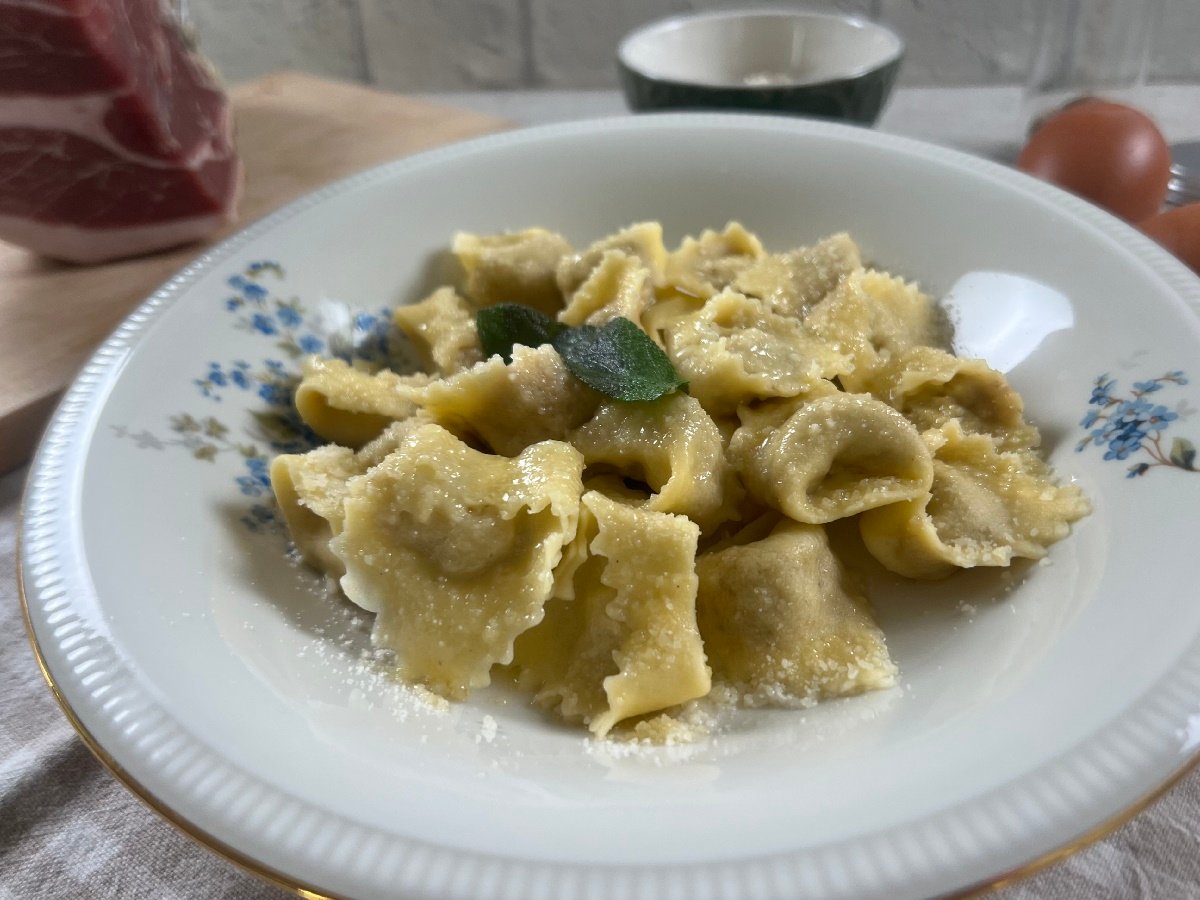
ilaria bertinelli-tortellini-di-Valleggio

Gluten-free Tortellini di Valeggio

26g carbohydrates per 100 g of uncooked tortellini

Ingredients for the filling for 6-8 servings

  • 100 g beef
  • 100 g pork
  • 100 g veal
  • 100 g chicken
  • 50 g Prosciutto di Parma
  • 50 g carrot
  • 50 g onion
  • 30 g celery
  • 30 g Parmigiano Reggiano, grated
  • 1 egg
  • 1 glass dry white wine
  • 1 knob of butter
  • nutmeg
  • salt and pepper

Ingredients for the dough and for dressing

  • 500 g gluten-free Mix for fresh pasta Mulino Dallagiovanna** (or, if you want to use naturally gluten-free flours, see recipe Angolotti del plin)
  • 6 eggs
  • Parmigiano Reggiano, grated
  • butter
  • 4-5 sage leaves
  • a pinch of salt
  • brown rice flour*

**Ingredients specific for celiacs

*Ingredients whose labels must read “gluten free” (or, in Italy, present on on Prontuario AIC)

Method

  1. Finely chop the carrot, celery and onion. Melt the butter in a large pan, add the vegetables with a pinch of salt and cook gently until softened.
  2. Cut all the meats into small pieces and add them to the pan. Brown them over medium heat, stirring frequently until they lose their raw colour. Add a sprig of rosemary and pour in the white wine. Once the alcohol has evaporated, cover with a lid and continue cooking until the meat is tender.
  3. Remove the rosemary sprig and transfer the cooked meat to a food processor. Blend until smooth, then place the mixture in a bowl. Add the finely chopped Prosciutto di Parma, grated Parmigiano Reggiano, the egg, freshly grated nutmeg, salt and black pepper. The filling should be firm enough to hold its shape. If necessary, add a little gluten-free breadcrumbs.
  4. Roll out the pasta dough as thinly as possible and cut it into approximately 4 × 4 cm squares. Place a small ball of filling in the centre of each square. Fold the square diagonally to form a triangle, then wrap the two corners around your finger and press them together to create the traditional tortellino shape.
  5. Cook the tortellini in lightly salted boiling water until they float to the surface. Remove them carefully with a slotted spoon and toss them with melted butter infused with fresh sage leaves. Finish with plenty of grated Parmigiano Reggiano and serve immediately while piping hot.
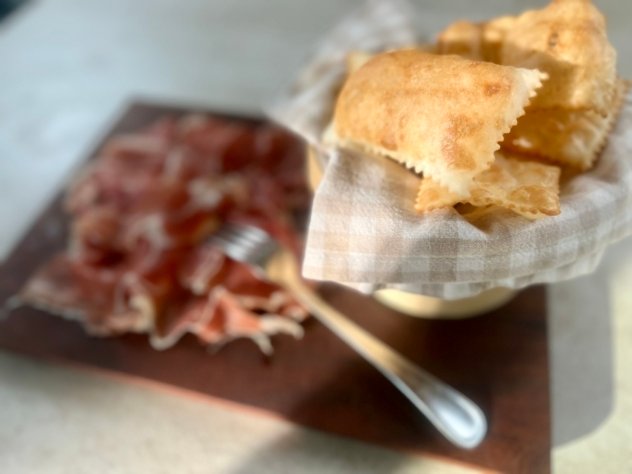
There are recipes that are not just dishes, but true rituals of conviviality. In Emilia-Romagna, Torta Fritta or fried dough is one of them: golden, puffed, fragrant, served piping hot in the center of the table, ready to cradle the finest local cured meats.

For the fifth stage of my Giro d’Italia in 20 Recipes, I returned to my region of origin and asked my friend Simonetta which dish her daughter had missed the most after being diagnosed with celiac disease. In a land where wheat-based specialties are everywhere, the answer was immediate: Torta Fritta.

Because Torta Fritta is synonymous with social gatherings, Sunday lunches, long, joyful tables filled with conversation. It is one of those dishes you fold with your hands and share informally. Yet it is also one of the hardest traditional specialties to find in a truly safe gluten-free version when eating out at a restaurant.

One fascinating aspect of this specialty is that it runs through the entire region, changing its name depending on the city. In Reggio Emilia, it is called Gnocco Fritto, while in Bologna it is known as Crescentina. Different names, small local variations, but the same soul: a simple dough that, once plunged into hot oil, puffs up to create that characteristic hollow center — perfect for holding cured meats and cheeses.

Here is my gluten-free Torta Fritta, designed to recreate the same crisp exterior and airy interior as the original, but in a version that is safe for those living with celiac disease. Served with Prosciutto di Parma, Culatello di Zibello, or a fragrant Salame Felino, it becomes once again what it has always been: an invitation to share.

For the first stages of my Giro d’Italia in 20 Recipes, explore the stops in Valle d’Aosta and Piedmont.

ilaria-bertinelli-torta-fritta

Gluten-free Torta fritta

46g carbohydrates per 100g

Ingredients for 4 servings

  • 250 g BiAglut “Pane e Paste Lievitate” flour**
  • 150 g sparkling water
  • 10 g lard or butter
  • 4 g baking powder*
  • 4 g salt
  • Oil for frying, as needed

Preparation

  1. Dissolve the baking powder in the sparkling water, then add the flour, butter, and salt. Mix until you obtain a smooth and soft dough.
  2. Roll the dough very thin using a pasta machine, stopping at the second-to-last setting. Cut into diamond shapes and fry in plenty of hot oil.
  3. Once the diamonds are in the oil, gently tap them with a slotted spoon to help them puff up.
  4. Remove from the oil and place on paper towels to absorb excess oil. Serve the Torta Fritta very hot, accompanied by traditional cured meats or creamy cheeses.

Version with gluten of Torta fritta

Replace the BiAglut flour with 500 g wheat flour and adjust the amount of water if necessary.

There are recipes that taste of home, affection, and tradition — and Grandma’s Soup with Frue is one of them. With just three simple ingredients — potatoes, pasta, and Frue cheese — it becomes the kind of comforting dish that nourishes body and soul.

I discovered this recipe in Sardinia thanks to a kind lady I met while waiting in line at a local dairy. She told me she was buying Frue, a goat-and-sheep’s milk cheese with a slightly tangy flavour, to prepare this soup for her granddaughter, who said it was her favourite dish. I immediately fell in love with it too.

In summer, you can make it fresher by adding a few chopped tomatoes — a simple twist for a delicious variation.

If you’re a soup lover, don’t miss trying my Pulse Pasta with Rascino Lentils as well.

ilaria-bertinelli-minestra-della-nonna-con-frue

Grandma’s Soup with Frue

11g carbohydrates per 100g

Ingredients for 4 servings

  • 400g potatoes
  • 120g mixed small pasta or broken spaghetti **
  • 120g Frue cheese
  • chopped herbs of your choice
  • coarse salt
  • black pepper

**Ingredients specific for celiacs

*Ingredients whose labels must read “gluten-free” (or, in Italy, present on  Prontuario AIC)

Preparation

  1. Cut the potatoes into ½ cm cubes and place them in a saucepan with water and a pinch of coarse salt. Cook for around 10 minutes, or until tender.
  2. Add the pasta — choose small shapes that cook in the same time, or use short pieces of broken spaghetti. Cook until al dente.
  3. Mash the Frue cheese with a fork in a separate bowl.
  4. When the pasta is ready, remove the saucepan from the heat, stir in the Frue until perfectly combined, then finish with chopped herbs and a grind of black pepper.