Tag Archive for: gluten-free breakfast

This stop on my Tour of Italy in 20 Gluten-Free Recipes takes us high into the mountains of Trentino-Alto Adige, where my friends Gianni and Lorenzo introduced me to a dessert I had never come across before: the Mòchena Brioche.

“Mòchena” refers to the Valle dei Mòcheni, an area where traditional baking is closely linked to local ingredients. Berry cultivation is particularly widespread here and represents one of the defining features of the region’s culinary identity.

Alongside the berries, the structure of this dessert reflects the Central European influences typical of this border region: a fragrant, carefully crafted dough similar to brioche, braided and enriched with pastry cream and fruit preserve to create a soft and indulgent texture.

This gluten-free version preserves that balance, focusing on both structure and flavour to produce a light, well-risen braid in which the sweetness of the pastry cream is complemented by the slightly tangy notes of blueberries. It is no surprise that Gianni and Lorenzo immediately thought of such a delicious dessert, and I am grateful to them for introducing me to it!
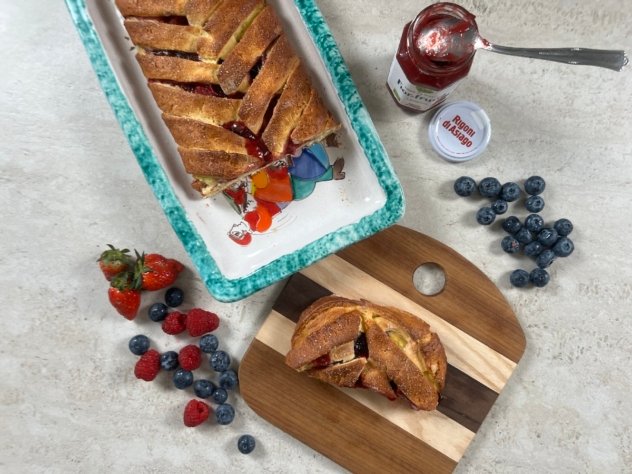
ilaria-bertinelli-treccia-mochena

Gluten-free Mochena Brioche

49g carbohydrates per 100g

Ingredients for one 40cm brioche

  • 165 g Biaglut bread mix**
  • 165 g Nutrifree bread mix**
  • 85 g milk
  • 80 g softned butter
  • 50 g sugar
  • 2 medium eggs
  • 12 g fresh brewer’s yeast
  • 4 g salt
  • zest of 1 lemon
  • seeds from a small piece of vanilla pod

For the filling

  • 300 g pastry cream (prepared with 200 g milk, 60 g sugar, 16 g cornstarch*, 2 egg yolks and vanilla)
  • 200 g raspberry jam
  • 50 g fresh mixed berries

To finish

  • 1 egg white
  • brown sugar

**Ingredients specific for celiacs

*Ingredients whose labels must read “gluten free” (or, in Italy, present on on Prontuario AIC)

Preparation

  1. Pour the milk into a small saucepan, place it over low heat and add the sugar, stirring until dissolved. Remove from the heat, allow it to cool slightly, then add the eggs and whisk well.
  2. Crumble the yeast into the milk and egg mixture and whisk until fully dissolved.
  3. Place both flour mixes into the bowl of a stand mixer fitted with the paddle attachment. Mix for a minute to aerate the flour, then add the liquid mixture containing the yeast. Knead at low speed until combined, add the salt and continue mixing until the dough becomes smooth and homogeneous.
  4. Meanwhile, combine the softened butter with the lemon zest and vanilla. Gradually incorporate it into the dough, adding a little at a time.
  5. Shape the dough into a ball and leave it to rise in a bowl covered with cling film in a slightly warm oven for about 2 hours, or uncovered if using a steam-proofing function.
  6. Once the dough has doubled in size, transfer the bowl to the refrigerator and chill for 30–40 minutes. This step makes the dough easier to handle.
  7. Roll out the dough on a lightly floured sheet of baking paper to form a rectangle measuring approximately 30 × 40 cm.
  8. Imagine dividing the rectangle lengthwise into three equal sections. Spread the pastry cream over the central section, cover it with the blueberry preserve and scatter the fresh berries on top.
  9. Cut diagonal strips approximately 3 cm wide along the two outer sections. Fold the strips alternately over the filling to create a braided effect, then seal both ends to prevent the filling from leaking during baking.
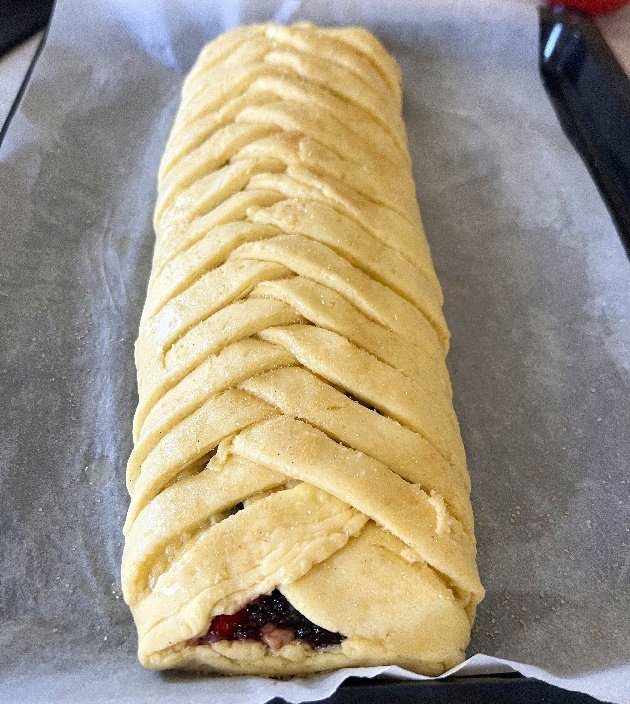
ilaria-bertinelli-treccia-mochena

10. Brush the surface generously with the lightly beaten egg white and sprinkle with brown sugar. Leave the braid to rest while the oven preheats.

11. Bake in a fan-assisted oven preheated to 170°C on the middle shelf for 40–50 minutes, or until the braid is golden brown. If it starts to brown too quickly, cover it loosely with aluminium foil. Allow the braid to cool completely before serving.
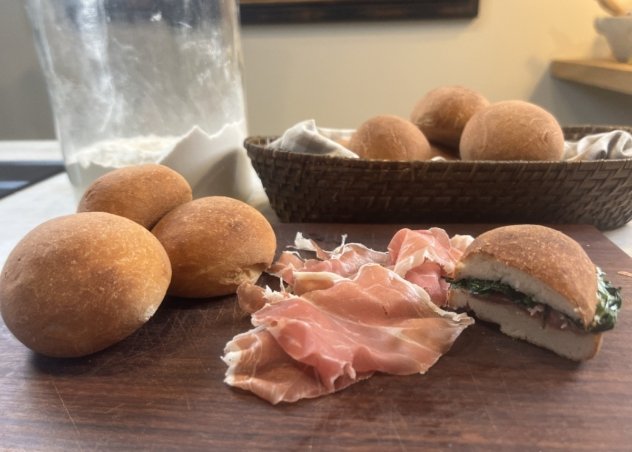
Here is the recipe for soft and delicate Gluten-free milk rolls—perfect not only to accompany meals or breakfast, but also as a versatile base for other preparations. In particular, they work beautifully in one of the regional recipes featured in our culinary Giro d’Italia in 20 recipes.

Since white bread is not always the best ally for blood sugar levels, we can make a small but effective adjustment: replace 20 g of one of the gluten-free flours with 20 g of inulin. This simple swap helps slightly lower the glycaemic index without compromising texture or flavour.

Now it’s time to get your hands into the dough. Just a few steps, a little care, and the aroma of freshly baked bread will do the rest. Let’s prepare these gluten-free milk rolls together, ready to tell the story of a stage of our Giro d’Italia… one bite at a time.

ilaria-bertinelli-panini-al-latte

Gluten-free Milk Rolls

51g carbohydrates per 100g

Ingredients for about 10 rolls

  • 400 g milk
  • 320 g gluten-free bread flour mix Nutrifree **
  • 100 g gluten-free bread flour mix Farmo **
  • 60 g wholegrain rice flour* (plus extra for dusting)
  • 50 g extra virgin olive oil
  • 12 g fresh baker’s yeast
  • 8 g fine salt
  • Extra virgin olive oil, for brushing

**Ingredients specific for celiacs

*Ingredients whose labels must read “gluten-free” (or, in Italy, present on  Prontuario AIC)

 Preparation


  1. Dissolve the yeast in the lukewarm milk together with the sugar.
  2. Place the flours in a bowl or in the bowl of a stand mixer. Gradually add the milk, mixing until smooth. Add the salt, then slowly drizzle in the olive oil.
  3. Using a spoon and a little rice flour, shape the dough into rolls of about 90 g each. Place them well spaced on a baking tray lined with parchment paper and brush the surface with extra virgin olive oil.
  4. Let the rolls rise until doubled in volume.
  5. Bake in a fan-assisted oven preheated to 200°C for 20–25 minutes, until golden brown.

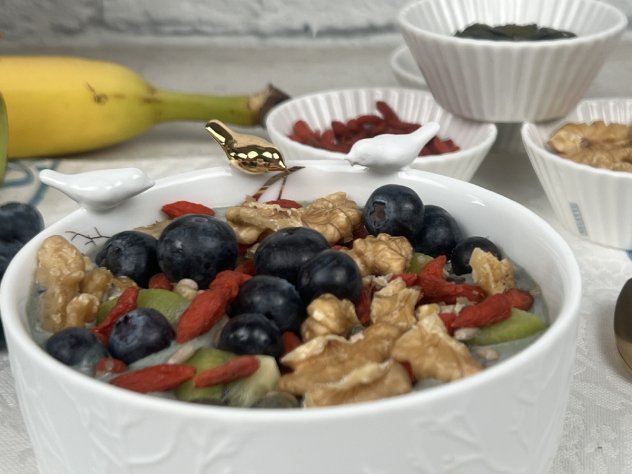
Since many of you often ask me where I get my energy from, I’m revealing one of my daily habits: my Blueberry Bowl, a colourful and energizing way to start the day.

I’m sharing this habit with you because the colour of the month, which I explore together with nutrition coach Bianca Balzarini, is blue—the same vibrant hue as two of the main ingredients in this bowl: blueberries and spirulina. In the world of food, blue is a rare shade, but it’s as fascinating as it is full of benefits.

The blue-violet colour of blueberries comes from their high content of anthocyanins, which help fight oxidative stress and protect cells from damage caused by free radicals. These little vitamin-rich fruits are low in calories and offer more than 3 grams of fibre per 100 grams, making them a low glycaemic index food.

Spirulina is a green-blue superfood with extraordinary properties. It’s a freshwater microalga made up of 60–70% high-quality protein that includes all essential amino acids. It’s rich in vitamins and minerals, a powerful antioxidant, and thanks to this exceptional nutritional profile, some studies suggest it may support metabolism and cardiovascular health.

Perfect for breakfast or as a functional snack, this bowl is packed with macro- and micronutrients. In addition to the benefits of blueberries and spirulina, it also provides protein from Greek yogurt, natural sugars from fruit, fibre, and healthy fats from seeds and nuts. All ingredients are naturally gluten-free, and the balance of carbohydrates, protein, and fibre makes this bowl an ideal choice for people with type 1 diabetes too.

What are you waiting for? Enjoy your breakfast!

Ilaria-bertinelli-bowl-ai-mirtilli

Blueberry Bowl

10.12g carbohydrates per 100g

Ingredients for 4 bowls

  • 300g fat-free Greek yoghurt
  • 150g banana
  • 125g blueberries
  • 3 dates
  • 1 level teaspoon of spirulina
  • 1 kiwi
  • suflower seeds
  • pumpkin seeds
  • goji berries
  • walnuts

**Ingredients specific for celiacs

*Ingredients whose labels must read “gluten-free” (or, in Italy, present on  Prontuario AIC)

Preparation

  1. Blend the yogurt with the banana, half of the blueberries, the pitted dates, and the spirulina until smooth.
  2. Divide the mixture between 4 bowls and top each with: 2 teaspoons sunflower seeds, 2 teaspoons goji berries, the kernels of 2 walnuts, 1 teaspoon pumpkin seeds, a few cubes of kiwi, and the remaining blueberries. Enjoy as breakfast or a snack.

Ilaria-bertinelli-bowl-ai-mirtilli


For the ‘friendsrecipes‘ section, today we offer you the recipe that Simonetta recommended: Rice and buckwheat biscuits prepared with naturally gluten-free flours.

Breakfast is essential for the energy boost we need to get through the day and is also the time when we can indulge in the sweet moment with less fear of not being able to deal with the carbohydrate load. Furthermore, homemade gluten-free biscuits are certainly an extra guarantee of the quality of the food we consume. Also try my Lavender biscuits to enrich your breakfast.

We really liked them…we couldn’t stop eating them.

Rice and buckwheat biscuits

69.46g carbohydrates per 100g

Ingredients

  • 250g wholemeal rice flour*
  • 250g buckwheat flour* (or 200g buckwheat flour* plus 50g cocoa* or Venere rice flour*)
  • 200g brown sugar
  • 3 eggs
  • 100g butter
  • 8g baking powder
  • ginger, cinnamon and jam to taste

*Ingredients whose labels must read “gluten-free” (or, in Italy, present on  Prontuario AIC)

Preparation

  1. Wait until the butter is soft and mix it with sugar, eggs one at a time, flour and baking powder. Mix everything together to a firm, smooth ball.
  2. Divide the dough into 3 parts; leave one part plain to form the biscuits that will be filled with jam; add ginger to the second part and cinnamon to the third part.
  3. Then roll out the doughs with the help of a rolling pin and cut the biscuits to the desired shapes. Put them on a baking tin lined with parchment paper and bake at 180°C for about 15 minutes.

Biscotti_al_riso_e_saraceno_senza_glutine

  1. Finally, choose the shape you want to give the biscuits with jam, fill them and join them two by two.

Biscotti_gluten_Free

Version with gluten of Rice and buckwheat biscuits

The recipe contains only naturally gluten-free ingredients, so no adaptation is necessary for its version with gluten.