Tag Archive for: easy gluten-free cooking

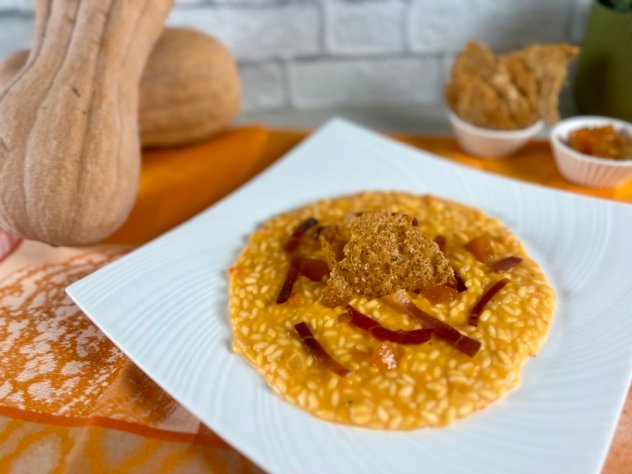
What if the filling of traditional pumpkin ravioli became a risotto? This is the idea behind my Risotto with Pumpkin Ravioli Filling, a recipe that brings the flavours of Mantuan culinary tradition to the table in a creative new way. Pumpkin, amaretti biscuits and mostarda are the stars of this dish – the very same ingredients found in the famous tortelli filling, here transformed into a creamy, comforting risotto.

To complete the dish, I added a few contrasting flavours and textures: crispy speck, with its savoury taste and smoky aroma, and a Parmigiano Reggiano cheese crisp enhanced with a pinch of porcini mushroom powder, adding a delightful woodland note. The result is a risotto that plays with sweet and savoury flavours, as well as soft and crunchy textures, while preserving the identity of a great Italian classic in an entirely new form.

Risotto with Pumpkin Ravioli Filling

carbohydrates per 100 g

Ingredients for 4 servings

  • 1.5 litres vegetable or meat stock
  • 320 g Carnaroli rice
  • 250 g oven-roasted pumpkin
  • 100 g white wine
  • 60 g Parmigiano Reggiano, grated + 4 tablespoons for the crisps
  • 40 g very cold butter
  • 30 g onion
  • 30 g sliced speck*
  • 30 g apple and pear mostarda*
  • 1 teaspoon of powdered Porcini mushroom
  • extra virgin olive oil

Method

  1. First, prepare the toppings for the risotto. Mix 4 tablespoons of grated Parmigiano Reggiano with 1 teaspoon of powder made by blending dried porcini mushrooms. Shape the mixture into 4 discs on a sheet of baking paper placed on an oven tray. Bake in a preheated fan oven at 200°C (400°F) for 6 minutes. Remove from the oven and leave to cool until crisp.
  2. Cut the speck into thin strips and cook in a non-stick frying pan, without adding any oil or other ingredients, until crispy. Set aside.
  3. Blend the previously roasted pumpkin until smooth and creamy.
  4. Now prepare the risotto. Finely chop the onion and sauté it in a saucepan with a drizzle of extra virgin olive oil. Add the rice and toast it until the grains are hot and slightly translucent.
  5. Pour in the white wine and let it evaporate. Then gradually add the hot stock. Stir in the pumpkin purée straight away and cook the rice until al dente, adding more stock as needed.
  6. Remove the saucepan from the heat to cream the risotto. Add the very cold butter (ideally straight from the freezer) and the grated Parmigiano Reggiano. Stir vigorously to release the rice’s starch and create a beautifully creamy consistency. After creaming the risotto for 3–4 minutes, cover the pan with a clean kitchen towel and let it rest for 1 minute before serving.
  7. Divide the risotto between individual serving plates and finish with small pieces of mostarda, crispy speck and a Parmigiano Reggiano crisp.
ilaria-bertinelli-risotto-al-ripieno-di-zucca

For the tenth stop on my Tour of Italy in 20 gluten-free recipes, I’m heading to the Marche region with a recipe that perfectly illustrates just how creative cooking can be, even at its simplest. I asked Francesca, a passionate home cook, which traditional dish she would most love to see recreated in a gluten-free version. There were plenty of recipes to choose from, but in the end, the winner was Gluten-free Crescia marchigiana.

In its most traditional form, Crescia is a type of flatbread made with flour and lard, which is rolled out and folded to achieve its characteristic texture. Deeply rooted in the culinary traditions of the Marche region, it is usually enjoyed filled with cured meats, cheeses or vegetables.

My version, however, takes a different approach: making this dish even simpler and more contemporary by replacing the traditional preparation with an ingredient that all too often gets forgotten at the back of the fridge: leftover polenta. The result is a surprisingly delicious Crescia that comes together in no time, while also turning leftovers into a brand-new dish and embracing the principles of waste-free cooking.

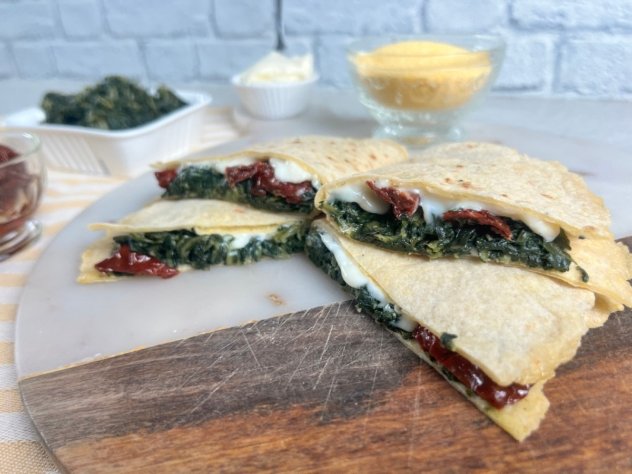
I chose to fill mine with seasonal vegetables, a creamy cheese and a few sun-dried tomatoes, but I’ll leave plenty of room for your creativity. Crescia is a simple, delicious base that lends itself to endless variations, whether you fill it with vegetables, cheeses, cured meats or whatever you happen to have on hand.

Because a good zero-waste recipe should never feel like something made from leftovers. On the contrary, it can be an opportunity to look at the ingredients in our kitchen with fresh eyes and transform them into something surprisingly delicious.

ilaria-bertinelli-crescia-marchigiana

Gluten-free Crescia marchigiana made with polenta

31 g carbohydrates per 100 g of Cresce without stuffing

Ingredients for 5 Cresce

  • 400 g lefover cooked polenta*
  • 50 g gluten-free flour of your choice* (teff, oat, sorghum, buckwheat, etc.)
  • 50 g Schär Mix B Bread Flour**
  • 40 g Nutrifree Bread Mix Flour**
  • rice flour* for dusting
  • extra virgin olive oil
  • salt

Ingredients for the filling

  • seasonal greens, sautéed with olive oil and garlic
  • crescenza cheese or other soft cheese of your choice
  • sun-dried tomatoes in oil*

**Ingredients specific for celiacs

*Ingredients whose labels must read “gluten free” (or, in Italy, present on on Prontuario AIC)

Method

  1. Mash the leftover polenta with a fork, pass it through a potato ricer or blend it in a food processor until smooth.
  2. Combine the polenta with the flours and salt, mixing until you obtain a firm, smooth dough. Cover with an upside-down bowl and leave to rest for 15 minutes.
  3. Divide the dough into 5 portions and shape each into a ball. Roll out each ball on a lightly rice-floured surface until you obtain a round disc approximately 20 cm in diameter.
  4. Cook each crescia in a hot, non-stick frying pan lightly brushed with extra virgin olive oil, for a few minutes on each side.
  5. Fill the cresce with a mixture of seasonal greens sautéed in a little olive oil with a clove of garlic, a spoonful of crescenza cheese and a few sun-dried tomatoes.

Version with gluten of Crescia marchigiana made with polenta

Replace the gluten-free flours with enough wheat flour to obtain a firm, smooth dough.