Tag Archive for: carbohydrate counting

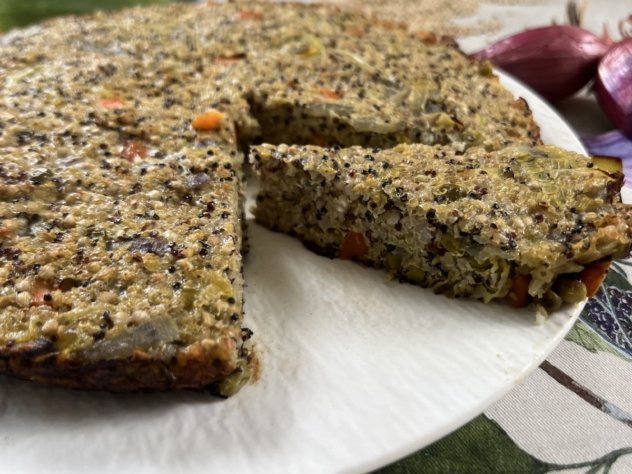
Vegetable quinoa and buckwheat bake is one of those recipes that truly simplifies everyday cooking: everything is prepared in a single pan, first on the hob and then finished in the oven, with no unnecessary steps and no extra washing up. A small detail that makes a big difference, especially when time is limited but you still want a complete meal.

In this bake, the key ingredients are quinoa and buckwheat, two naturally gluten-free pseudocereals with very interesting nutritional properties.

Quinoa, originally from the Andean region and cultivated for thousands of years by pre-Columbian populations, was already considered a staple food by the Incas, who referred to it as the “mother grain”.

Even today, it is widely appreciated and often considered a superfood for several reasons: 1) it contains all essential amino acids, which is quite rare in plant-based foods; 2) it provides a good amount of fibre; 3) it has a moderate glycaemic index; 4) it is rich in minerals such as magnesium, iron and potassium; 5) it contains antioxidant compounds.

Buckwheat, despite its name, is not a cereal but a plant belonging to a different botanical family. It is also naturally gluten-free, with a good fibre content and an interesting supply of minerals such as magnesium and iron.

When used in a preparation like this bake — together with eggs and vegetables — they help create a complete, satisfying dish that is also easy to manage from a glycaemic perspective.

A practical, versatile recipe, suitable for everyday cooking, designed to optimise time and steps without compromising on ingredient quality.

ilaria-bertinelli-tortino-di-quinoa-e-grano-saraceno

Vegetable quinoa and buckwheat bake

16g carbohydrates per 100g

Ingredients

  • 300 g red onions
  • 150 g carrots
  • 100 g quinoa*
  • 100 g buckwheat*
  • 100 g cherry tomatoes
  • 100 g peas
  • 80 g leek
  • 40 g milk
  • 3 eggs
  • Extra virgin olive oil
  • Oregano
  • Salt and pepper
  • Cream cheese, to serve

**Ingredients specific for celiacs

*Ingredients whose labels must read “gluten-free” (or, in Italy, present on  Prontuario AIC)

Preparation

  1. Cook the quinoa and buckwheat separately in lightly salted water for about 20 minutes. Cover and leave to cool slightly.
  2. Meanwhile, heat a drizzle of extra virgin olive oil in a non-stick pan that is also ovenproof. Add the sliced leek, onions, diced carrots and peas. Season with a pinch of salt, add a few tablespoons of water and cook for 5 minutes.
  3. Add the halved cherry tomatoes and cook for a further 3 minutes. Season with pepper and a pinch of oregano.
  4. In a bowl, beat the eggs with the milk. Add the cooked quinoa and buckwheat, mix well, adjust seasoning with salt and pepper, then pour the mixture into the pan with the vegetables.
  5. Cook over a low heat for 5 minutes while preheating the oven to 180°C. Transfer the pan to the oven and bake for 15 minutes.
  6. Serve warm, either on its own or with fresh, creamy cheese.

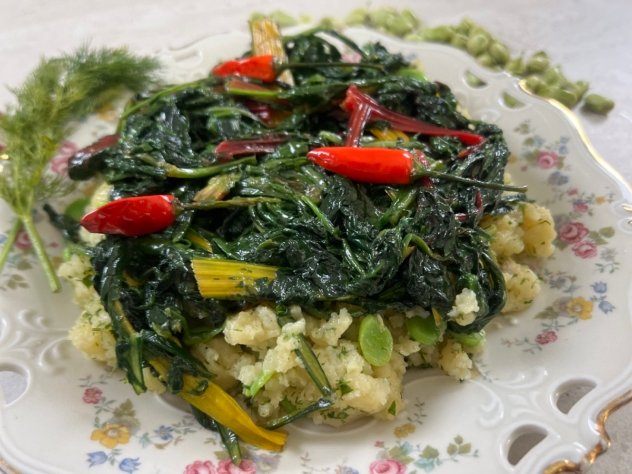
Mashed potatoes and broad beans with sautéed greens is a simple, seasonal and nutritionally balanced dish — perfect for getting even the most sceptical family members to enjoy their vegetables!

Potatoes are always a crowd-pleaser and, in this recipe, they give the mash a naturally soft and creamy texture. Fresh broad beans add flavour along with an interesting plant-based protein component. The sautéed greens, with their slightly bitter note, balance the dish and make it more appealing to the palate.

From a nutritional perspective, broad beans are often overlooked, yet they are well worth including more regularly in your diet. They provide fibre and plant-based protein, both of which contribute to satiety and help slow down the absorption of carbohydrates in the meal. They are also a good source of folate and contain minerals such as iron and magnesium.

Compared to other legumes, fresh broad beans have a lower carbohydrate content and, when used in a dish like this — which also includes fibre and healthy fats from extra virgin olive oil — they help keep the overall glycaemic impact of the meal more balanced.

A naturally gluten-free recipe, ideal for those looking for simple, balanced dishes that fit easily into everyday cooking. And if you’re in the mood for salads, here’s what to look for in May: hearty, fortified salads.

ilaria-bertinelli-macco-di-patate-e-fave

Mashed potatoes and broad beans with sautéed greens

13.2g carbohydrates per 100g

Ingredients

  • 500 g potatoes
  • 250 g mixed greens (chard, chicory, baby spinach)
  • 60 g fresh broad beans, shelled
  • Wild fennel
  • Fresh chilli
  • Parsley
  • Garlic
  • Extra virgin olive oil
  • Salt and pepper

 Preparation

  1. Blanch the broad beans in salted water for a few minutes, then remove their outer skins.
  2. Boil the whole potatoes with their skins on. Once cooked, peel and mash them with a fork.
  3. Add the broad beans to the mashed potatoes along with 30 g of extra virgin olive oil, a pinch of salt, freshly ground pepper and finely chopped wild fennel.
  4. Blanch the greens in lightly salted boiling water, then drain and transfer them to cold water.
  5. Heat a pan with a drizzle of extra virgin olive oil, one garlic clove and some fresh chilli. Add the blanched greens and sauté to flavour.
  6. To serve, spread the potato and broad bean mash on a serving dish, top with the sautéed greens and finish with chopped parsley, freshly ground pepper and a drizzle of extra virgin olive oil.

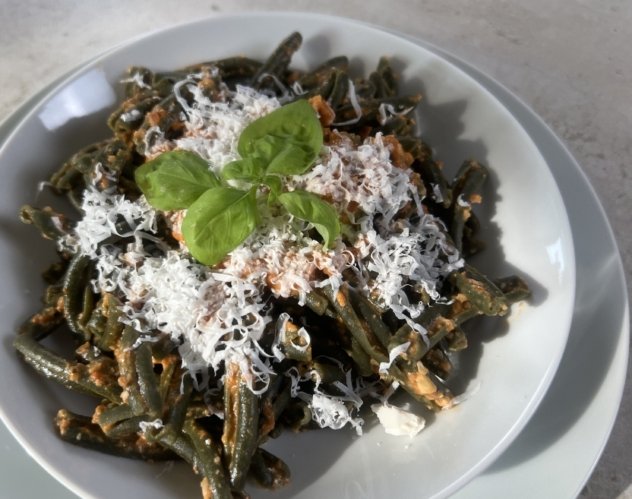
Legume pasta with spirulina and red pesto is a recipe that combines intense flavour and nutritional value in a surprisingly well-balanced way. The star of the dish is Spinosi’s egg-based legume flour pasta, an excellent choice for those who wish to bring to the table a complete, satisfying first course that also supports metabolic wellbeing.

Compared to traditional pasta, this legume-based pasta stands out for its nutritional profile: it provides 43 g of carbohydrates, 27 g of protein and 9.6 g of fibre per 100 g of dry product. Carbohydrate content is significantly lower, while protein and fibre levels are considerably higher than in durum wheat pasta. This translates into greater satiety and a slower absorption of carbohydrates—an especially valuable aspect for maintaining more stable blood glucose levels over time. The presence of egg in the dough also enhances the overall protein quality, making the dish nutritionally more complete.

What makes this recipe even more interesting is spirulina, a microalga known for its rich content of micronutrients and antioxidant compounds. It gives the pasta its deep green colour while adding further nutritional value.

The sauce, a red pesto made with sun-dried tomatoes, nuts and Parmigiano Reggiano, completes the dish with a combination of healthy fats, savoury notes and aromatic depth, transforming a simple recipe into a rich and satisfying experience.

Legume pasta with spirulina and red pesto    

19g CHO per 100g of cooked and dressed pasta

 Ingredients for 4 servings

  • 400g Legume pasta Spinosi with spirulina**
  • 100g sun-dried tomatoes in oil*
  • 40g Parmigiano Reggiano
  • 30g peeled almonds
  • 30g pine nuts
  • salted ricotta
  • extra virgin olive oil
  • basil
  • pepper

**Ingredients specific for celiacs

*Ingredients whose labels must read “gluten-free” (or, in Italy, present on  Prontuario AIC)

Preparation

  1. Drain the sun-dried tomatoes thoroughly from their oil. Place the pine nuts and almonds in a non-stick pan and toast them for about 10 minutes.
  2. Transfer the tomatoes, pine nuts, almonds and grated Parmigiano Reggiano into a blender and blend until smooth. Add a pinch of black pepper, a drizzle of olive oil and a little water as needed to achieve a creamy pesto consistency.
  3. Transfer the pesto to a large frying pan, big enough to toss the pasta once cooked.
  4. Cook the pasta in plenty of salted water, drain it al dente (reserving some of the cooking water), and add it to the pan with the pesto. Toss over a high heat for a couple of minutes, adding a little cooking water if needed, until the pasta is well coated.
  5. Serve hot with a grating of salted ricotta and a few fresh basil leaves.

ilaria-bertinelli-pasta-di-legumi-all-alga-spirulina

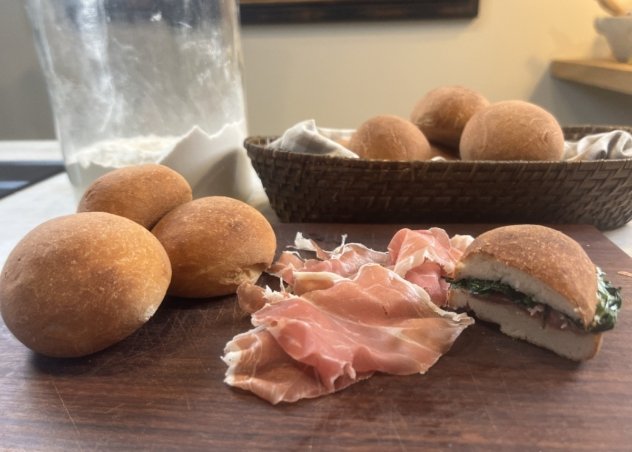
Here is the recipe for soft and delicate Gluten-free milk rolls—perfect not only to accompany meals or breakfast, but also as a versatile base for other preparations. In particular, they work beautifully in one of the regional recipes featured in our culinary Giro d’Italia in 20 recipes.

Since white bread is not always the best ally for blood sugar levels, we can make a small but effective adjustment: replace 20 g of one of the gluten-free flours with 20 g of inulin. This simple swap helps slightly lower the glycaemic index without compromising texture or flavour.

Now it’s time to get your hands into the dough. Just a few steps, a little care, and the aroma of freshly baked bread will do the rest. Let’s prepare these gluten-free milk rolls together, ready to tell the story of a stage of our Giro d’Italia… one bite at a time.

ilaria-bertinelli-panini-al-latte

Gluten-free Milk Rolls

51g carbohydrates per 100g

Ingredients for about 10 rolls

  • 400 g milk
  • 320 g gluten-free bread flour mix Nutrifree **
  • 100 g gluten-free bread flour mix Farmo **
  • 60 g wholegrain rice flour* (plus extra for dusting)
  • 50 g extra virgin olive oil
  • 12 g fresh baker’s yeast
  • 8 g fine salt
  • Extra virgin olive oil, for brushing

**Ingredients specific for celiacs

*Ingredients whose labels must read “gluten-free” (or, in Italy, present on  Prontuario AIC)

 Preparation


  1. Dissolve the yeast in the lukewarm milk together with the sugar.
  2. Place the flours in a bowl or in the bowl of a stand mixer. Gradually add the milk, mixing until smooth. Add the salt, then slowly drizzle in the olive oil.
  3. Using a spoon and a little rice flour, shape the dough into rolls of about 90 g each. Place them well spaced on a baking tray lined with parchment paper and brush the surface with extra virgin olive oil.
  4. Let the rolls rise until doubled in volume.
  5. Bake in a fan-assisted oven preheated to 200°C for 20–25 minutes, until golden brown.