Tag Archive for: legume recipes

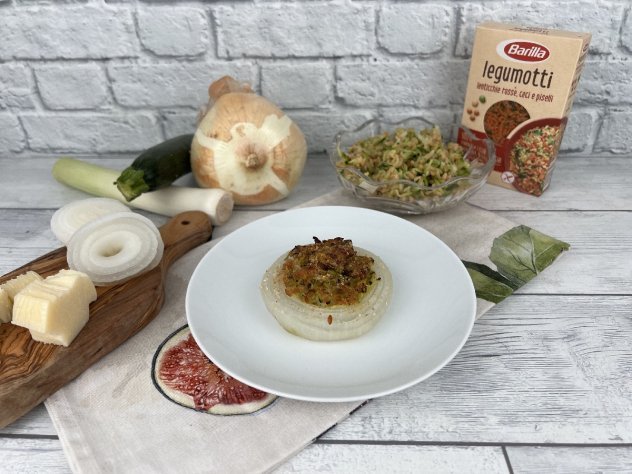
September is one of the months in which the Giarratane onions, the sweet, extra-large Sicilian onions that are perfect for stuffing and preparing in a thousand ways, are harvested: try these Giarratane onions stuffed with Legumotti.

The Giarratana onion is an onion grown in the area of the municipality of Giarratana in the south-east of Sicily. Its size is variable and a single bulb can weigh up to 3 kg. Its main characteristic is sweetness, which makes this onion particularly popular and part of the traditional Italian produce (P.A.T.) list created by the Ministry of Agriculture and Forestry.

Precisely because of its sweetness, this onion is also often eaten raw, but it is excellent with all types of cooking: boiled, grilled and baked au gratin.

Stuffed with my beloved Legumotti topped with lots of vegetables and a touch of melting cheese, it is a perfect main course for people affected by diabetes and coeliac disease for both lunch and dinner.

If you like Legumotti, try them in the Legumotti salad with caramelised Tropea onion.

Giarratane onions stuffed with Legumotti

carbohydrates 13.13g per 100g
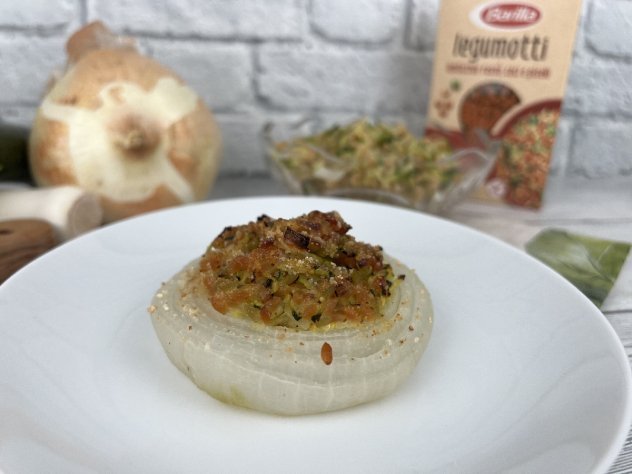
cipolle-giarratane-ai-legumotti

Ingredients for 4 servings

  • 4 Giarratane onions of about 350g each
  • 180g courgettes
  • 150g leek
  • 120g Barilla Legumotti*
  • 50g sharp Provolone cheese
  • breadcrumbs*
  • extra virgin olive oil
  • oregano
  • salt and pepper

**Ingredients specific for celiacs

*Ingredients whose labels must read “gluten free” (or, in Italy, present on  Prontuario AIC)

Preparation

  1. Peel and trim the Giarratane onions then cut them in half horizontally.
  2. Put a pan of water on the heat, when it comes to the boil throw in the Giarratane onions cut in half and boil them for 5 minutes. Drain them with a skimmer and lay them on a cutting board to dry.
  3. Chop the leek very finely and sweat it in a non-stick pan with a little oil. Add grated sharp Provolone cheese and stir to melt.
  4. Use, if you like, the water used to blanch the onions to cook the Legumotti for 9 minutes, then drain and throw them into the non-stick pan with the vegetables; stir and season with salt and pepper.
  5. Remove some internal layers of the onions to form a hollow for the filling; use the inside of the onions for any other preparation (sauces, onion stuffing, caramelised onions, etc.).
  6. Stuff the emptied onions with the Legumotti, sprinkle with breadcrumbs and a drizzle of oil and put in a convection oven preheated to 200°C for 15 minutes to gratin.
  7. Serve the stuffed onions warm.

cipolle-giarratane-ai-legumotti

A year later, I virtually set off again towards Rieti to meet with bloggers, journalists and cooking enthusiasts to discover other products of the Alta Valle del Velino area through the first recipe: Chestnut and grass pea soup.

This soup is naturally gluten-free and the presence of pulses helps to better control the carbohydrates provided by dried chestnuts and potatoes, foods that require some attention for proper blood sugar management.

The journey of flavours in the heart of Italy: Chestnut and grass pea soup

zuppa di castagne e cicerchie

The local tourism and culture project was designed by the Rieti Viterbo Chamber of Commerce in cooperation with the Azienda Speciale Centro Italia Rieti and is aimed at highlighting the area’s excellence. Also look at the recipes cooked last year: Amatriciana and Pulse pasta with Rascino lentils.

The main ingredients of Chestnut and grass pea soup are two types of chestnuts and dried grass peas.

The chestnuts of the Rieti area are Chestnuts from Antrodoco and Rossa del Cicolano, both valuable varieties that have always been linked to the economy of these areas and thus one of the main components of the diet of mountain populations along with the rich selection of pulses. In our soup, we used dried chestnuts from Atrodoco, left to soak in water for about half an hour, and partly sliced raw to add a delicious fresh scent and a crunchy touch to the preparation.

The grass pea or Indian pea (an expression that betrays its provenance from distant lands) is a pulse whose cultivation is valuable in areas prone to drought and famine, so it ensured subsistence for farmers even in years when other products failed to bear fruit, thus important despite the difficult harvest.

Grass peas have a sweet taste, similar to that of chickpeas, that easily conquers the palate, but since they grow on stony ground it is important to subject them to a careful visual inspection before putting them in the pot: restaurants in this part of Italy are often equipped with a good insurance policy to cover any expenses for a dentist’s surgery after a tasty stop at the table!

So are you ready to discover the heart of Italy with another recipe? Let’s arm ourselves with pots and ingredients and cook it together.

Chestnut and grass pea soup

16.04 g carbohydrates per 100g

Ingredients for 4 servings

  • 1.2 litres of water
  • 300g dried grass peas (soak for at least 8 hours)
  • 100g dried chestnuts (soak for 1 hour)
  • 100g potatoes
  • 20g extra virgin olive oil, plus oil for serving
  • 4 whole chestnuts
  • 1 clove garlic
  • bay leaf
  • parsley
  • rosemary
  • salt and pepper

Preparation

  1. Put extra virgin olive oil in a pan and season with chopped garlic and parsley. Add the soaked and well-drained grass peas and allow them to gain flavour for a few minutes, stirring them with a wooden spoon.
  2. Add water and cook for about 20 minutes.
  3. Meanwhile, cook the soaked dried chestnuts for about 20 minutes in lightly salted water with a bay leaf. Drain and roughly chop them, then add them to the grass peas together with the diced potatoes and finish cooking.
  4. Take 2 ladles of soup and put them in a blender, then pour the resulting cream back into the soup so that the mixture is nicely thick.
  5. Peel the raw chestnuts, cut them into thin slices and serve the soup with the chestnut slices, chopped rosemary and parsley and a drizzle of extra virgin olive oil. Complete with bread croutons to your taste.

zuppa di castagne e cicerchie

Version with gluten of Chestnut and grass pea soup

The recipe contains only naturally gluten free ingredients, so no adaptation is necessary for its version with gluten.